Before any treatment talk
The part we tell you up front: bulges show up
in people with no pain at all
Here's the thing that ought to change how you read your own report.
Researchers have scanned people with no back pain at all — volunteers, healthy, symptom-free —
and found disc bulges in a large share of them. Not a handful. A large share. Pooling 33
studies of 3,110 pain-free people, about one in three of the
twenty-somethings already had a disc bulge, and by age 80 it was more than four in
five.6 Those studies ran across more than
twenty-five years of changing MRI equipment, in volunteers who aren't necessarily typical of
everyone, so read the numbers as a direction rather than a precise count. The direction is not
in doubt: the older the group, the more bulges turned up, whether or not anyone hurt.
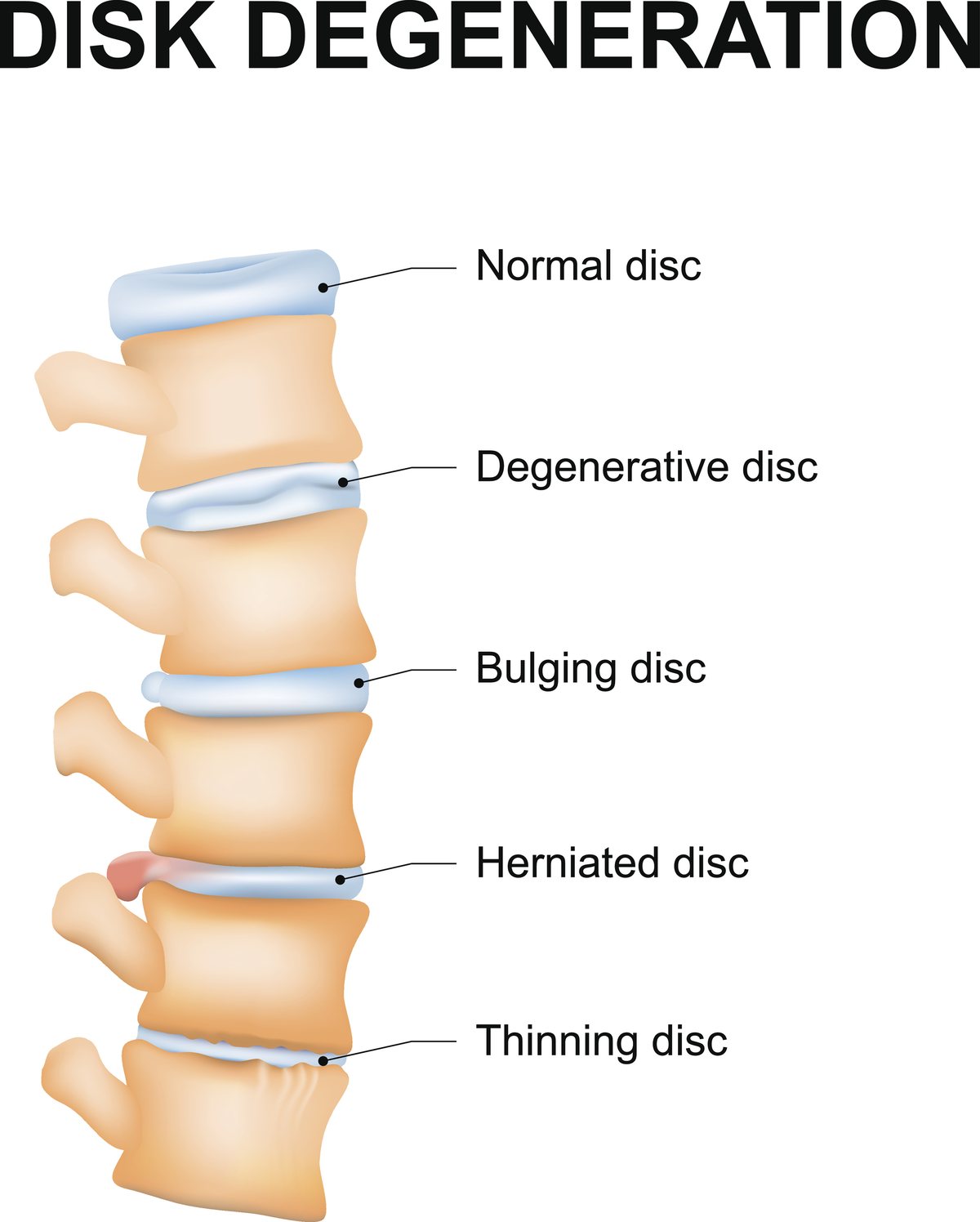
Which means a disc bulge, all by itself, can be an ordinary feature of a spine that has been
used. Like gray hair, or the wear on a pair of boots you've walked a lot of miles in. The
scariest words on your report are also printed on the reports of people out playing golf right
now.
Now the other half, because the straight version has two. The same researchers
ran the comparison the other way — people with back pain against people without it — and found
that bulges, extrusions, protrusions and degeneration genuinely are more common in the
group that hurts.7 That comparison covered only
adults under 50 and its estimates are loose, so don't lean on the size of the difference. But
it rules out the lazy conclusion that scans mean nothing. Your imaging is real information. It
just can't tell you by itself that it's the thing causing your pain — which takes an
examination read alongside the film.
So when a report says "disc bulge," it has not established that the disc is the problem. It
has established that you have a disc bulge. Those are different sentences, and the gap
between them is where a lot of money gets spent.
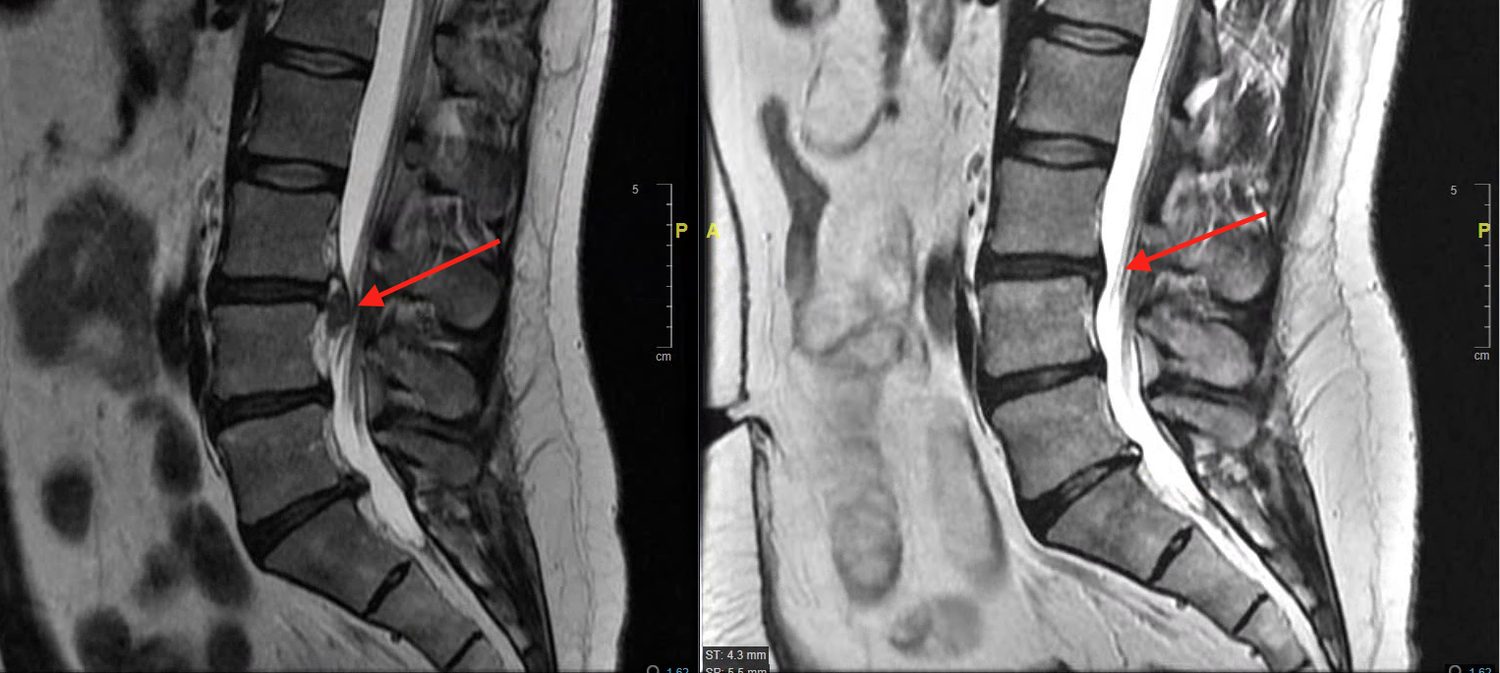
This is also why the imaging is not the diagnosis. An MRI is a photograph of
a spine holding still, taken while you're lying down and nothing hurts particularly. Your
problem is something your spine does at hour six of a workday. A picture can show what's
there. Only an examination can connect what's there to what you feel.
That's not a technicality. It's the reason we won't quote you a treatment plan over the phone
from a report you read to us, and it's the reason the consultation starts with an exam and not
a price.
And once the exam is done, the imaging gets its turn — with you watching. Patients tell us
the same thing all the time: nobody ever showed them the pictures. There's a reason. The
doctor most trained to read your MRI — the radiologist — writes the report and never meets
you. The doctors who do meet you usually work from that report, and a surgeon's schedule
rarely has room to sit down and walk through the images with you. Nobody did anything
wrong — and you still ended up owning a spine you've never seen.
We think that's backwards. Your consultation happens in
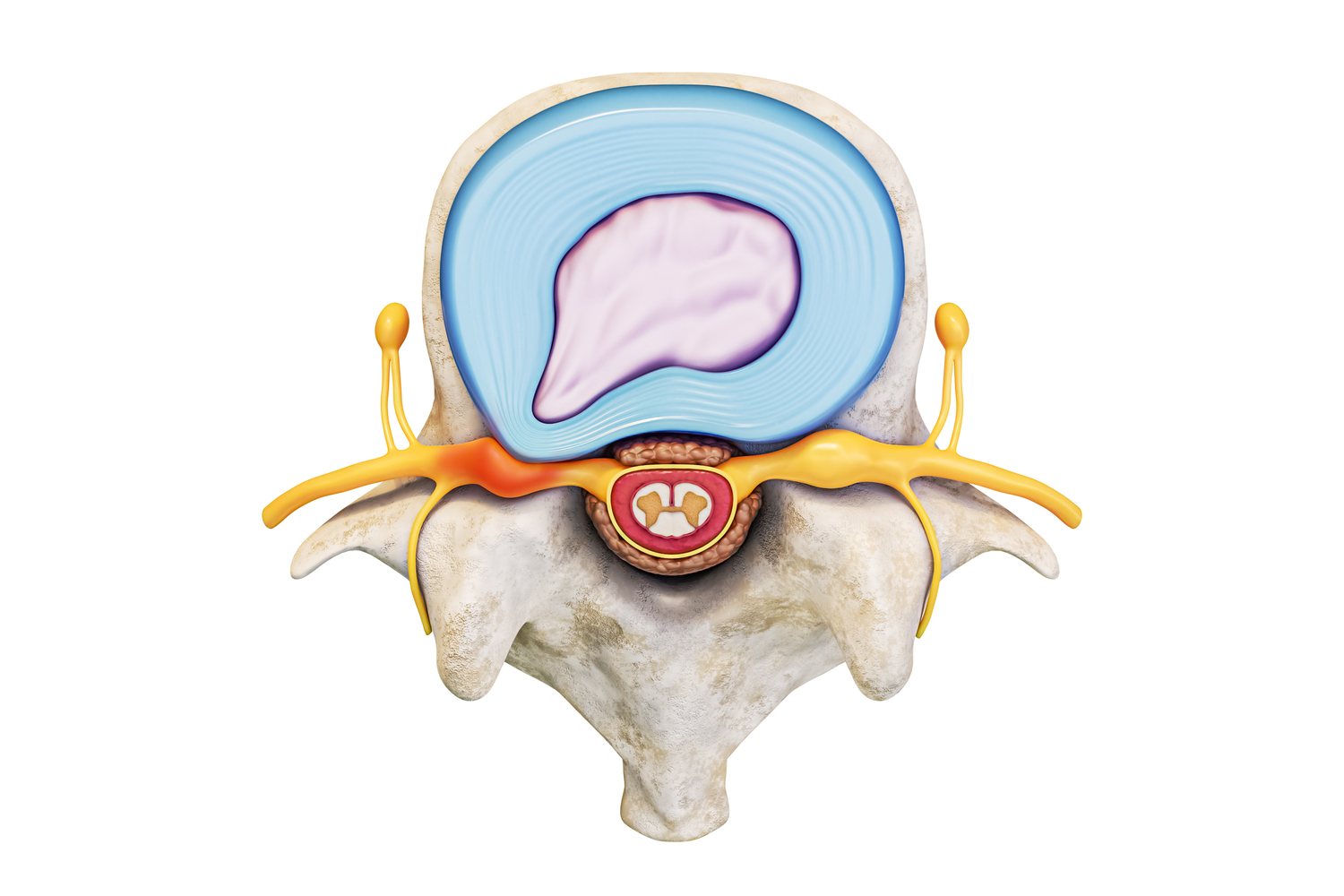
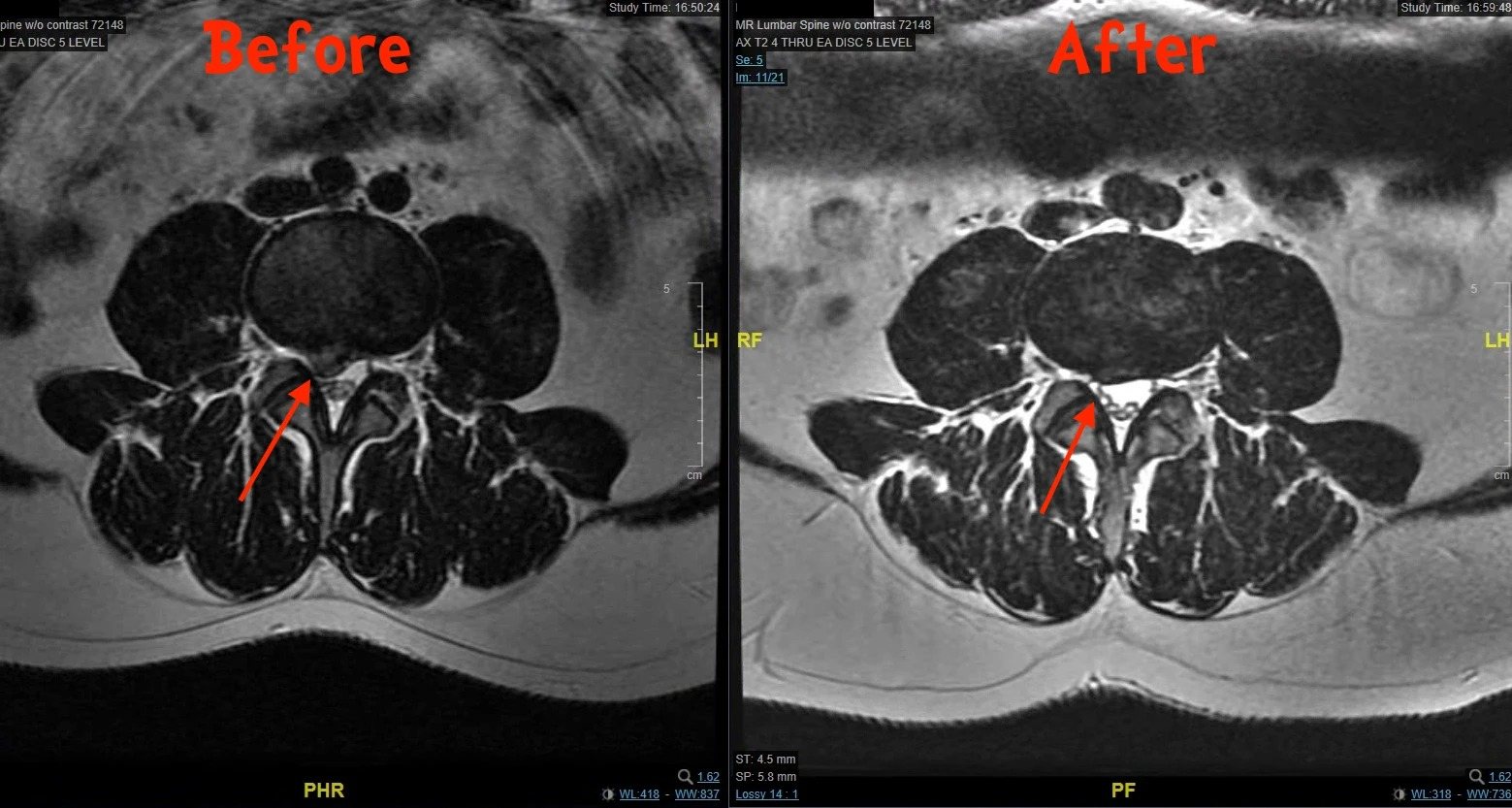
front of a screen with your MRI on it. We go through the pictures — not just the report —
and show you what's pressing on what, why it hurts the way it does, and exactly what we plan
to do about it. You leave understanding what your spine looks like and how we
intend to fix it.