A woman sitting on her couch, wincing and holding her lower back.

For people in San Antonio whose back has been hurting long enough that "give it time" stopped being an answer

Your back pain isn't "back pain."It's one of about seven different problems — and they don't share a fix.

The way your pain behaves — worse sitting or worse standing, in your back or down your leg, first thing in the morning or after a block of walking — points to a specific structure that's failing. This page will help you work out which pattern is yours. Then it will tell you what we can treat without surgery, injections or long-term medication — and what we can't.

23 years in practice
21 years using the DRX9000
2,000+ patients treated on it

Nobody hurts their back doing anything heroic.

You bent down to pick up a sock. You reached into the back seat for a grocery bag. You stood up out of the car. You leaned over the sink to spit out toothpaste. And something in your low back let go — a jolt, a pop, a flash of heat — and you were on the floor, or frozen mid-bend, or fine that afternoon and unable to stand up straight the next morning.

That's the part nobody understands when you tell them. There's no story. No car wreck, no heavy box, no moment worth retelling. Just a sock. And now:

  • Putting on socks means sitting on the bed, or lying down, or asking someone
  • You haven't sat on your own couch through a whole movie in months — you end up on the floor
  • Long drives cost you the next day
  • You're awake at 4am because that's when your back wakes you, and you pace the kitchen because moving is the only thing that helps
  • You've started planning around it: which chair, which errand, how far from the parking spot
  • You get through the workday, and the workday takes everything you have

And when you try to explain it, people's eyes glaze. Backs are boring. Everyone's had one go out. So you stop mentioning it, which is its own kind of lonely — you're in pain all day and it's invisible to everybody but you.

Two things are true, and you deserve to hear both. What you're feeling is real, and it has a mechanical cause. And "wait and see" is not the only plan available to you, no matter how many times you've been given it.

What actually happened

It wasn't the sock

Here's what actually happened, and it starts years before the sock.

Your spine has a budget. Healthy spinal tissue absorbs an enormous amount of force before it ever complains — far more than any normal day asks of it. Think of it as margin: the gap between what you load your back with and what your back can handle.

Every year takes a little of that margin. Sitting eight hours a day. The commute. The couch. An old injury you'd forgotten. A job that has you lifting, or a job that has you frozen at a desk — both cost you. Tissue that used to bounce back takes longer. It gets drier, stiffer, more sensitive, more reactive.

None of that hurts while it's happening. That's the cruel part. The margin shrinks silently for a decade, and everything feels normal — until the day the gap closes and something ordinary lands on the wrong side of it.

It wasn't that one movement. It was years of accumulated load finally exceeding what the tissue could carry.

The sock was just the last straw on a pile you couldn't see.

That reframe matters for two reasons. First: you didn't do this to yourself. People carry real guilt about this — "I should have lifted properly," "I let myself get out of shape." The load was already there. Second, and more useful: if the problem is a margin problem, then the fix has two halves. Take the load off what's failing now. Then rebuild the margin so the next ordinary Tuesday doesn't do this again. A treatment that only does one half buys you months. A plan that does both is how you stop living in this cycle.

What the four tissues are and why they fail together — the DRX9000 page

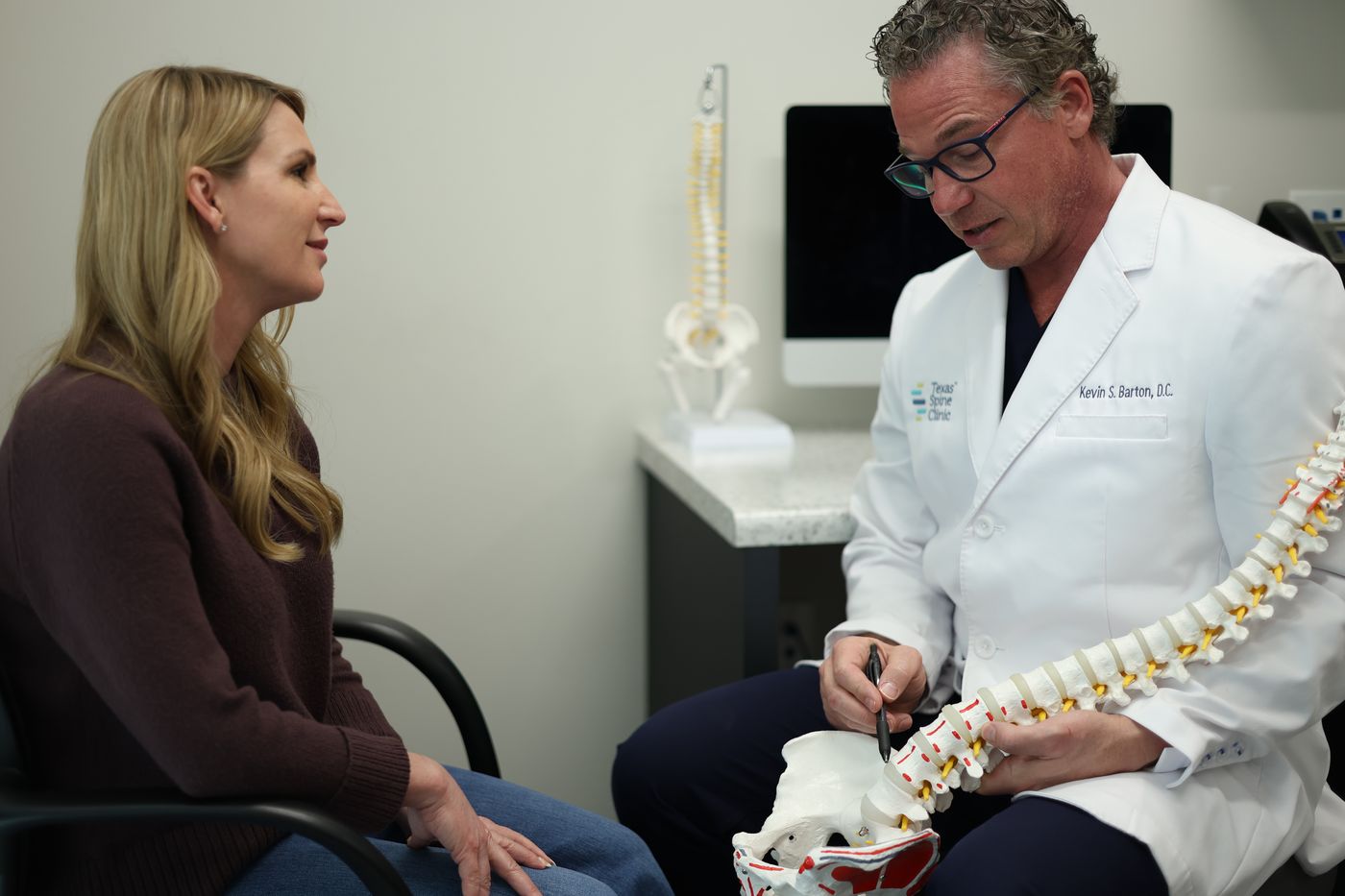
Dr. Kevin Barton explaining spinal anatomy to a patient using a model of the lumbar spine.
The margin conversation. Dr. Kevin S. Barton, D.C., walking a patient through what years of load actually do to a lumbar segment — and why the trigger is almost never the cause.

The differential

Which pattern is yours?

Your back has rules. You've learned them without noticing — which chair is safe, which movement you don't make anymore, what makes it worse by evening.

Those rules aren't random. They're the single most useful piece of diagnostic information you own, and most people are never asked about them. A disc under pressure behaves one way. A worn joint behaves the opposite way. A narrowed canal behaves a third way entirely, and it shows up in your legs, not your back.

Read the patterns below and find the one that sounds like your week. You may see yourself in two — that's normal, and it's common for more than one tissue to be involved. What matters is where you start.

One thing first.

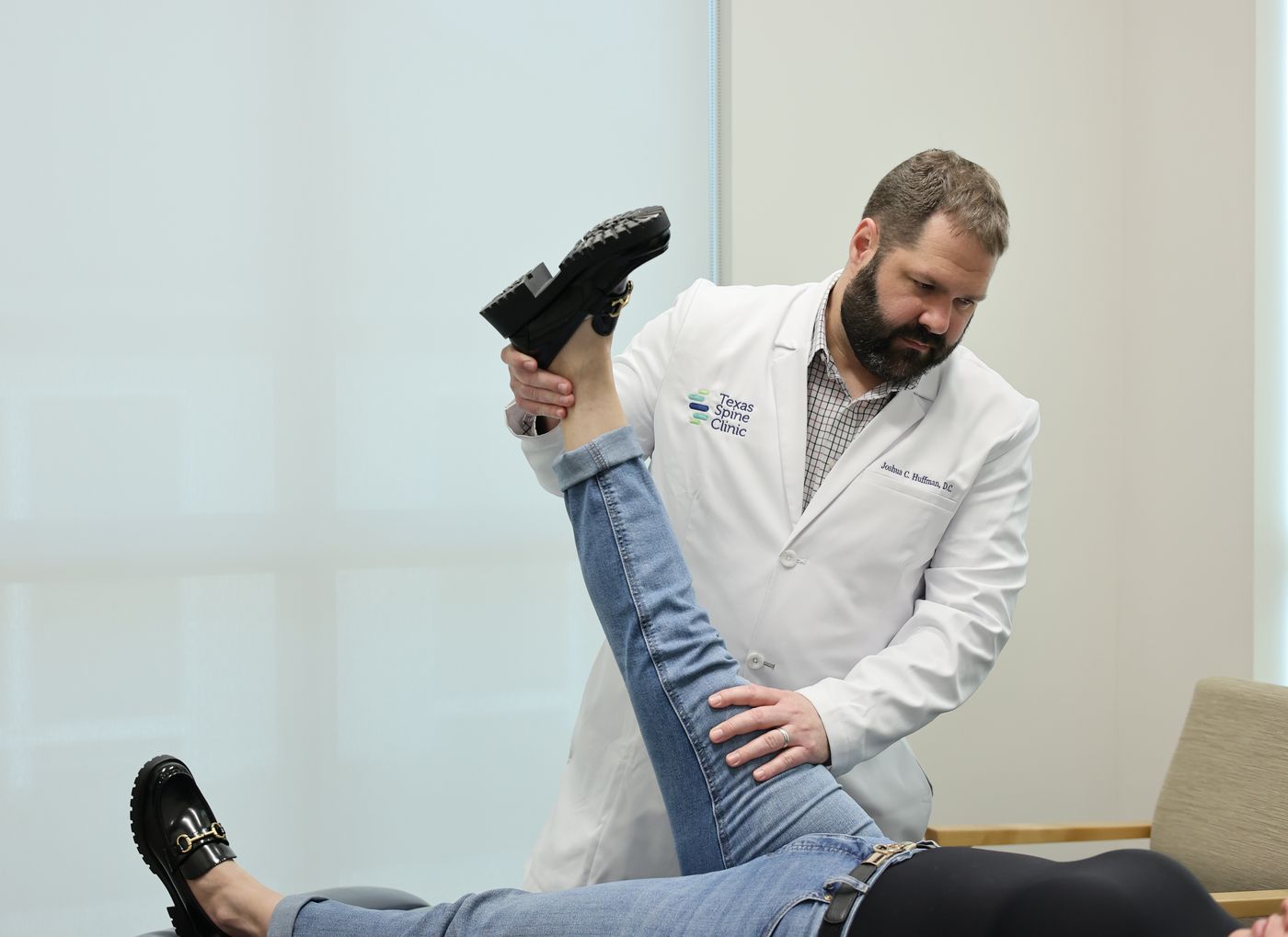
Dr. Joshua C. Huffman performing a straight-leg-raise test during a lower back examination.
The positions tell the story. Each pattern below shows its hand under specific tests — which is how an exam confirms what your own rules already suggest.

Before anything else

The small number that need an emergency room today

Go to an emergency room today — not to an appointment — if you have:

  • New loss of bladder or bowel control
  • Weakness that is rapidly getting worse
  • Numbness in the groin, the inner thighs, or the area you sit on — what doctors call saddle anesthesia

Those signs can mean severe nerve compression that can't wait.

Also go now if your back pain came with a fall or crash and severe pain, with fever, or with unexplained weight loss, or if you have a history of cancer and this pain is new.

This isn't scare talk. It's the one version of this problem where speed matters more than choosing the right clinic.

Pattern 1

Sitting is the enemy, and it runs down your leg

What it looks like: Sitting is the worst thing you do all day. The car is torture. You'd rather stand at a restaurant than sit. Getting up out of a chair takes a second of bracing. Bending forward — sink, dishwasher, shoes — is when you feel it most. Standing and walking often feel better, at least for a while.

And somewhere in the mix, your leg is involved: an electric line down the back of the thigh, a burning calf, pins and needles in your foot, a numb patch on the outside of your shin, or a whole leg that "lights up" when you sit down wrong.

What that pattern means: your discs — the fluid-filled shock absorbers between the bones — get loaded hardest when you bend forward, and sitting rolls your pelvis back into a version of that same forward-leaning position, then holds it there for an hour without letting up. If a disc is bulging or herniated, that tips its soft center toward the nerve running behind it. The nerve fires. The firing is what you feel down your leg.

This is the pattern that responds best to what we do, and it's the pattern the research on spinal decompression is strongest for.

Where to go next

  • The leg symptoms are the loudest part → Sciatica
  • Your MRI says "herniation," "protrusion" or "extrusion" → Herniated Disc
  • Your report says "disc bulge" and you're not sure how worried to be → Bulging Disc

Pattern 2

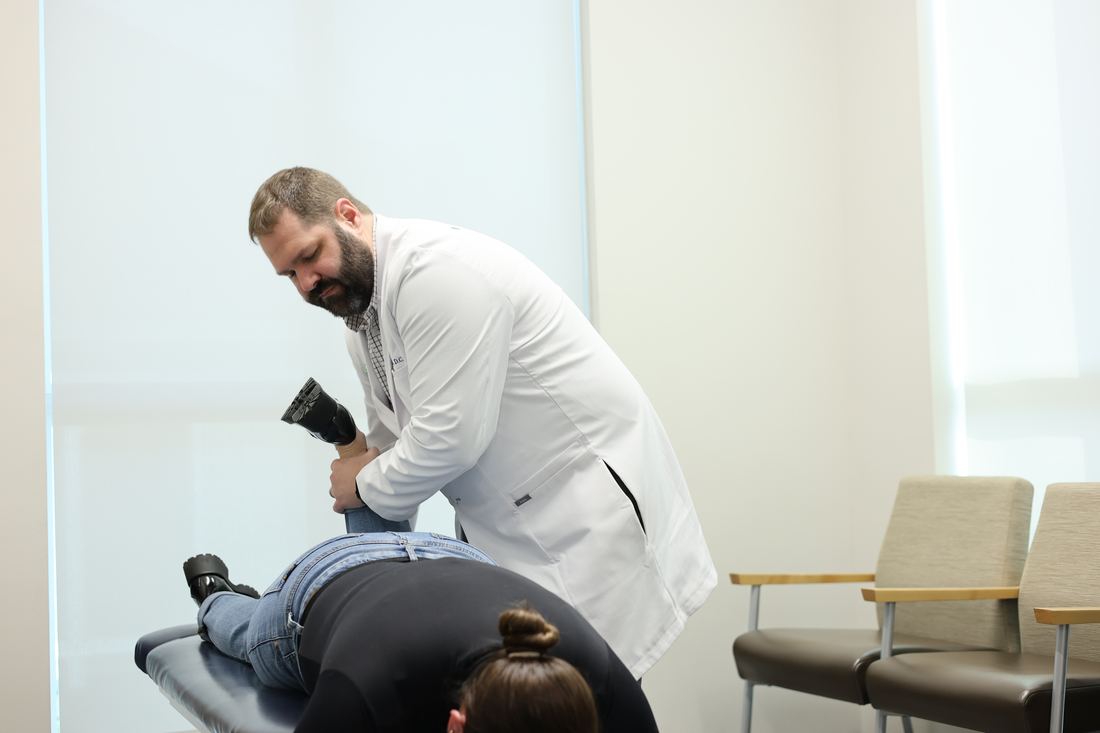
Yeoman's test performed during a lumbar examination.
Provocation tests are how a pattern becomes a diagnosis instead of a guess.

Standing is the enemy, and sitting is a relief

What it looks like: the mirror image of Pattern 1. Standing at the kitchen sink for ten minutes is miserable. Arching back to reach a top shelf or look up gives you a jolt across the low back. Walking slowly through a store is worse than walking briskly. But sit down, or lean forward over the counter, and it eases.

The pain usually stays local — low back, maybe spreading into the top of the buttock — rather than shooting past your knee.

Somebody may have told you that you have "a little arthritis in your spine," in the tone people use for gray hair. A report may have said "facet arthropathy." Maybe you had an injection that worked beautifully for six weeks and then faded.

What that pattern means: behind every disc sits a pair of small joints — facet joints — that guide how your spine moves. Standing tall and arching press them together. Sitting and leaning forward open them up. Your back's rules are describing those joints out loud.

Where to go next

Facet Syndrome

Pattern 3

Your legs quit before you do

What it looks like: your back may not even be the main complaint. It's your legs. After a block — sometimes half a block — they get heavy, achy, burning, or strangely dead, and you have to stop. Sit down for a few minutes and you can go again, about the same distance.

You've noticed you're fine in the grocery store, because you're leaning on the cart. You're fine on a bike. Uphill is easier than downhill. Someone in your family has started calling it "the shopping cart thing."

What that pattern means: the canal your nerves travel through has narrowed. Standing upright narrows it further; leaning forward opens it back up. That's why the cart works — and the cart lean is one of the most reliable clues in all of spine medicine.

This one needs a careful, real evaluation more than any other pattern on this page. Some narrowing is soft-tissue and disc-driven, and responds to unloading. Some is hard bone, and nothing we own will move bone. We refer severe bony stenosis out to a surgeon, and we'd rather tell you that at a consultation than after you've paid for a program.

Where to go next

Spinal Stenosis

Pattern 4

Stiff every morning, sore after every long drive

What it looks like: no single dramatic injury — or the injury was years ago and this crept in behind it. The first twenty minutes of every morning are the worst part of your day. You feel like a rusty hinge until you move around. Long drives, long flights and long meetings cost you. Good days and bad days come in waves, and you can usually tell which you're getting by 9am.

You've said some version of "my back is 80 years old" out loud, and you're 41.

Maybe a report used the word "degenerative," and it landed like a life sentence.

What that pattern means: discs are about 90% fluid when they're healthy. Under years of load they dry out and lose height. Lower height means less cushion, less motion, more work for the joints and muscles around them — which is exactly what morning stiffness feels like.

Here's what nobody told you: "degenerative disc disease" is not a disease and it is not a forecast. It's a description of a disc that's dried out and flattened. Dried-out tissue can take fluid back in. That's the whole premise of what we do.

Where to go next

Degenerative Disc Disease

Pattern 5

You had the surgery. You still hurt.

What it looks like: you did the hardest, scariest thing on the list. Maybe it worked for a while. Maybe you woke up and the leg pain was gone but the back pain never left. Maybe you're two years out and it's crept all the way back, and you can't face telling anyone.

There's a particular loneliness in this one. People expect a surgery story to end. Yours didn't, and now you feel foolish for hoping, or angry, or both.

What that pattern means: several straight things, depending on your case — the level above or below the surgery taking on load it wasn't built for, scar tissue, a disc that re-herniated, or pain that was never coming from the structure that got operated on.

Straight talk: hardware or a fusion at the level we'd be treating rules out decompression at that level — no exceptions. But if your surgery was a discectomy or laminectomy with no hardware left behind, the door is open: we treat post-discectomy patients all the time, and the exam and your current imaging decide. The level next door to a fusion is the genuinely case-by-case call. You will get a straight answer, and we'd rather give you a hard one than a hopeful one.

Where to go next

Failed Back Surgery

Pattern 6

It started with the crash

What it looks like: you were fine at the scene, or thought you were. Two days later your low back seized. Or it's been six weeks and everyone keeps asking why you're not better yet, including an adjuster.

What that pattern means: a crash loads your spine in a fraction of a second in ways daily life never does. It can herniate a disc outright, or it can take a back that was already low on margin and spend the rest of it in one impact.

Accident care is a different program here, for a real reason: it involves documentation, insurance, and often an attorney. Our accident program handles the medicine and the paperwork together, so you're not driving to four offices while you hurt.

Where to go next

Car Accident Injury Program

Pattern 7

None of these sound quite like me

That's a real answer, and it's more common than you'd think. Some possibilities worth knowing about:

  • Your pain moves around, or you hurt everywhere. Widespread pain with fatigue and poor sleep can point somewhere other than a single structure — and that's worth a proper workup, not another table.
  • It's really your hip. Hip arthritis fools everybody. It usually shows up in the groin and the front of the thigh, and it hates putting on socks and shoes just like a back does.
  • It's one spot beside your tailbone, and it flared after a pregnancy or a fall. That can be the sacroiliac joint, where your spine meets your pelvis.
  • It's mostly muscular — a deep ache that eases with movement and heat, no leg symptoms, and it settles within a couple of weeks. Most of these genuinely do resolve.

What to do next: get examined by someone who will actually put hands on you and test the positions. If your problem isn't ours, we'll tell you and point you at who it belongs to. We do that most days.

The statistic you keep hearing

"Most back pain gets better on its own." True. And useless to you.

You've been told this. It's on every hospital page, and it's true: most episodes of low back pain settle within about six weeks, whatever anyone does.

Which is exactly why it's such a cold thing to hear when you're the person still hurting at month six.

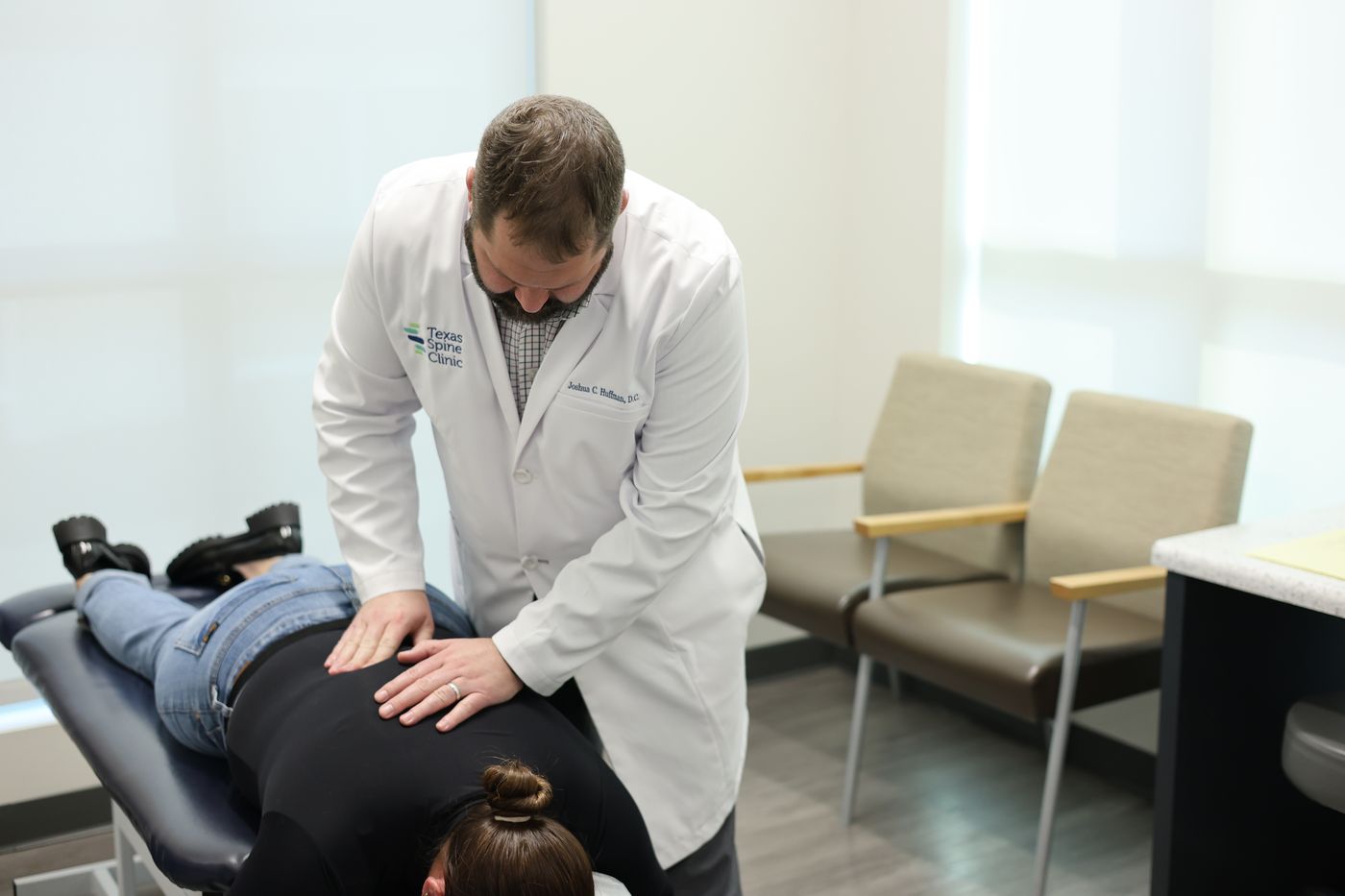
Dr. Huffman examining a patient's lower back during a consultation.
Seven patterns, one exam. Which movements hurt, which positions help, and what the leg does are how we tell them apart.

Two problems with using it as a plan. First, it's a statement about a crowd, not about you. If your pain has already outlived the window that most people's pain lives in, you're by definition not in the group the reassurance describes. Continuing to wait is a choice being made on your behalf with someone else's odds.

Second, "better" and "fixed" aren't the same word. A lot of back pain quiets down without the margin ever being rebuilt — which is why so many people describe not one injury but a decade of episodes, each one a little easier to trigger than the last. That pattern isn't bad luck. It's a spine still living on a shrinking budget.

Early on, waiting is reasonable. At some point, waiting becomes the plan by default — and nobody ever says so out loud.

Rough markers for when to stop waiting:

  • 6 weeks of pain that isn't clearly trending down
  • Pain running below your knee, or numbness and tingling in your foot
  • Any weakness — a foot that catches on stairs, a leg that gives way
  • Pain that's forcing you to give things up: sleep, work, driving, your walk
  • You've been through the whole treatment list once already and you're back where you started

Your treatment history

The ladder you've already climbed

Most people who find this page can recite their own list. It usually goes like this.

Rest.

The first advice everybody gets, and the one that ages worst. A few days of relative rest is fine. Past that, discs are fed by movement — they have no real blood supply of their own — and stillness makes joints stiffer and the supporting muscles weaker. You rested, you got tighter, and getting going again hurt more.

Ibuprofen, naproxen, meloxicam.

They lower inflammation, and lowering inflammation is real relief. They also do nothing whatsoever to the mechanics that are causing the inflammation. Plenty of people describe taking 2,400mg a day for three weeks and ending up with a sore stomach and the same back.

The exercise sheet.

You went to physical therapy. Sometimes it was excellent. Sometimes it was thirty seconds of assessment and a corner of the room with a resistance band and eleven other people. Either way you came home with a printed sheet of exercises. If the sheet made you worse, that's information — it usually means the exercises were loading the tissue that was already over its limit.

Adjustments that hold for two days.

This one we'll be blunt about, because we're chiropractors. An adjustment restores motion to a joint that's locked up, and it can feel wonderful. But if the reason that joint keeps locking up is a flattened disc in front of it taking too much load, the joint will lock again — Thursday, usually. Feeling great for forty-eight hours, over and over, for a year, isn't a treatment plan. It's a rental agreement.

The injection that bought three good weeks.

The most misread event in the whole list. A steroid injection calms the inflammation around an angry nerve. That relief is real, and its arrival tells you something valuable: the pain generator was where they put the needle. What the medication cannot do is change why the nerve is angry. So it fades. The first one often helps a lot; the second usually less; the third sometimes not at all. That decay curve isn't bad luck, and it isn't your body failing. It's a shot doing exactly what a shot does.

The surgical consult.

Maybe it ended with "you're not bad enough for surgery yet": good news delivered as a dead end, with a prescription and an instruction to come back when it's worse. Or maybe it ended with a surgery date and a knot in your stomach, because everybody knows somebody whose back surgery didn't go well. Either way, if your pain hasn't gotten better with the easy stuff, you belong here first.

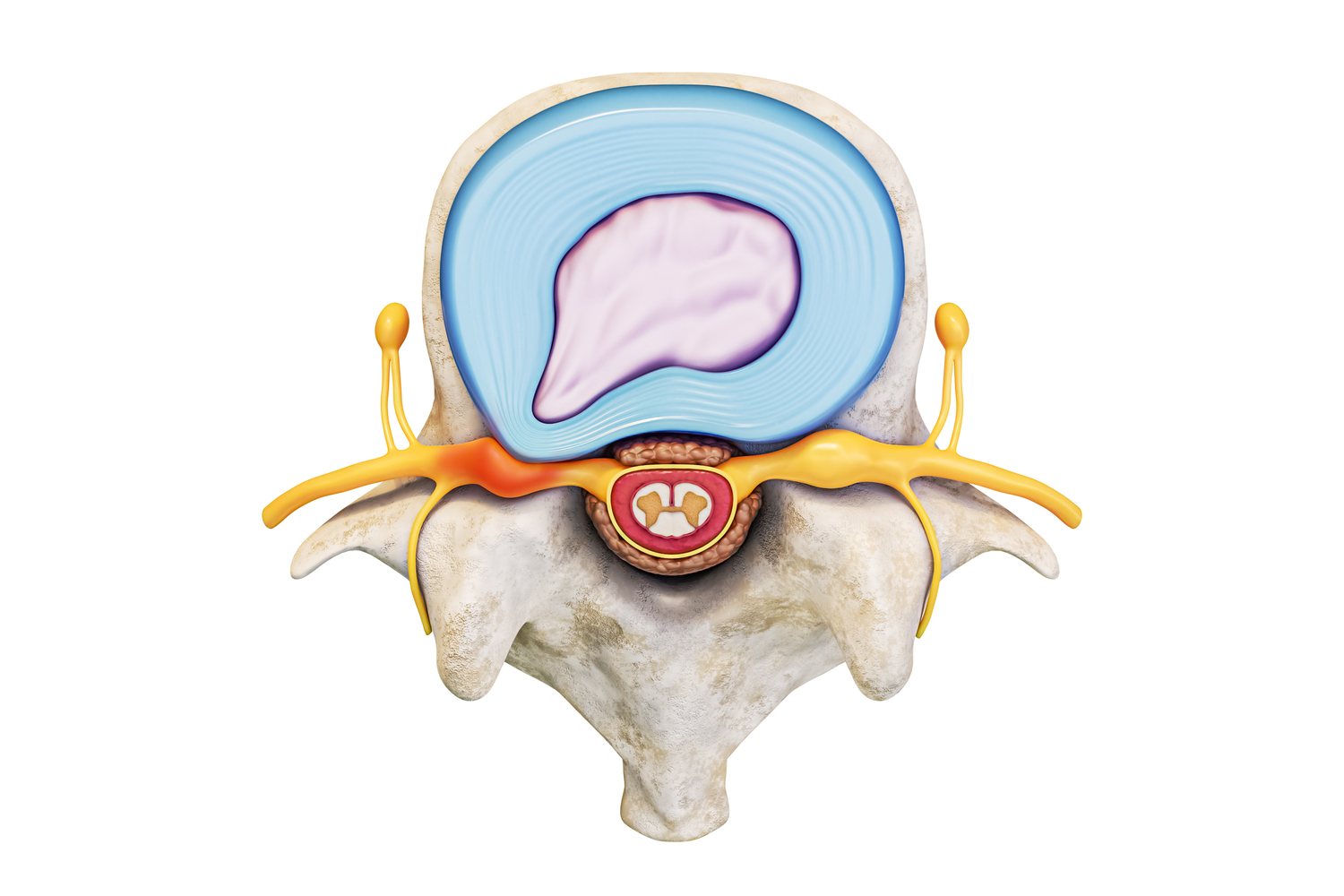
Illustration looking down through a lumbar vertebra from above: the disc's outer rings in blue, the soft centre pushed backwards through the wall, and the nerve root inflamed red-orange where the disc reaches it.
One of the seven patterns, drawn. When the disc reaches the nerve root, the pain stops being a back problem and starts running down a leg — and that change is the most useful thing you can tell us.

Almost everything on that list is aimed at the alarm, not the fire.

Pills quiet the alarm. Shots quiet the alarm. Muscle relaxers quiet the guarding that the alarm caused. The only rungs that touch the mechanics — therapy and adjustments — are working against a disc that's still flattened and still loaded every hour you spend upright.

That's not a failure of your effort. It's a gap in the middle of the menu.

Scans,

When you actually need imaging — and when you don't

You probably don't need a scan in the first month. If your pain is new, has no leg symptoms, no weakness and no red flags, imaging in the first few weeks usually changes nothing about what should happen next. It can even make things worse: scans of pain-free people over 40 are full of bulges and "degenerative changes" that were never hurting anybody. Finding one of those in a bad week can hand you a frightening word to worry about instead of a plan.

You do need imaging when:

  • Symptoms are running down your leg, or you have numbness or weakness
  • Six weeks or more have passed without clear improvement
  • There are any red flags from the list above
  • Somebody is proposing a course of treatment aimed at your disc. Which includes us.

That last one is the reason this section exists. We do not put anyone on a decompression table based on an X-ray. X-rays show bone. Discs are soft tissue — they don't appear on an X-ray at all, only the space where they should be. If a clinic tells you that your X-ray shows three bulging discs and hands you a treatment plan the same afternoon, you have learned something important about that clinic.

If you already have an MRI, bring it and the disc or the link. That review is worth having even if you never treat with us — because patients tell us the same thing all the time: nobody ever showed them the pictures. There's a reason. The doctor most trained to read your MRI — the radiologist — writes the report and never meets you. The doctors who do meet you usually work from that report, and a surgeon's schedule rarely has room to sit down and walk through the images with you. Nobody did anything wrong — and you still ended up owning a spine you've never seen.

We think that's backwards. Your consultation happens in front of a screen with your MRI on it. We go through the pictures — not just the report — what "protrusion" means versus "extrusion," what the millimetres do and don't tell you, and which findings match the symptoms you actually have. We show you what's pressing on what, why it hurts the way it does, and exactly what we plan to do about it. You leave understanding what your spine looks like and how we intend to fix it.

If you don't have one and your case genuinely needs one, we'll refer you for it. An MRI is required before anyone is treated here — or a CT if you can't have an MRI. Those are the only two kinds of imaging that show the disc, and we need to see the disc one way or the other.

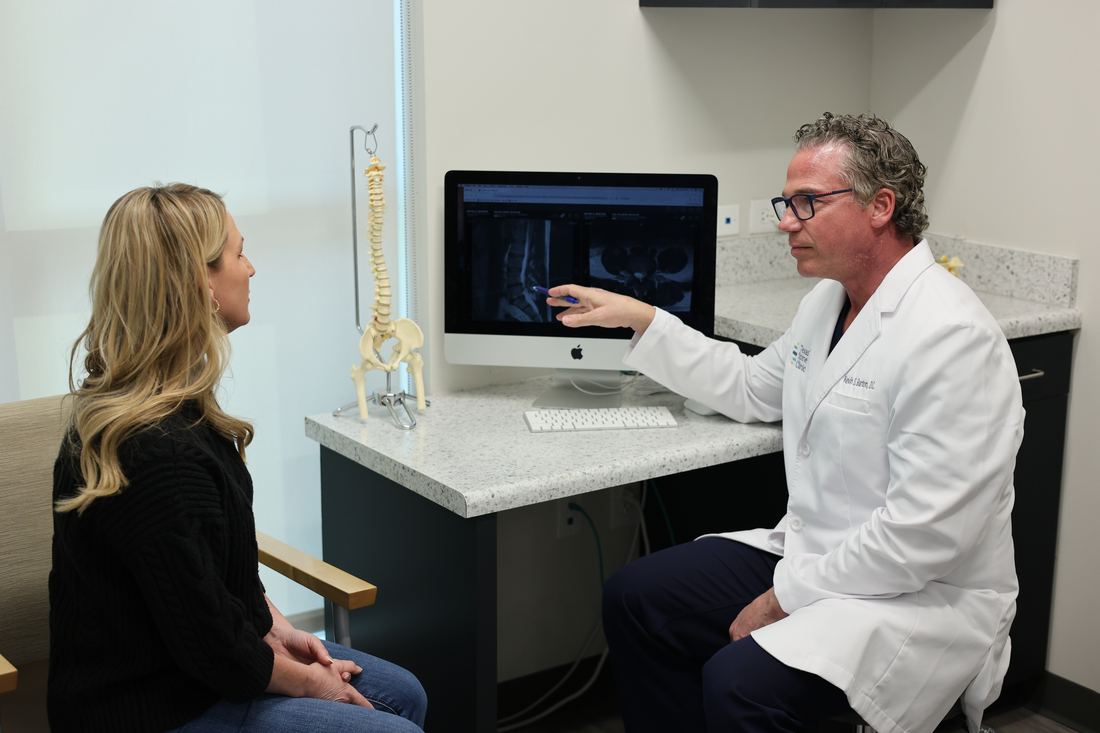
Dr. Kevin Barton reviewing a lumbar MRI on a monitor with a patient sitting beside him.
The MRI review — the pictures, not just the report. What "protrusion" means versus "extrusion," what the millimetres do and don't tell you, and which findings actually match your symptoms — worth having even if you never treat with us.

The mechanism

How it works

If your pattern is disc-driven, here's what we actually do about it.

The DRX9000 is an FDA-cleared, computer-controlled spinal decompression system. You lie on a table, comfortably clothed, in a harness. The machine applies a precise, gentle, rhythmic pull to one specific level of your spine — the level your imaging and exam identified — for about 25 to 30 minutes.

Inside the disc, that pull creates negative pressure: a vacuum effect. Two things follow. Fluid, oxygen and nutrients get drawn back into a disc that has been squeezed dry — and the bulge gets a chance to draw back off the nerve behind it.

Dr. Barton's bruise analogy is the clearest version: if you had a bruise on your arm and somebody pressed on it all day every day, it would never heal. Your disc is no different. Every hour you spend upright, it's being pressed. The table's job is to take the thumb off the bruise long enough for the tissue to do what tissue does.

And because a spine is one system, unloading a level reaches four tissues at once: the disc rehydrates, the joints behind it regain motion, the guarding muscles stop bracing, and the nerve gets its space back. That's why patients ask a question we hear constantly — "why is my flexibility coming back so fast?" Motion was lost for several reasons at once, and it's being restored for several reasons at once.

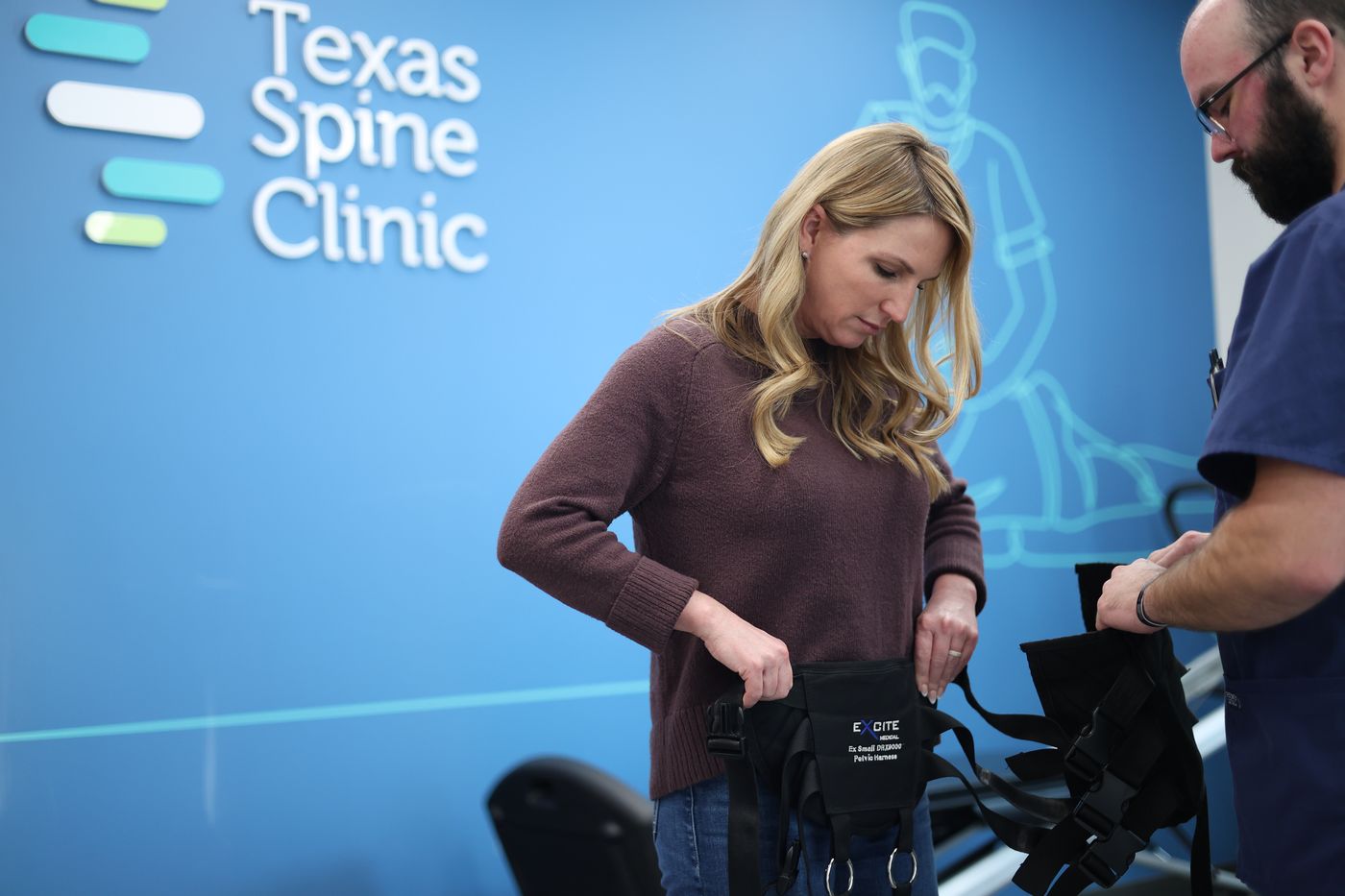
A Texas Spine Clinic team member fitting the DRX9000 pelvic harness around a patient's hips before treatment.
Getting set up. Fully clothed — the pelvic harness goes on over your own clothes before you lie down.
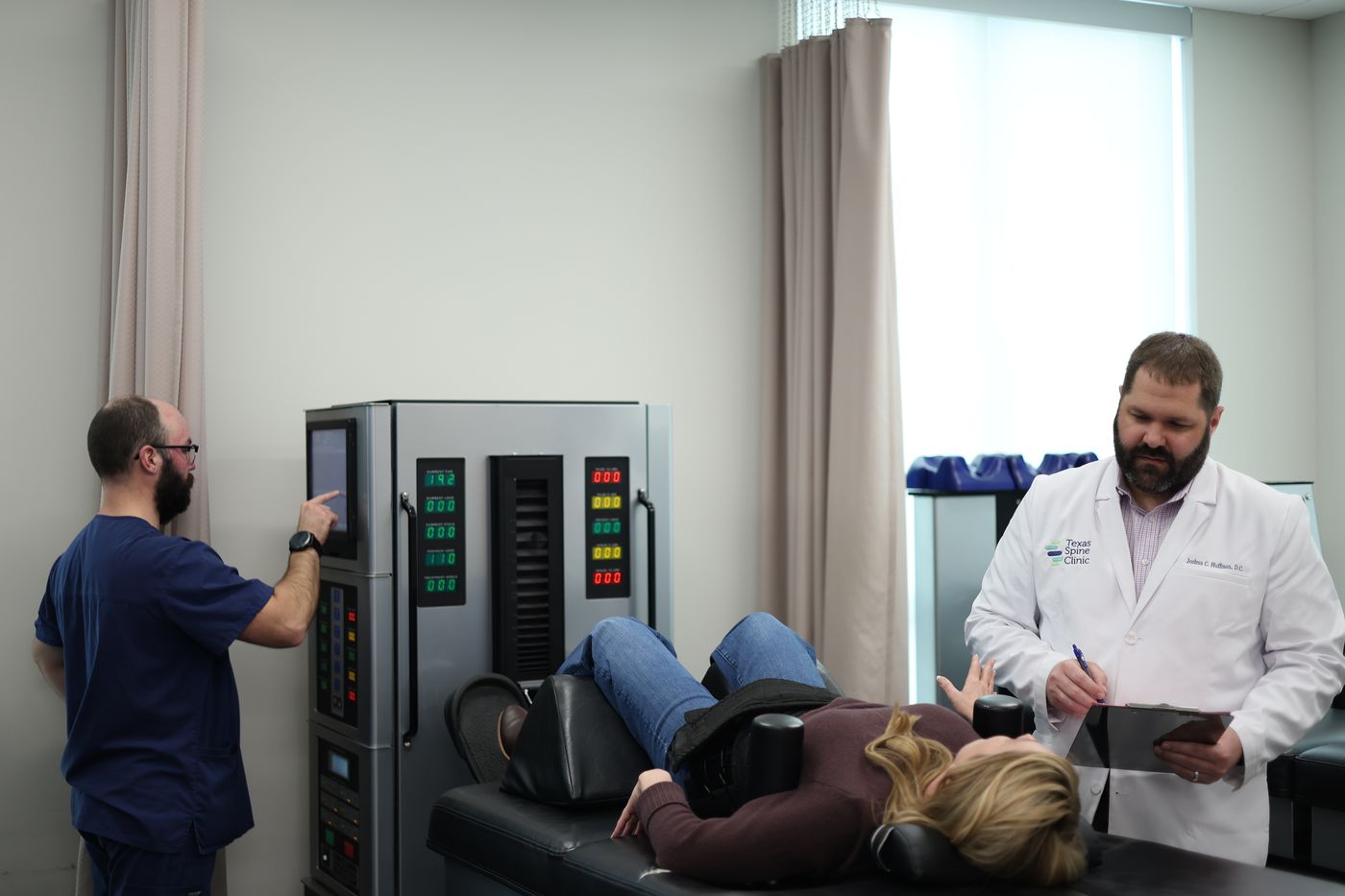
A patient lying on the DRX9000 table while a team member sets the console and Dr. Huffman reviews her chart.
On the table. About 25–30 minutes. The pull is aimed at the one level being treated, on a force curve set by hand and adjusted as you respond.

"Isn't this just traction?"

They're relatives. The difference is control. Straight traction pulls, and your muscles fight the pull — that's a reflex, and it cancels much of the effect. The DRX applies a computer-controlled force curve that ramps and eases so the muscles don't guard against it, aimed at a specific level and a specific angle rather than at your whole spine. Whether that difference produces better outcomes than plain traction is a fair argument, and we take it seriously on our evidence page rather than waving it away.

"How do I know it will be done right?"

Ask us the hard questions — we like them. Here's how care is decided here, and you can hold us to every line: a doctor reviews your actual MRI before anyone discusses a plan or a price. A disc is never diagnosed from an X-ray, because an X-ray can't show one. Nobody is treated here who shouldn't be — the exam decides, and "no" is an answer we genuinely give. Which is why the section below is the most important one on this page.

"Why does it take so many visits?"

Because you're asking connective tissue to change, and connective tissue changes slowly. The disc is avascular, meaning it has no blood vessels of its own, which is why it's one of the slowest-healing structures in your body. A disc doesn't rehydrate in three sessions any more than a broken wrist knits in three days. The protocol runs about 20–25 sessions over six to eight weeks, and it is genuinely a time commitment — several visits a week, on top of your actual life. Tissue sets the schedule, and we work with it rather than around it.

Weigh it against the alternative

The case for trying this first

Whatever else you decide about this program, weigh what it asks of you. No incision. No anesthesia. No hardware in your spine. No fusion. No narcotics and nothing to wean off. No recovery period, and no time off work — sessions run about half an hour and you drive yourself home afterward.

And nothing about it closes a door. Whatever options you have today — an injection, a surgical consult, a second opinion — you'll still have every one of them when you're done here. That isn't true in the other direction. A fused segment doesn't come back, and scar tissue doesn't unform. Trying the reversible thing first isn't a compromise; it's the order that makes sense.

Why this works

Why this works — and who we won't treat

There are two reasons this program works, and only one of them is the machine.

The first is the machine — and knowing how to run it. The DRX9000 is genuinely effective at what it does, but owning one and knowing how to use it are different things. Every protocol is set by hand: the angle of pull, the force curve, the specific level being treated, adjusted as your spine responds week to week. We've been doing that for 21 years. That experience is the difference between a table and a treatment.

The second matters just as much, and almost nobody in this industry will tell you about it:

We screen patients the way a spine surgeon screens surgical candidates.

Who we don't treat

  • Fusion or hardware at the level being treated — no exceptions. A prior discectomy or laminectomy without hardware is a different story — routinely treated.
  • Severe osteoporosis
  • Spinal fracture, tumour or infection
  • Severe bony stenosis — that's a surgical conversation, and we'll refer you for it.
  • Unstable spondylolisthesis — a slip that shifts more than 5 mm on the flexion-and-extension X-rays we take to check; a stable slip, of any grade, can still be a candidate.
  • Pregnancy
  • Anyone with the emergency signs listed near the top of this page, who needs a hospital and not us
We have turned away more patients than we can count — including people who pushed, pleaded and offered to pay in full. Saying no costs us money every time. It's also the only reason we've been able to do this for 21 years and still have the reputation we have.

The exam and your imaging — not the machine, and not your credit card — decide whether someone is treated here.

What can go wrong

Some patients feel sore or flared in the first several sessions before things turn. That's common enough that we warn everybody about it up front, because people who aren't warned quit in week one — and some of them were two weeks away from relief. A smaller number get worse and stay worse, and for them the right answer is to stop, which we'll say out loud.

The real checkpoint

We assess whether your spine is responding around the second week, after eight to ten sessions. If it isn't, we say so then — not after another month of visits — and you don't pay for the rest.

What we stand behind

We don't quote a success rate — the eye-catching percentages in this industry are exactly the claims that drew regulators, and a number from a marketing department isn't evidence. What you get instead is a straight candidacy answer your exam decides, your imaging reviewed with you on the screen, your number in writing before you commit, an real checkpoint at week two, and the published studies themselves, on a page, for you to read.

How we decide whether this fits your pattern

Decompression does its best work on disc-driven pain — especially when it runs into the leg. If your pain is purely in your back with no leg involvement at all, the exam has to make the case, and it's part of why some people leave our consultation without a program. Selection is the whole reason this works as well as it does.

And we bring some mileage to that judgement. Dr. Barton has been in practice since 2003 and has run this machine since 2005 — 21 years and more than 2,000 patients on the DRX9000. That's long enough to know which spines respond to it and which ones don't, and to tell you which one you are early instead of late.

What it costs

What insurance covers, and what to expect

You'll have your figure in writing before you commit to anything.

If your care is chiropractic — adjustments, hands-on therapy and rehab — most insurance plans cover it, and it's some of the most affordable care you can get for a back. We verify your benefits at no charge and tell you what your visits will run before you start.

Spinal decompression isn't a covered benefit. No plan covers the decompression program. If you carry a commercial health plan, we can usually generate an insurance credit through it, which we apply against your cost. How big that credit is depends on your specific benefits. So expect an out-of-pocket investment, and expect to know exactly what it is before you commit. We verify your benefits at no charge, paying at time of service earns a discount, and CareCredit, Affirm and in-office payment plans are available. You only ever pay for care you actually receive — if you paid ahead and the program stops being right for you, the unused portion comes back to you. Cost & Insurance — how the investment works.

Full breakdown: Cost & Insurance

The research

What it looks like in numbers

Here's the research, with its problems attached. If a clinic ever shows you these studies without the second half of each sentence, you've learned something about the clinic.

The vacuum effect was measured, not imagined. Researchers publishing in the Journal of Neurosurgery put pressure sensors inside human lumbar discs during decompression and recorded the pressure dropping to −100 to −160 mm Hg1 — a true vacuum, measured inside a living disc.

Herniations shrank more than with a sham treatment. In a randomized trial of real decompression against a sham — so patients couldn't tell which they got — the herniation index fell 27.6% with real treatment against 7.1% with sham, with better leg pain and disability scores at follow-up.3

Discs measurably gained height. Thirty patients scanned before and after a six-week DRX9000 program showed average disc height rising 7.5 mm → 8.8 mm, with pain falling 6.2 → 1.6 out of 10 — and the two changes tracked together.2

Leg pain responded most. In 73 patients compared against physiotherapy plus conventional traction, radiating leg pain and disc height improved far more with decompression.5

Across working clinics. The largest recent series followed 267 patients across multiple clinics: average pain fell from 6.9 to 2.5, with measurable improvement in reflexes and daily function.4

Read those five together and a consistent shape appears. The evidence is strongest exactly where our screening points: disc-driven pain with leg symptoms. That's not a marketing sentence. It's the reason our screening is built the way it is.

What the change looks like on MRI

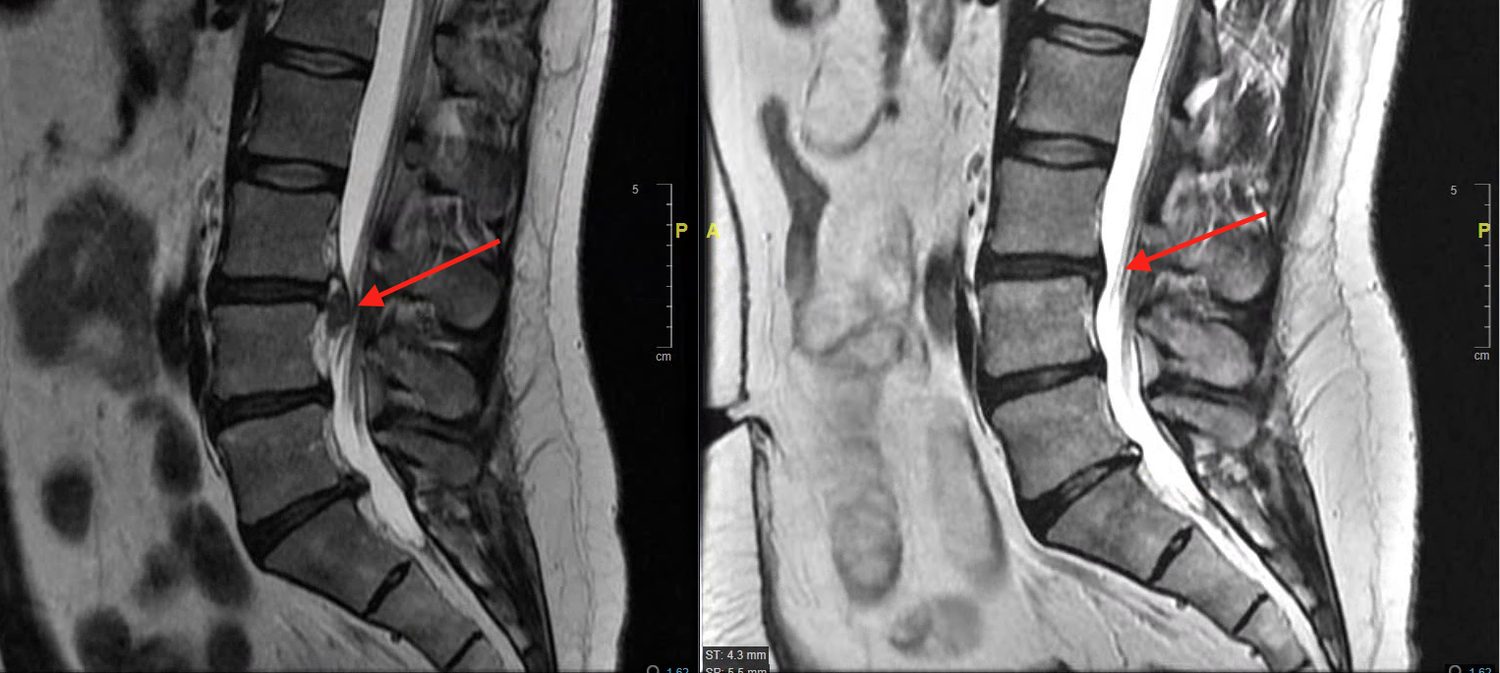
Before-and-after sagittal lumbar MRI scans shown side by side, with the disc visibly reduced in the second scan.
Before and after, side-on. Imaging is how disc change is measured in the studies on this page — and how your own progress gets shown to you rather than described to you.
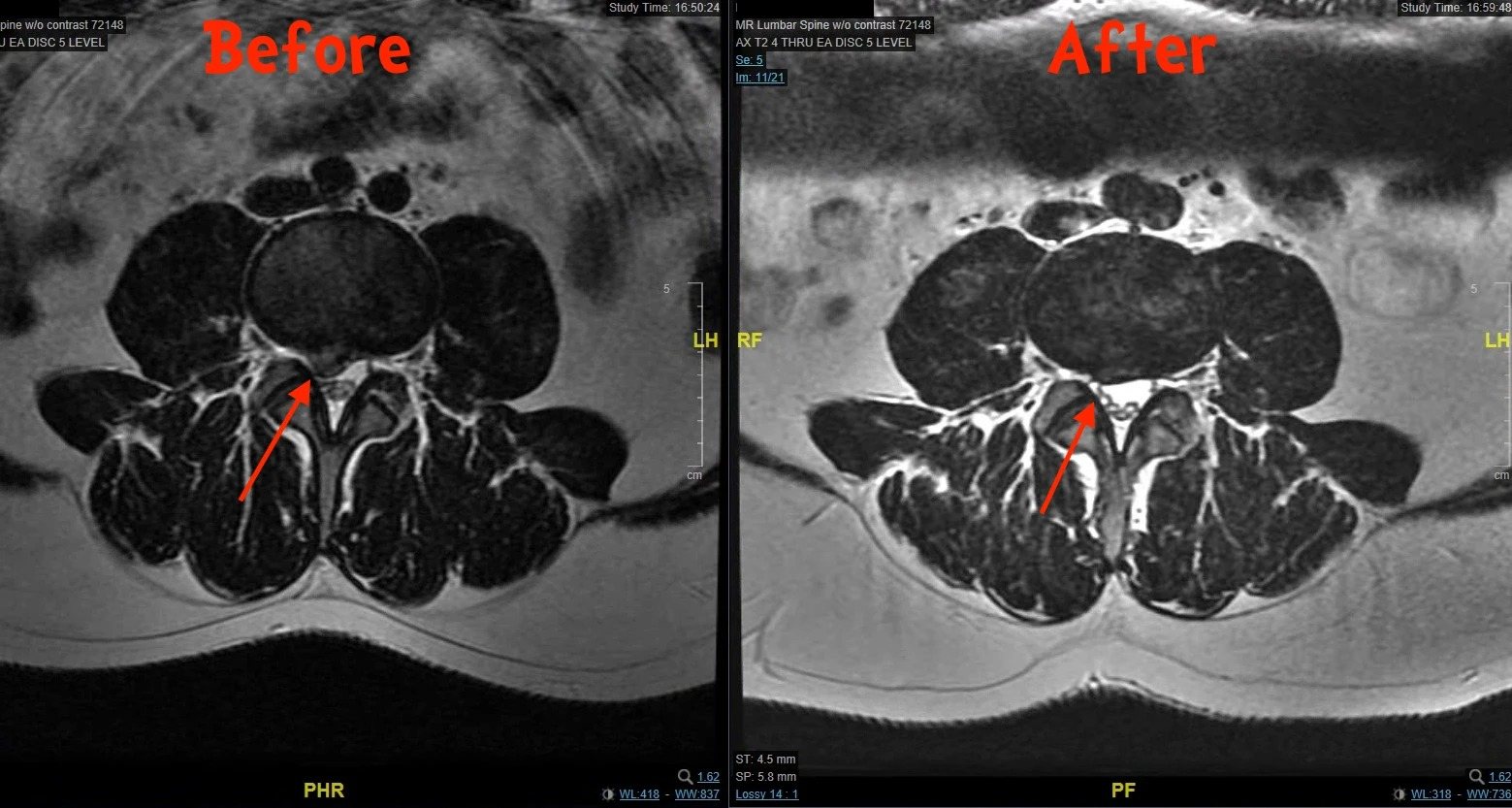
Before-and-after axial lumbar MRI scans of the same patient, seen from above, with a red arrow marking the same spot on each.
The same disc from above — the arrow marks the same spot on both scans, before and after a course on the DRX9000.

Who you'll see

Your care team

We work as a team. Dr. Barton and Dr. Huffman have practiced side by side for more than 18 years, and your care is a team effort from your first visit.

Dr. Kevin S. Barton, D.C.

Kevin S. Barton, D.C.

Chiropractor · In practice since 2003

Dr. Barton has been in practice since 2003 and has used the DRX9000 since 2005, with more than 2,000 patients treated on it. He's the author of the treatment philosophy here: find the source of the pain and treat it there, without surgery and without narcotics. He completed advanced scrambler therapy training in Rome with Dr. Giuseppe Marineo, the inventor of the treatment.

In 2025 he went through the DRX9000 program himself, for one of the worst herniated discs he'd seen in his career, and filmed the whole course of treatment, MRIs included. Watch his nine-part series.

Dr. Joshua C. Huffman, D.C.

Joshua C. Huffman, D.C.

Chiropractor · In practice since 2007

Dr. Huffman earned his Doctor of Chiropractic degree from Texas Chiropractic College in Pasadena, Texas, and completed his internship at Moody Health Center, with a rotation at the Michael E. DeBakey VA Medical Center in Houston. He has advanced training in myofascial release technique and is certified as a designated doctor for the State of Texas.

A Texas native, he was born and raised in Matagorda County. When he isn't getting patients well, he's hunting, fishing, kayaking and hiking with his wife, Kendra, and their two children, Titus and Alley.

How the program runs

Decompression and strengthening, together

Getting out of pain is one half of the job. If the reason your back failed was a margin problem, then ending the program with the same margin you started with just resets the clock.

So the rebuild runs alongside decompression: progressive core strengthening and therapy, restoring the movement patterns that pain quietly changed. When you hurt, you move differently — you brace, you guard, you stop using a hip properly — and those compensations outlive the pain and help bring it back.

We re-examine along the way rather than at the end, so the plan follows your spine instead of a calendar. And the program has a defined finish.

After it ends, periodic maintenance treatments matter — taking the pressure off your spine from time to time, the way you'd get your teeth cleaned. Discs feed by exactly that pressure exchange, and ordinary life never stops loading them. We'll recommend the schedule that fits your spine, plainly, because it protects the result. You leave with a stronger back than the one that failed — and you know exactly what to do if it complains again.

The goal isn't just getting you out of pain. It's rebuilding your margin, so ordinary life stops being a risk.
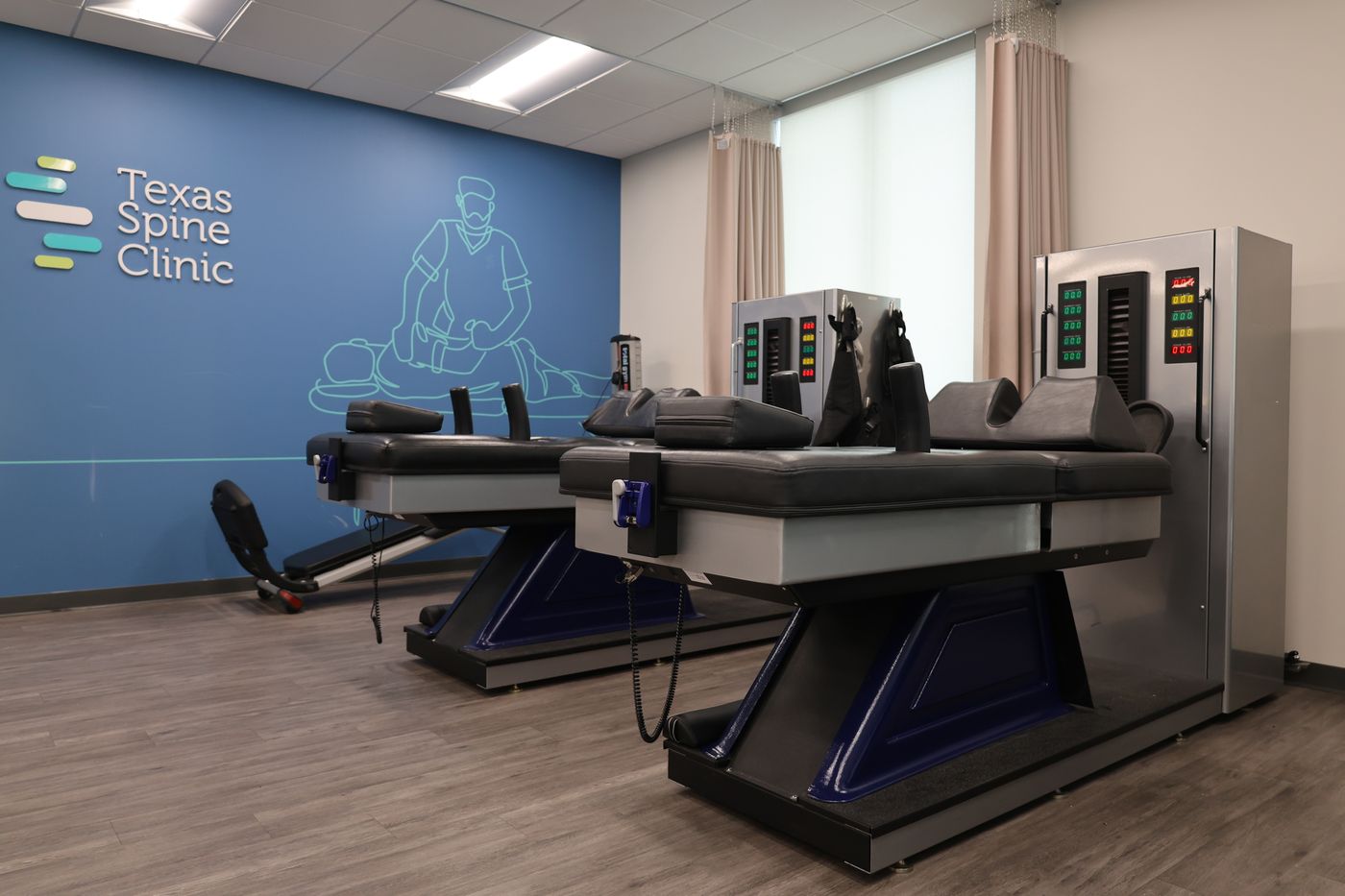
DRX9000 spinal decompression tables in the Texas Spine Clinic treatment room, in front of the clinic's logo wall.
The DRX9000 room. Decompression happens here, with progressive core strengthening, re-exams along the way, and a defined finish.

Patients

Patient stories

4.6 out of 5 · 112 reviews on Google
“He has always been straight, understanding, seeking to evaluate before moving to the next therapy or referral outside his scope… We continue to recommend him to others.”
Liz Gutiérrez Manley · Posted on Google

Reviews quoted verbatim from our public Google profile.

Every patient's story is their own. Results vary. These are real Texas Spine Clinic patients, sharing their experiences with their permission — watch them tell it in their own words.

Questions patients actually ask

Before you call

How do I know which of those patterns is mine?

Most people can name theirs from the descriptions above, because you've been running the experiment for months. The two clues that matter most: does sitting or standing make it worse, and does anything happen below your knee? Those two answers narrow it enormously. An exam confirms it — we put you through the specific positions that make each pattern show its hand. And no, you don't need a diagnosis before you come in. Most people who call us have a symptom, not a diagnosis. Sorting that out is what the consultation is for.

How long should I wait before doing something?

If it's new, has no leg symptoms and is trending better, waiting a few weeks is reasonable — keep moving while you do. Stop waiting if you're six weeks in without clear improvement, if pain is running below your knee, if there's any numbness or weakness, or if you're giving up sleep, work or driving to accommodate it.

Is my back pain from a bulging disc? Everybody says it is.

Maybe, and maybe not. Bulges are extremely common on scans of people with no pain at all, especially past 40. What makes a bulge the culprit is whether its position matches your symptoms — that's why we compare imaging against the exam instead of treating the report.

Do you treat everyone who comes in?

No, and that's the point. Some people leave with a referral, some with a plan that doesn't involve our equipment at all, some with an instruction to see a surgeon. The exam and your imaging decide.

Does insurance cover this?

If chiropractic care is all you need, most insurance plans cover it, and it's among the more affordable treatment there is for a back.

Decompression is the exception. The decompression program isn't a covered benefit under any plan. If you carry a commercial health plan, we can usually generate an insurance credit through it, which we apply against your cost. How big that credit is depends on your specific benefits. So expect an out-of-pocket investment, and expect your exact number in writing before you commit to anything. We verify your benefits for you at no charge. Full breakdown on the Cost & Insurance page.

Isn't surgery covered, though?

Covered doesn't mean free. A procedure your plan pays for can still run you to your deductible, your coinsurance and your annual limit, and cost you weeks off work on top of it. The question worth asking about any option is what it actually costs you — and what you get for it. This one gets you no incision, no hardware, no narcotics, no downtime, and every option you have today still open afterward.

What if it doesn't work?

We check whether your spine is responding around the second week, at eight to ten sessions. If it isn't, we tell you then and stop. Texas law requires chiropractic care to be prorated, so you pay for treatment received and not a session more — and if you paid up front, the unused portion comes back to you.

Can I just do this at home with an inversion table?

You can try, and some people get relief from hanging, inversion or floating in a pool — anything that unloads the spine for a while helps a little. The difference is control and measurement: a clinical system applies a known force to a known level at a known angle, ramped so your muscles don't fight it, adjusted as you respond. An inversion table applies your own bodyweight to your whole spine and tells you nothing. If a home approach is genuinely helping you, keep doing it.

I've been to a chiropractor before and it didn't hold. Why would this be different?

Because it's a different job. An adjustment restores motion to a locked joint. It doesn't change the load on a flattened disc, which is usually why the joint keeps locking. If your pattern is disc-driven, treating the disc is the missing step — and if it isn't disc-driven, we'll tell you that too.

Not ready to call?

Take the two-minute candidacy check instead.

A short set of questions about how your pain behaves — where it goes, what makes it worse, what you've already tried. At the end you'll get a straight read on whether decompression is even the right conversation for your pattern, including "probably not, here's what is."

Footnotes

  1. Ramos & Martin, J Neurosurgery 1994 — intradiscal pressure during vertebral axial decompression.
  2. Apfel et al., BMC Musculoskeletal Disorders 2010 — disc height and pain through a six-week DRX9000 program.
  3. Choi et al., Int J Clinical Practice 2022 — the only true sham-controlled randomised trial, N=60; herniation index −27.6% vs −7.1%; no between-group difference in low-back-pain scores.
  4. Schueren et al., Military Medicine 2025 — N=267 across 7 clinics, pain 6.9→2.5; its authors call for randomised trials.
  5. El-Zayat et al., Egyptian Rheumatology & Rehabilitation 2019 — N=73, decompression vs. physiotherapy with traction.

Full citations on the evidence page.

The ask

Find out which one you have.

Call (210) 741-9166 or send the form. The consultation is $49 — and it isn't a sales pitch. Here's exactly what happens next:

  1. A conversation, not a sales pitch. We ask how your pain behaves — sitting, standing, walking, sleeping — and what you've already been through. Bring your list. Bring the résumé of failures. It's diagnostic.
  2. An examination, and your imaging reviewed with you. Bring the MRI or CT if you have one, on a disc or in a portal. We'll put it on the screen and go through the pictures with you — not just the report. If you don't have imaging and your case genuinely needs it, we'll help you sort that out.
  3. A straight answer. One of three: you're a good candidate and here's what the program involves; you're not a candidate and here's who you should see; or here's a simpler thing to try first. You'll get a real recommendation — and if the answer is yes, your treatment starts that same visit.
  4. If the answer is yes, your first treatment is included. The $49 covers the examination, the imaging review and your first session on the table. If the answer is no, it's no.

3212 Napier Park, San Antonio, TX 78231.

Book your $49 consultation

No referral needed. Same-day appointments available.

Calendar not showing? Open it in a new tab.
Rather book by phone? Call (210) 741-9166.

P.S. The thing that quietly gets worse isn't usually the pain. It's the list of things you no longer do: the chair you avoid, the walk you shortened, the trip you didn't book, the way you now lower yourself onto the bed to put on your socks. Every one of those was a small negotiation, and you barely noticed making it. That list is reversible, and it's a much better measure of progress than a pain score — patients here mark their recovery in verbs. Walking the dog around the whole block. Sitting through a movie on the actual couch. Sleeping until the alarm instead of until 4am. One consultation tells you which pattern you have and whether we're the right people for it. If we're not, we'll tell you who is.