Chiropractor
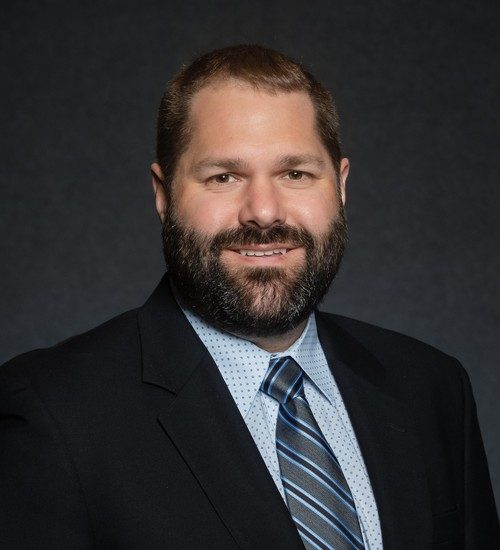
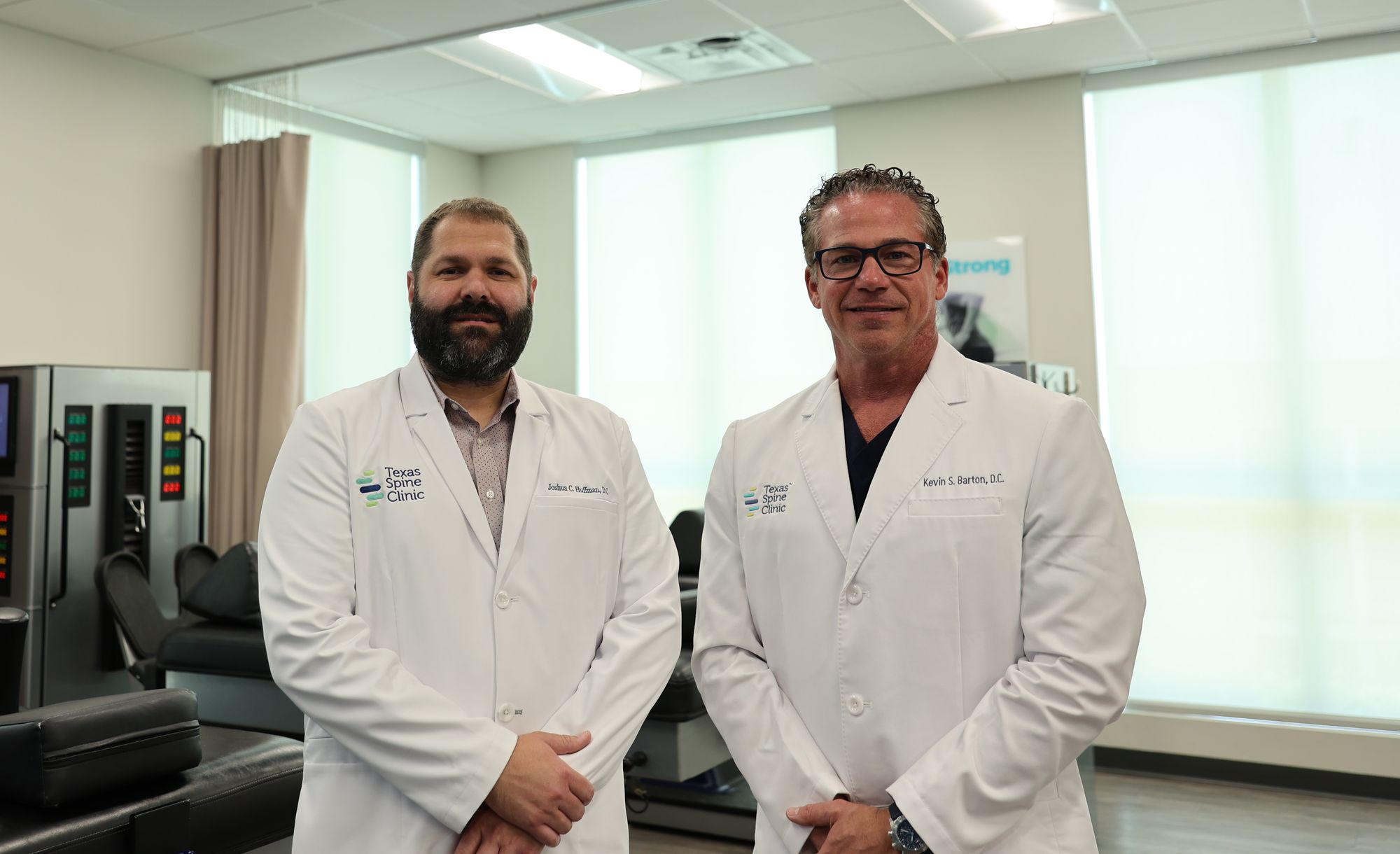
Kevin S. Barton, D.C.
In practice since 2003, on the DRX9000 since 2005, and the author of the treatment philosophy here. Advanced scrambler-trained with Dr. Marineo in Rome; performs the scrambler treatments.
About Texas Spine Clinic · Our approach
No referral needed. Every new patient can be seen the same day.
Texas Spine Clinic puts chiropractors, medical doctors and a nurse practitioner under one roof in San Antonio. You get one exam, one plan and one team. And the plan starts with the care you came looking for: no surgery, no narcotics, nothing cut and nothing you can't take back.
If this sounds familiar
You've had the scan, the pills, and the exercises. Maybe the shot that worked for a few weeks. Someone has said the words back surgery — or told you you're “not bad enough yet” and sent you home to wait.
You're still hurting. You still don't know exactly what's wrong. And you've started searching at night for something that fixes the problem instead of covering it up.
That's the patient this practice was built for. Someone who wants to know what is truly causing the pain — and wants it treated at its source.
Why we're built this way
Most spine and nerve problems have a mechanical side and a medical side. Here, both live in the same building.
The mechanical lane
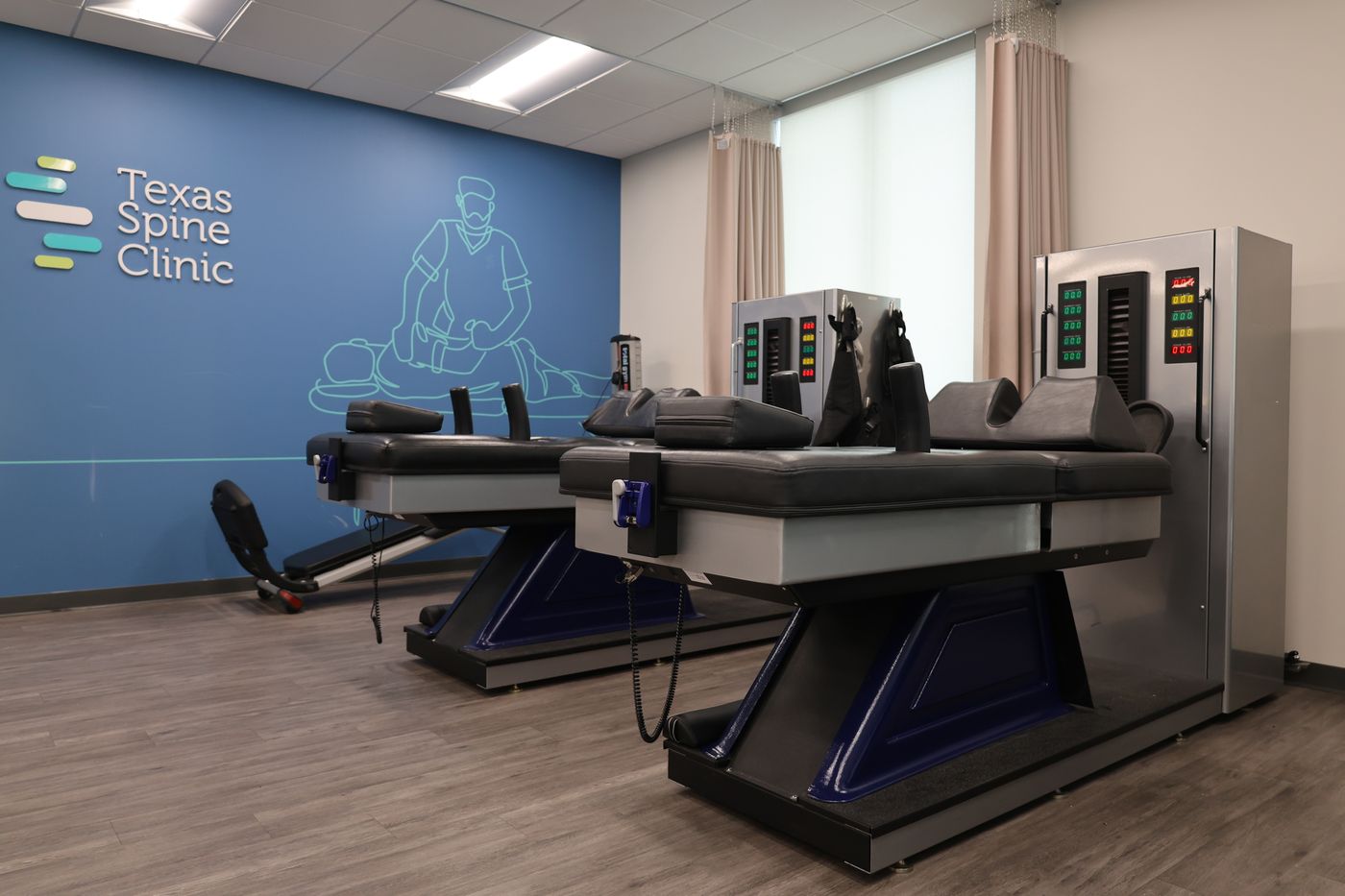
Chiropractic care, DRX9000 spinal decompression, scrambler therapy for nerve pain, therapies like laser, ultrasound and muscle stimulation, and the strengthening rehab that holds a result in place. All of it non-surgical. No narcotics.
The medical lane
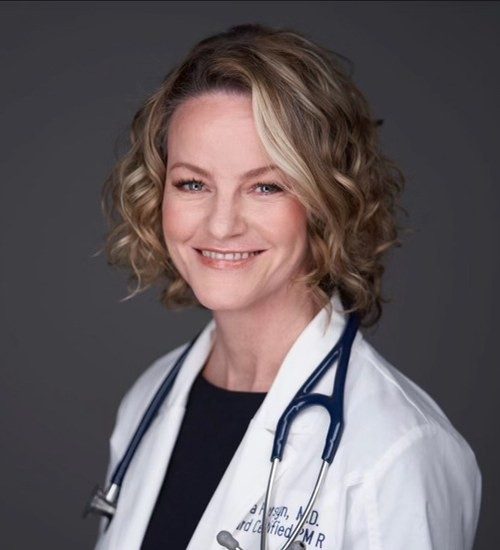
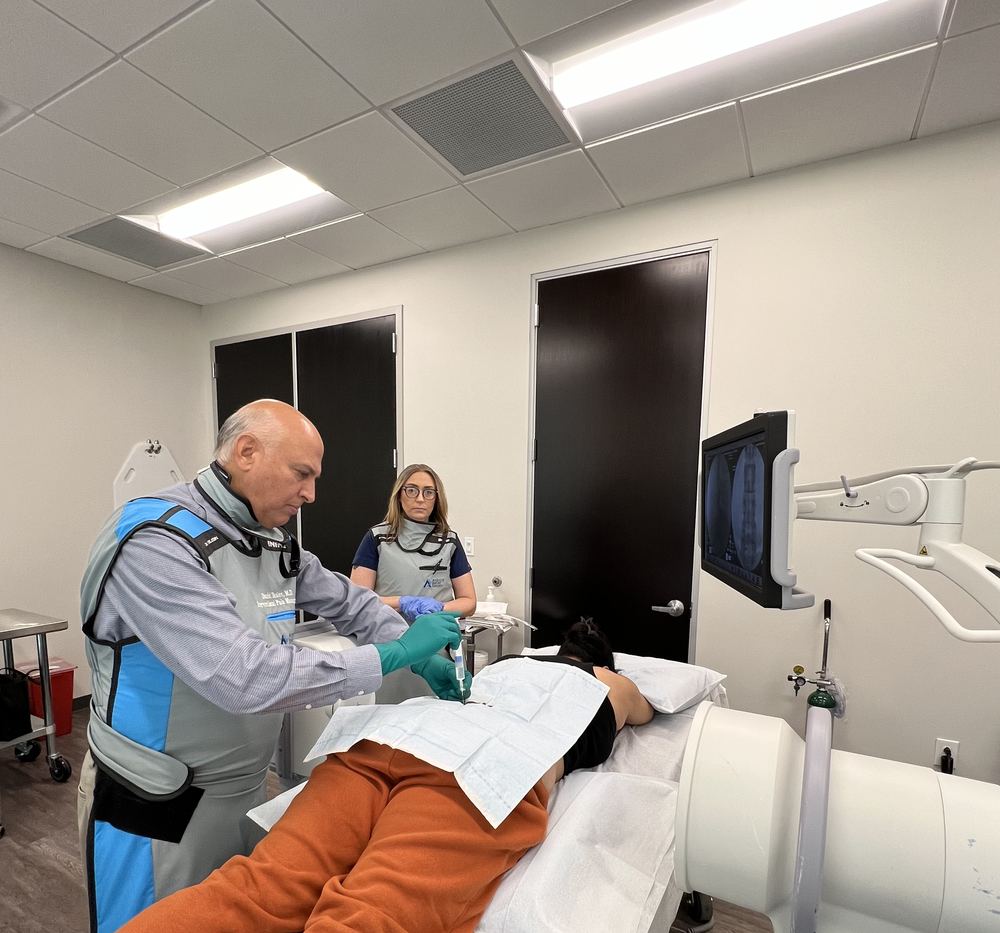
Interventional pain procedures are performed here by Praful C. Singh, M.D., an anesthesiologist fellowship-trained in pain management, and Lisa D. Persyn, M.D., board certified in physical medicine and rehabilitation — when a case truly calls for one. Dr. Persyn also medically supervises our scrambler therapy program.
Where the approach comes from
More than 20 years ago, Dr. Barton's brother, Robert A. Barton, D.C., herniated a disc. Robert has been a chiropractor in the Houston area for nearly 30 years, and he treated it with spinal decompression. Watching that is why Dr. Kevin Barton brought the DRX9000 to San Antonio in 2005.
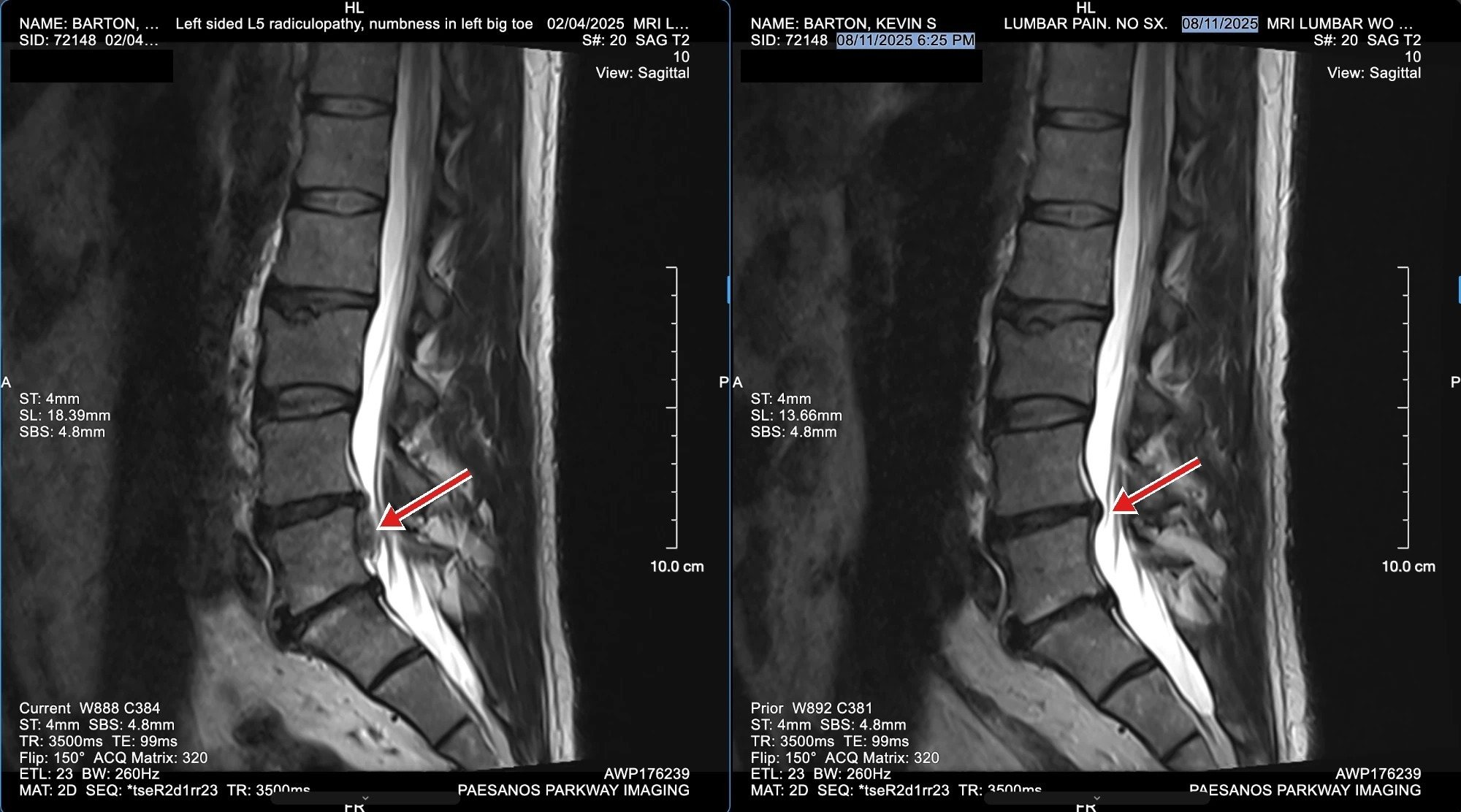
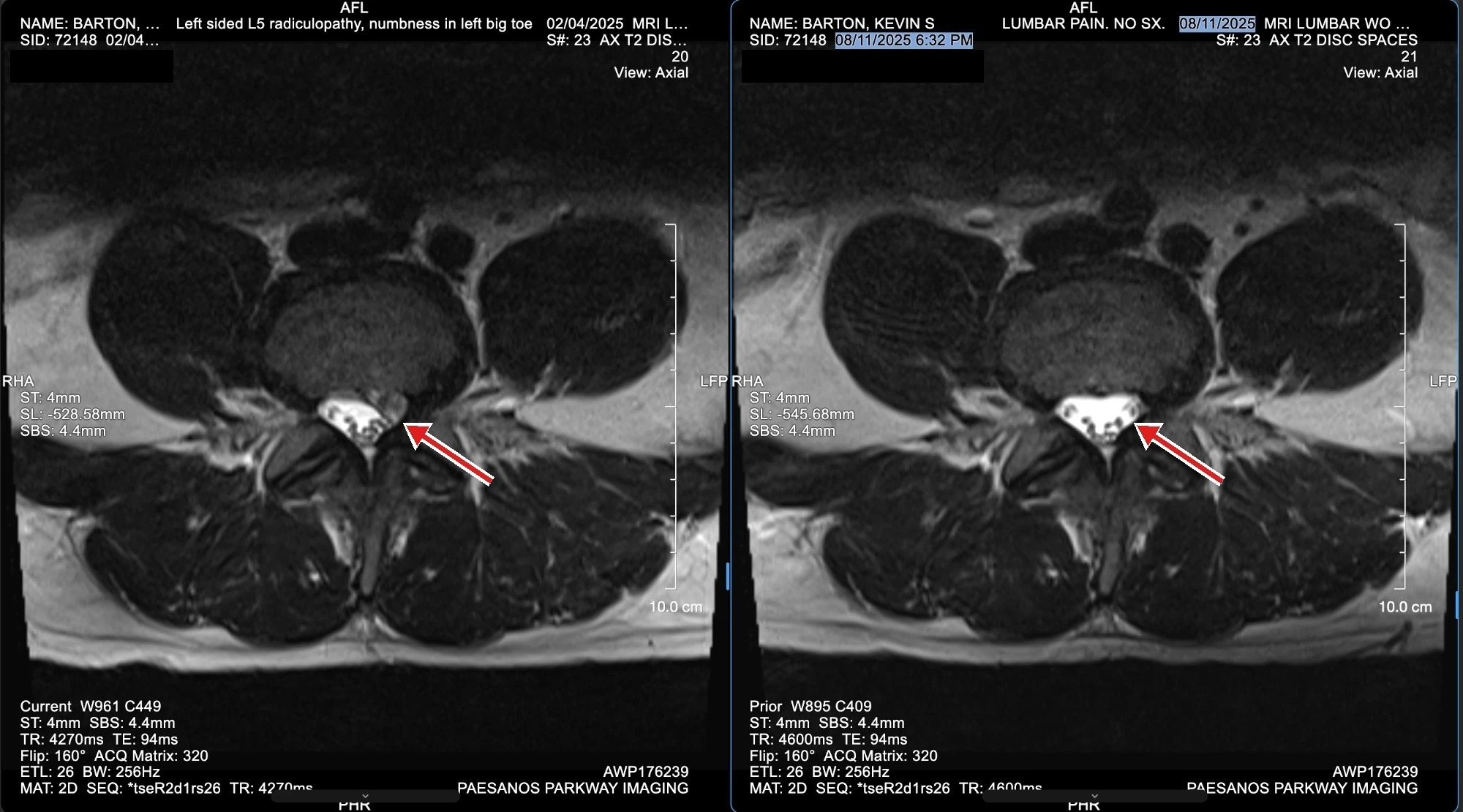
In 2025, after more than 2,000 patients on that machine, his own L4-L5 disc ruptured — a 15 mm extrusion crushing the nerve to his left leg. His big toe went dead. He couldn't walk on his heel. In his words, it was one of the worst cases he'd seen in over 20 years.
He was a candidate for surgery. He chose the same care he offers you. In under two weeks he had control of his big toe back. By three weeks he could walk on his heel. His follow-up MRI showed the extrusion gone.
He filmed all of it — the MRI, the exam, the sessions and the after images — so you can watch exactly what happened. His case is his own. Yours gets its own exam, its own imaging review and its own plan. But this is why the approach here starts where it does.
Six standards
Nothing cut, nothing fused, nothing implanted. No narcotics, and nothing to become dependent on. No downtime — you work and drive through your care. And nothing we do here closes a door you might want to open later.
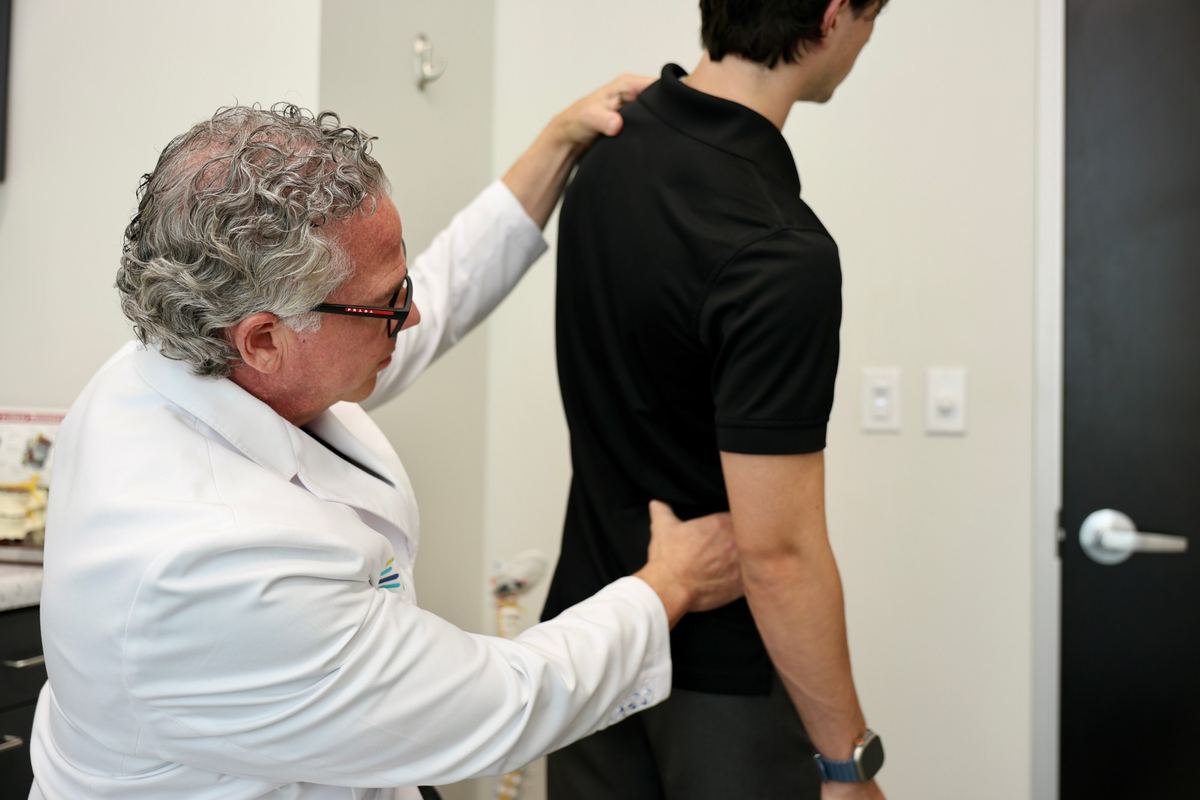
Every plan starts with your history and an orthopedic and neurological exam, plus imaging when your case needs it. We screen the way a spine surgeon screens: for decompression, that means an MRI or CT — an X-ray alone never qualifies anyone, and about one in five people who ask about the program are told no.
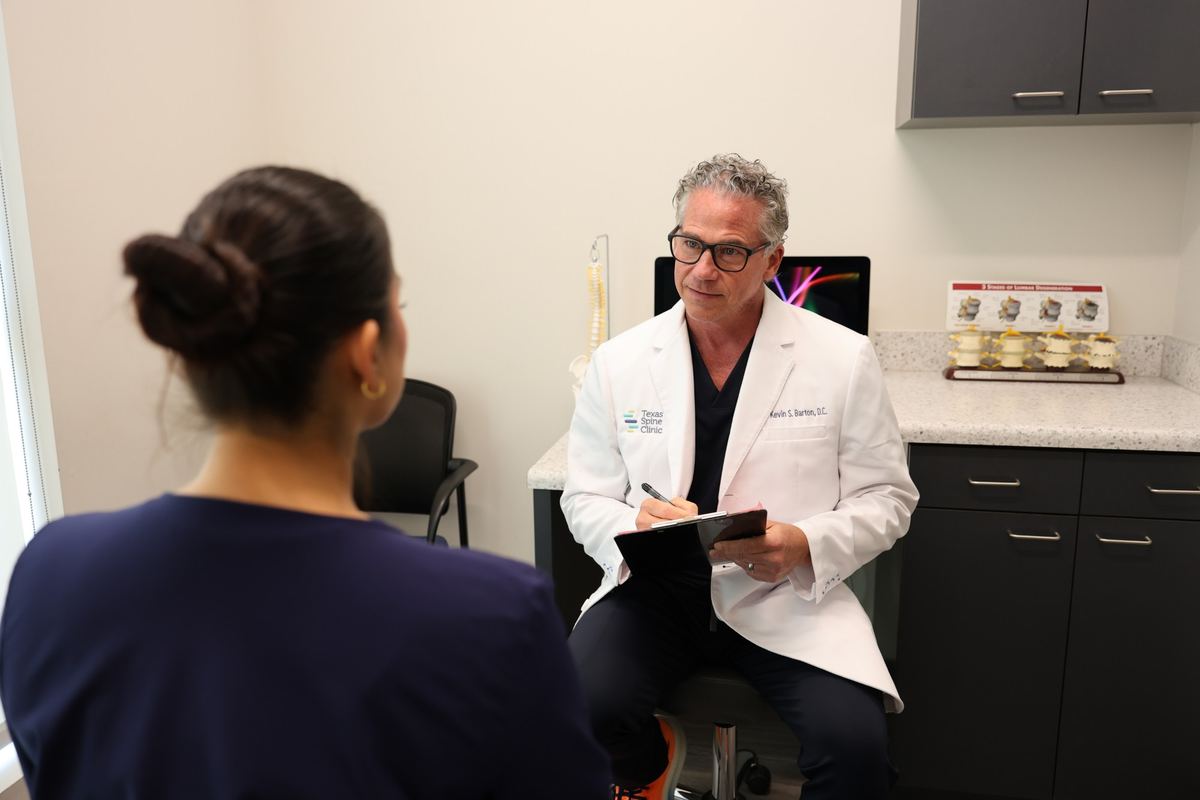
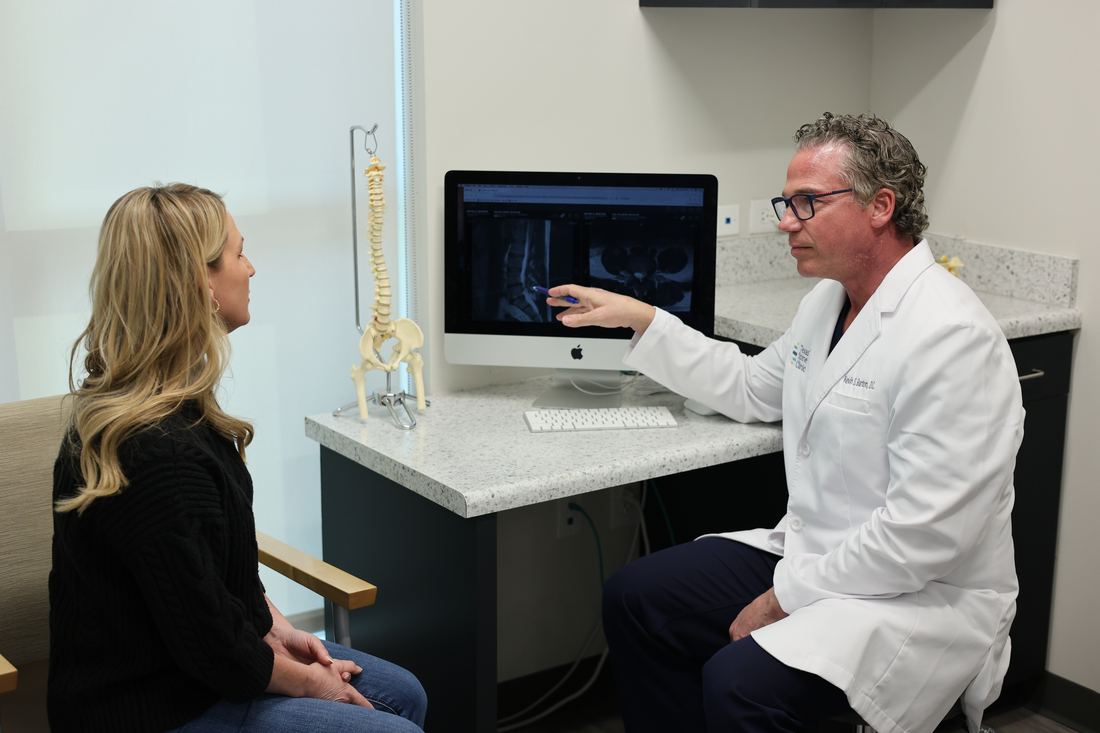
Patients tell us all the time that nobody ever showed them the pictures. Here, your X-rays or MRI go on the screen and we walk you through them — what's pressing on what, why it hurts the way it does, and exactly how we plan to fix it.
Your care is fitted to you and adjusted as you respond. Chiropractic care built on 23 years in practice. Decompression protocols set by hand — angle, force and level — by a team with 21 years on the DRX9000. Scrambler therapy run by Dr. Barton, who trained in Rome with Dr. Giuseppe Marineo, the inventor of the treatment.
We measure it, whatever treatment you're having: how bad the pain is, how often it comes, and what you can do each day. You fill out the same standard questionnaires at your first exam and at every follow-up, so the change is on paper, not just a feeling. And we listen to you at every visit.
Feeling better is half the job. Your plan includes the strengthening that helps a result hold once care ends — for decompression, a full core-strengthening program. Afterward, occasional maintenance visits keep the spine moving well — the way regular cleanings protect your teeth.
“I can't tell you how many patients I've turned away from this treatment that were begging for me to take their money.”
Who this care is for
Your exam picks the treatment, not the other way around. Neck pain, back pain, a stiff mid-back or an SI joint that won't settle usually starts with chiropractic care. Burning, electric nerve pain from CRPS, chemotherapy, shingles or an amputation may be a case for scrambler therapy. An accident injury gets all of it under one roof, and our medical providers see you when you need medication or a procedure.
For decompression, the best candidates have a disc problem their imaging and exam agree on: herniated or bulging discs, degenerative disc disease, facet syndrome, sciatica, and mild-to-moderate stenosis. Had a discectomy or laminectomy without hardware? We treat those patients all the time.
What we treat
Herniated and bulging discs, sciatica, degenerative disc disease, stenosis, neck pain. A 20–25 session program over 6–8 weeks, plus core strengthening.
Start with the $49 DRX9000 consultation →CRPS, chemo-induced neuropathy, shingles pain, phantom limb pain. Small electrodes on healthy skin send a non-painful message up the same nerves your pain has been using, retraining the signal instead of masking it. No drugs, no needles, FDA-cleared.
$19 consultation · $99 first session, credited to your course →Neck, mid-back, low back and SI joints. Usually 6–12 visits, sometimes just one.
No referral needed →Chiropractic, imaging, decompression and pain management in one building. Letters of protection accepted.
Nothing out of pocket at your first visit →The people behind the plan
Chiropractor
In practice since 2003, on the DRX9000 since 2005, and the author of the treatment philosophy here. Advanced scrambler-trained with Dr. Marineo in Rome; performs the scrambler treatments.
Plus the therapists who run the core strengthening in every program.
In our patients' words
★★★★★ 4.6 out of 5 · 112 reviews on Google
“Although my daughter had two herniated discs…, he identified an issue with her lower SI joints and proposed a targeted treatment plan… We saw results that same day… This experience gave us our daughter—and her life—back!”
“Dr. [Huffman] and his Physical Therapists have been dedicated in healing my back and sciatica problems… They communicate well and I can't say enough how they have helped my healing process.”
Questions people ask first
Both. Chiropractors, board-certified medical doctors and a nurse practitioner work here together. Most care is chiropractic and decompression; the medical side is on hand in the same building.
No. No referral is needed for your initial visit. If your care later requires one, we’ll get it for you.
Yes. Interventional pain procedures are performed by Praful C. Singh, M.D., and Lisa D. Persyn, M.D. Your exam decides whether your case calls for one. Most of our patients' care is non-surgical and narcotic-free.
No. An adjustment is never required for anything we do here. We have plenty of other ways to treat you — decompression, laser, ultrasound, muscle stimulation, heat, ice and guided exercise among them. When we do adjust, it's only with your consent.
It depends on the treatment. We bill Medicare and most plans for chiropractic. The decompression program isn't a covered benefit on any plan, but with commercial insurance we can usually generate a credit, which we apply against your cost. Scrambler therapy is an out-of-pocket investment. Accident care is billed to the coverage responsible.
We verify your benefits at no charge, and we'll tell you what your investment is, in writing, before you commit to anything. Programs are prorated, so every dollar you invest goes to care you actually receive.
Whatever treatment you're having, here's how we know you're responding:
And we listen, at every visit. What you tell us steers your care. If progress stalls, you'll know and we'll know — and we'll act on it together.
What happens next
No referral needed. Same-day appointments available.
Calendar not showing? Open it in a new tab.
Rather book by phone? Call (210) 741-9166.
P.S. You didn't come this far to hear “live with it” again. One visit gets you an exam that looks for the cause, a clear picture of what you're dealing with, and a straight answer about how to fix it — without surgery and without living on pills.