
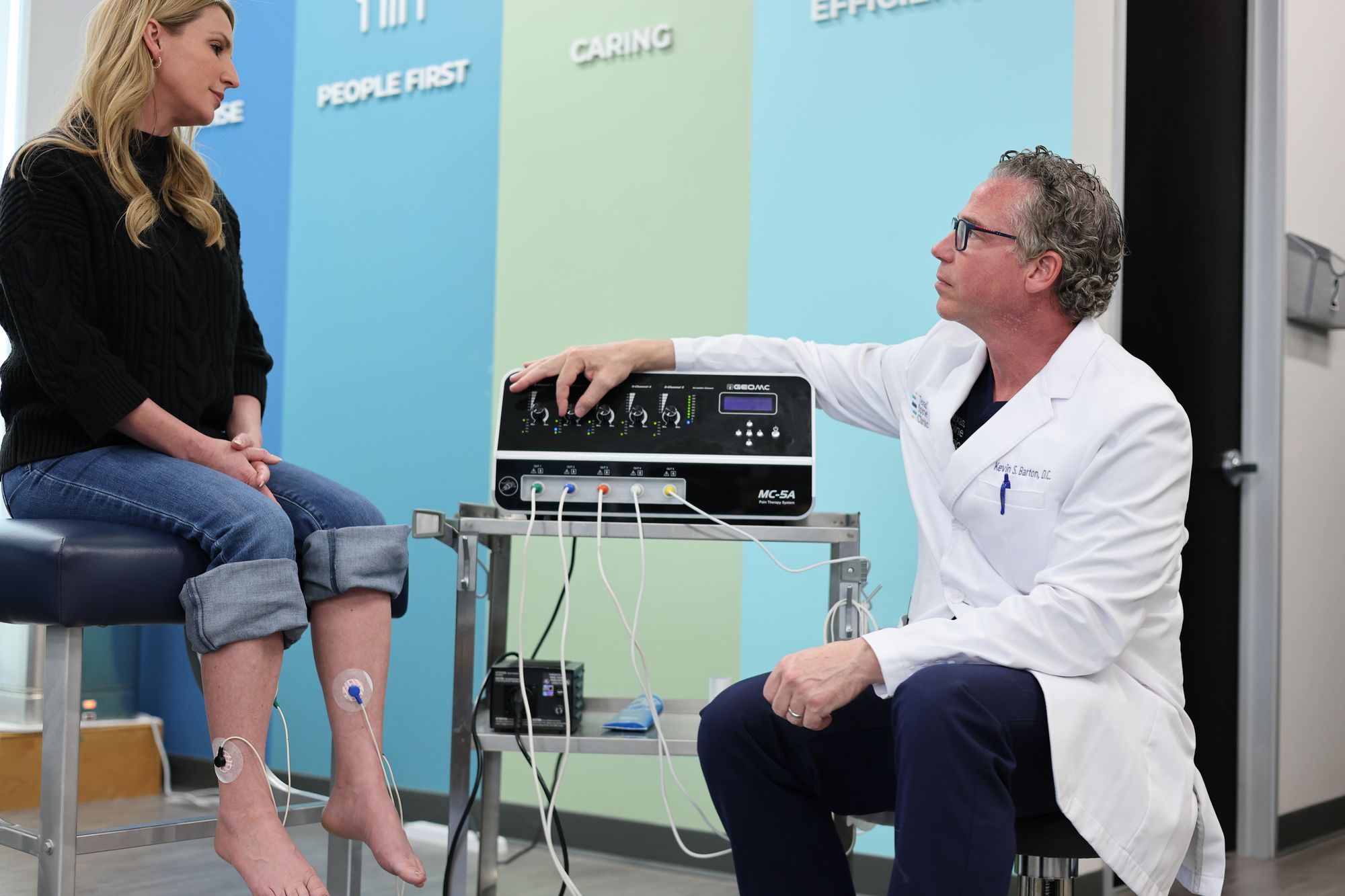
For people with neuropathy who were told nothing more can be done
You were told there's no cause. That isn't the same as no answer.A $99 session shows whether your nerves respond — before you commit to anything.
Scrambler therapy is an FDA-cleared, non-drug treatment for nerve pain. Small electrodes go on healthy skin near the pain, and the machine sends a no-pain message up the same nerves that have been carrying the burning. No needles. No medication. Nothing implanted. Nothing to recover from. It's here in San Antonio, and you can find out early whether your own nerves answer it.
It started in your toes. A tingle, maybe. A patch that felt like you were wearing a sock that wasn't there.
Then it climbed. The balls of your feet. The arches. Now it's at your ankles, maybe your shins — and some days your fingertips have started to join in. Doctors call that pattern "stocking and glove." You call it your feet being on fire.
You know the words, because you've tried all of them on people who didn't get it. Burning. Electric. Pins and needles. Like walking on gravel. Like your feet should come with a fire warning label.
You have an arrangement with the night. Feet out from under the covers, because the sheet is too heavy. A pillow under your calves so your heels don't touch the bed. And still the 3am jolt that wakes you up and won't let you back to sleep.
You watch your feet everywhere you walk now. You've dropped a mug or two. You've stopped saying yes to things — the walk to the restaurant, the second errand in one day, the trip that involves an airport.
And you did everything right. You saw your doctor. You saw a neurologist. You let them run the nerve test up and down your legs. You gave the blood for the B12, the thyroid, the sugar. The report came back with two words: axonal polyneuropathy. Then a third one: idiopathic. Which, as far as you can tell, means we don't know.
So you got a prescription. Gabapentin, and the fog. Lyrica, and the weight. Maybe Cymbalta. The dose went up, and the pain mostly didn't come down. You have a cabinet of supplements that did nothing, and a closet of shoes you can't wear.
And somewhere along the way, someone said the sentence: there's nothing more we can do — you'll have to learn to live with it.
Here's what that sentence meant: we've run out of tools. It was true — about their toolbox. The work-up did its job. It looked for a cause that could be fixed, and it didn't find one. What it couldn't do was change the pain signal. And the tool that can was almost certainly never in the room: insurance rarely covers it, very few clinics own the machine, and it's still new to most doctors. That tool is what the rest of this page is about.
Your report, in plain words
What "axonal" and "idiopathic" actually mean
Your peripheral nerves are the wiring that runs from your spine out to your hands and feet. There are more than 100 known types of peripheral neuropathy.1 The longest wires — the ones that reach your toes — usually show it first. That's why it starts in the feet and climbs.
"Axonal" comes from your nerve test.
Each nerve is a long wire, called the axon, with a coating around it. "Axonal" means the wire is where the trouble shows up. It's a very common pattern in neuropathy that starts in the feet.
"Idiopathic" means the work-up didn't find a cause.
No diabetes. No B12 problem. No thyroid problem. Nothing in the blood that explains it. You aren't rare — doctors see a lot of it. It's a real diagnosis, reached after a real search.
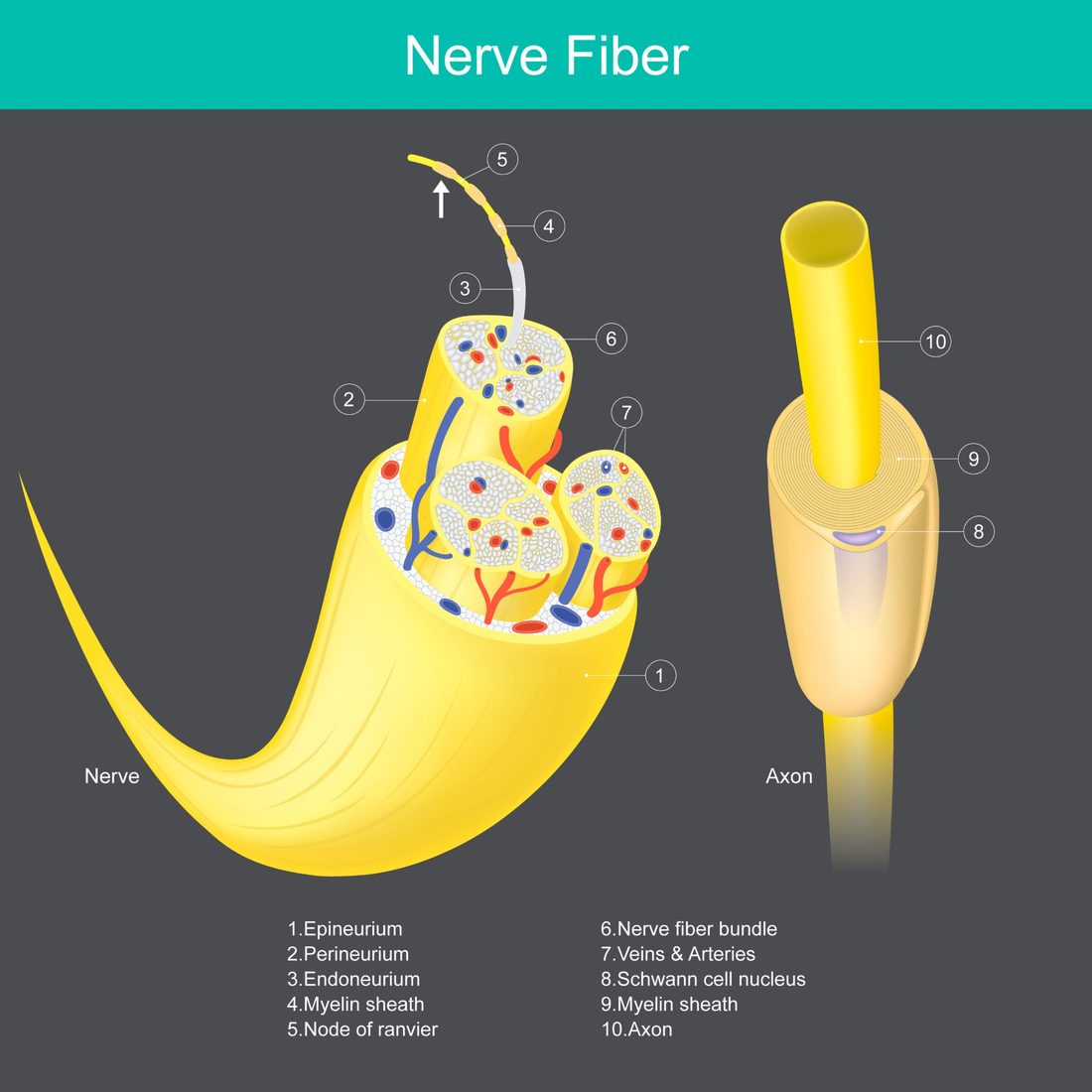
Here's what those two words don't tell you: how much it has to hurt. The damage and the pain are not the same thing. The pain is a signal — and in neuropathy, the signal gets stuck. The nerves keep firing. The spinal cord and brain keep listening. And the whole circuit gets better and better at sending a message that isn't warning you about anything anymore. Pain becomes the habit rather than the alarm.
That's why the pills underperform. Gabapentin turns the volume down. It doesn't change the message — so the dose climbs, and the fog climbs with it.
Find your kind of neuropathy
Know what started it? There's a page for you.
Each of these is nerve pain, and each one gets scrambler therapy set up for how it behaves. If no one ever found a cause — you're already in the right place. Keep reading.
Diabetes
Diabetic neuropathy
Burning feet, pins and needles, the jolts at night. Keep working on your sugar — let's work on the pain.
Read the diabetic neuropathy page →After cancer treatment
Neuropathy after chemo
You finished treatment. You rang the bell. Your hands and feet never came back.
Read the chemo neuropathy page →After shingles
Shingles nerve pain
The rash healed months ago. The burning never got the message.
Read the shingles pain page →After an injury or surgery
CRPS / RSD
A limb that can't stand a sheet or a breeze. We run a protocol built for it.
Read the CRPS page →After an amputation
Phantom limb pain
Pain in a limb that isn't there — and it's real pain, in a real nervous system.
Read the phantom limb page →No cause found
Idiopathic or axonal neuropathy
Tests done, cause unknown, pain still there. This page is yours — keep reading.
How the treatment works ↓The mechanism
How it works — in plain words
Scrambler therapy goes after the message, not the volume. In 2023 the New England Journal of Medicine published a review of it by physicians at Johns Hopkins and the Mayo Clinic.2
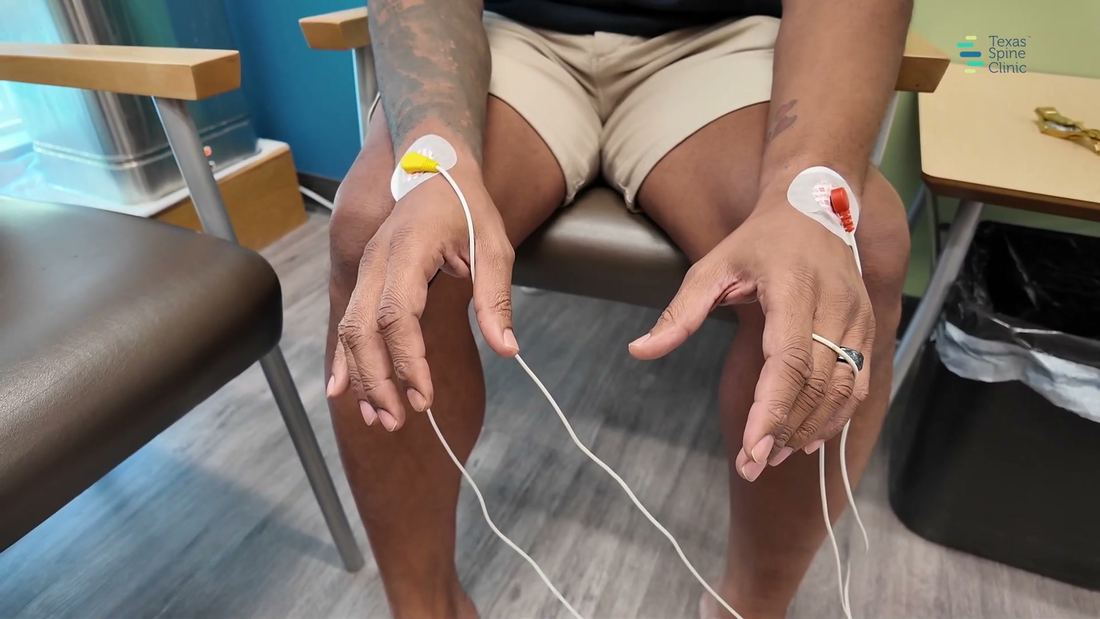
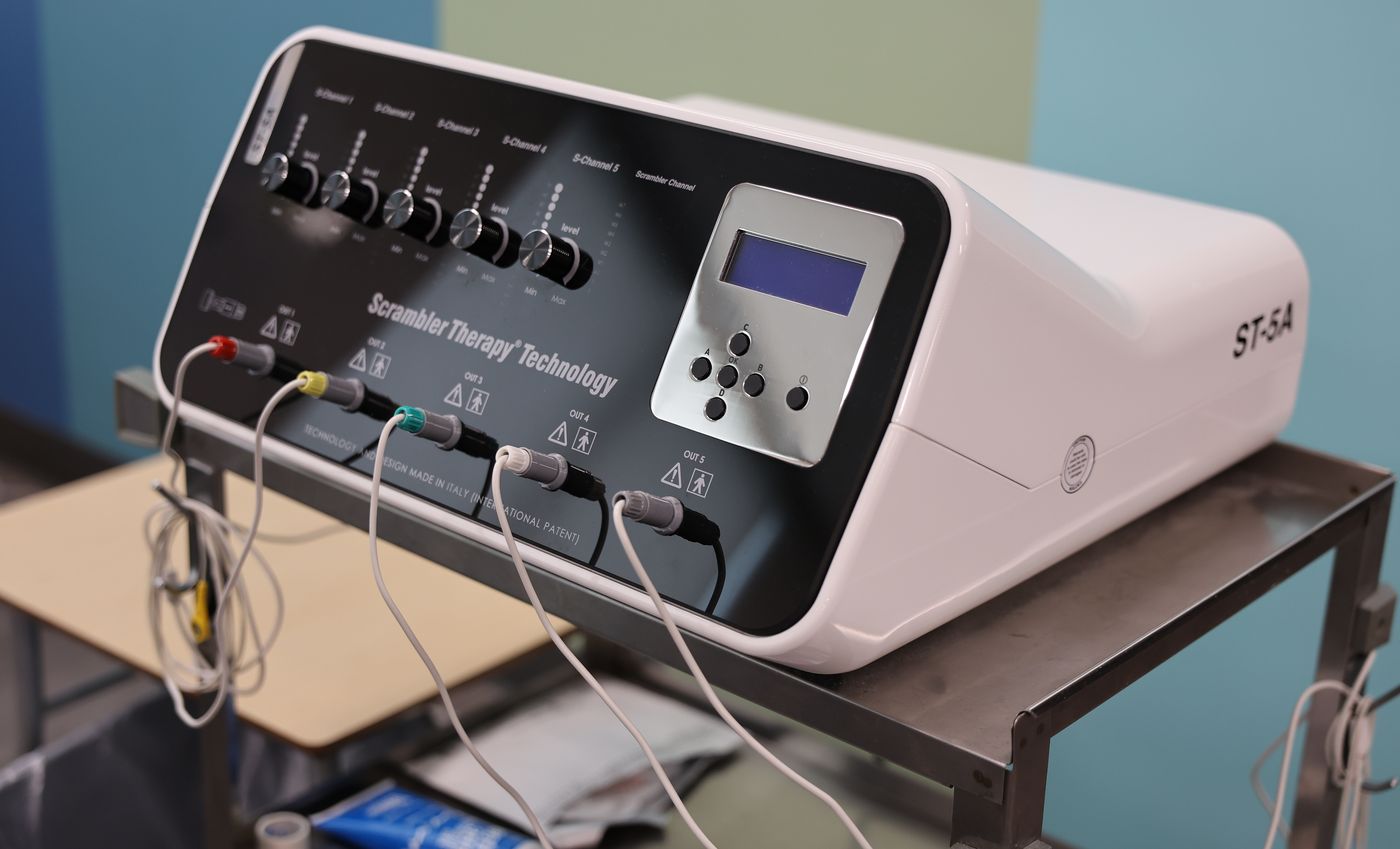
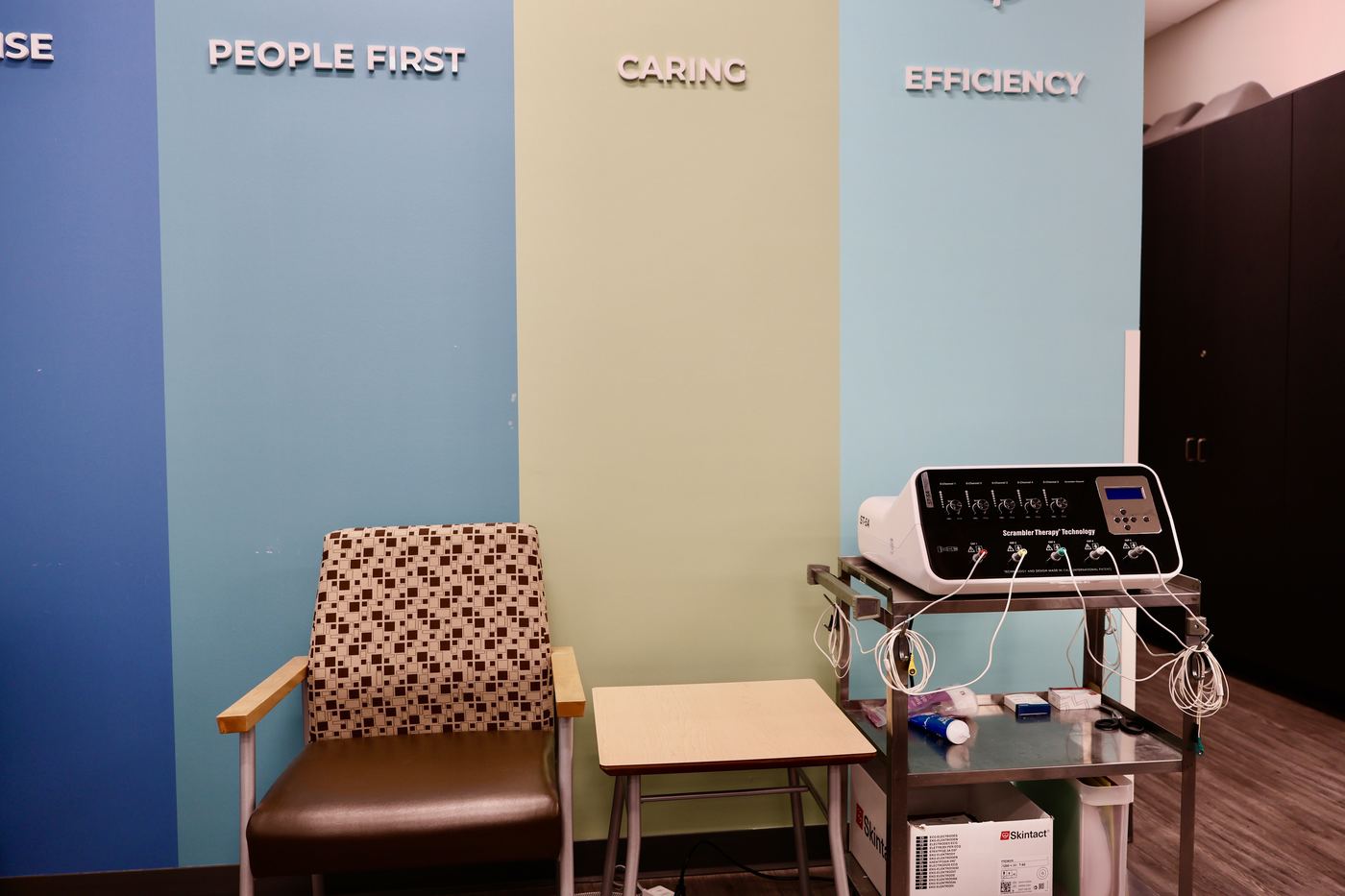
Small sticky electrodes — like the ones used for an EKG — go on healthy skin around the painful area, on the nerve pathways that feed it.3 Never on the raw spot. Never on skin that has gone numb. The whole idea depends on nerves that still carry a signal well.
Then the machine sends its own signal up those nerves. It isn't a buzz, and it isn't random. It builds sequences of waveforms, changing all the time, shaped to imitate the traffic a healthy nerve sends when nothing is wrong.3 Your nervous system gets a no-pain message on the same line that has been carrying pain — over and over, for about forty minutes.
While that's happening, most people feel their pain drop in the room. Then you go home, and the question becomes how long it holds. Over a course, that's the part that grows.
"Isn't this just a TENS unit?"
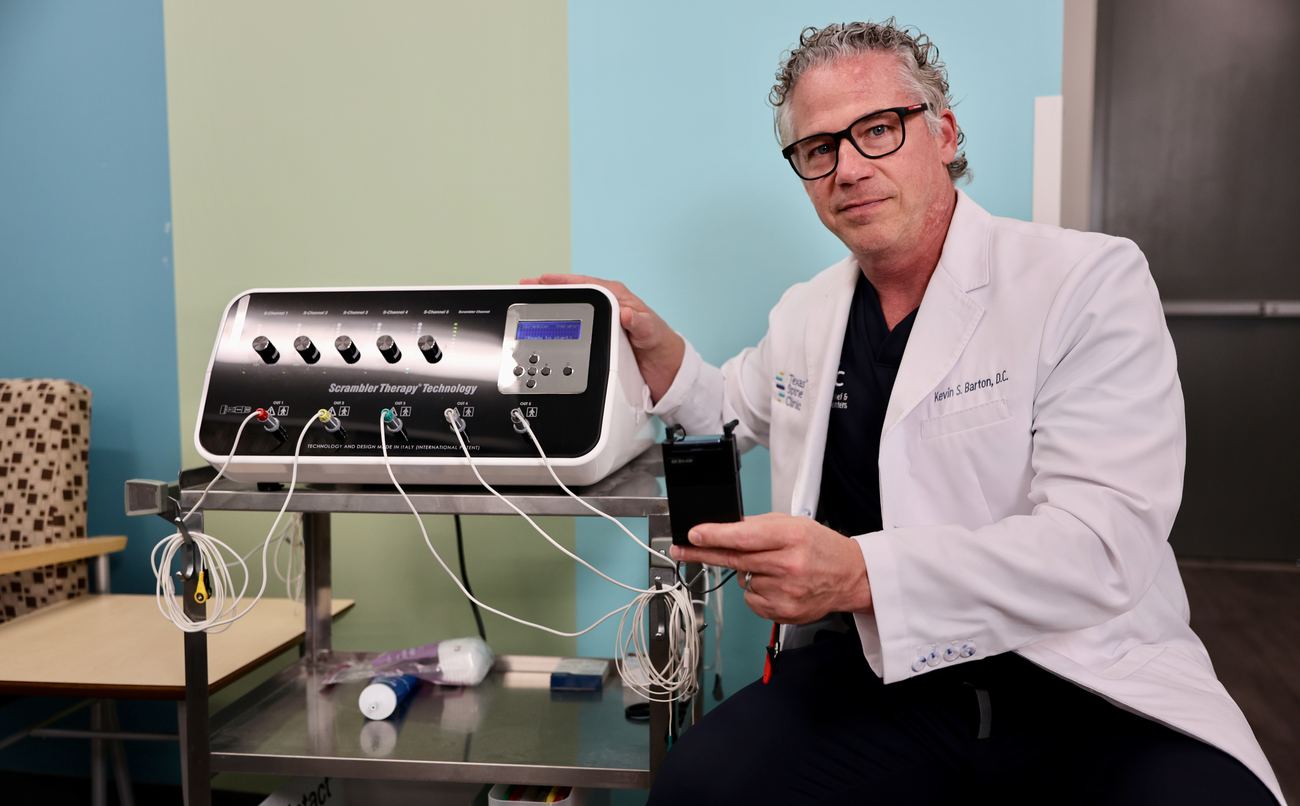
No. The same NEJM review is clear that scrambler therapy is not a kind of TENS.3 A TENS unit is made for you to adjust at home, and its relief is built to last while it's switched on. This machine's signal comes from the device's own program, and it's given as a course, aiming at relief that outlasts the session. It can only be run by physicians, or by trained personnel under a physician's supervision. If you tried a TENS unit and got nothing, that tells you nothing about this.
"What am I committing to on day one?"
A $19 consultation. Here's how we run it. You invest $19 in a consultation and $99 in a first full session before anyone talks to you about a course. The device is FDA-cleared, and the program is medically supervised by a physician. You see what your own nerves do with this first — then we talk about a course.
"Will it bring back feeling in my feet?"
It's built to treat pain. If the burning is what's running your life, that's exactly what we're after — and the first session tells you a lot about whether we'll get there.
Neuropathy in the feet and hands
How we set it up for your neuropathy
Placement is worked out for your pain, by hand.
Both feet, one foot, feet and hands — the pads go where your pattern of pain says they should, on healthy skin above the numb zone. If a placement isn't bringing the pain down, it comes off and goes somewhere else. In that session, not next week.
The target is zero.
The goal in every session is your pain at zero while you're in the chair — or as close as your body will go that day. When that isn't happening, it means we haven't found the right setup yet, so we keep working.
If your pain is stubborn, we add to it.
For nerve pain that doesn't answer the scrambler sessions alone, we bring in parts of the protocol we built for CRPS: gentle desensitizing work while the pain is down, and changing the approach from session to session. It's part of the program, with no separate charge. In our experience, it moves things along faster.
Bring your medication list.
Keep taking what you take — don't change anything on your own. Some nerve-pain medicines can change how a course is run, so we want to see the full list, including gabapentin or pregabalin.
What to expect
What a session is like — and how the course runs
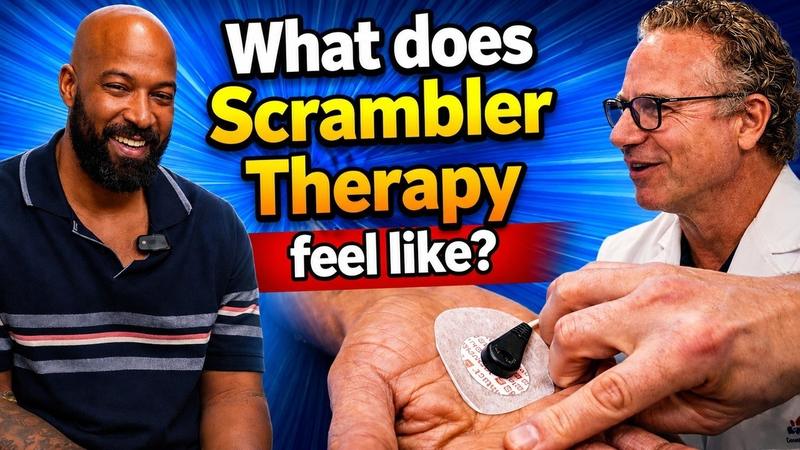
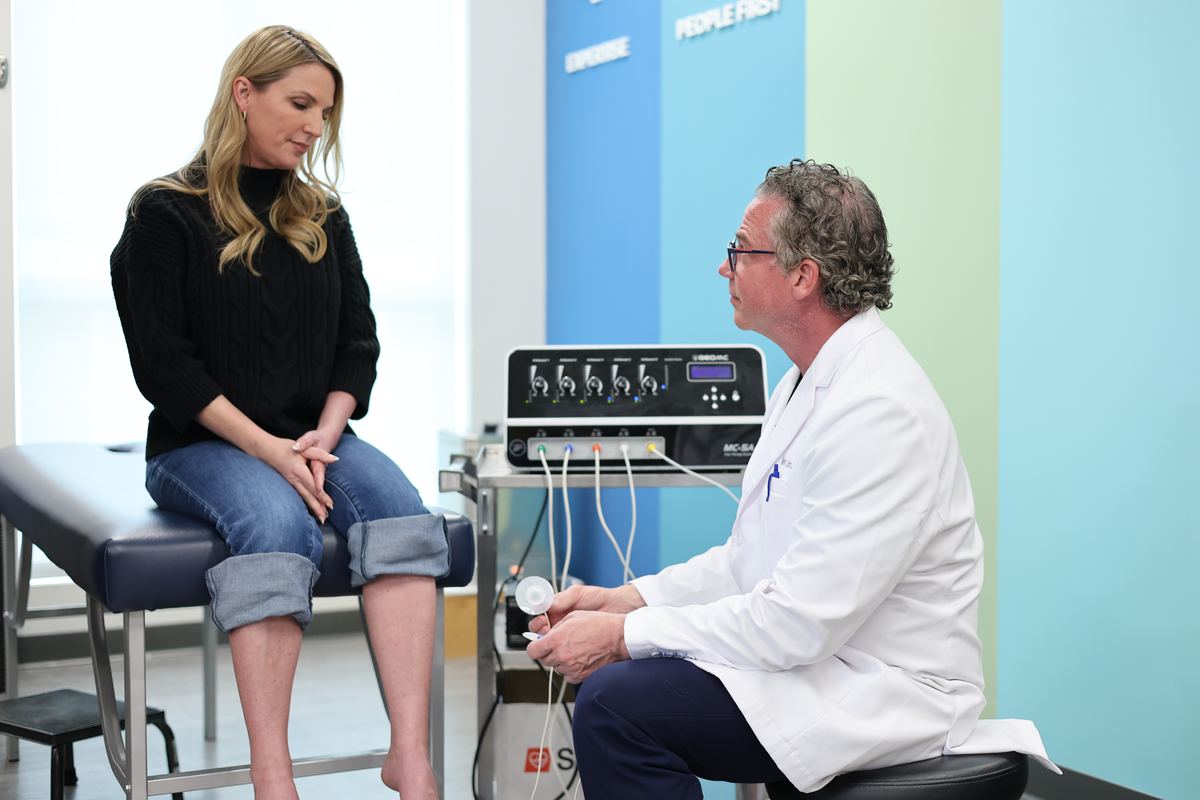
You keep your clothes on. You sit back in a chair. The pads go on. Then the level comes up slowly, one channel at a time, and the only thing you have to do is tell us what you feel. First tell me when you feel something, then tell me when it's enough.3 The target is a clear, comfortable tingle — people describe it as fizzing, or tiny electrical ants.3
A session runs about forty minutes.4 Someone is with you the whole time. Then the pads come off and you drive yourself home — no drowsiness, no restrictions.
A full course is ten sessions on consecutive weekdays — two weeks.4 That's why we run scrambler sessions on Fridays, when the rest of the clinic is closed.
How it starts
- The $19 consultation. Plan on about an hour, Monday through Thursday: roughly 30 minutes of consultation and exam, then about 30 minutes of treatment. We go through your history, your nerve test, what you've already tried, and the list of reasons someone can't have this treatment.
- A $99 first full session — credited toward the course. This is the responder session. It exists so you can find out what your own nerves do with this before you commit.
- The course, with your number in writing. Scrambler therapy isn't a covered insurance benefit, so the course is an out-of-pocket investment. If you're responding, we go over it with you before you start. If it isn't working, we tell you, and we stop.
What "working" looks like
Relief usually builds over the course — each session's relief tends to last a little longer than the last.3 Some people come back later for a short round of booster sessions, usually a couple of days rather than another full course. In San Antonio, that's a drive, not a flight.
How we measure it: standardized questionnaires at the start and at follow-ups, plus the things you actually care about — how you slept, how far you walked, whether you wore real shoes to the store. We listen to what you tell us.
Why this works
Why this works — and what we stand behind
Two things make this work here.
The first is the treatment. It works on the signal, not the volume. That's a different kind of tool from anything in your medicine cabinet — and for pain that has outlasted the pills, it's the one worth trying next.
The second is the hands running it. Where the pads go, and how carefully the level is set, decide what you get from this machine. Dr. Barton trained in Rome with the inventor, Dr. Giuseppe Marineo, and every course runs under the medical supervision of Lisa D. Persyn, M.D.
What we stand behind
- The consultation decides whether you're a candidate — not a sales conversation.
- A full session before you're asked to invest in a course.
- Your number in writing before you commit.
- Someone with you for every session, and placement worked out fresh each visit.
- Progress measured — pain, sleep, walking — and talked through with you.
Candidacy
Who this is for — and who we won't treat
What it's used for
Scrambler therapy is used for nerve pain — pain caused by a problem in the nerves themselves, rather than pain from a joint or a muscle. For neuropathy, that includes:
- Idiopathic and axonal polyneuropathy — burning, electric feet with no cause found
- Diabetic neuropathy — burning feet, pins and needles, the "walking on gravel" feeling
- Chemotherapy-induced neuropathy — the hands and feet that never came back
- Shingles nerve pain, CRPS and phantom limb pain
- Nerve pain after surgery or injury
Who cannot have this treatment
These are absolute. They come from the device's own instructions, and no exam changes them:4
- An implanted pacemaker or defibrillator
- A spinal cord stimulator or peripheral nerve stimulator, implanted or in trial
- Aneurysm clips, vena cava clips, or skull plates
- A seizure disorder — epilepsy, or a tendency to seizures
- Pregnancy — the treatment hasn't been studied in pregnancy, so it isn't used
- Undiagnosed pain — pain nobody has worked up yet needs a diagnosis first, not a treatment. If that's where you are, we'll help you get to the right person. (Idiopathic neuropathy, after a full work-up, is a diagnosis.)
Where we take extra care
Heart problems, diagnosed or suspected — we talk to you about it, and there are placements we don't use. Skin that has lost normal sensation, or is broken, infected or fragile where pads would go — with neuropathy feet, this is why the pads go on healthy skin above the numb zone. A tendency to bleed or bruise easily, or a recent fracture. Some anticonvulsant medications can change how the course is run — bring your full medication list to the consultation. And occasionally, skin irritation where the pads sit: it's the most common side effect there is, and moving the placement usually solves it.4
Your care team
Who does the treatment
With scrambler therapy, who is placing the electrodes matters as much as the machine. So here's our answer, before you ask.
Kevin S. Barton, D.C. has practiced in San Antonio since 2003. He manages the scrambler program, and he does the treatments. He completed advanced scrambler therapy training in Rome, Italy, with Dr. Giuseppe Marineo — the biophysicist who invented this treatment.5 Training with the person whose research created the device.
The program is medically supervised by Lisa D. Persyn, M.D., board certified in Physical Medicine and Rehabilitation — the specialty built around restoring function to people living with pain and nerve injury. It's how this treatment is meant to be delivered: the device is restricted to physicians, or to trained personnel working under a physician's supervision.2
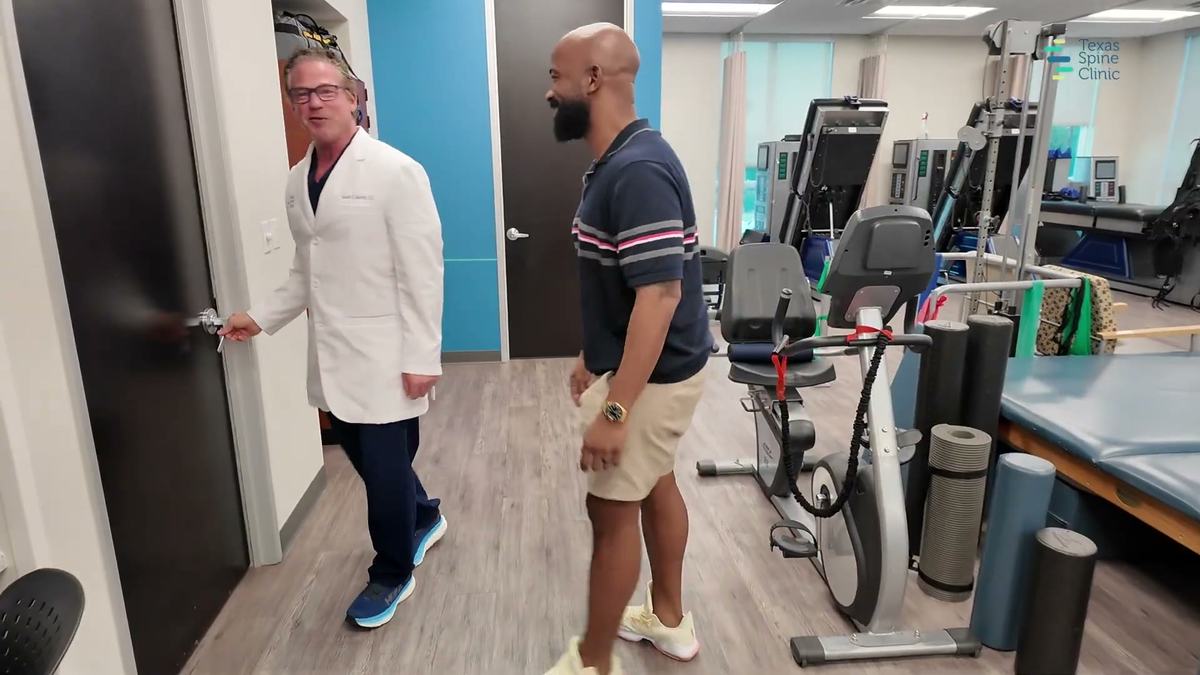
We work as a team, in a full spine and pain practice on Napier Park. For you, that looks like placement worked out fresh at every visit, the level brought up with you saying where it stops, the setup changed on the spot when the pain isn't answering, and someone with you for the whole session.

Patients
Patient stories
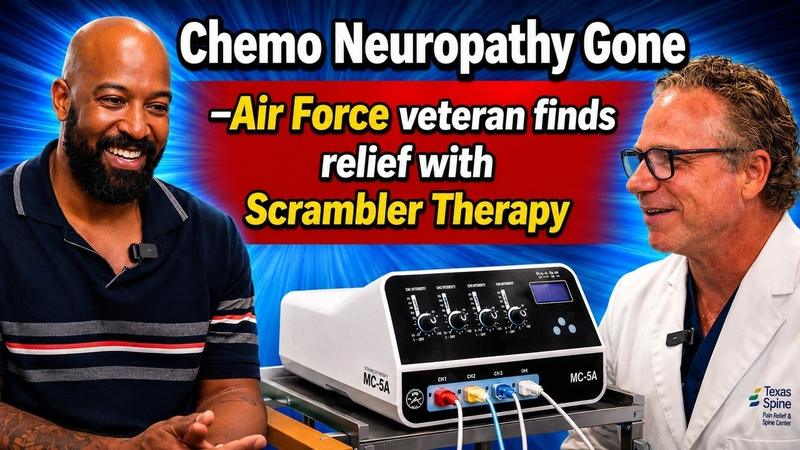
“Highly recommend using Texas Spine Clinic. I've been traveling to Dallas for the last three years and now I can go in San Antonio for scramble therapy.”
Every patient's story is their own. Results vary. These are real Texas Spine Clinic patients, sharing their experiences with their permission.
Questions patients actually ask
Before you call
Can scrambler therapy help idiopathic neuropathy?
Yes — it's used for it. Scrambler therapy treats the pain signal, and that signal doesn't need a known cause to be treated. The $99 first session shows whether your nerves respond.
My nerve test says "axonal polyneuropathy." Does that rule me out?
No. It's a very common pattern in neuropathy that starts in the feet. Bring the report and we'll go through it with you. What matters most is where it hurts, and where the skin still feels normal enough to carry the signal.
Will it bring back feeling in my feet?
It's aimed at the pain — the burning, the electric jolts, the crawling, the gravel. Tell us exactly what you feel at the consultation, and we'll tell you exactly what we're aiming at.
Does it hurt?
No. A properly run session feels like a comfortable tingle. If anything increases your pain, we change the setup. A scrambler treatment that hurts is being done wrong.
How soon will I know if it's working?
Often during the first session — many people feel the pain fall in the room. What matters most is whether relief starts holding longer between visits. That's usually clear within the first several days.
Can I keep taking gabapentin or Lyrica?
Keep taking them for now, and don't stop anything on your own. Gabapentin, Lyrica (pregabalin) and Cymbalta (duloxetine) can all interfere with the signal scrambler therapy sends, so we'll work with the doctor who prescribed them to wean you off safely. That has to be done gradually: gabapentin and Lyrica are anticonvulsants, and stopping them all at once can cause seizures. Cymbalta can cause withdrawal symptoms if it's stopped suddenly. Bring your full medication list to the consultation.
What does scrambler therapy cost, and is it covered by insurance?
The consultation is $19. The first full session is $99, and it counts toward the course. The course itself isn't a covered insurance benefit, so it's an out-of-pocket investment — quoted in person before you commit. If you have a workers' comp claim or an unusual plan, tell us at the consultation and we'll check what's possible.
I'm thinking about a spinal cord stimulator. Can I try this first?
If it isn't implanted yet — yes, and that's the order that makes sense. There's nothing to implant and nothing to remove. An implanted stimulator, a pacemaker or a defibrillator rules this treatment out.
Do I need a referral?
No. No referral is needed for your first appointment, and if one is needed for subsequent visits, we will get it for you. Call or book online. Bring your nerve-test report, any other test results, and your medication list.
Footnotes
- National Institute of Neurological Disorders and Stroke (NINDS), National Institutes of Health — Peripheral Neuropathy: more than 100 types of peripheral neuropathy have been identified. ↩
- Smith TJ, Wang EJ, Loprinzi CL. Cutaneous Electroanalgesia for Relief of Chronic and Neuropathic Pain. New England Journal of Medicine 2023;389:158–64. Review by physicians at Johns Hopkins and the Mayo Clinic. ↩
- Same review (note 2) — mechanism and application: electrode placement on unaffected skin along the affected dermatomes; the continuously varied waveform sequences; the operator's step-by-step level-setting dialogue; session length; relief typically lengthening over a course; reported durability and retreatment; and the statement that scrambler therapy is distinct from TENS. ↩
- ST-5A device instruction manual (Delta International Services & Logistics, rev. 2020) — indications, warnings, contraindications, precautions and treatment protocol, including session length, the ten-treatment course structure, and the exclusions listed above. ↩
- Dr. Barton completed advanced scrambler therapy training in Rome, Italy, with Dr. Giuseppe Marineo, who developed scrambler therapy at the University of Rome Tor Vergata. ↩
Primary sources on file at the clinic.
The ask
Find out in ten days what you've been wondering about for years.
Call (210) 741-9166. The consultation is $19.
- The $19 consultation. About an hour. Your history, your nerve test, an exam, what you've already tried, and the candidacy list — with a clear answer about whether scrambler therapy fits your pain.
- A $99 first full session — credited toward the course. Done properly, so you see what your own nerves do with this before anyone talks to you about a course.
- Your course, with the number in writing. If you're responding, we walk you through the sessions, the schedule and the investment before you start.
Texas Spine Clinic · 3212 Napier Park, San Antonio, TX 78231
Monday–Thursday, 8 a.m.–5 p.m. · Friday: scrambler therapy sessions only, by
appointment.
Want the whole treatment story first? Read the scrambler therapy page.
Book your $19 consultation
No referral needed. Same-day appointments available.
Calendar not showing? Open it in a new tab.
Rather book by phone? Call (210) 741-9166.
P.S. You've been told to live with it, and you've already spent a lot on things that didn't help. So here's the one thing to take from this page: there's a quick, low-cost way to find out whether your nerves answer this. A $19 consultation and a $99 session. Ten days from now, you could have an answer instead of another maybe. Call (210) 741-9166.