
For people told it's back surgery or nothing
You've tried everything that treats the pain.This treats the disc.
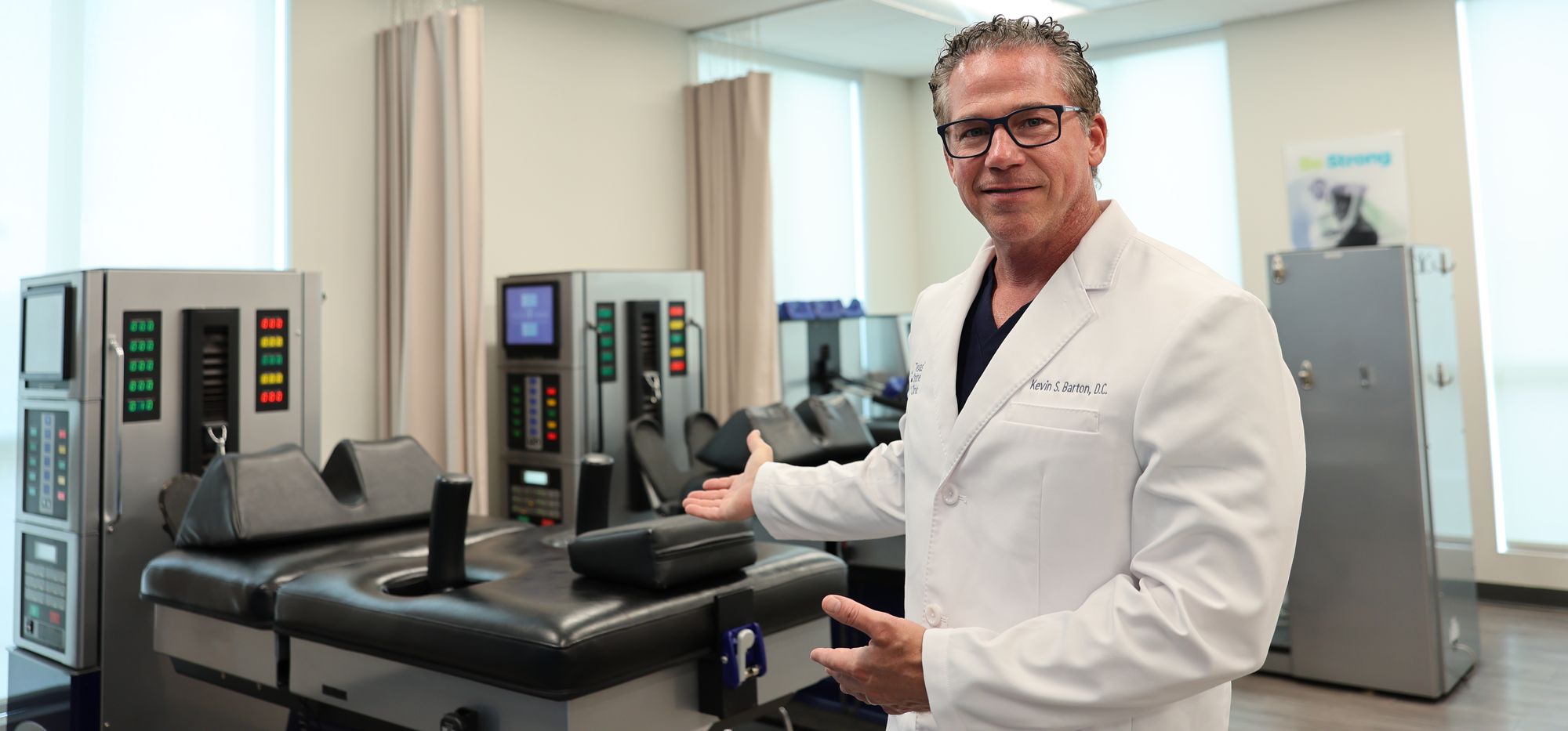
The DRX9000 is an FDA-cleared, computer-controlled spinal decompression system. It gently unloads the four tissues that keep your spine in pain — the discs, the joints, the nerves and the muscles — at the same time. No surgery. No injections. No medication to live on. Nothing cut, nothing fused, nothing implanted, no downtime — you drive yourself home and go back to work.
It probably didn't start with anything dramatic. You bent over to pick something up. You stood up out of the car. You put on your shoes. And your back went out — like a switch flipped.
Since then you've done what everyone does. The ibuprofen. The sheet of exercises from physical therapy. Maybe adjustments that felt great for two days, then wore off. Maybe an injection that bought you three good weeks — and a second one that barely worked at all.
And now you're here, probably late at night, reading about spinal decompression with two browser tabs open: one full of success stories, and one full of doubts.
This page is written for exactly that moment. We'll show you how it works, who it's for, who it's not for, what it costs, and how to tell a real decompression program from a sales operation.
The part nobody explained
Four tissues carry the load. Everything you've tried treats one of them.
Your spine is under load all day. Every step. Every hour in a chair. And above all, every time you bend forward to pick something up — because bending loads a lumbar disc far harder than standing upright does, and you do it dozens of times a day without noticing.
When spinal tissue is young and healthy it absorbs enormous force before anything hurts. Years of load shrink that capacity. That's why "all I did was bend over" can put you on the floor. It wasn't that one movement. It was years of accumulated load finally passing what your tissues could take.
The disc
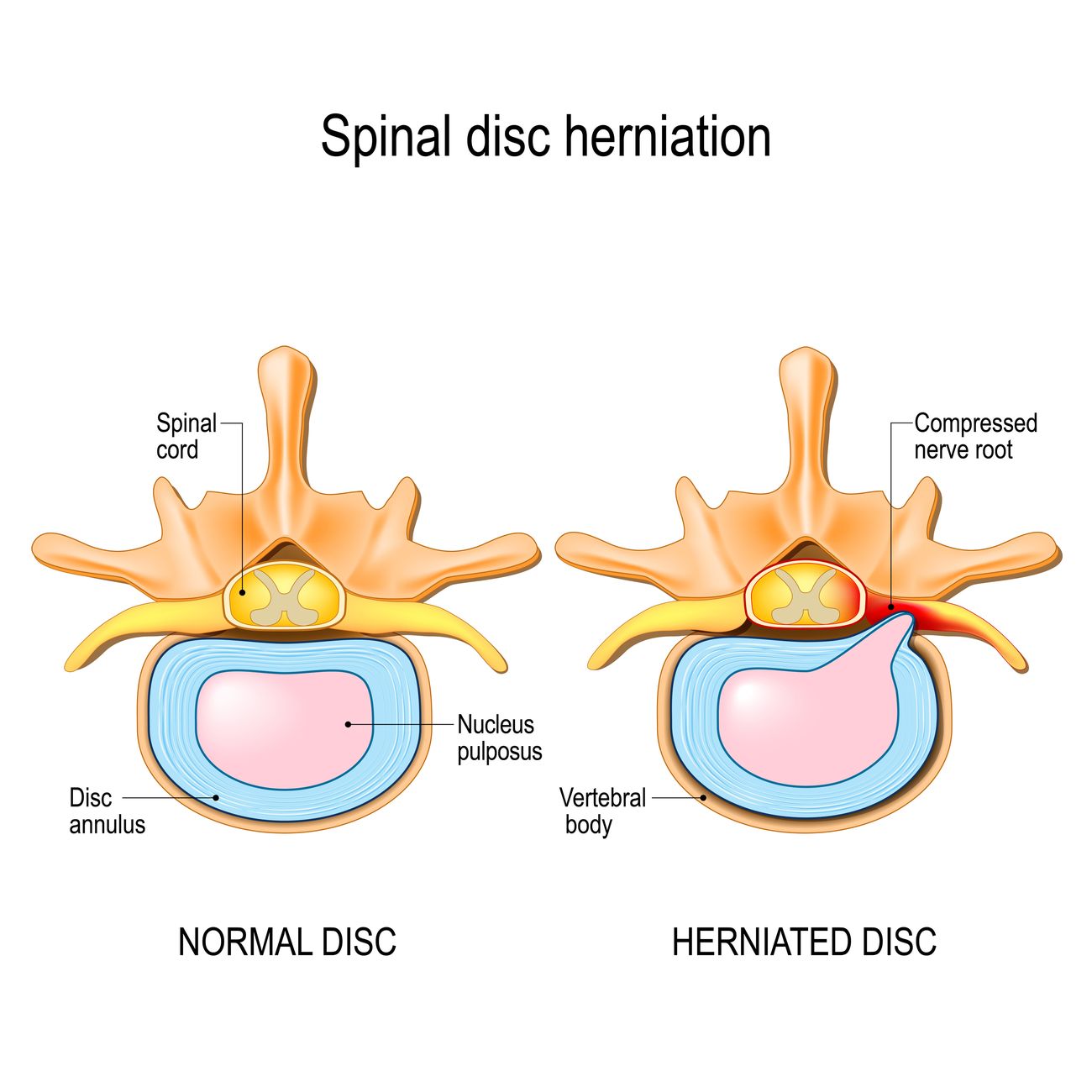
Your shock absorber, about 90% fluid. Overload it and two different things can go wrong — one sudden, one slow. Almost always the center of the problem.
The facet joints
Small joints at every level of your spine. Under compression they get irritated, inflamed and arthritic — like knee arthritis, but in your back.
The nerves
When a disc bulges it can press straight onto a nerve root. That's the electric pain down your leg, the burning, the tingling, the numb toes.
The muscles
They guard the injury by tightening and going into spasm — which locks down your motion and loads everything else even harder.
About that disc — two different things go wrong, and they aren't the same story.
One is sudden. Enough load at the wrong moment and the disc can rupture: the soft inner material pushes out through the wall and presses directly on a nerve. That's the lightning down your leg, and it can happen to a disc that was doing its job perfectly well the day before.
The other takes years. Repetitive stress and ordinary aging dry the disc out. It loses water, loses height, and flattens — and a flattened disc spreads outward and bulges. Nothing dramatic happens on any particular day. You just notice one year that mornings are stiffer than they used to be, and long drives cost you the evening.
Plenty of people get both: a disc quietly drying out for a decade, and then one ordinary movement that finishes the job. Either way, the disc stops doing its job — and every other tissue in your spine pays for it.
Now look at your treatment history through that lens. Pills calm the inflammation — for a while. Adjustments move the joints — for a while. An epidural quiets the nerve — for a while. Each one touches a single tissue, and none of them touches the disc. The pressure that caused the problem is still there.
That's why everything worked "for a while," and nothing held.
The mechanism
What the DRX9000 actually does
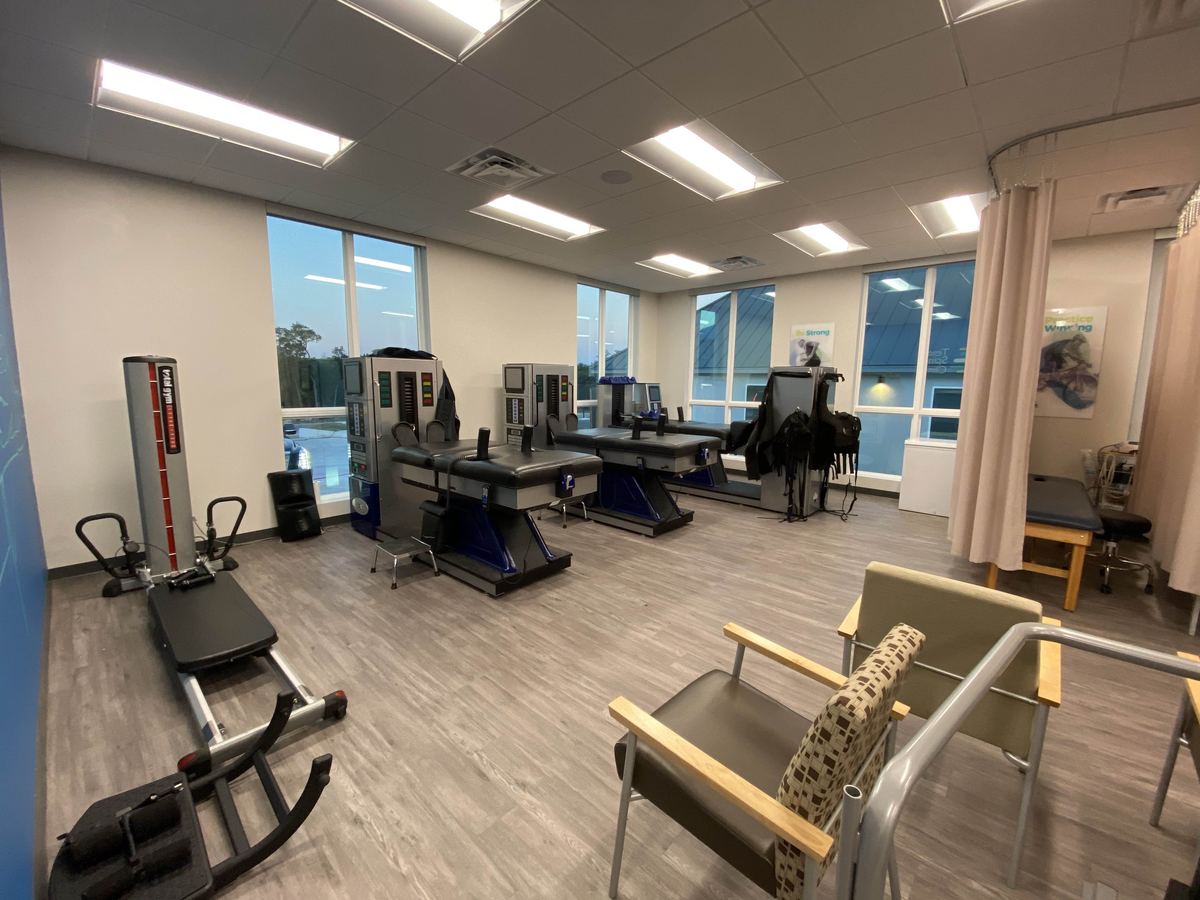
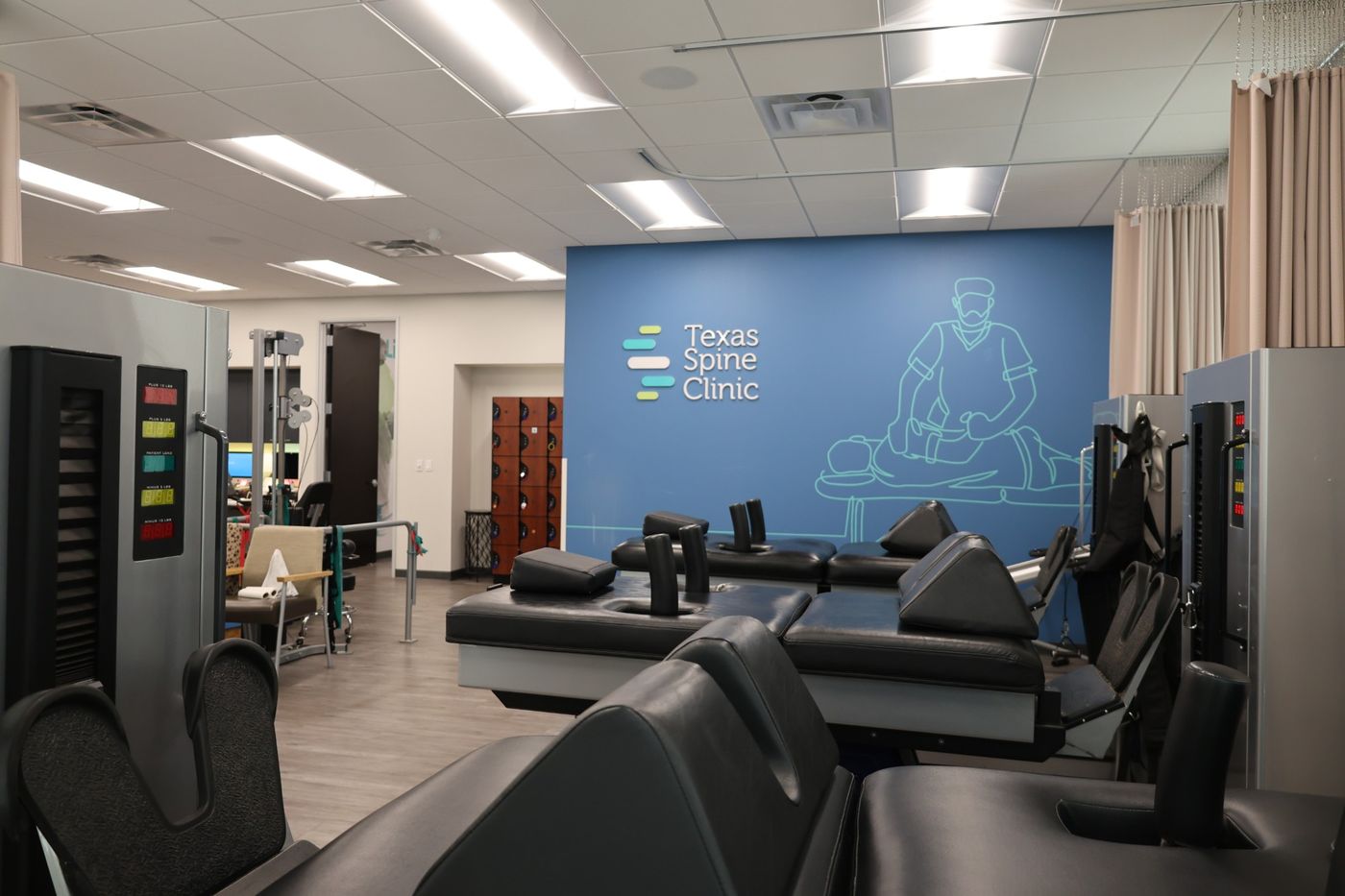
It applies a precise, computer-controlled, rhythmic pulling force to your lower back or neck — customised to your body, your diagnosis and the exact spinal level that's injured. You lie on the table, fitted in a harness, for about 25 to 30 minutes. Most patients find it comfortable. Many doze off.
Inside the disc, that gentle unloading creates a negative pressure — a vacuum effect — that draws fluid, oxygen and nutrients back toward the disc's center. The disc begins to rehydrate. A herniation can begin to retract, pulling back off the nerve. At the same time the facet joints regain motion, the guarding muscles finally relax, and the nerve gets the space it needs to calm down.
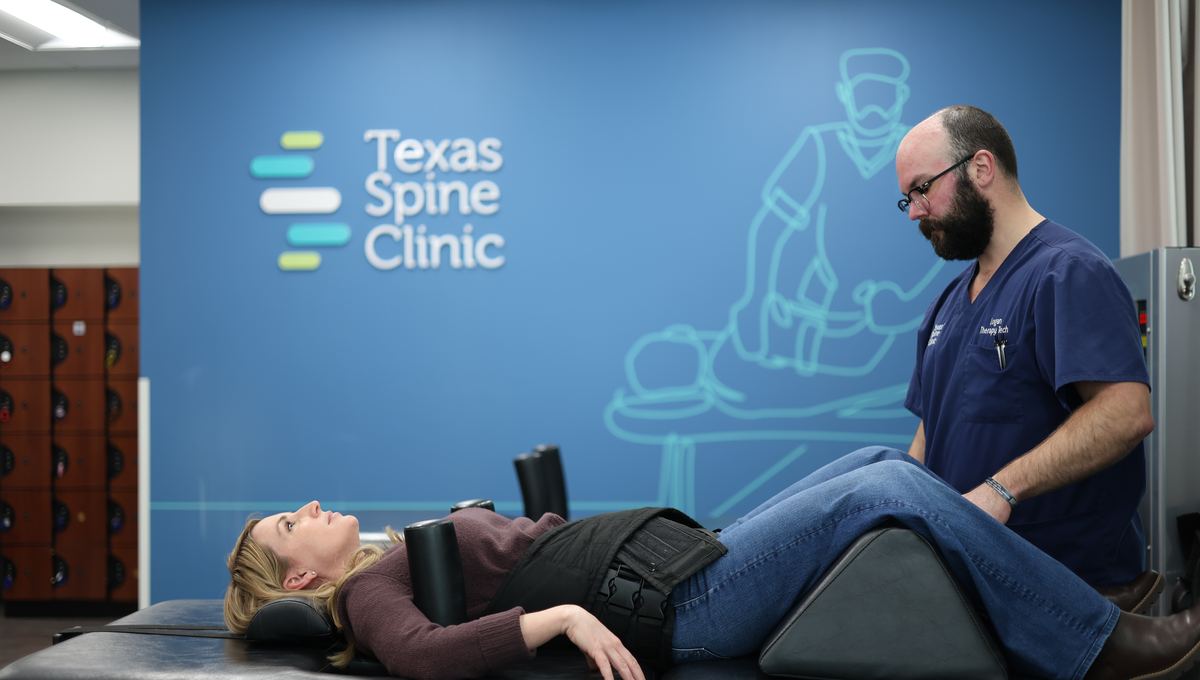 Watch · lumbar demo
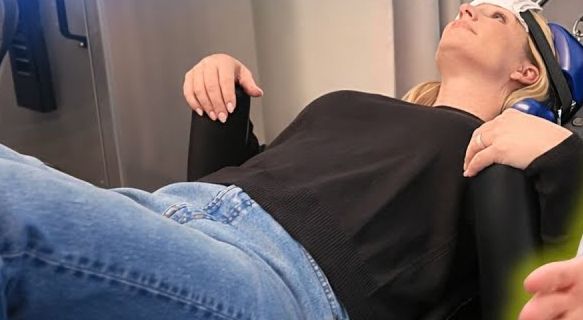 Watch · cervical demo
And nothing about this closes a door. Whatever options you have today — an injection, a surgical consult, another opinion — you'll still have every one of them when you're done here. That isn't true in the other direction: a fused segment doesn't come back, and scar tissue doesn't unform. Trying the reversible thing first isn't a compromise. It's the order that makes sense.
Where this gets personal
The doctor has been on that table himself
Dr. Barton has practiced for 23 years and has overseen more than 2,000 decompression patients across the 21 years he's used this machine. Then his own back gave him one of the worst herniated discs he had ever seen in practice.
His words: "My own MRI was humbling." He treated it the same way he treats yours — on the DRX9000 — and documented the whole thing.
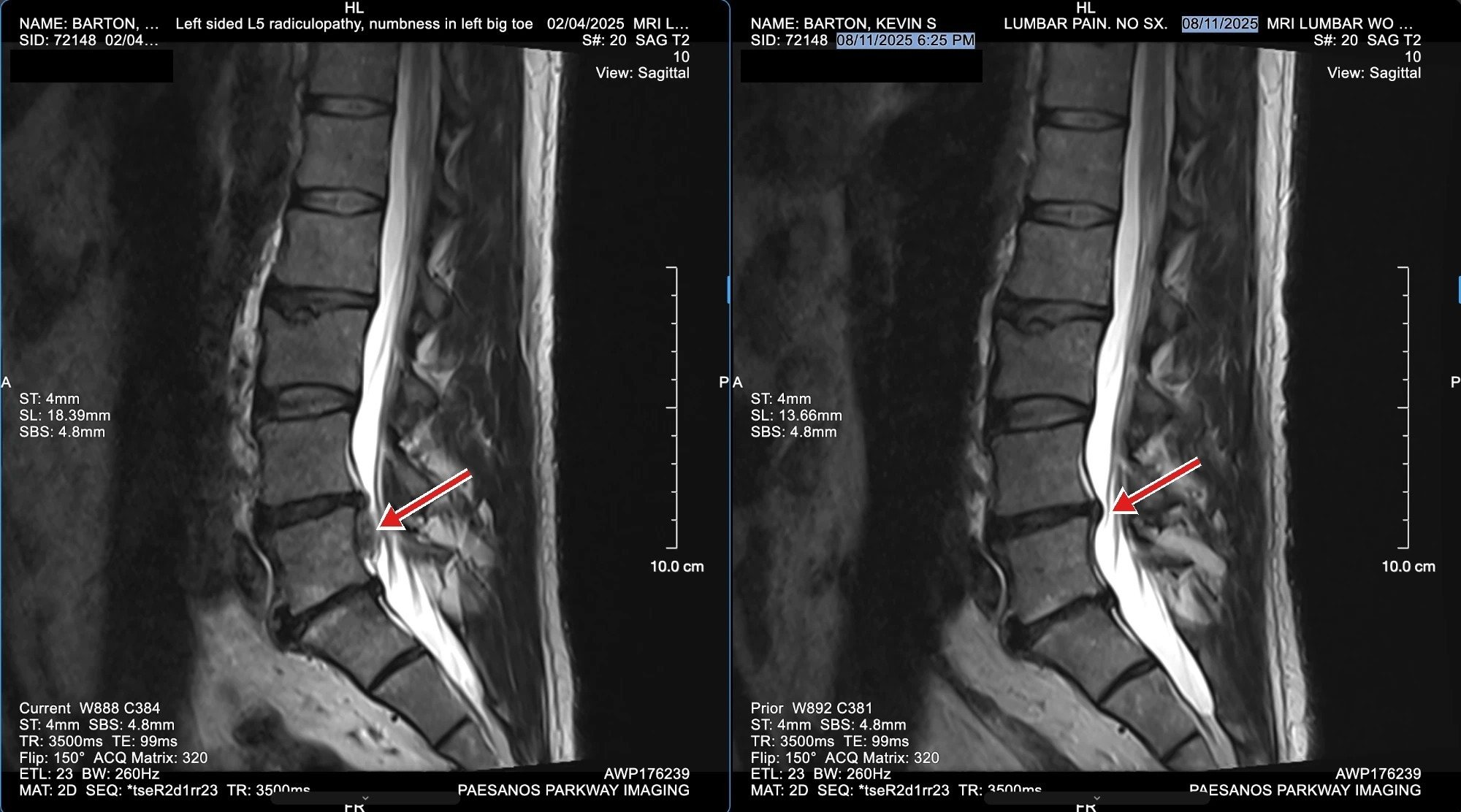
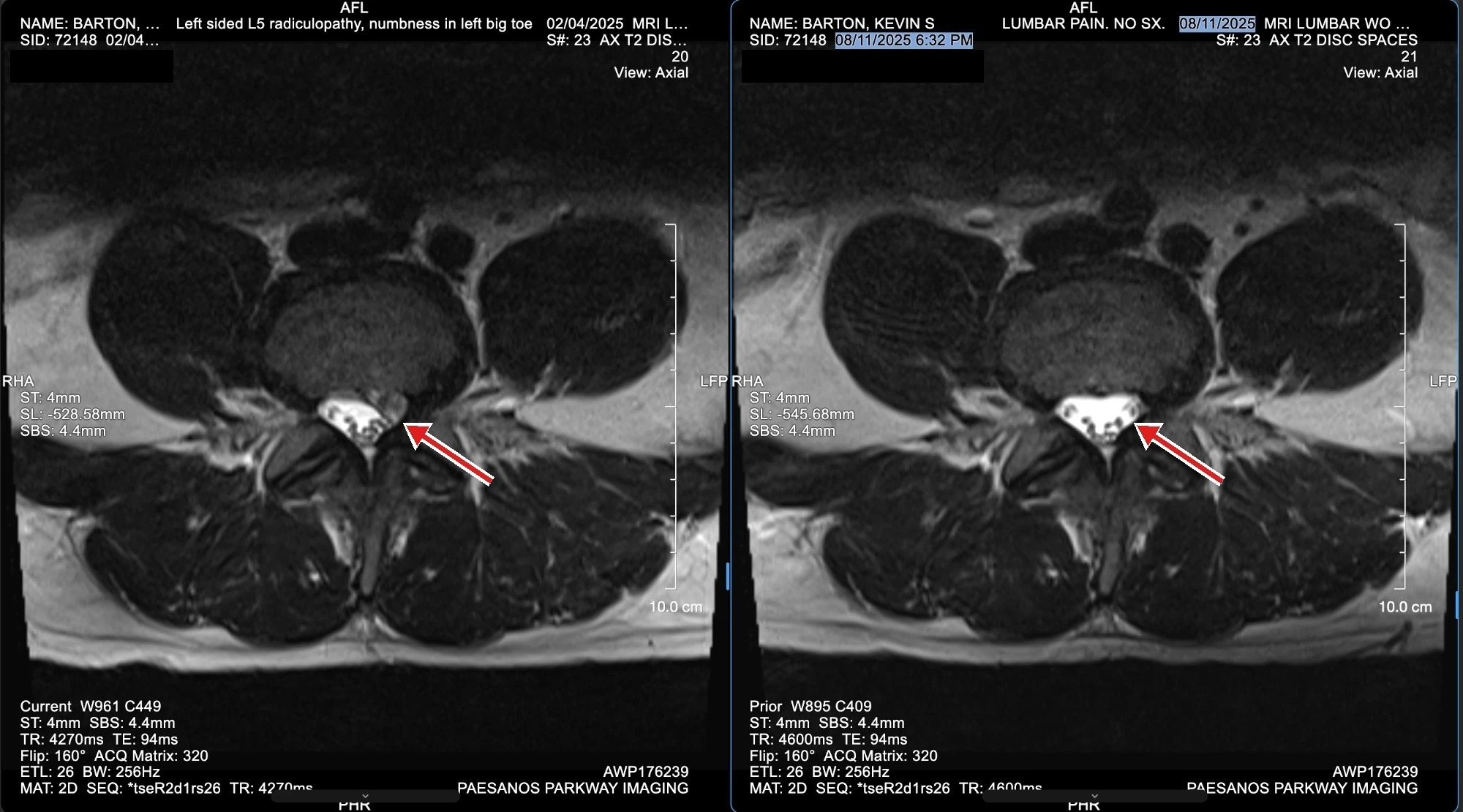
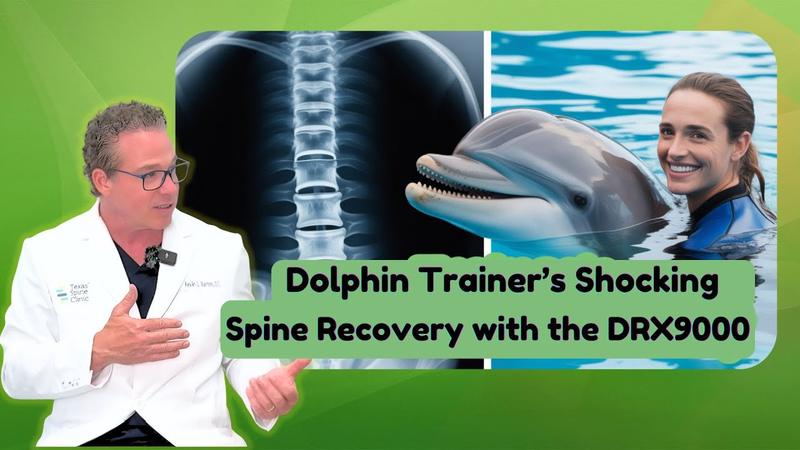
He filmed all of it. The first MRI, the exam, the sessions, the week the foot drop got worse before it got better, and the follow-up imaging at the end. Nine episodes, nothing edited out.
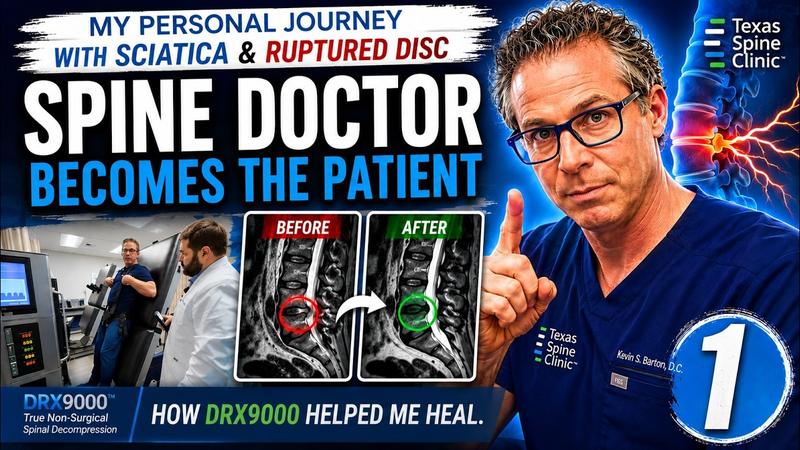
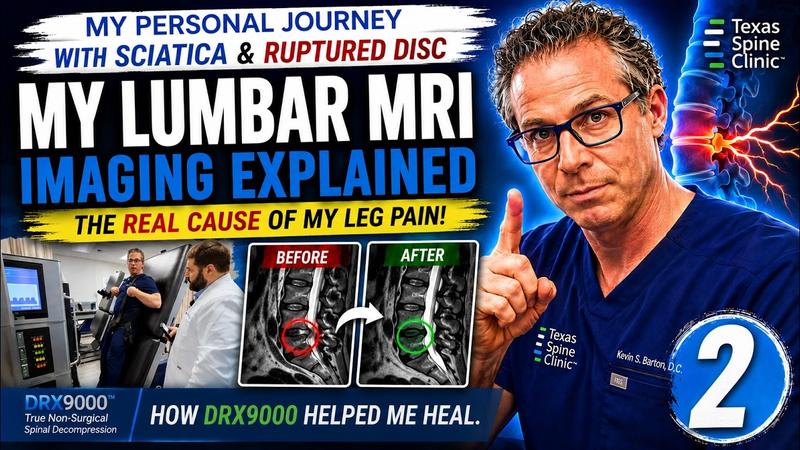



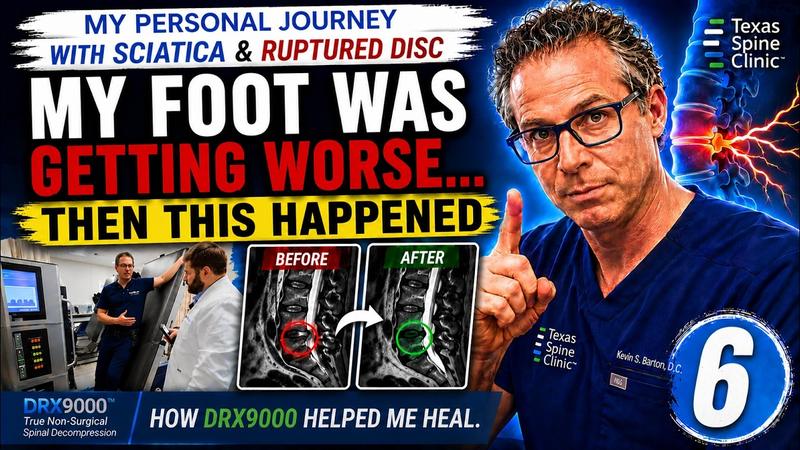

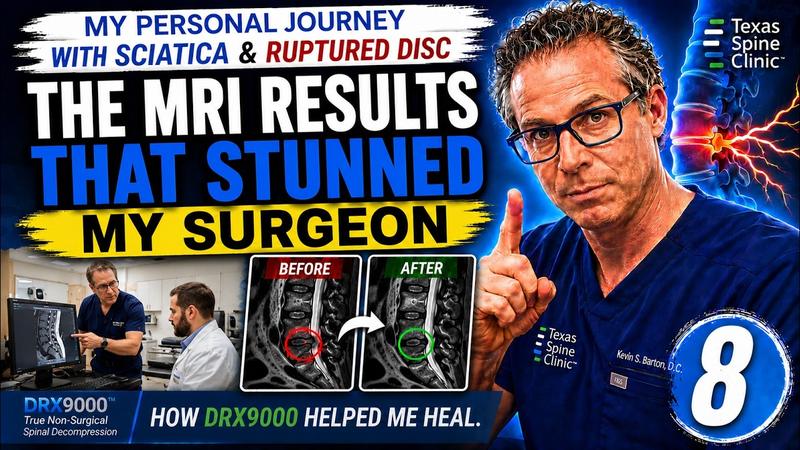
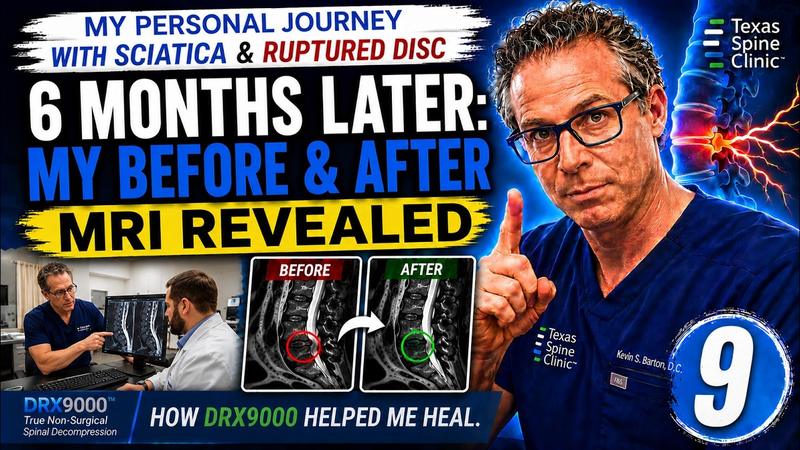
We'll never tell you this machine is magic. We'll show you what it did for the doctor who owns it, and let you judge.
The part that decides your outcome
Why we screen you the way a surgeon would
There are two reasons this program works as well as it does.
The first is the machine — and knowing how to run it. The DRX9000 is genuinely effective at what it does, but owning one and knowing how to use it are different things. Every protocol is set by hand: the angle of pull, the force curve, the specific level being treated, adjusted as your spine responds week to week. We've been doing that for 21 years. That experience is the difference between a table and a treatment.
The second matters just as much, and almost nobody in this industry will tell you about it.
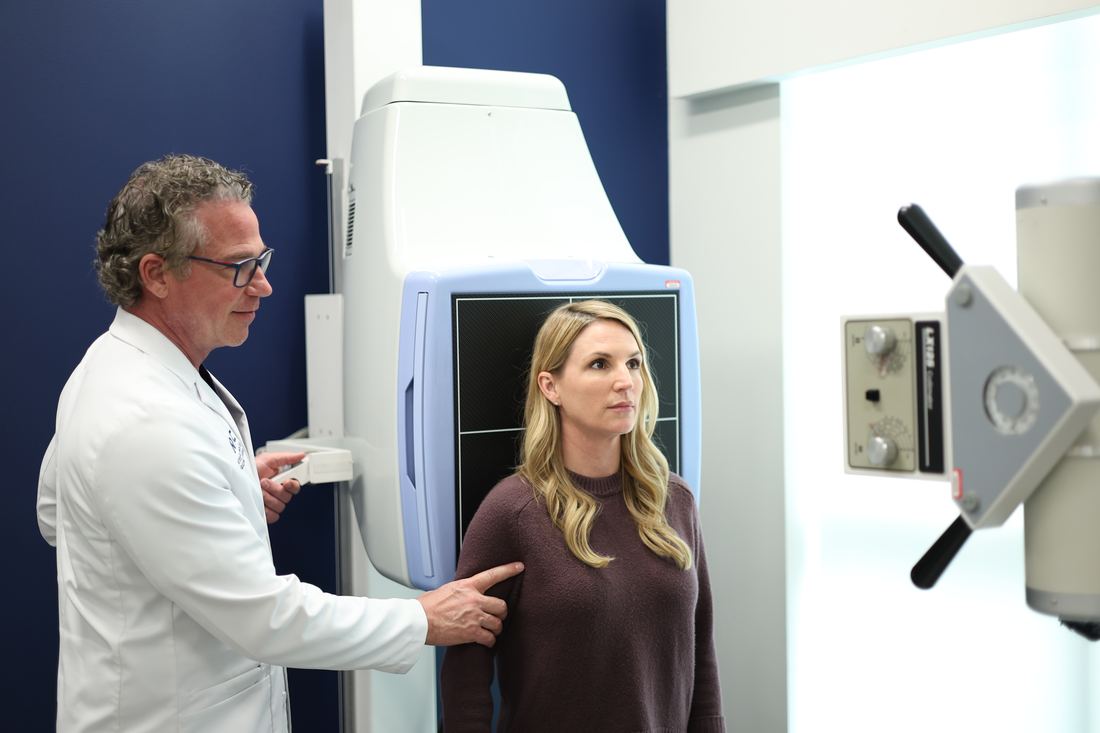
We screen patients the way a spine surgeon screens surgical candidates.
A good surgeon doesn't operate on everyone who wants an operation. They select — carefully, sometimes frustratingly — because the wrong patient in the wrong procedure produces a bad outcome and a bad reputation. We apply that same standard to a table instead of an operating room.
We have turned away more patients than we can count — including people who pushed, pleaded and offered to pay in full. Saying no costs us money every time. It's also the only reason we've been able to do this for 21 years and still have the reputation we have.
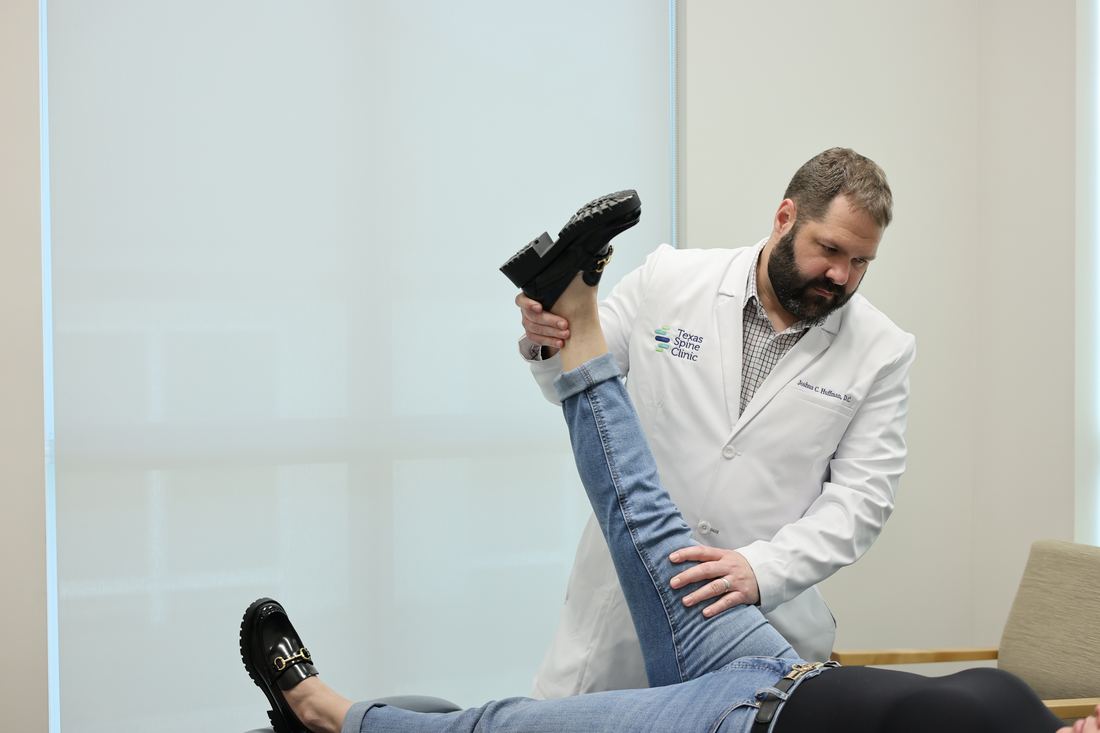
How care is decided here.
Five commitments — and you can hold us to every one of them.
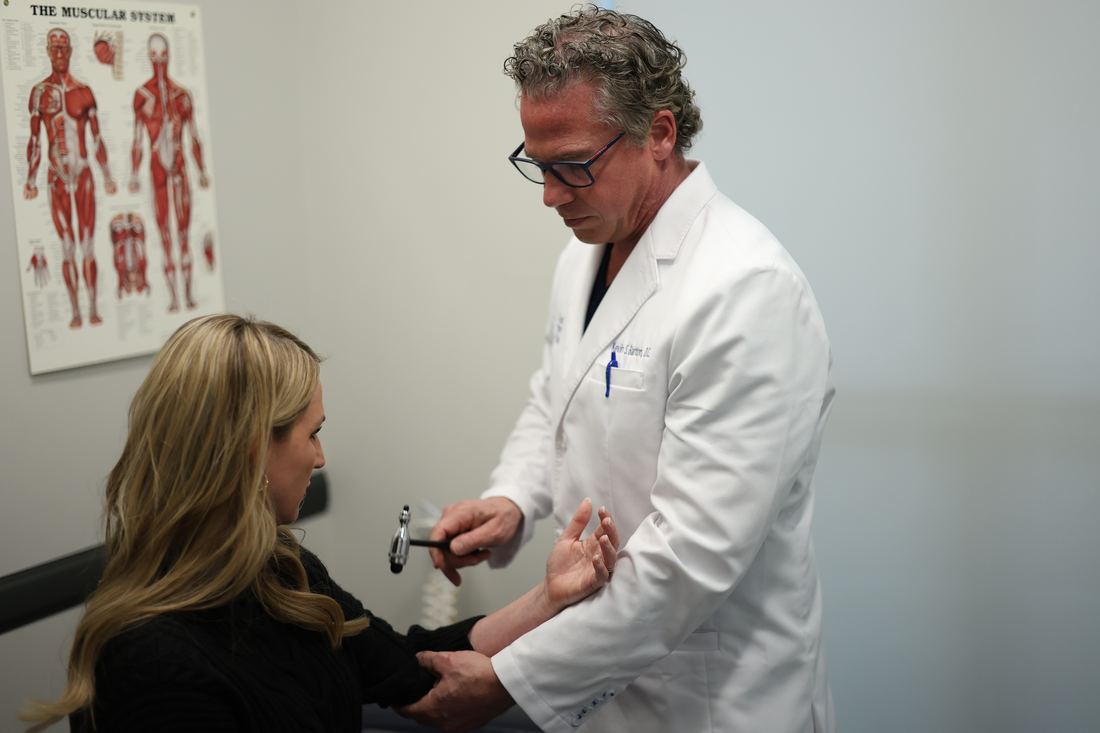
Evaluation first, always. We examine you and review your actual imaging before anyone discusses a treatment plan or a number — an MRI, or a CT if you can't have one, because those are the only two kinds of imaging that show a disc. If you don't have imaging yet, we'll refer you for it. Then you get one of three straight answers — you're a good candidate, you're not, or here's the option that fits you better. Two of those three answers earn us nothing, and we aren't afraid to give them.
And "review your imaging" means something specific here. Patients tell us the same thing all the time: nobody ever showed them the pictures. There's a reason. The doctor most trained to read your MRI — the radiologist — writes the report and never meets you. The doctors who do meet you usually work from that report, and a surgeon's schedule rarely has room to sit down and walk through the images with you. Nobody did anything wrong — and you still ended up owning a spine you've never seen.
We think that's backwards. Your consultation happens in front of a screen with your MRI on it. We go through the pictures — not just the report — and show you what's pressing on what, why it hurts the way it does, and exactly what we plan to do about it. You leave understanding what your spine looks like and how we intend to fix it.
Candidacy
Who this is for — and who it isn't
Decompression is likely the right conversation if…
- Your MRI shows a herniated disc, bulging disc or degenerative disc disease
- You have sciatica or arm pain that traces to a disc pressing on a nerve
- You have facet syndrome, or stenosis driven by disc height loss, and want to avoid surgery
- Your disc pain hasn't gotten better with the easy stuff: rest, pills, exercises, adjustments, a shot that wore off
- A surgeon has recommended an operation — or told you you're not bad enough yet — and you want to try this first
- You've had a discectomy or laminectomy — no hardware — and the same disc is acting up again. We treat post-surgical discs all the time, generally starting two to three months after surgery.
We generally will not treat you if…
- You've had a spinal fusion or have hardware at the level we'd be treating — that's an absolute no. The level next door to a fusion is a case-by-case evaluation, in the neck exactly as in the low back.
- You have severe osteoporosis, a spinal fracture, a tumour or an infection
- Your stenosis is severe and driven by bone rather than disc — that belongs with a surgeon
- Your spondylolisthesis is unstable — it shifts more than 5 mm on the flexion-and-extension X-rays we take to check. A stable slip can still be a candidate.
- You have warning signs of cauda equina — that's an emergency room, not a clinic
- You're pregnant
If any of those describe you, we'll tell you at the consultation and point you toward the right next step — even when it isn't us. Some of the worst decompression stories online come from clinics that skipped this screen.
What to expect
The program, described
Decompression is the foundation — not the finish line. The program has two halves, and the second one is what keeps the first from wearing off.
25–30 minutes on the table
Force computed for your body and your level — and built up gradually, session by session. Your spine isn't taken from nothing to full unloading at once; the first visit is the gentlest of the whole program. There's no downtime — you can work, drive and live your life throughout.
The early sessions can stir things up
Some patients flare before things turn — soreness, even a temporary echo of the leg pain. We tell you before you start rather than after.
The real checkpoint
Around the second week we stop and assess whether your spine is responding. If it isn't, we say so — and under Texas law you don't pay for the unused portion.
Where responders usually notice change
Not the first week. Early signals show up at the checkpoint; the change you actually feel in daily life tends to arrive here.
Rebuilding your structural margin
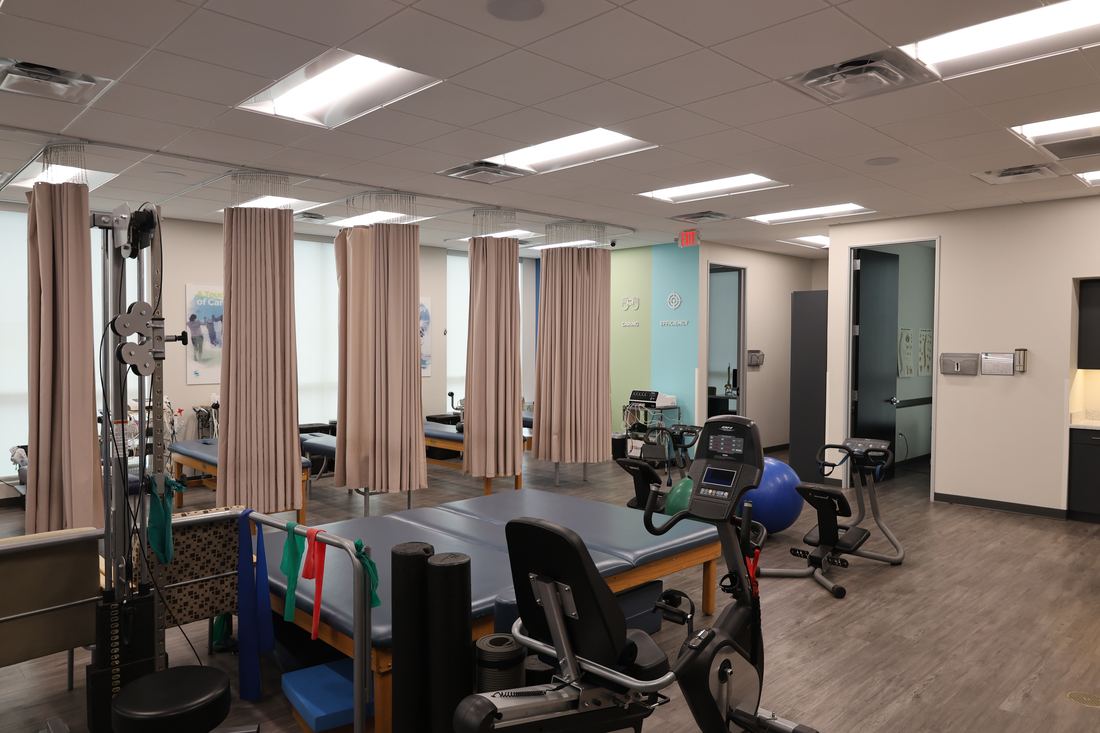
As pain calms, we strengthen the core muscles that support your spine and restore normal movement patterns — so you finish stronger, not fragile.
Cost & insurance
What insurance covers, what it doesn't, and how you'll know your number.
You'll have your figure in writing at your MRI review — and your care continues that same day.
We examine you, review your imaging with you, verify your benefits at no charge, calculate your insurance credit, and hand you the number — then we keep your care moving, because every day a compressed nerve waits is a day it doesn't heal. Here's how the money actually works.
The decompression program is not a covered benefit. Under any plan.
Not commercial insurance, not Medicare. That isn't our policy — it's how every carrier classifies it.
With commercial insurance, you'll usually get a credit.
If you carry a commercial health plan, we can usually generate an insurance credit through it, which we apply against your cost. How big that credit is depends on your specific benefits.
So expect an out-of-pocket investment
And expect to know exactly what it is, in writing, at your MRI review. Finding out is free — we verify your benefits for you and apply the credit before your number is ever quoted.
If you have Medicare
This program isn't covered. If you also carry a secondary major health plan, we can usually generate a credit through it. We check that for you up front.
How you pay is your call, not a condition of care
Most patients settle the program at the start and earn a time-of-service discount for doing it. If paying up front isn't realistic, that's not a problem: we work with CareCredit and Affirm, and we have flexible in-office payment plans.
Which raises the obvious question: how would you know if it isn't working?
We make that call around the second week, after eight to ten sessions. That's the point where a spine that's going to respond has usually started to show it. If yours hasn't, we tell you then — not after another month of visits — and you don't pay for the rest.
What you're actually deciding
Be careful with the word "covered." Covered doesn't mean free — a procedure your plan pays for can still run you to your deductible, your coinsurance and your annual limit, and cost you weeks off work besides. The question worth asking about any option is what it actually costs you.
Weigh it against what you're actually deciding between. By the time you add up the surgeon's fee, the facility, the anesthesia, and the weeks away from work, the investment in decompression is often not far from — and frequently less than — the true cost of spine surgery.
Everybody knows somebody whose back surgery didn't go well: the coworker who never went back to work, the uncle who still lives on painkillers. You can have the best surgeon in the world, and back surgery can still bring complications that can never be taken back.
For Dr. Barton, when it was his own ruptured disc on the MRI, the money was never the biggest difference. The reason he didn't have back surgery was the unknown. If an operation doesn't go perfectly, some of what follows can't be given back: scar tissue that forms around the nerve and stays there. The recurrent herniation at the same disc. An outcome so common it has its own diagnosis — failed back surgery syndrome. The next operation the first one sets up, ending at a fusion. And infection — the complication nobody signs up for. Decompression asks you to risk none of those.
How it works: visit one is the exam and your first time on the table — both included in the $49 — then the MRI. Visit two is your MRI review: your findings on screen, your number in writing, and if you're a candidate, your care continues that same day.
Patients
People who came in facing surgery








Real patients, telling it in their own words, with their permission. Individual results vary. See every patient story →
“I am so grateful to Dr. Huffman and Texas Spine Clinic for offering Non-Surgical Spinal Decompression treatment. After a few short series of treatments, I always leave pain-free… The team, the physical therapists and Jennifer (the receptionist), are so attentive and caring. Thank you so much!”
“I have been extremely pleased with the care and attention given to my back issues. Dr. Huffman and the therapists not only provide excellent care, but are caring and thoughtful. When I started the program, I was in pain all day and had trouble sleeping at night due to pain. I was using a walker at home and struggled with a cane when I went to the doctor. I was confined at home with pain killers. Now, I don't take pain medication… I have made so much progress, and my activity level has improved greatly.”
Reviews quoted verbatim from our public Google profile.
Questions patients actually ask
Before you call
How many sessions until I feel something?
Straight answer: it varies, and the early sessions can flare before they help. Most responders notice real change mid-program — around weeks three to five — not in the first days. We re-examine on a schedule so you're never guessing whether it's working.
Is this just traction? Is it the same as an inversion table?
Same family, different animal. Hanging from a bar or an inversion table pulls your whole spine bluntly, and your muscles guard against it — you can't target a level or control the force curve. The DRX9000 measures and adjusts its pull continuously, targets the specific disc level, and works below the threshold that triggers muscle guarding. That control is the point, and it's what home equipment can't do.
Does it hurt?
Most patients find sessions comfortable — many fall asleep on the table. Done right, decompression should never feel like an ordeal. Soreness in the early weeks can happen, and we want to hear about it when it does.
Can I keep working during treatment?
Yes. Sessions are about half an hour, there's no downtime, and most patients schedule around work. The bigger commitment is showing up several times a week for the full course — we'll be straight with you about that at the consultation.
What if it doesn't work for me?
Then we say so, out loud, at the checkpoint around your eighth to tenth session — and you don't pay for the part of the program you don't use. Texas law requires that care be prorated, so no clinic in this state can legally sell you an unrefundable block and keep the money if it isn't helping.
From there we help you figure out the next step, whether that's another treatment here or a referral out. No treatment works for everyone, and we'd rather protect your trust than your session count.
How long do results last?
A disc that has rehydrated and pulled back off a nerve doesn't re-inflate your pain on a schedule — but your spine is still the one you brought in. That's why the program ends with strengthening rather than just decompression, and why we teach you how to protect the margin you've rebuilt.
What happens next
Find out if your spine is a candidate — the consultation is $49, and it isn't a sales pitch.
- Your first visit — the $49 consultation. We take your history, examine you, and put you on the machine so you feel for yourself what a treatment is like. It's gentler than you imagine: decompression builds gradually over the course of a program, and the first session is the gentlest of all. Then we send you for an MRI — or a CT if you can't have one. Already have imaging? Bring it.
- Your second visit — the MRI review. Your pictures on the screen, not just the report, explained in plain English. For many patients it's the first time anyone has walked them through their own MRI. You get a straight answer — candidate, not a candidate, or the better option for you — and your cost in writing, with your insurance credit already calculated.
- If the answer is yes, your care continues that same day. You've been evaluated, you've been on the table, and you have your number — there's nothing left to wait for. If the answer is no, it's no, and we'll point you to whatever is worth trying instead.
Book your $49 consultation
No referral needed. Same-day appointments available.
Calendar not showing? Open it in a new tab.
Rather book by phone? Call (210) 741-9166.
P.S. You already know what the next year looks like if nothing changes: the same flare-and-fade cycle, a little less golf, a little more caution, planning your day around your back. The four tissues wearing down don't reverse course on their own while the load stays on. One consultation tells you whether taking the load off can change that — and if we don't think it can, we'll tell you that too. That's the whole deal.