

Car accident injury care · Same-day · San Antonio
You told everyone you were fine.Then the next morning happened.
The stiff neck. The headache that won't lift. The back that locks up when you get out of the car. Now there's an adjuster on the phone, a bill from the ER, and nobody telling you what to do next.
Here's what to do next: come in today. Your injury evaluation costs you nothing out of pocket, you can be seen the same day, and your care — imaging, treatment, and pain management if you need it — stays under one roof from the first day to the last.
Same-day appointments, Monday–Thursday.
Start where you are
Where are you right now?
The wreck was this week.
Soreness that shows up a day or two after a crash is the rule, not the exception — adrenaline covers it up. This is the best week to be examined.
Someone already told you no.
The urgent care said "just whiplash." Your family doctor doesn't see auto cases. We see accident patients every week, and your first visit costs you nothing out of pocket.
It was weeks — or months — ago.
"I thought it would go away" is the most common thing accident patients tell us. It isn't too late, and you're not imagining it.
One roof
After a wreck, you shouldn't need five waiting rooms.
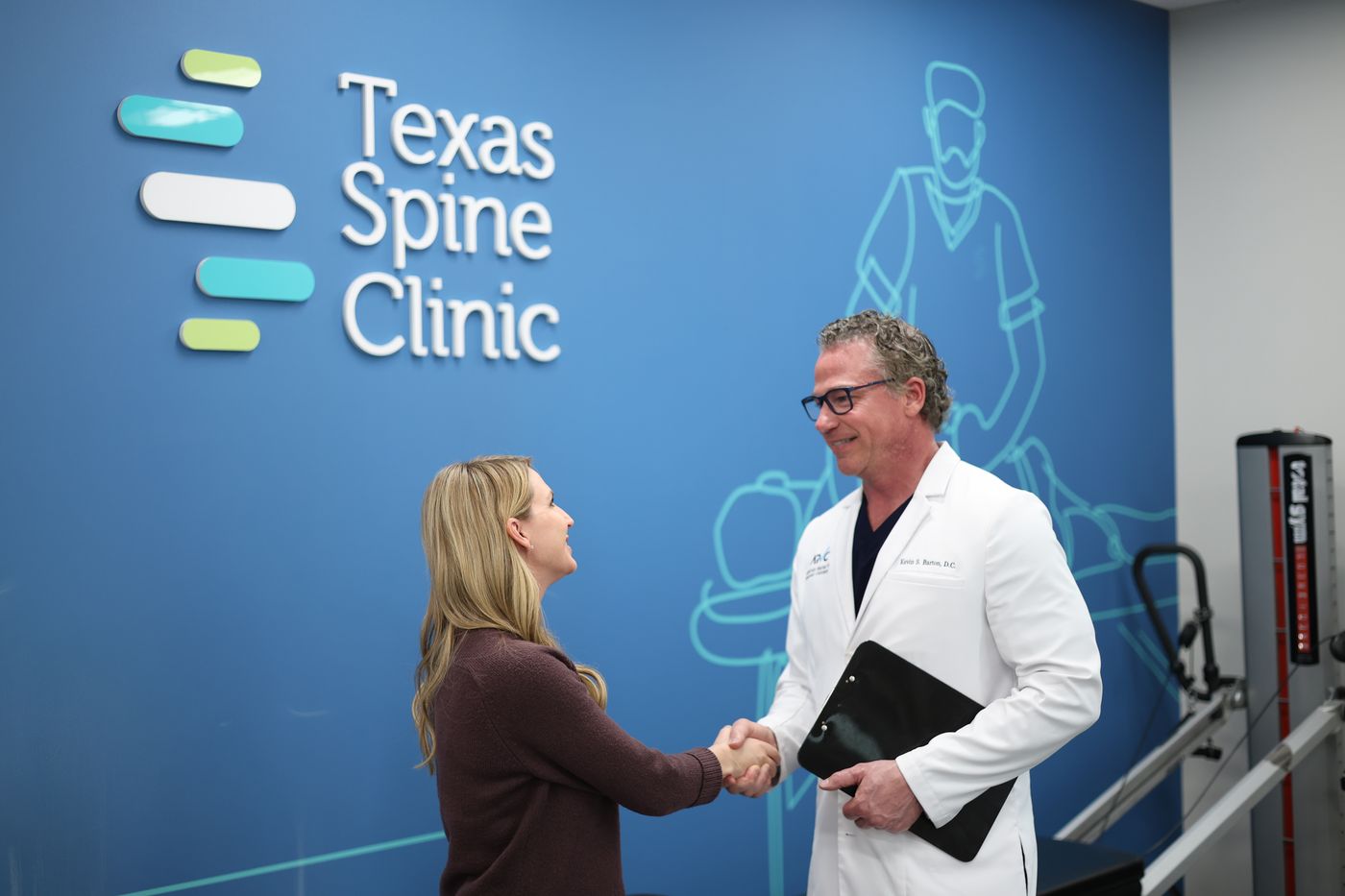
Recovering from a wreck can take more than one kind of care — a thorough exam, hands-on treatment, sometimes imaging, sometimes a pain specialist. We built this practice so all of it happens in one building, with one team that knows your whole story from the first visit.
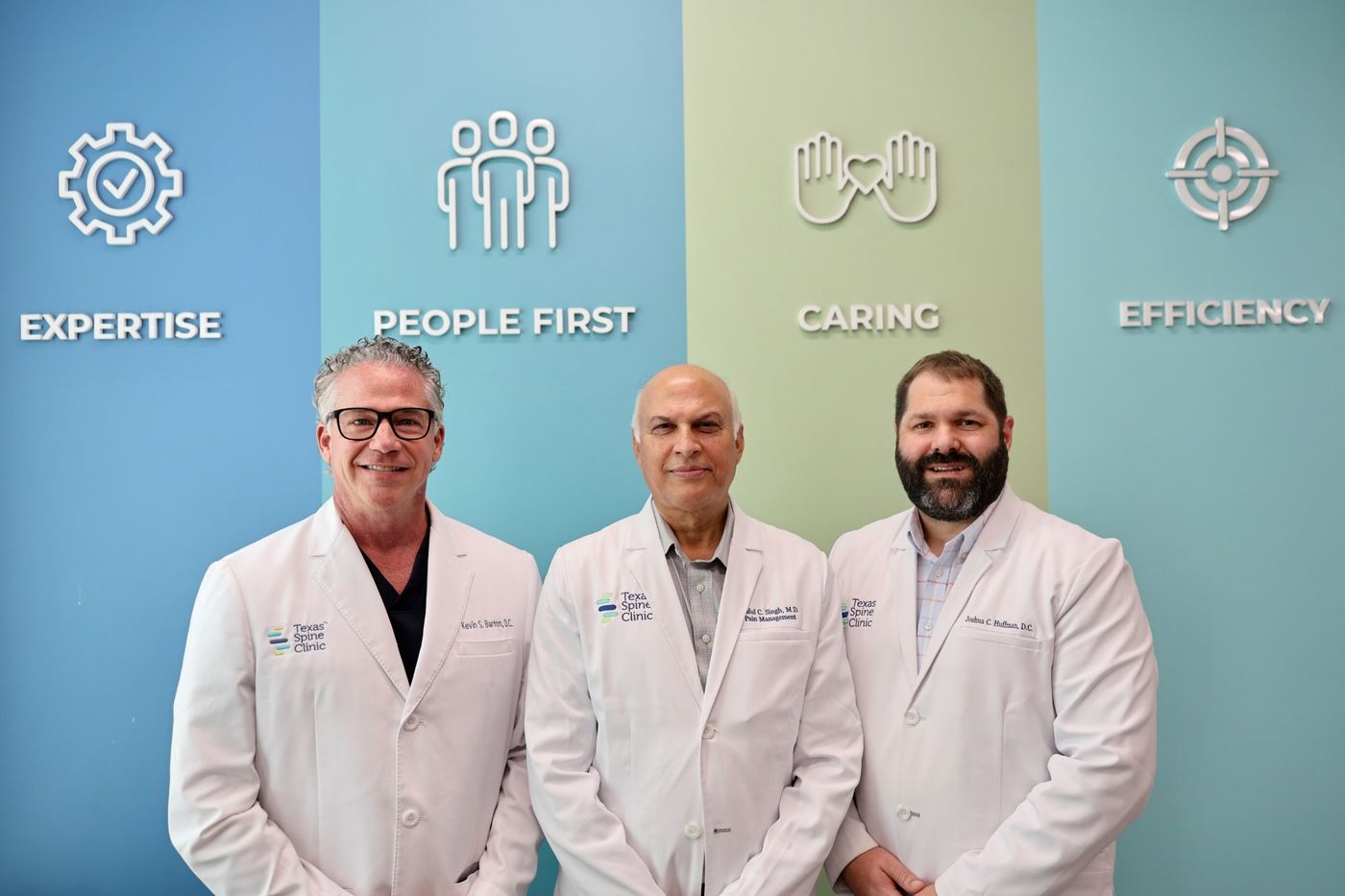
- A medical provider when you need one. If your injury calls for medication, our nurse practitioner or one of our two pain management doctors, Praful C. Singh, M.D., or Lisa D. Persyn, M.D., sees you here, in the same building.
- Hands-on care that starts the same day. Chiropractic adjustments, myofascial release, laser, therapeutic modalities and rehab exercise — nothing invasive.
- Imaging, arranged for you. When your exam or your symptoms call for an MRI, we order it, schedule it and handle the paperwork. Then we put the pictures on the screen and walk you through them.
- Decompression, if a disc was injured. If imaging shows a disc injury, the DRX9000 is down the hall — not a referral away.
- Interventional pain management, in-house. If your pain doesn't settle with hands-on care, Dr. Singh or Dr. Persyn performs your procedure here. Same building, same team.
Why it can hurt more now
The crash lasted a second. Your body's repair job takes months.
In a collision your body gets thrown one way and your head goes the other, faster than muscles can brace. Muscle, ligament and the tissue that wraps them get stretched past where they're built to go, and they tear — usually in small places you can't see on an X-ray.
Then your body starts repairing them, on a schedule that has nothing to do with how you felt at the scene:
Inflammation.
Swelling and soreness move in. For a lot of people, adrenaline hides this for the first day or two, which is why "I felt fine" is so common.
Patching.
Your body lays down new fiber to close the tears. It's fast, it's strong, and it's laid down in a hurry — in whatever position you're holding. Guarding a sore neck for three weeks teaches the new tissue to be short and stiff.
Remodeling.
That patch tightens and settles in. Heal it moving, and it settles in flexible. Heal it guarded, and it settles in tight — and a tight neck or back hands extra load to the joints and discs underneath it, every day, for years.
That's why so many people feel worse at month three than they did in week one. The injury healed. It just healed wrong.
Two doors
Every injury gets the care it needs — no less, and no more.
No two wrecks do the same damage, so no two accident patients need the same care. Everyone starts with the same thorough exam. What it finds decides which door you walk through. If you need to move from one to the other, it's down the hall.
Hands-on care
For the sprains, strains and soft-tissue injuries a wreck leaves behind. The goal is to keep healing tissue moving and bring your full range of motion back, without anything invasive.
- Chiropractic adjustments
- Myofascial release and laser
- Therapeutic modalities and rehab exercise
- DRX9000 decompression, when imaging shows a disc injury
Medical care
For injuries that need more than hands-on care alone — a badly irritated disc or nerve, or pain that won't settle. Our medical providers do their own exam, and their care runs alongside your treatment, in the same building.
- Medication, prescribed by our nurse practitioner or one of our pain management doctors
- Spinal injections and interventional pain management, performed here by Praful C. Singh, M.D., and Lisa D. Persyn, M.D.
If injections don't give you the relief you need.
Then the next opinion belongs to a surgeon, and we refer you to the right one: a spine surgeon or an orthopedic surgeon from the outside specialists we work with, depending on what's injured and how severe it is. Your exam findings and imaging go with you, so you don't start over.
The care path
A plan with checkpoints — and a finish line.
Day one: the whole story, and the exam.
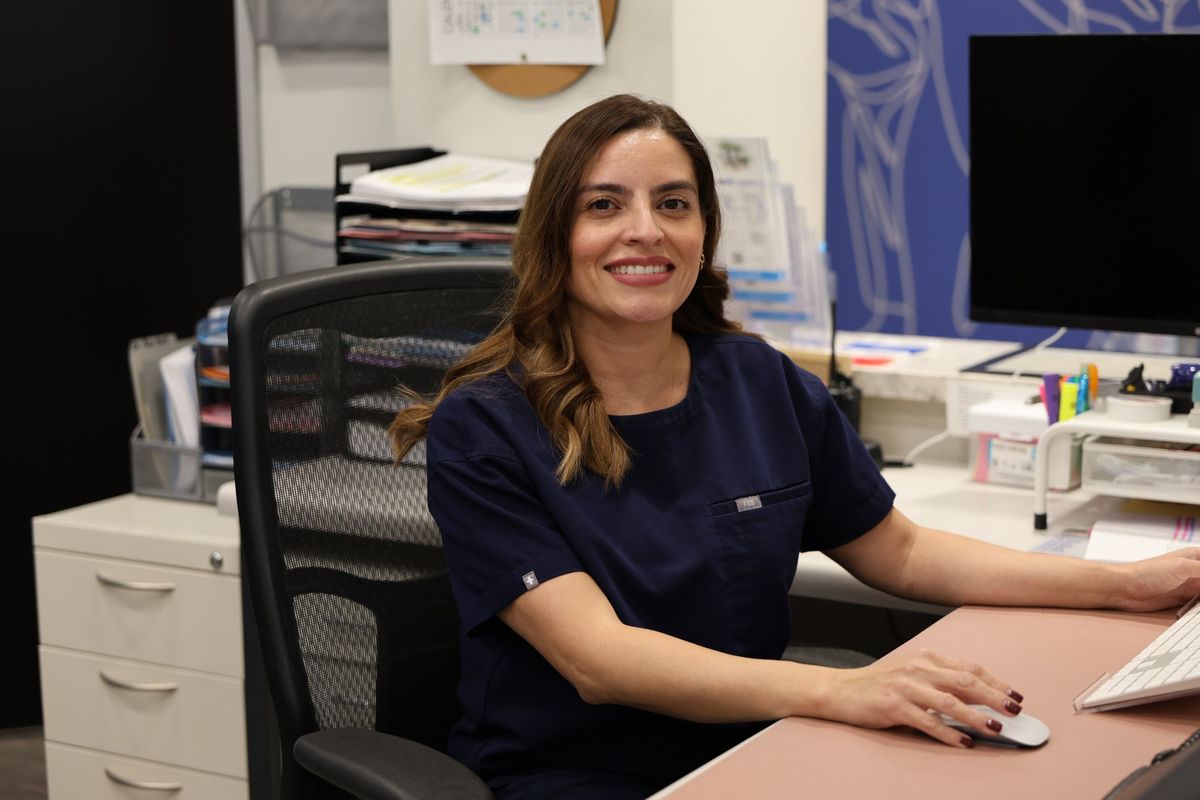
You'll tell us exactly what happened — which way you were hit, where you were sitting, what the car looked like, where it hurts and when it started. Then a hands-on exam: range of motion, which movements provoke pain, reflexes and strength. Most accident patients get their first treatment that same visit, and if you need medication, our nurse practitioner sees you before you leave. Before you leave, Silvia walks you through how your care gets paid for.
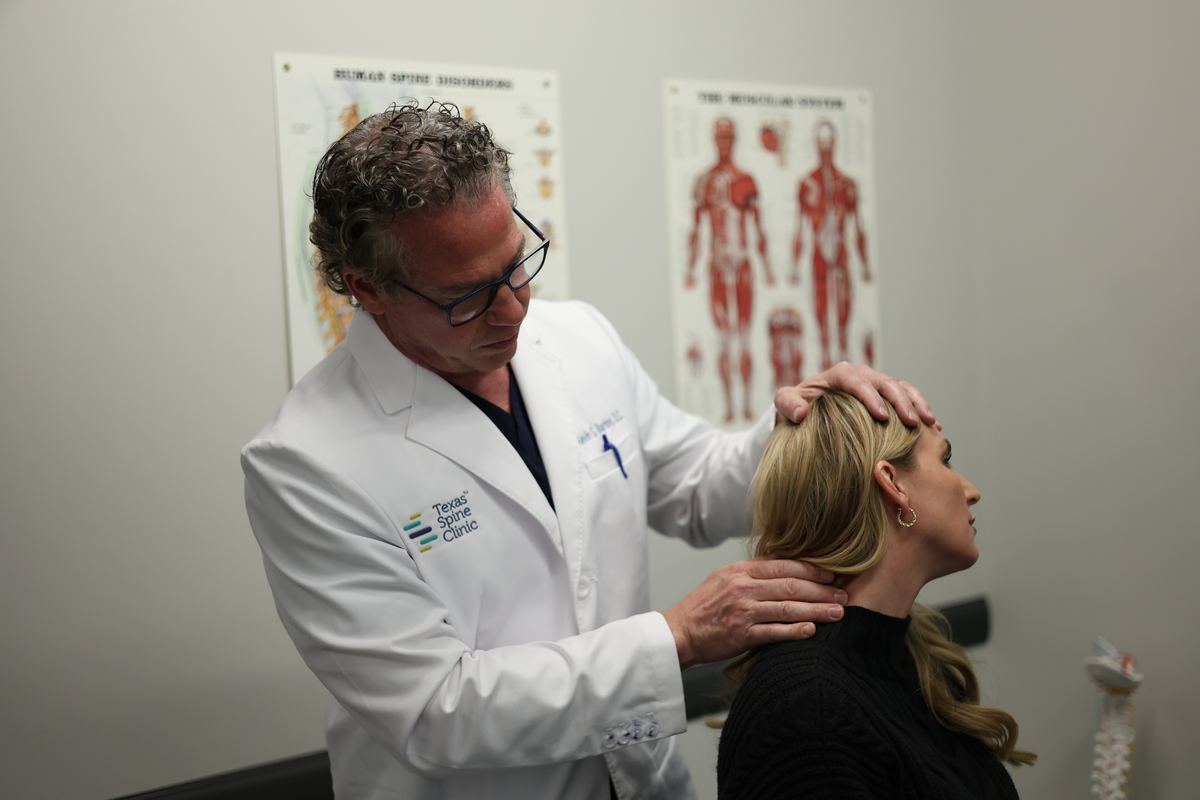
The exam is hands-on: where it hurts, what provokes it, how far the neck and back will go. The first weeks: hands-on care while it matters most.
Adjustments, myofascial release, laser and rehab exercise to keep healing tissue moving and get your range of motion back.
The re-check.
We re-examine you and compare against day one. Moving better and hurting less? We finish the course and release you.
MRI — when the exam says so.
If the re-check shows pain that isn't settling, symptoms that are getting progressively worse, numbness or tingling, or anything that points past soft tissue, we order an MRI and arrange it for you. Then we review it with you, on the screen — the pictures, not just the report.
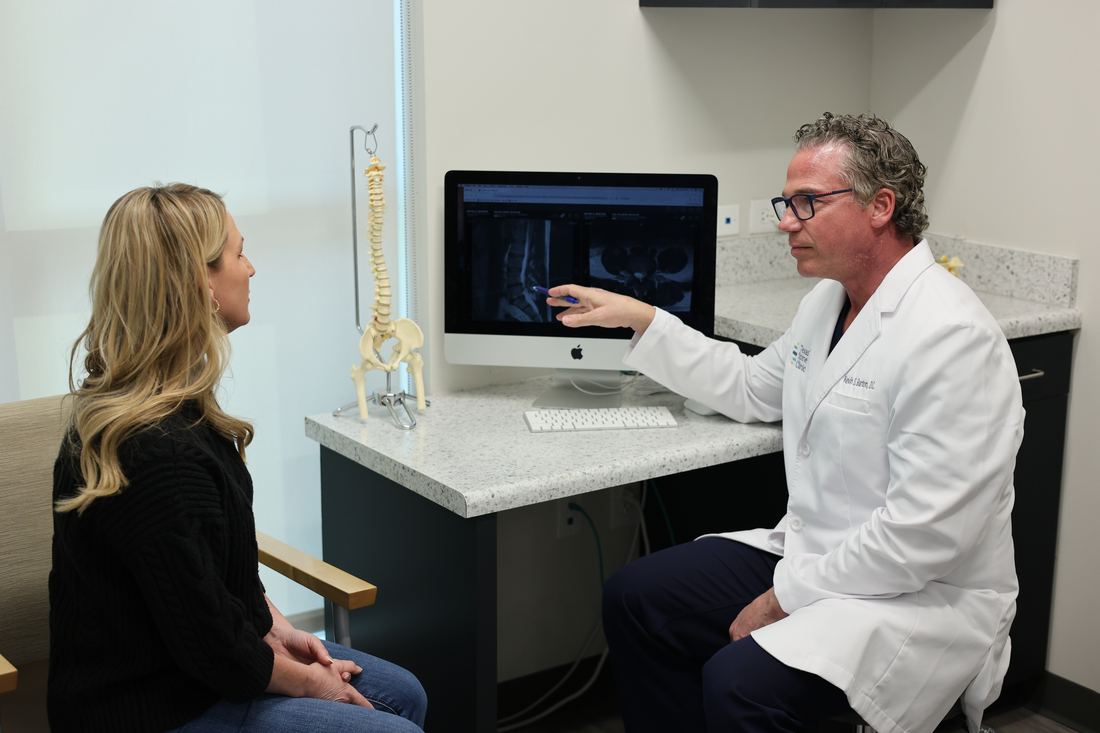
We review your MRI with you, on the screen — the pictures, not just the report. If imaging shows a disc injury: decompression.
A course on the DRX9000, FDA-cleared, to take pressure off the injured disc and the nerve beside it — non-surgical, nothing cut, nothing implanted.
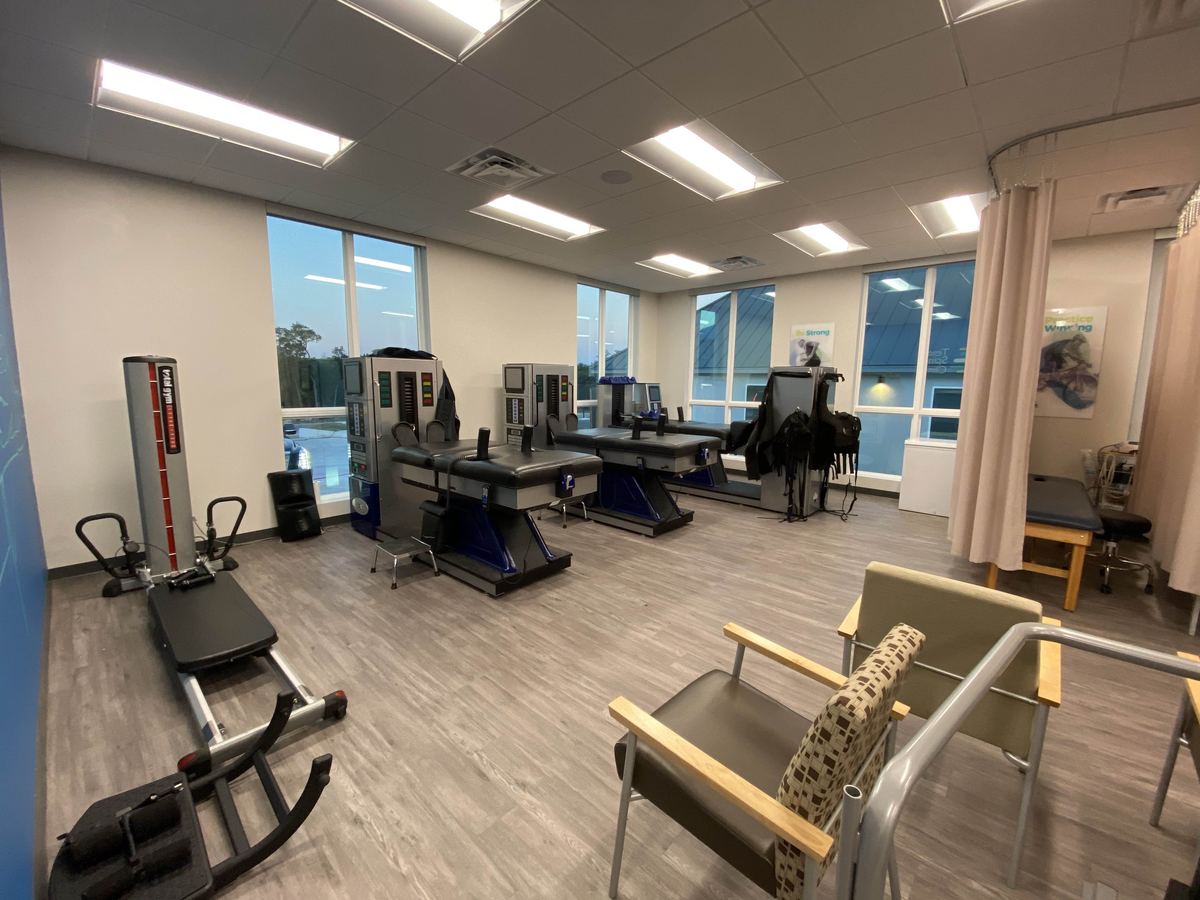
The DRX9000 is down the hall — not a referral away. If pain still won't let go: pain management, same building.
Dr. Singh or Dr. Persyn evaluates you here. No new office, no new intake packet, no starting over.
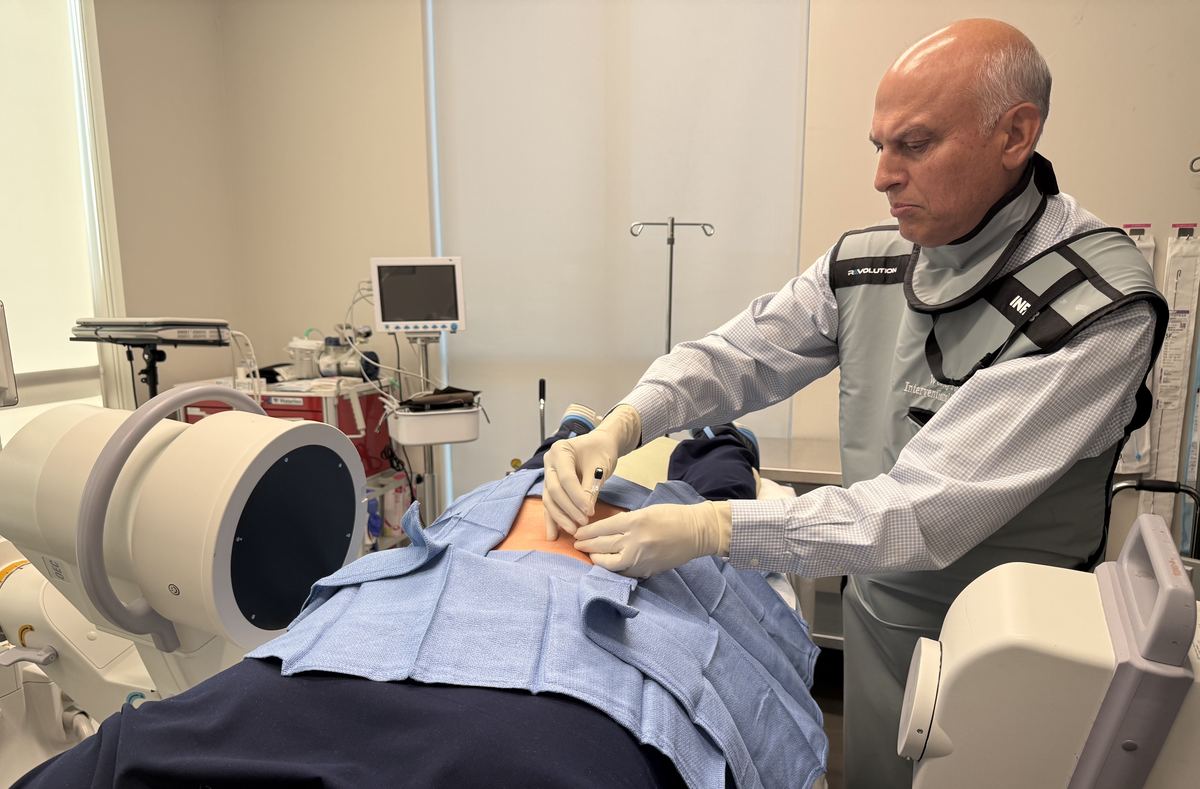
Injections are done here, under image guidance, by Dr. Singh or Dr. Persyn. If injections don't give you relief: a surgeon's opinion.
We refer you to a spine surgeon or an orthopedic surgeon, depending on what's injured and how severe it is, and send your findings and imaging with you.
Release.
You're released when the exam shows substantial improvement, or when you've reached maximum medical improvement — the point where you've recovered as far as this injury is going to let you and we've worked through the treatment that can help.
The next 72 hours
What to do now — before you talk to anyone's insurance company.
This is protective advice from doctors, not legal advice. The point is simple: understand what you're signing before you sign it.
Do
- Get examined — even if you feel mostly fine. Adrenaline is a painkiller. An exam in the first days is better medicine, and it puts your injuries on record while they're fresh.
- Take pictures now. Both cars, the scene if you can, and any bruising or seat-belt marks — bruises fade within days.
- Write down what hurts, today. Even the small stuff. Symptoms that seem minor on day one are often the ones that matter by week three.
- Keep one folder. The police report number, the claim number, every letter, text and voicemail about the wreck.
- Tell us if you've already talked to an insurer or an attorney. It changes nothing about your care — it just tells Silvia where to pick up the paperwork.
Don't
- Don't tell the other driver's insurer "I'm fine." You don't know yet. A recorded "I'm fine" on day two is hard to take back in week four.
- Don't sign a release or take a quick check before you've been examined. A fast offer usually comes with a release of everything — including injuries that haven't shown up yet.
- Don't take calls from people you didn't contact. If a stranger calls about your wreck offering a doctor and a lawyer, hang up. In Texas, soliciting accident victims that way is illegal. You choose your own care.
The free guide: Your First 30 Days After a Wreck
Everything above, plus a week-by-week of what to expect, what to write down, and the questions to ask before you sign anything.
Just the guide. No sales calls.
Who pays
You shouldn't need an insurance degree to get treated.
It really is that complicated, which is exactly why we handle it. The short version of how accident care gets paid for in Texas:
Your first visit costs you nothing out of pocket.
We bill the coverage responsible for your accident — that's our job, not yours.
You may already have coverage you've never used.
Texas auto policies include at least $2,500 per person in Personal Injury Protection (PIP) unless the policyholder turned it down in writing. It pays regardless of who caused the crash. A lot of people find out they've been carrying it for years.
If the other driver was at fault,
their insurance is ultimately responsible for your accident-related care. We see auto cases every week and handle that billing for you. Some carriers push back early, depending on the carrier and how serious your injuries are. If yours does, Silvia will tell you right away and walk you through your other options.
Letters of protection are accepted.
If you have an attorney, we work with their letter of protection, and your care goes forward without you paying up front.
No attorney? That's fine too.
You don't need one to be treated here. That decision is yours.
How accident care is decided here
Five standards. Hold us to every line.
-
1. Exam first, paperwork second.
You're examined before anything else happens, and Silvia explains your coverage in plain English before you leave.
-
2. Your care, your choice of attorney — or none.
We never refer you to a lawyer. Bring yours, or come without one.
-
3. A reason for every visit.
Each one is written in your chart, and your plan changes as you improve.
-
4. One building, one record.
Chiropractors, a nurse practitioner and two pain management physicians work in the same building, with imaging arranged by us — so your records tell one complete story.
-
5. Released when you're better.
Treatment ends when your exam says you've recovered — your motion is back and your spine handles normal load — or you've reached maximum medical improvement.
Getting treated isn't "building a claim."
A lot of people put off care after a wreck because they don't want to be that person — the one working an angle. So they settle fast for too little, skip the appointments, and carry someone else's mistake in their neck for the next ten years.
Getting examined isn't gaming anything. It's refusing to let a stranger's bad afternoon become your permanent condition. Come in, find out what's actually injured, and fix it.
Questions patients actually ask
Fair questions
Will I pay anything at my first visit?
No. Your injury evaluation is nothing out of pocket. We bill the coverage responsible for your accident, and Silvia walks you through where things stand before you leave.
I feel mostly okay. Should I still come in?
Yes. Adrenaline hides pain for a day or two, and tissue that heals guarded heals stiff. An early exam is the cheapest insurance you'll ever get — it costs you nothing, and it puts your injuries on record while they're fresh.
I already went to the ER. Why do I need another exam?
The ER's job is to rule out the emergencies — fractures, bleeding, head injury. That's important, and it's usually where their job ends. Ours starts there: the soft-tissue, joint and disc injuries that decide how you feel three months from now.
My accident was months ago. Is it too late?
No. Tissue that healed stiff can still be treated, and a disc injury can still be found. The sooner you're examined, the sooner we know what we're working with.
Should I talk to the other driver's insurance company?
Not about your injuries until you've been examined. Stick to the facts of the crash, and don't sign anything or accept a payment until you know what's actually hurt.
Do I need an attorney?
That's your decision, and we don't give legal advice — we're doctors. If you have one, we work with their letter of protection. If you don't, you're just as welcome here.
Do you take my health insurance?
Auto coverage — PIP and the at-fault driver's insurance — is usually responsible first after a wreck. Silvia sorts out which coverage applies to you, including your health plan when it's the right one to use.
How do I get an MRI?
If your exam calls for one — or your symptoms are getting progressively worse — we order it and arrange it. You don't have to find an imaging center or chase a referral.
Do you do injections?
When a case needs one, yes — performed here by Praful C. Singh, M.D., or Lisa D. Persyn, M.D. Most accident patients start with hands-on care, and the exam and MRI decide if someone needs injections.
What if I need surgery?
We don't do surgery here. If your injury needs a surgeon's opinion — usually after injections haven't given you relief — we refer you to a spine surgeon or an orthopedic surgeon, depending on what's injured and how severe it is, and send your findings and imaging along.
How long will treatment take?
It depends on the extent of your injury. Your progress is measured at each exam, and you're released when your exam shows you've recovered or reached maximum medical improvement.
Can I come in today?
Monday through Thursday, yes — we see new patients the same day. Call (210) 741-9166.
Come in today
The repair job already started. Make sure it's done right.
Your body began patching the damage within hours of the crash. The weeks right after are when care has the most say in how it heals. Come in today: same-day appointment, no-cost evaluation, and one team from the first visit to the last.
Texas Spine Clinic · 3212 Napier Park, San Antonio, TX 78231
Monday–Thursday, 8 a.m.–5 p.m. · Same-day appointments
Book your no-cost evaluation
No referral needed. Same-day appointments available.
Calendar not showing? Open it in a new tab.
Rather book by phone? Call (210) 741-9166.