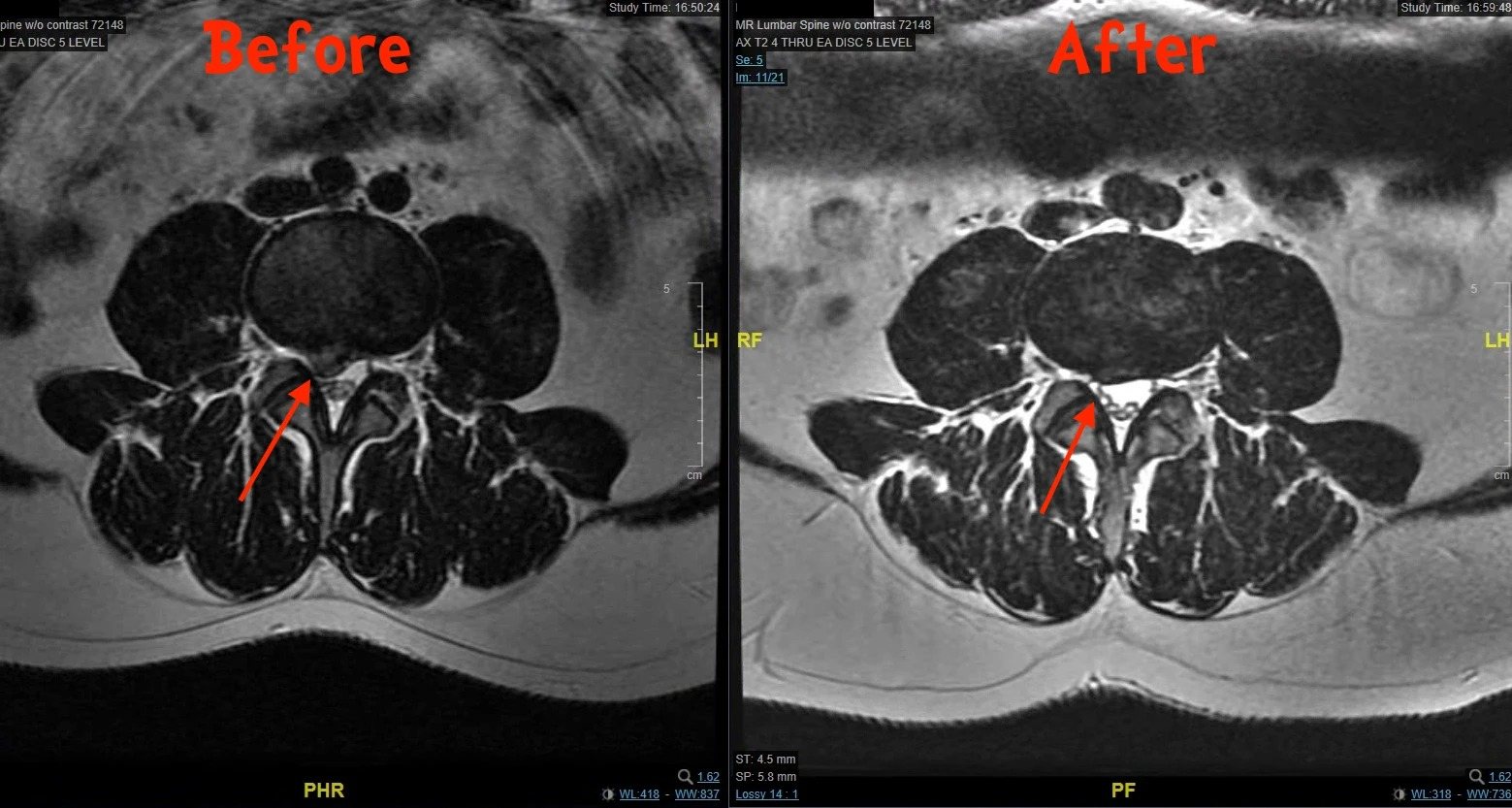
And this has actually been measured
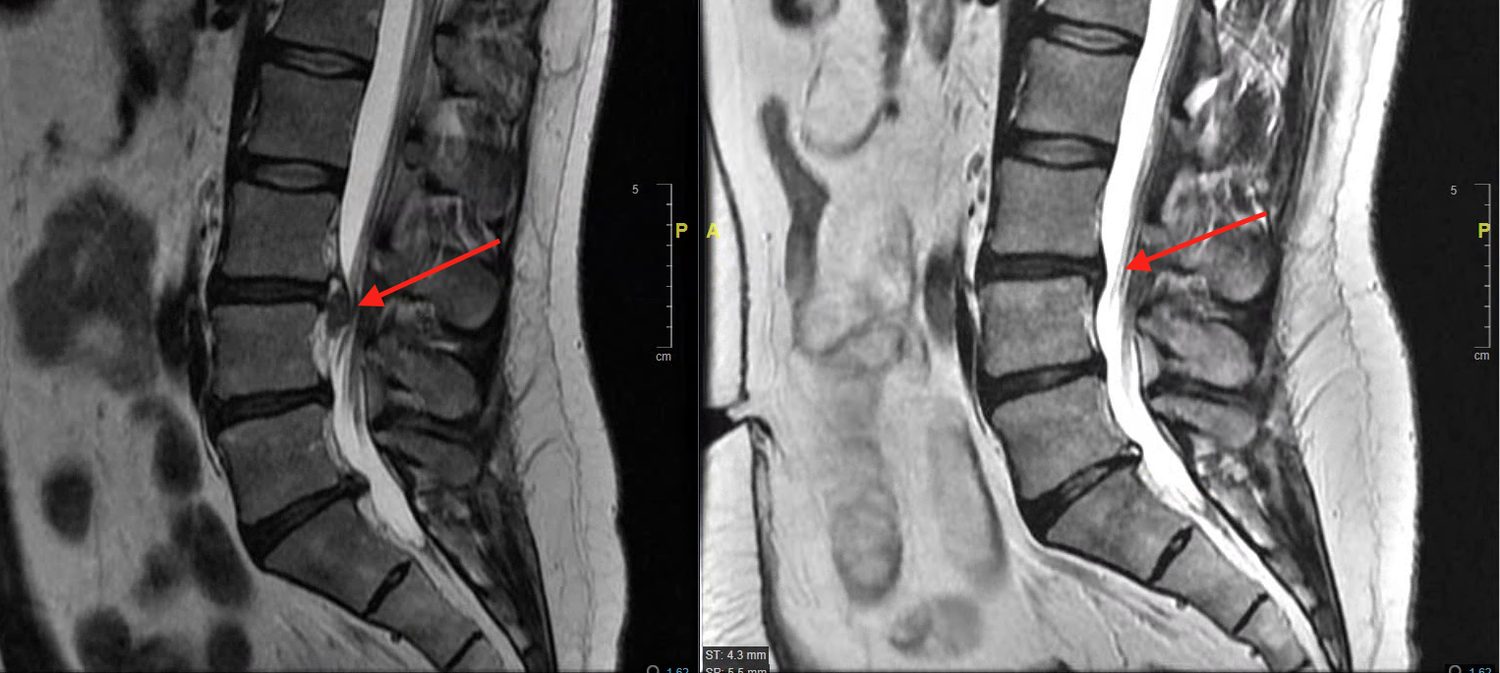
You don't have to take our word for the mechanism. Researchers imaged 100 people
with lumbar stenosis in flexion and in extension and measured the actual
cross-section of the nerve sleeve running down the canal.6
At the L3-4 level it measured about 96 mm² leaning forward versus 74 mm² arched
back. At L4-5 — the level that gives most people the most trouble — it was about
72 mm² forward versus 61 mm² back.
Put a threshold next to those numbers and the story finishes itself. The classic work on
where symptoms start put the critical size at roughly 65 mm² at
L4.7 Arched back, that L4-5 measurement drops
below the line. Leaning forward, it stays above it. Same spine, same
afternoon, two different situations for your nerves.
Read it precisely, though: those 100 people all already had stenosis, so the
study shows how a narrowed spine changes with position and not how yours compares with a
healthy one — and the 65 mm² threshold came from a 1984 study of seven cadaver
spines, a small, old number that has been quoted for forty years partly because
nothing better replaced it. Treat it as a landmark, not a verdict on your MRI.
But the direction is not in doubt, and it's the mechanical core of everything else on this
page.
Leaning forward buys your nerves room. Standing and arching spends
it.
Now nothing about your day is mysterious.
Walking is standing, over and over
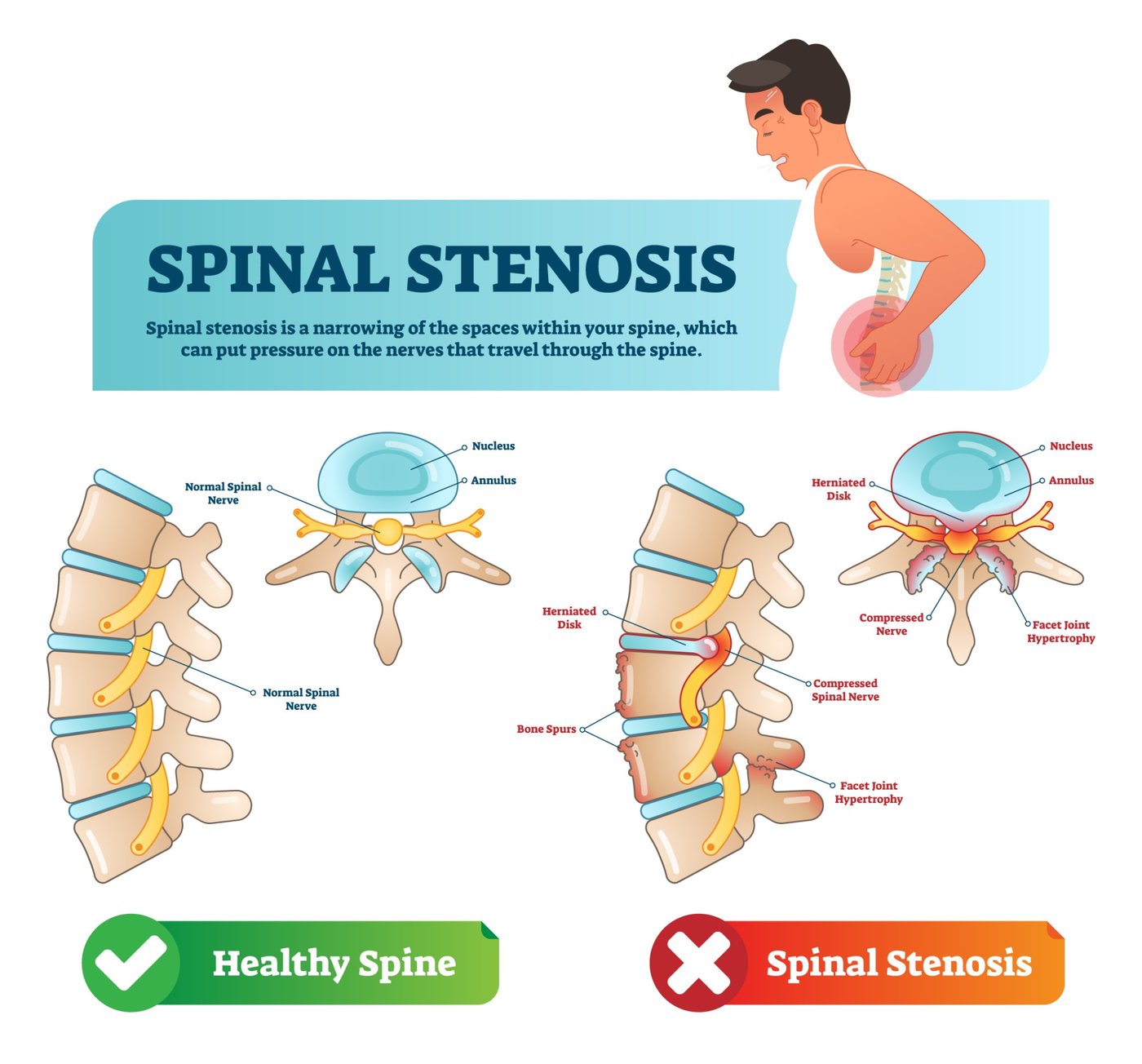
When you walk, you're not just upright. Every step lets that arch deepen for an instant. Do
that a few hundred times and the crowded nerves get less and less room.
There's a second half to it, and it matters. Nerves need blood. They have
their own tiny vessels, and those get squeezed too. A working nerve needs more blood than a
resting nerve — and walking is the nerve working. So the demand goes up exactly when the
supply goes down.
That's why the symptoms build over minutes instead of arriving with the first step. It's
also why they feel the way they do: not sharp and sudden like a pinched nerve, but heavy,
burning, tired, unreliable. Legs that quit rather than legs that stab.
Doctors call it neurogenic claudication. Claudication is just an
old word for limping. Your legs limp because of a nerve supply problem — that's the
"neurogenic" part.
Why leaning fixes it in about a minute
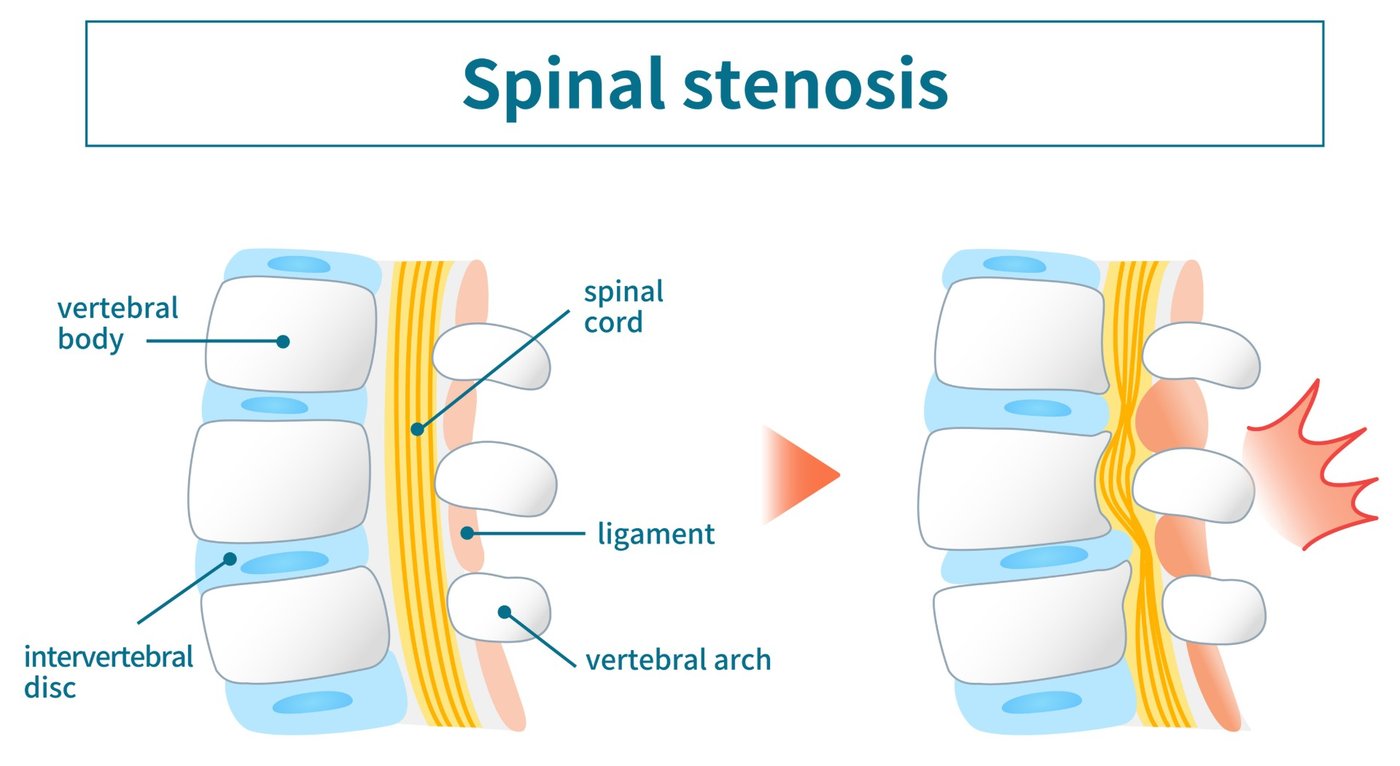
Lean on a shopping cart and your spine flexes forward. The tunnel opens. The pressure comes
off the nerve and its blood vessels. Circulation catches up. Ninety seconds later your legs
are yours again.
Notice what that means: stopping isn't what helps you. Bending is. People
with stenosis usually have to sit or lean to get relief. Just standing still doesn't do
much.
What the research says about the shopping-cart sign
The principle behind the cart — symptoms that ease when you bend forward — has been tested
in 468 patients. People whose symptoms improve when they bend forward are
about six times more likely to have stenosis. One sign is even stronger:
no pain while seated, which makes stenosis about six to seven
times more likely.8
That's why we ask about it. The cart tells us where to look. Your exam and your imaging
tell us exactly what's there.
If your legs settle down
only when you sit or bend, that points at the spine. If they settle down just from standing
still, that points at your circulation — vascular claudication, a different problem,
with a different doctor, and worth ruling out. We'd rather send you to the right person than
treat the wrong thing.