← Blog
Nerve Pain
Burning hands and feet: the types of neuropathy, and a treatment that isn’t a pill
Diabetic, chemo, small fiber, no cause found. The common types of neuropathy, the treatments most people are offered first, and how scrambler therapy goes after the burning pain itself, with no pills and no narcotics.
It starts in the toes or the fingertips. A burn that never cools off. Jolts like an electric shock when nothing touched you. Feet that feel like they are standing on hot sand, or hands that ache so much you set the coffee cup down. For some people it climbs past the ankles and wrists, up the legs and into the arms.
That is neuropathy pain. This article is for people whose main problem is the pain: the burning, the stabbing, the electric jolts in the hands, arms, legs and feet. It covers the common types of neuropathy, the treatments most people are offered first, and scrambler therapy, a non-drug, non-narcotic treatment built to give relief that lasts well after the session ends.
What neuropathy is
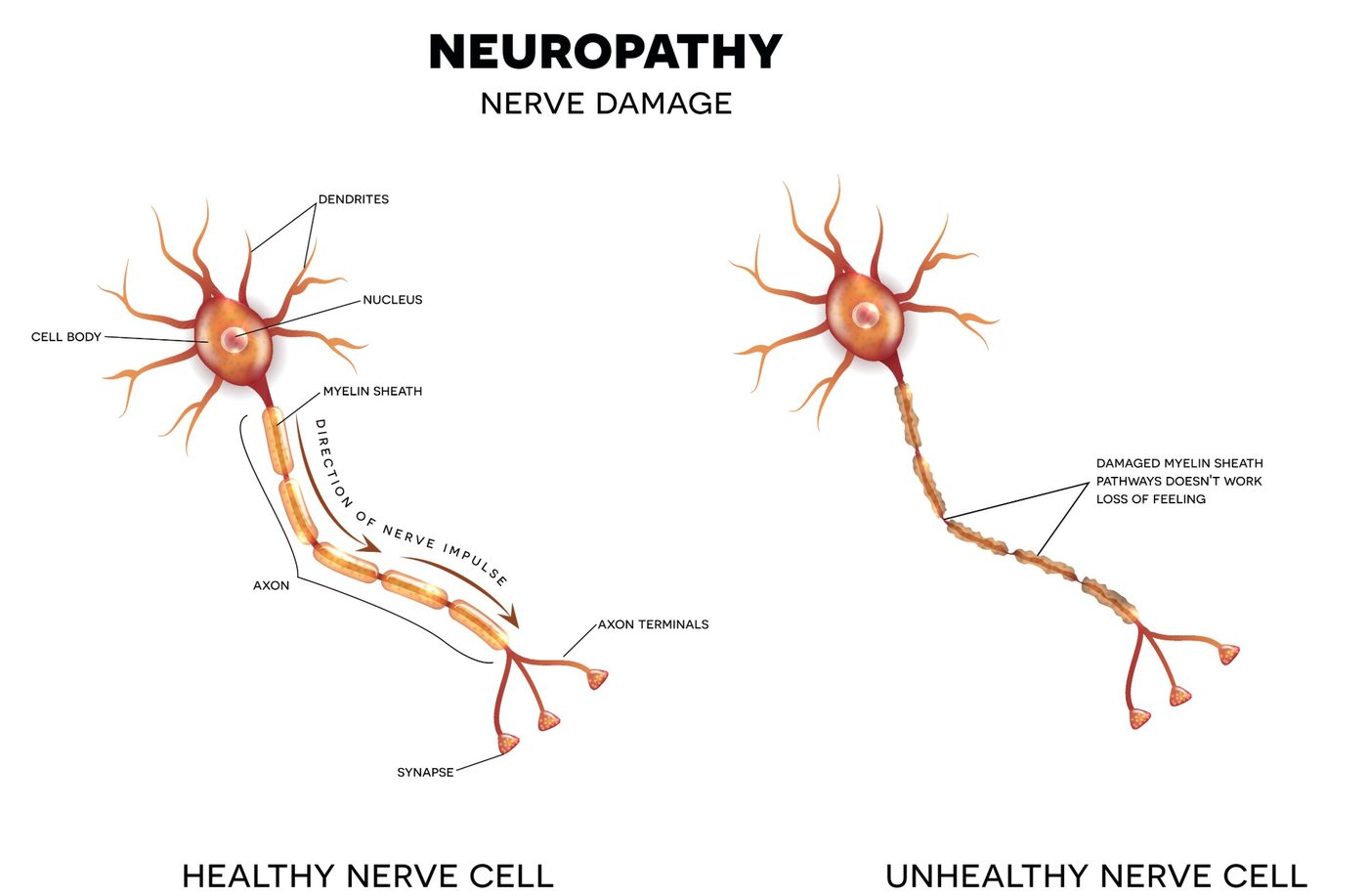
Your peripheral nerves are the long wires that run from your spinal cord out to your skin and muscles. Neuropathy means those nerves have been damaged. The longest nerves, the ones that reach your feet, are usually hit first. The hands tend to follow later. Doctors call this pattern “stocking and glove,” because it covers the areas a pair of socks and a pair of gloves would cover.
Damaged nerves can fail in two different ways, and the difference matters for everything that follows:
- They can go quiet. That is numbness: you lose feeling, and you might not notice a pebble in your shoe or how hot the bath water is.
- They can get loud. That is pain: the nerve fires on its own, sending burning, stabbing or electric signals when nothing is wrong at the skin.
Many people have some of both. Some have mostly numbness and little pain. Others have pain that runs their whole day.
The common types of neuropathy
More than 100 types of peripheral neuropathy have been identified.1 Most are named for what caused them. These are the ones we see most often in people with burning hands and feet.
Diabetic neuropathy
Diabetes is the most common known cause. Years of high blood sugar injure the nerves and the small blood vessels that feed them, and as many as half of people with diabetes develop some nerve damage.2 It usually starts as burning or tingling in both feet, and is often worst at night. Typical treatment: keeping blood sugar in range, daily foot checks, and medicine for the pain.
More on diabetic neuropathy pain →
Neuropathy after chemotherapy
Some chemotherapy drugs injure the long nerves to the hands and feet. Many people notice it after the chemotherapy has stopped, usually four to six weeks later, and for some it stays for years. Typical treatment: the oncology team may adjust or pause a drug during treatment. Once treatment is over, it is usually medicine for the pain.
More on neuropathy after chemo →
Idiopathic neuropathy (no cause found)
“Idiopathic” means the tests did not find a cause. It is common, especially after age sixty, and it is one of the most frustrating diagnoses to hear, because there is no underlying problem to fix. Typical treatment: medicine for the pain, and regular rechecks in case a cause shows up later.
More on peripheral neuropathy →
Small fiber neuropathy
This type damages the smallest nerve fibers, the ones that carry pain and temperature. Its signature is burning: burning feet, burning hands, sometimes burning skin that can’t stand a bed sheet. The standard nerve test (an EMG and nerve conduction study) checks the larger fibers, so it can come back normal even when the pain is real. A small skin biopsy that counts the nerve endings is how it is usually confirmed. Typical treatment: looking for a cause such as diabetes or pre-diabetes, then medicine for the pain.
Neuropathy from a vitamin shortage, alcohol, or another illness
Low vitamin B12, long-term heavy drinking, an underactive thyroid, kidney disease and some autoimmune conditions can all damage nerves. Typical treatment: correcting the cause, such as B12 replacement or treating the thyroid. Sometimes the nerves recover when the cause is fixed. When the pain stays anyway, the next step is usually medicine for the pain.
Nerve pain that isn’t in the hands and feet has its own pages: burning that stayed after a shingles rash healed, and CRPS, where one limb can’t stand to be touched.
The treatments most people are offered
Whatever the type, once the cause has been treated as far as it can be, most people with painful neuropathy are offered the same short list:
- Nerve-pain pills. Gabapentin, Lyrica (pregabalin), Cymbalta (duloxetine), and older antidepressants such as amitriptyline. They turn the volume of the pain signal down for a few hours at a time. Patients often tell us about the drowsiness, the fog, the dizziness and the weight gain, and the dose tends to climb over the years.
- Creams and patches. Lidocaine numbs the skin for a while. Capsaicin, the heat in chili peppers, is used as a cream or as a strong patch applied in a clinic.
- Narcotic pain medicine, such as tramadol or stronger opioids, comes with dependence and other risks of its own.
- Implanted devices. A spinal cord stimulator is a battery and wires placed under the skin and along the spine through a surgical procedure.
Every one of these works on the volume. The nerves keep sending the same pain message, and the pills, creams or devices have to keep going to keep that message quiet. That is why so many people with neuropathy end up taking something every day for years.
 Watch
Scrambler therapy: a different message, not a lower volume
Scrambler therapy is an FDA-cleared treatment for nerve pain. There are no pills, no narcotics, no needles and nothing implanted. It goes after the pain message itself.
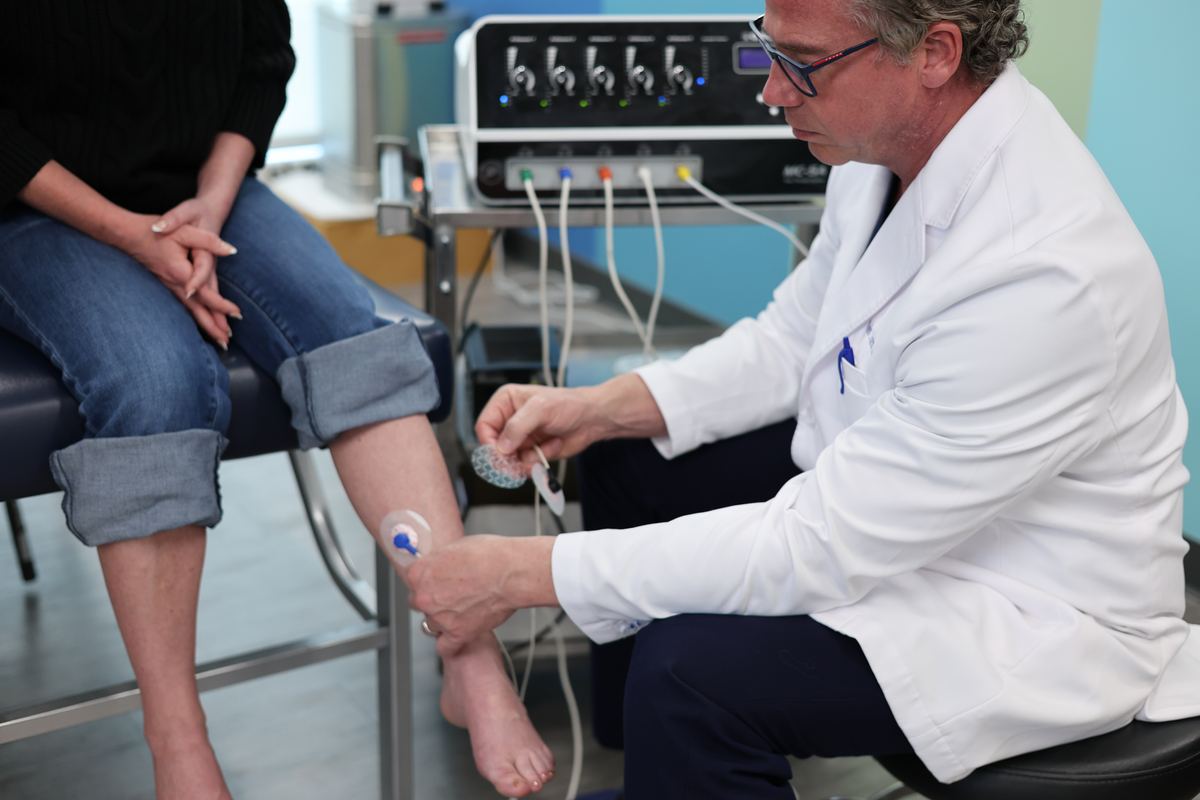
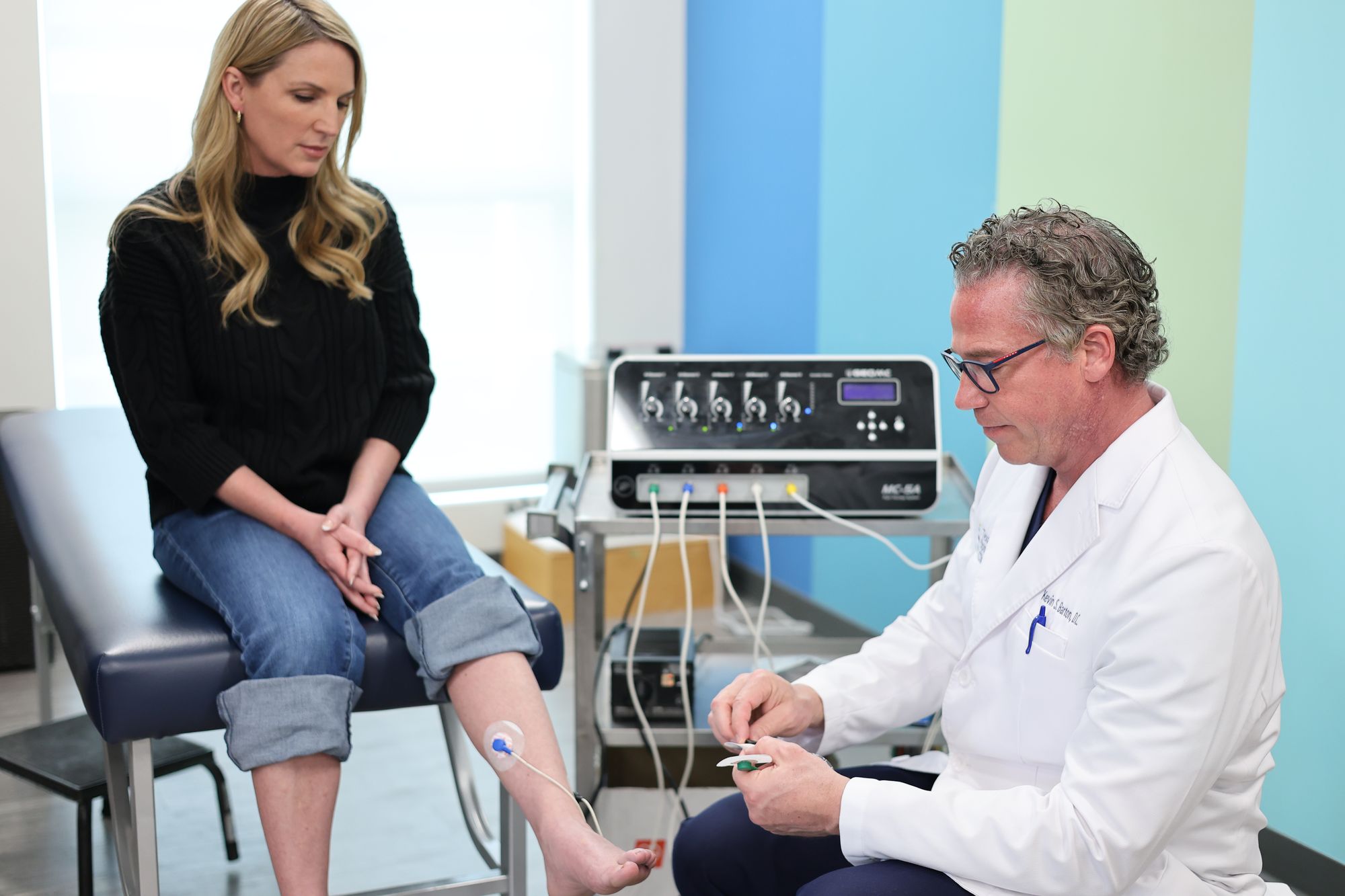
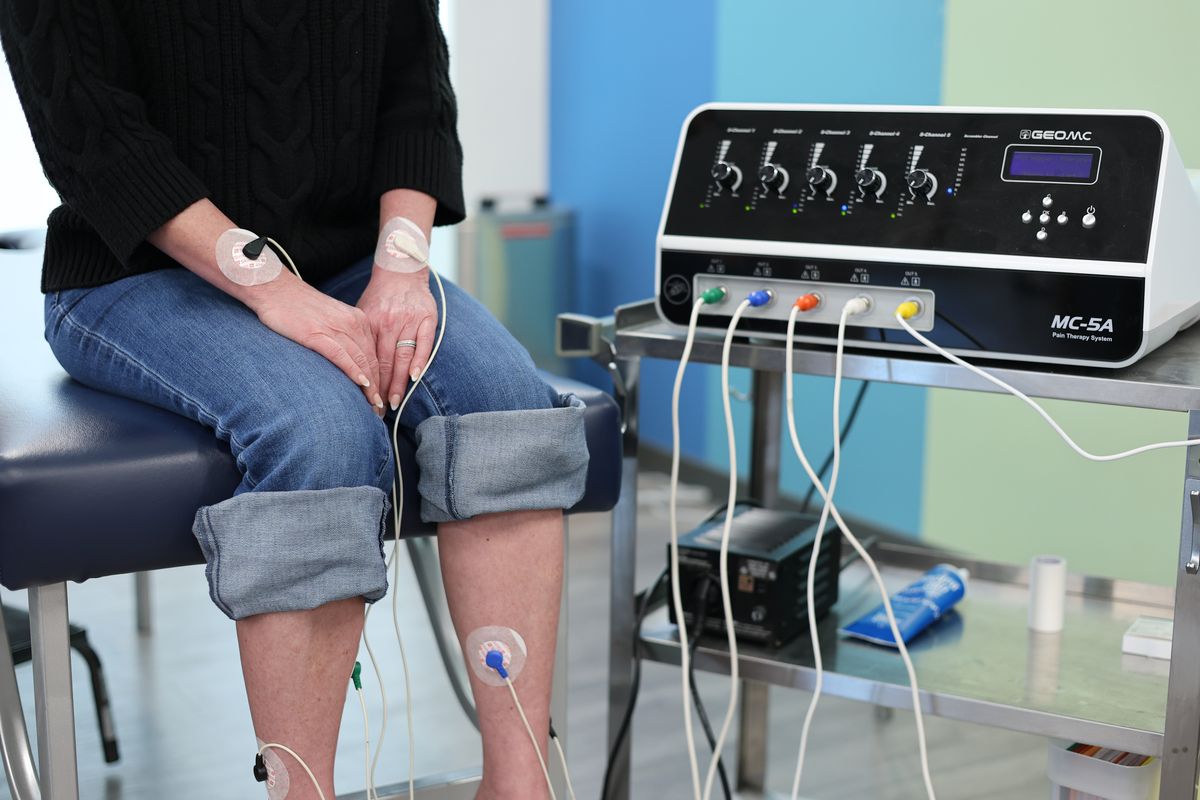
Small adhesive pads, like the ones used for a heart tracing, go on the skin along the nerves that feed the painful area. For burning feet, the pads go on the legs. For burning hands, they go on the arms. They always go on skin that still feels normally, above any area that has gone numb, because the treatment needs a working nerve to carry its signal.
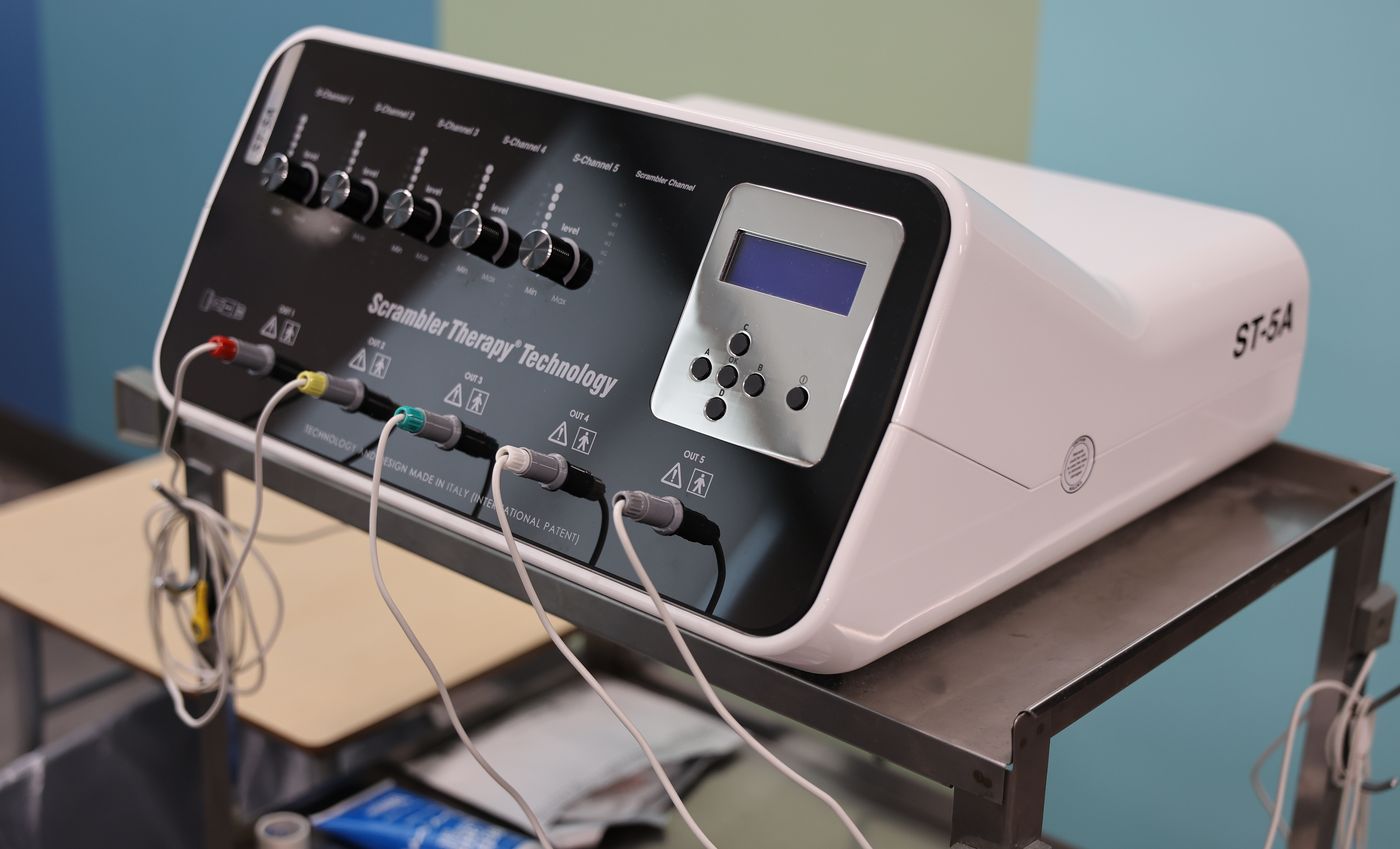
The machine then sends its own signal up those nerves: constantly changing patterns shaped to imitate what a healthy nerve sends when nothing is wrong.3 Your nervous system receives a no-pain message on the same line that has been carrying pain, over and over, for about forty minutes. Session after session, your brain relearns what no pain feels like.
That is the difference that matters for lasting relief. A pill works while it is in your bloodstream. Scrambler therapy is given as a course, and it aims for relief that keeps going after the machine is turned off. For people who respond, relief builds across the course, with each session’s relief tending to last longer than the one before. Published reports describe relief lasting weeks, months, and in some cases longer after a course ends, and people whose pain creeps back responding again to a short round of booster sessions.3
Pain, not numbness: who this treatment is for
Scrambler therapy treats nerve pain. It is for you if your hands and arms, or your feet and legs, hurt in a way that runs your day: burning, stabbing, electric jolts, pins and needles that hurt, or skin that can’t stand to be touched.
It is not a treatment for numbness on its own. If your feet or hands are numb but don’t hurt, this is not the right treatment for you, and we will tell you that at the consultation. If you have numbness and significant pain, the pain is what we treat. That is the part that keeps you up at night.
Numbness is the feeling that went missing. Pain is the signal that won’t stop. Scrambler therapy is aimed at the second one.
What a session feels like
- You keep your clothes on. Roll up your sleeves or trouser legs and sit back.
- The level comes up slowly, one channel at a time, while we ask what you feel. The target is a clear tingle or buzz that is completely comfortable. It should never hurt.
- Someone stays with you the whole time, adjusting the setup until your pain is at zero while you are in the chair.
- About forty minutes, then you drive yourself home. No drowsiness and nothing to recover from.
 Watch
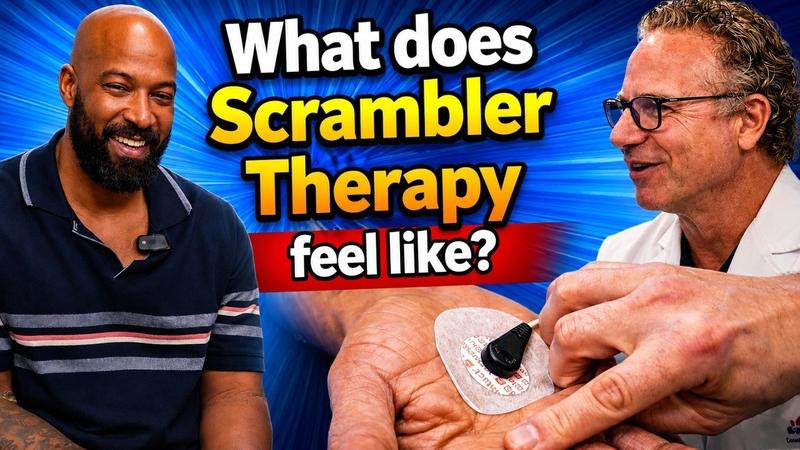
An Air Force veteran with neuropathy after chemotherapy went from a seven in the afternoon to a one, and told us his relief has typically lasted six months to a year between rounds. Read Braderick’s story.
If you take gabapentin, Lyrica or Cymbalta
These medicines can blunt the scrambler signal, so if you take one, we work with the doctor who prescribed it on a plan to step down. Never stop one on your own. Stopping gabapentin or Lyrica suddenly can cause seizures, and stopping Cymbalta suddenly can cause withdrawal symptoms. Bring your full medication list to the consultation. Diabetes medicines, including metformin and drugs like Ozempic and Mounjaro, cause no problems with the treatment. Keep taking them as prescribed.
The course, and how you find out if it works for you
A full course is ten sessions on back-to-back weekdays, five days a week for two weeks. You don’t decide about ten days on day one.
- First, a $19 consultation. Your history, which type of neuropathy you have, what you’ve already tried, and whether your pain is the kind this treatment is built for.
- Then a $99 first session. A full session, so you find out what your own nerves do with it. The $99 is credited toward your course if you continue.
- Then you decide. Scrambler therapy isn’t a covered insurance benefit, so the course is an out-of-pocket investment. You’ll have the exact number in writing before you commit to anything.
Who cannot have this treatment
These come from the device’s own instructions, and no exam changes them: an implanted pacemaker; a spinal cord stimulator or peripheral nerve stimulator, implanted or in trial; aneurysm clips, vena cava clips or skull plates; a seizure disorder; pregnancy; and undiagnosed pain, which needs a diagnosis before it needs a treatment.
An implanted defibrillator does not rule you out. We use a magnet to turn it off during the session. Joint replacements and the screws, plates and rods used to repair bones or fuse a spine are not a problem either.
If numbness or weakness spreads quickly over hours or days, go to an emergency room today. That needs a different kind of care first.
The scrambler program at Texas Spine Clinic is run by Dr. Kevin Barton, D.C., who trained in Rome with Dr. Giuseppe Marineo, the inventor of the treatment, and is medically supervised by Lisa D. Persyn, M.D., board certified in Physical Medicine and Rehabilitation. If your hands and feet burn and the pills have only turned the volume down, there is a next step.
Neuropathy treatment at Texas Spine Clinic
Sources
- National Institute of Neurological Disorders and Stroke (NINDS), National Institutes of Health. Peripheral Neuropathy.
- National Institute of Diabetes and Digestive and Kidney Diseases (NIDDK), National Institutes of Health. Diabetic Neuropathy.
- Smith TJ, Wang EJ, Loprinzi CL. Cutaneous electroanalgesia for relief of chronic and neuropathic pain. New England Journal of Medicine 2023;389:158–164. A review written by physicians at Johns Hopkins and the Mayo Clinic.
This article is educational and is not a substitute for an examination and diagnosis. Individual results vary and no outcome is guaranteed.