← Blog
Your Visit
What happens at your $49 DRX9000 consultation
Visit one: the exam, and if you’re a candidate, your first session on the table. Visit two: your MRI on the screen with you and your investment in writing. What to bring, and how long it takes.
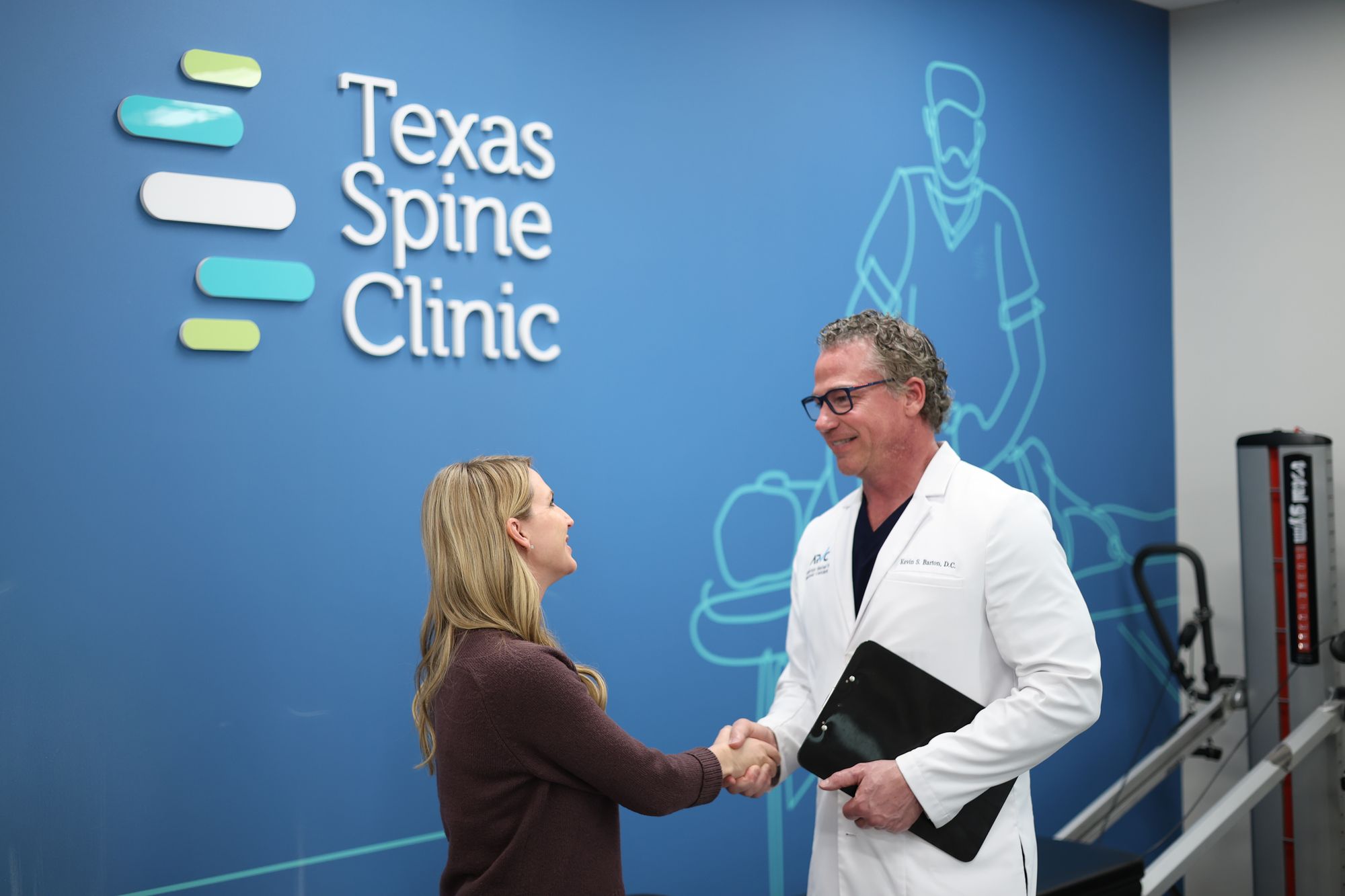
A $49 consultation for a program that runs for weeks makes people suspicious, reasonably. So here is exactly what the $49 buys, minute by minute, what it doesn’t, and what happens after.
The short version: it is always two visits. Visit one is the exam and, if you are a candidate, your first treatment on the table. Visit two is your MRI on the screen with you and your investment in writing. There isn’t time to evaluate you, treat you and review your imaging with you in one afternoon, and we won’t pretend there is.
What the $49 includes
- Your examination. History, an orthopedic and neurological exam, and X-rays if they are needed.
- Your imaging reviewed with you. Your MRI or CT on the screen, walked through finding by finding, at the second visit.
- Your first decompression treatment. If you are a candidate, you get on the DRX9000 at the first visit and feel what a session is like.
The $49 is for the DRX9000 spinal decompression consultation specifically. Our other programs start differently: scrambler therapy with a $19 consultation, car accident care with nothing out of pocket, chiropractic care same day with no referral.
Visit one, step by step
1. Check in
Your new-patient forms are on our website. Print them, fill them out at home and bring them, and you get to your exam sooner. Can’t print them? Fill them out when you arrive. It adds a little time to your visit.
2. Your history
Where it hurts, where it travels, what makes it better and worse, what you have already tried and what happened. This takes longer than you expect, because the story of your pain is half of the diagnosis. Bring your medication list.
3. The exam
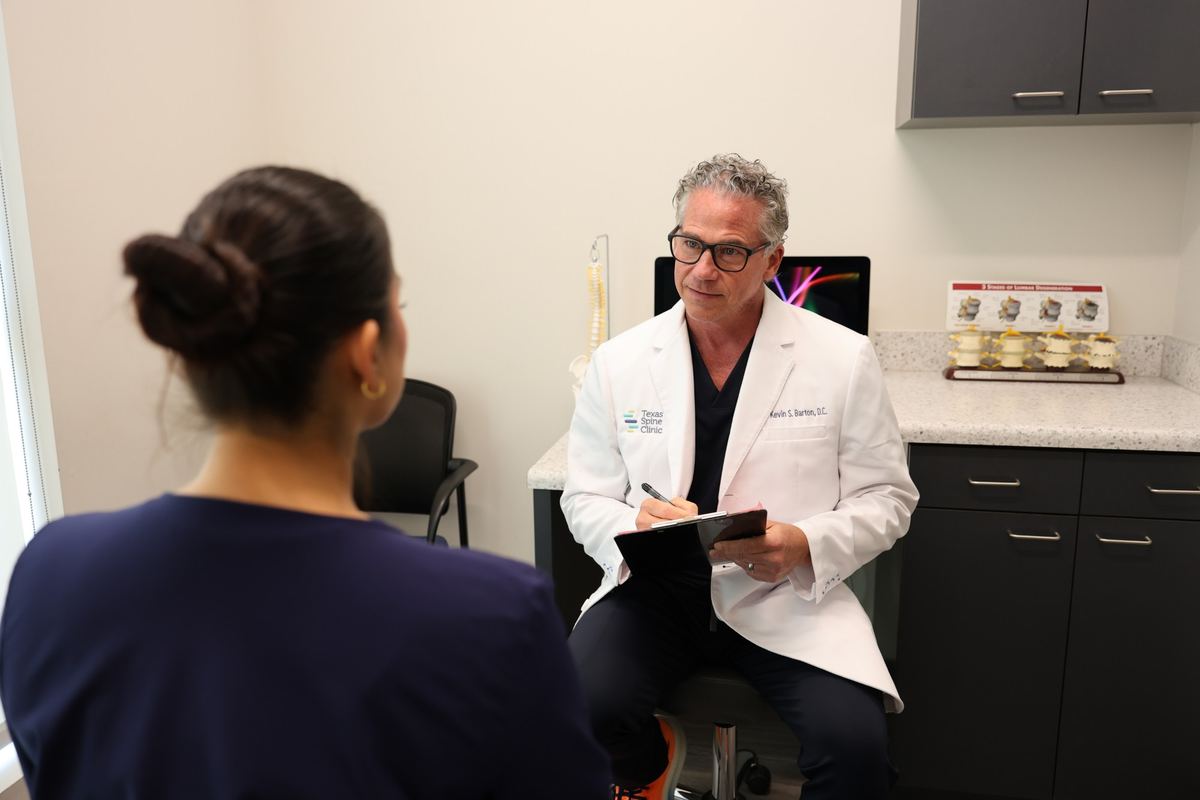
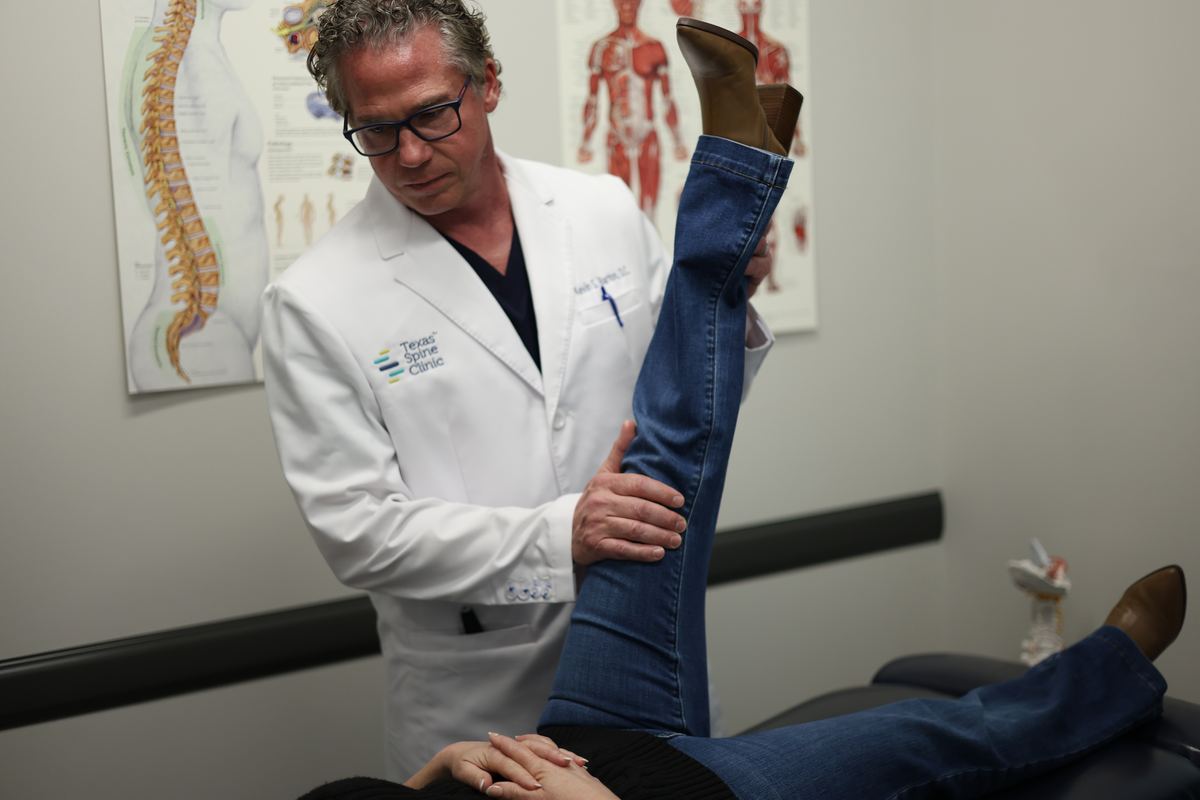
We screen the way a spine surgeon screens. Reflexes, strength and sensation in the leg or arm, to find out whether a nerve is losing function. Straight-leg raise and the other tests that reproduce disc pain on purpose. Range of motion. Where you are tender and where you aren’t. You also fill out a standard questionnaire about how bad the pain is, how often it comes, and what you can and can’t do, and you fill out the same one at every re-exam, so your progress is on paper.
 Watch
Watch4. X-rays, if they are needed
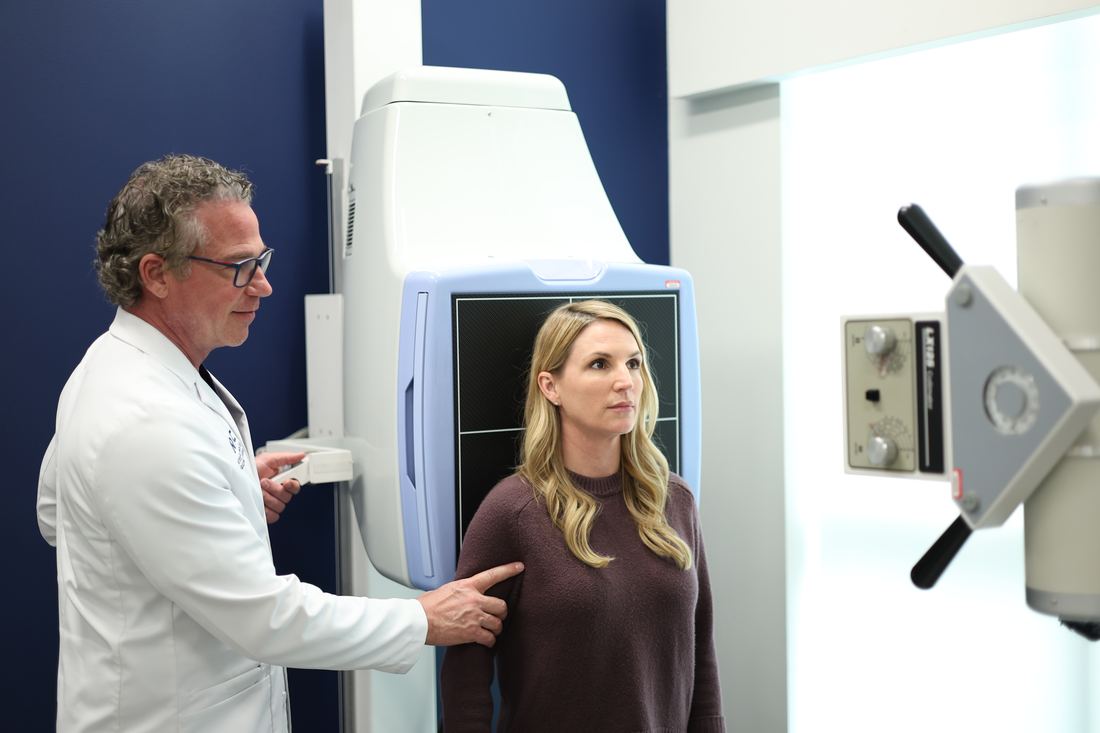
Taken here, the same visit. An X-ray shows bone, alignment and disc space. It cannot show a disc, which is why an X-ray alone never qualifies anyone for the program. That takes an MRI or CT.
5. Your first treatment
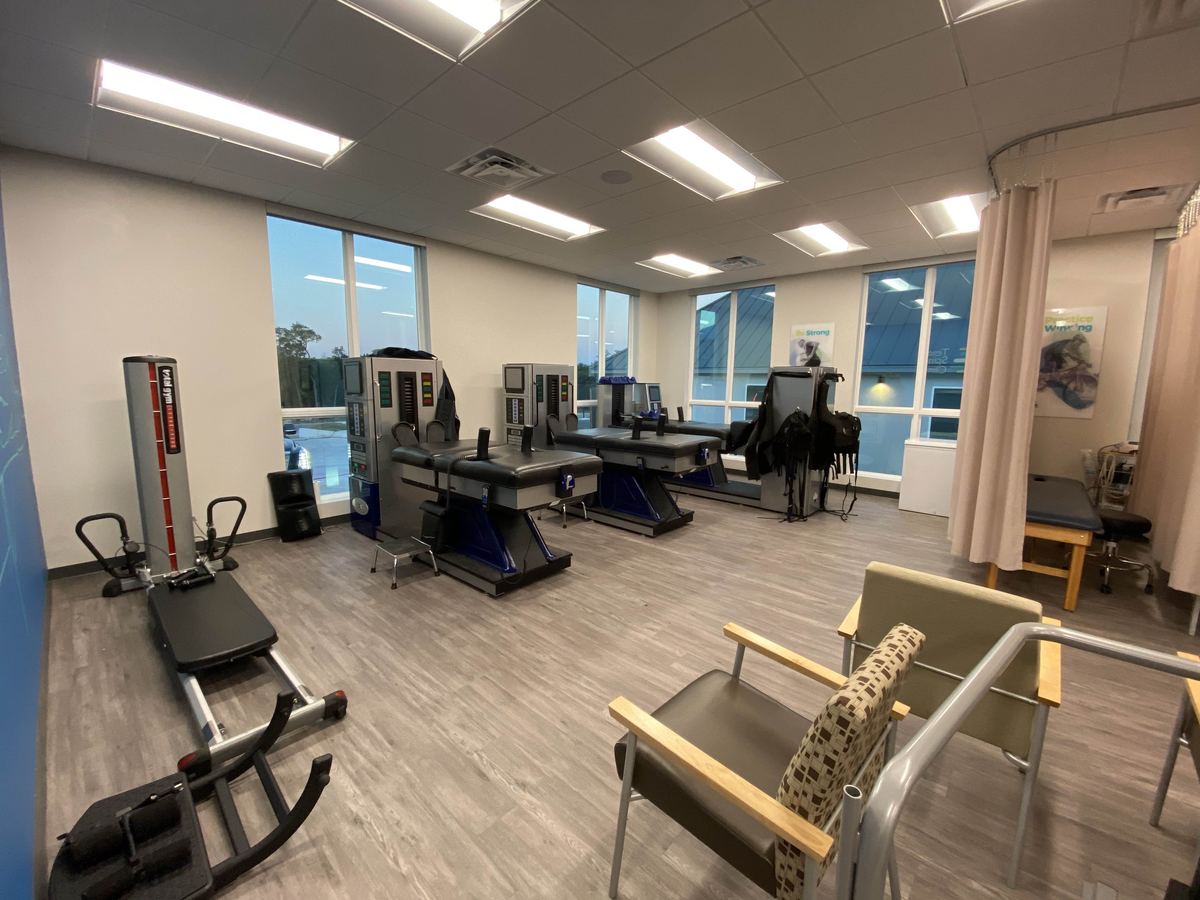
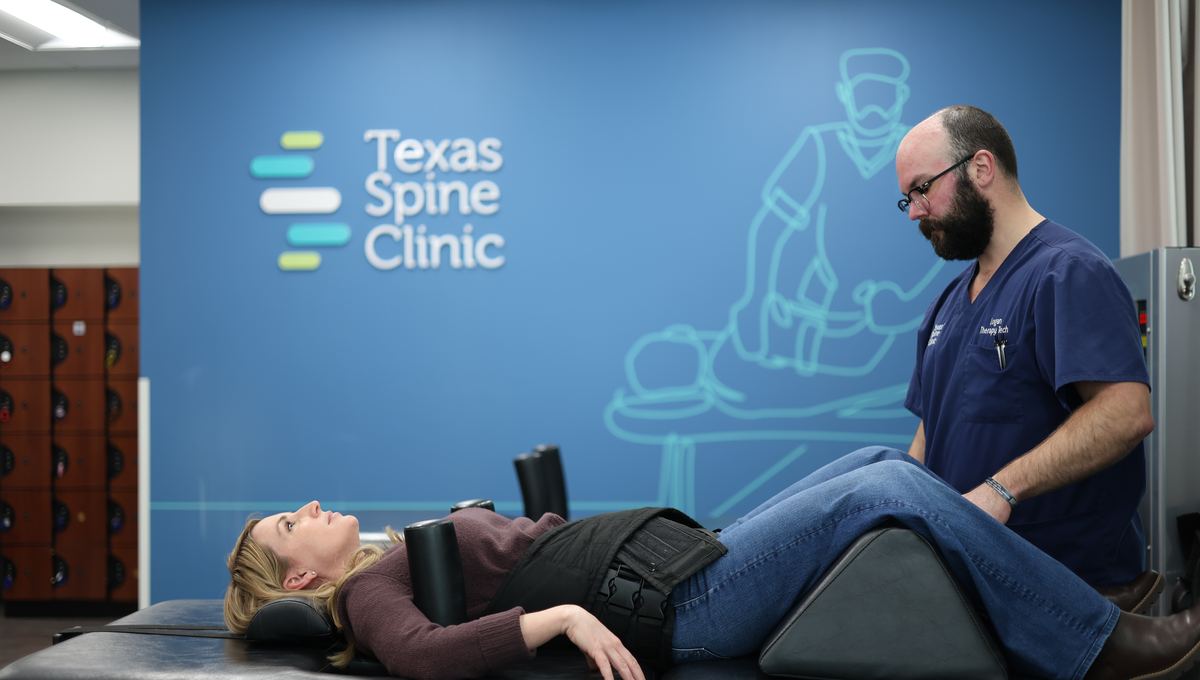
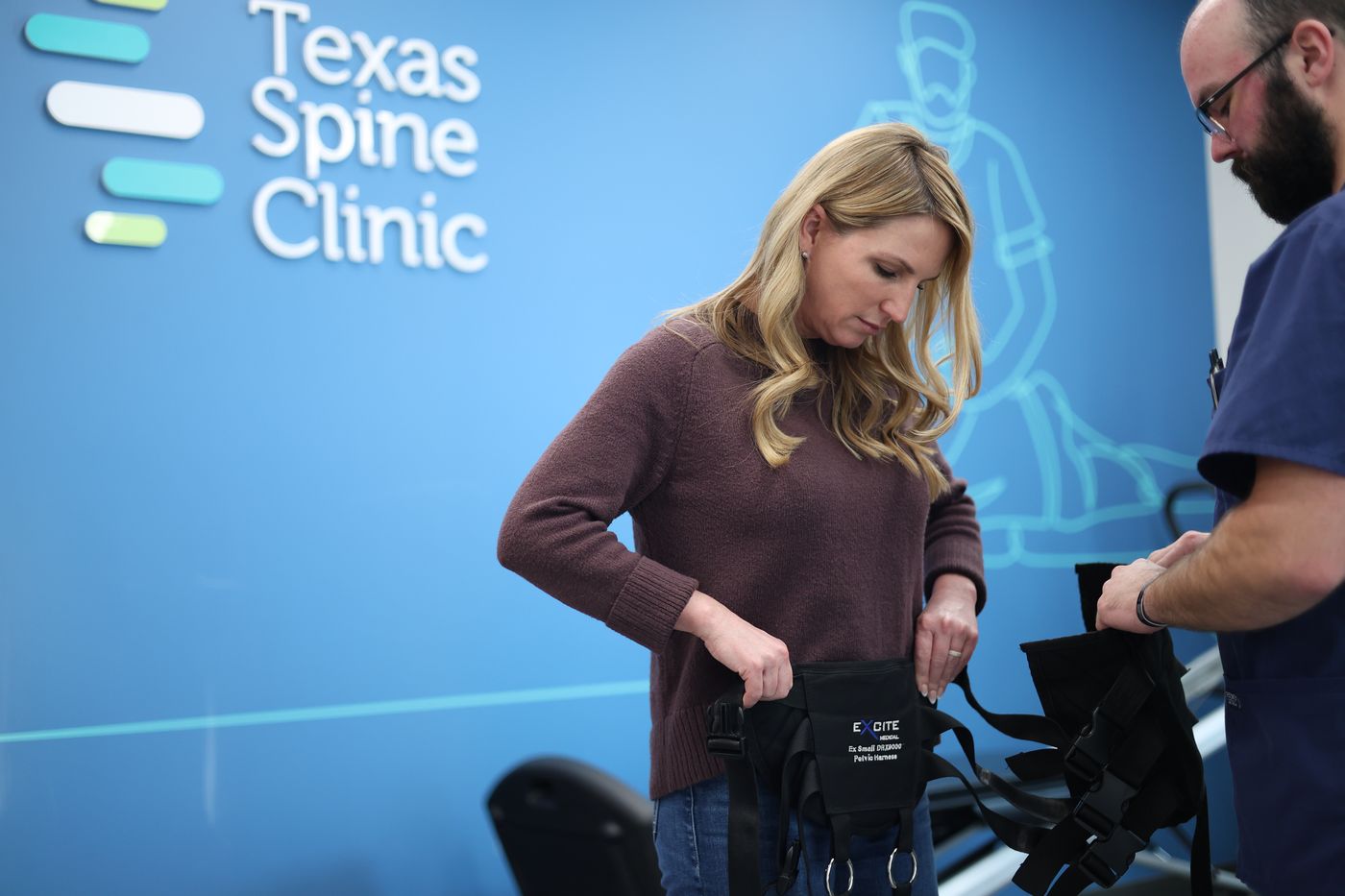
If the exam says you are a candidate, you get on the table. The harness is fitted, the angle and the force are set for your level and your body, and you lie there for about thirty minutes while the machine applies a gentle, measured pull and eases off, over and over. Most people find it comfortable. Some fall asleep. You leave knowing what a session feels like, not guessing.
6. If you don’t have an MRI, we send you for one
Bring yours if you have it, the images and the report. If you don’t, we order the MRI or CT and arrange it, and visit two is scheduled around it.
 Watch
WatchThe doctor's own disc, episode 4On the table himselfDr. Barton's own first sessions on the DRX9000.
 Watch
WatchA lumbar session, start to finishWhat the thirty minutes on the table actually look like.
Visit two: your MRI on the screen, and your number in writing
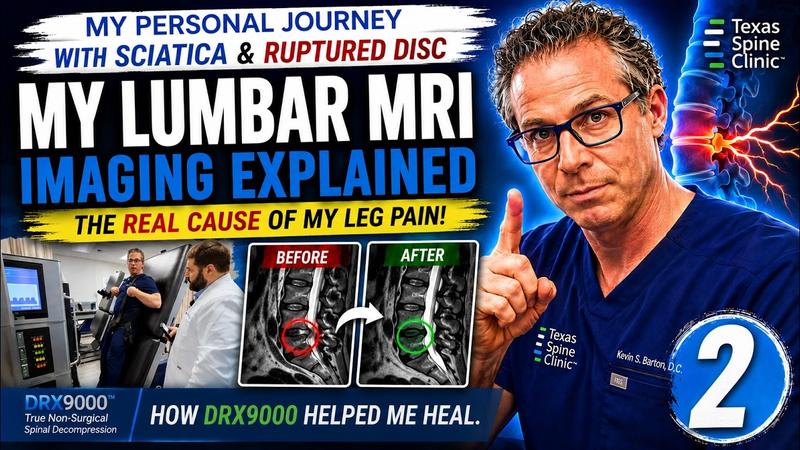
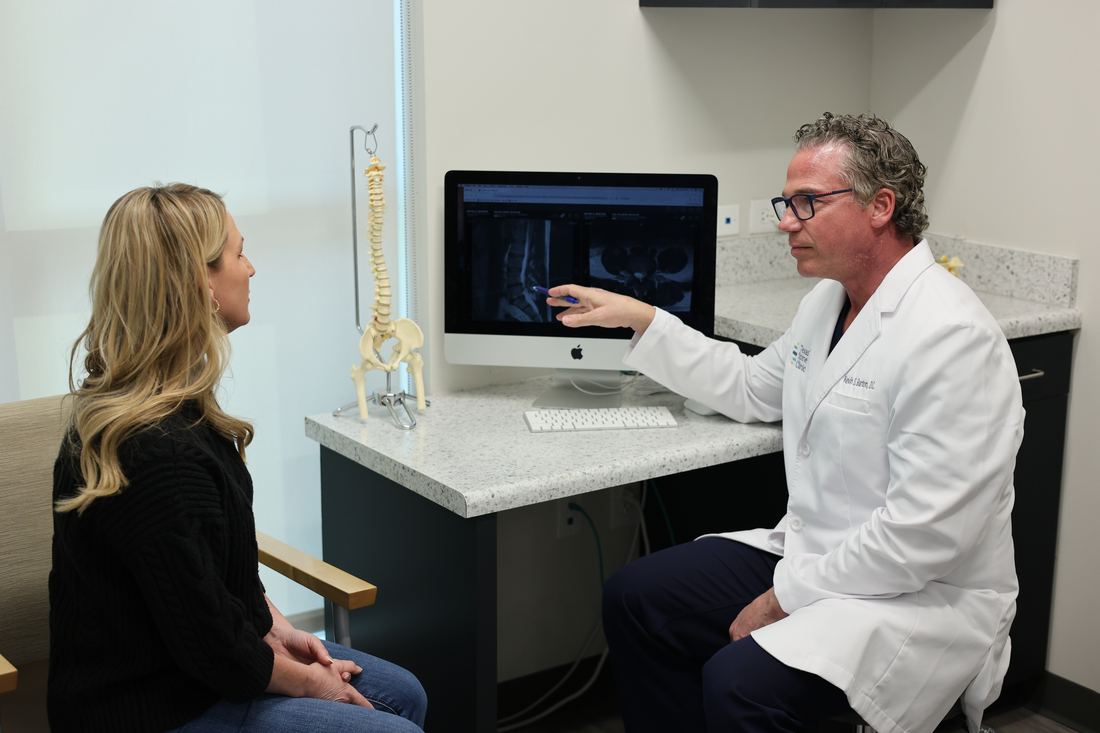
Patients tell us all the time that nobody ever showed them the pictures. Here, your MRI goes on the screen and we walk through it with you: what is pressing on what, why it hurts the way it does, and exactly how we plan to fix it. You get a straight answer about whether you are a candidate. About one in five people who ask about the program are told no, and if the exam or the imaging says no, we say no.
 Watch
WatchIf you are a candidate, you leave with your program in writing: the number of sessions, the schedule, the core strengthening that runs alongside decompression, and your investment. The decompression program isn’t a covered benefit. If you carry a commercial health plan, we can usually generate an insurance credit through it, which we apply against your cost. How big that credit is depends on your specific benefits, and we check it as part of your visit, before you commit to anything. CareCredit, Affirm and in-office payment plans are available. Most patients start their program that same day.
What to bring
- Your MRI or CT, the images and the report, if you have one
- Your insurance card and a photo ID
- A list of your medications
- Your completed new-patient forms, if you printed them
How long it takes
Plan on about ninety minutes for visit one, a little longer if we take X-rays and you fill out your forms here. A treatment session on its own is about thirty minutes on the table. A full program runs about 20 to 25 sessions over six to eight weeks, and you know by the second week whether your body is responding.
Who this is for
A herniated, bulging or degenerative disc in your back or neck. Sciatica or arm pain that traces to a disc pressing on a nerve. Spinal stenosis or facet syndrome when you want to avoid injections or surgery. Or the sentence that brings most people in: you were told you are not bad enough for surgery yet, and nobody offered a plan for the meantime. If you are not sure, the exam decides, and that is what the $49 is for.
Book the $49 DRX9000 consultation
This article is educational and is not a substitute for an examination and diagnosis. Individual results vary and no outcome is guaranteed.