

Free patient guide · From the injury team at Texas Spine Clinic
Your First 30 Days After a WreckWhat to do, what to write down, and what not to sign.
Keep this on your phone. Share it with anyone who was in the car with you.
How to use this guide
01Why the first 30 days matter
The crash takes a second. The repair job takes months — and the first few weeks decide most of how it turns out.
Torn muscle and ligament get patched with new tissue that's laid down fast, and in whatever position you're holding. Hold a sore neck stiff for a month and the patch sets in stiff, handing extra load to the joints and discs underneath it for years.
Move it right, early, and it heals flexible.
That's the whole reason this guide exists: the next 30 days are the ones you can still shape.

the crash Day 3 Day 7 Day 30
02Days 1–3
The protective checklist.
Nine things. Tap each one as you do it — it stays checked on this phone.
Do
0 of 5 doneDon't
0 of 4 read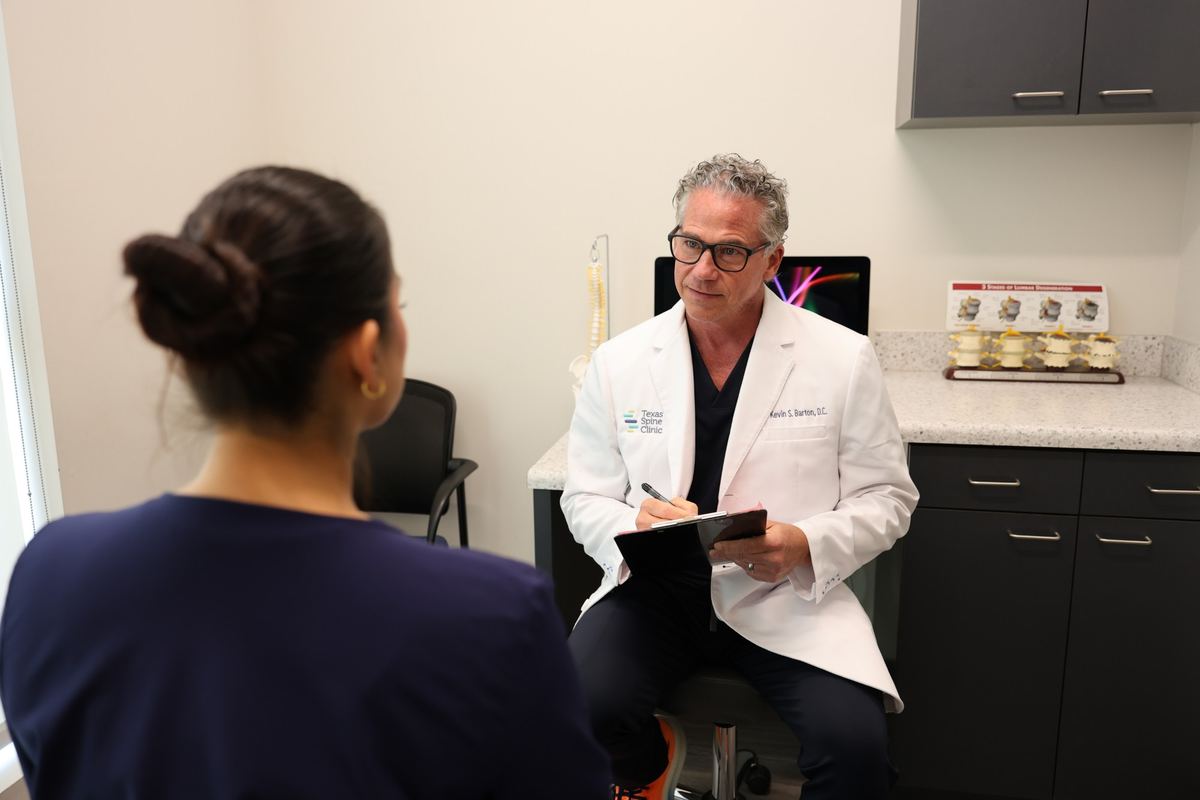
Why "get examined" is first on the list.
The soreness that shows up on day two or three is the injury catching up with you, not a new one. An exam now tells you what's actually hurt, starts care while the tissue is still deciding how to heal, and gives you something better than "I'm fine" to say to anyone who asks.
03Week 1
What's normal, and what isn't.
Common in the first week:
- Neck and upper-back stiffness
- Headaches that start at the base of the skull
- Low-back soreness
- Trouble getting comfortable at night
- Soreness that's worse the second or third morning than the first
At home while you wait to be seen
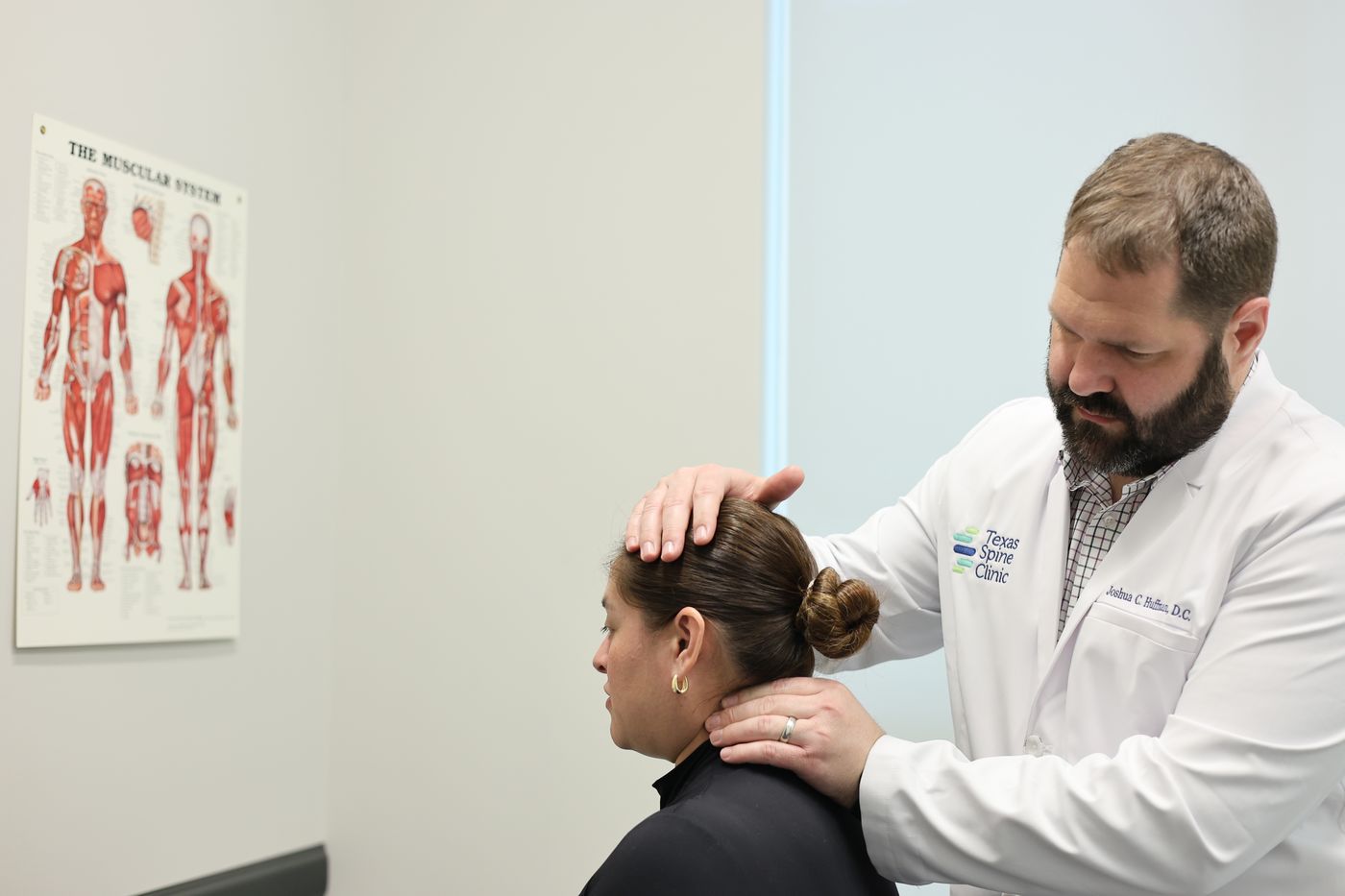
Gentle movement inside a pain-free range beats bed rest. Avoid heavy lifting and high-impact exercise until you've been examined.

Not an appointment — today
Go to an emergency room today if you have any of these.
If it's happening right now, call 911.
04Weeks 2–4
The window that shapes how you heal.
Keep your appointments.
Each visit builds on the last, and gaps slow your recovery.
Do the home exercises.
They're the part of your care that happens the other 23 hours of the day.
Track how you're doing.
Pain level, what you can and can't do, sleep. The log on page 8 takes a minute.
Tell your provider.
Tingling, pain moving into an arm or leg, headaches that change. New symptoms can change the plan, including whether you need an MRI.
Don't push through a flare to prove you're fine.
Back off, and tell us at the next visit.
05How treatment works here
Chiropractic care and pain management, in one office.
Recovering from a wreck can take more than one kind of care: a thorough exam, hands-on treatment, sometimes imaging, sometimes a pain specialist. We built this practice so all of it happens in one building, with one team that knows your whole story from the first visit. Nobody hands you off across town.
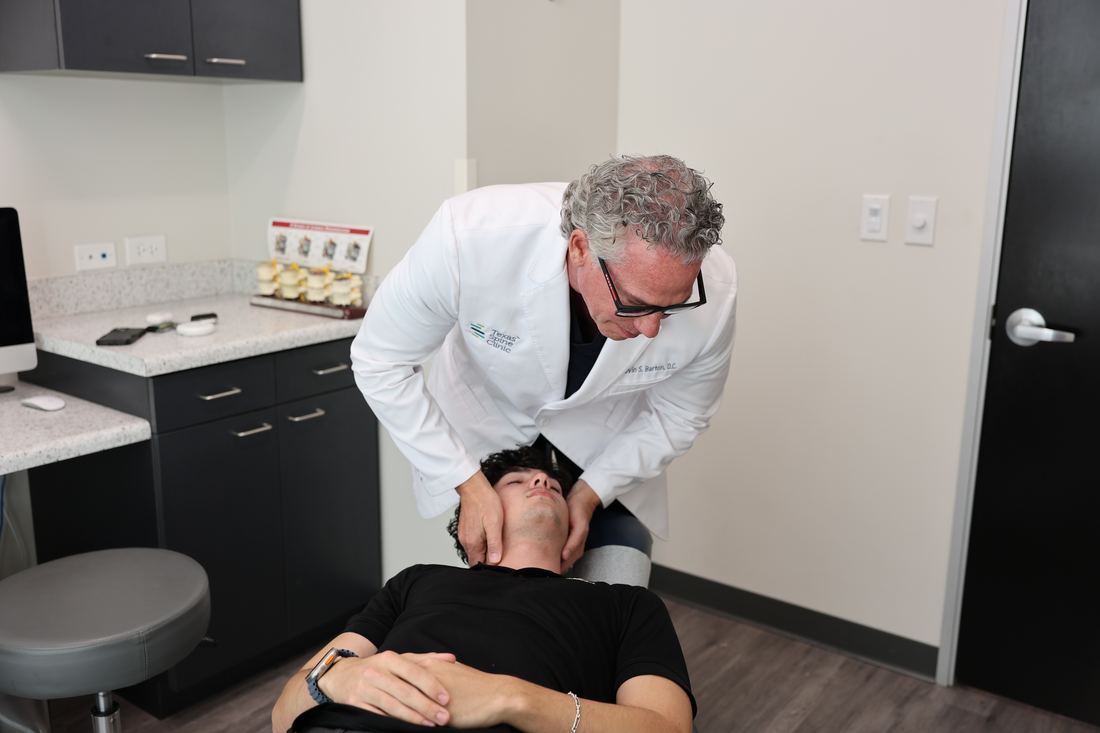
- Hands-on care that starts the same day. Chiropractic adjustments, myofascial release, laser, therapeutic modalities and rehab exercise. Nothing invasive.
- A medical provider when you need one. If your injury calls for medication, our nurse practitioner or one of our two pain management doctors, Praful C. Singh, M.D., or Lisa D. Persyn, M.D., sees you here, in the same building.
- Imaging, arranged for you. When your exam or your symptoms call for an MRI, we order it, schedule it and handle the paperwork. Then we put the pictures on the screen and walk you through them.
- Decompression, if a disc was injured. If imaging shows a disc injury, the DRX9000 is down the hall, not a referral away.
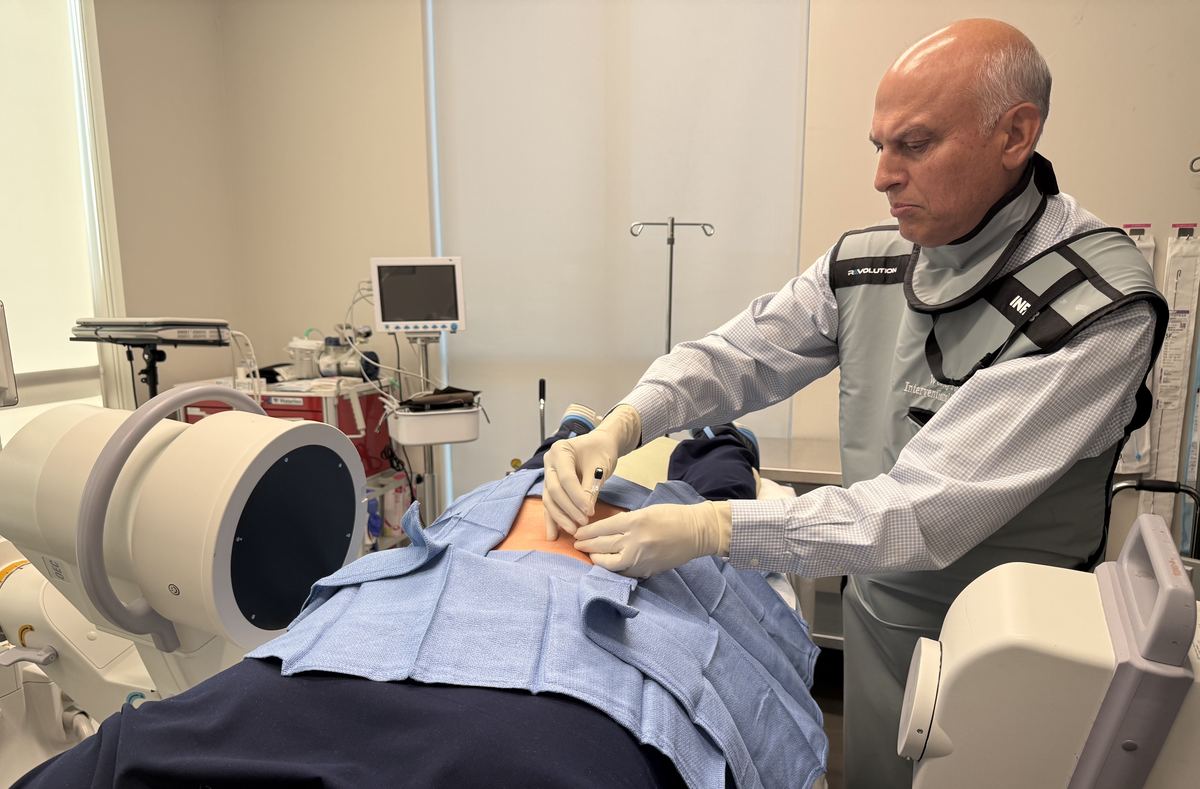
- Interventional pain management, in-house. If your pain doesn't settle with hands-on care, Dr. Singh or Dr. Persyn performs your procedure here. Same building, same team.

Everyone starts with the same thorough exam. What it finds decides which door you walk through.
No two wrecks do the same damage, so no two accident patients need the same care. If you need to move from one door to the other, it's down the hall.
Hands-on care
For the sprains, strains and soft-tissue injuries a wreck leaves behind. The goal is to keep healing tissue moving and bring your full range of motion back, without anything invasive.
- Chiropractic adjustments
- Myofascial release and laser
- Therapeutic modalities and rehab exercise
- DRX9000 decompression, when imaging shows a disc injury
Medical care
For injuries that need more than hands-on care alone: a badly irritated disc or nerve, or pain that won't settle. Our medical providers do their own exam, and their care runs alongside your treatment, in the same building.
- Medication, prescribed by our nurse practitioner or one of our pain management doctors
- Spinal injections and interventional pain management, performed here by Praful C. Singh, M.D., and Lisa D. Persyn, M.D.
06Who pays for your care in Texas
Most people have coverage for this and don't know it.
PIP — Personal Injury Protection
Texas auto policies include at least $2,500 per person unless the policyholder turned it down in writing. It pays regardless of who caused the crash. Check your policy.
The at-fault driver's insurance
Ultimately responsible for accident-related care when the crash wasn't your fault.
A letter of protection
If you have an attorney, their letter of protection lets your care go forward without paying up front.
Health insurance
Can come into play too. Which coverage goes first depends on your situation.
This is general information, not legal advice.

07Before you sign anything
Five questions to ask first.
A release, a check, a form from someone's office. Before your name goes on it, run it through these.
- Does this release cover injuries that haven't shown up yet?
- Have I been examined by a doctor since the crash?
- Do I know yet whether I'll need imaging or more treatment?
- Who referred me to this person or office — and did I contact them, or did they contact me?
- Do I understand every page? If not, who can explain it to me?
If you can't answer all five, you're not ready to sign.
That's not a legal opinion. It's the same thing we'd tell a family member.
08Your symptom log
One line a day. It takes a minute, and it's the most useful thing you'll bring to a visit.
Fourteen rows: two weeks of what hurt, what you couldn't do, and how you slept. It saves on this phone, and prints on one page.
| Date | Pain 0–10 | Where it hurts | What I couldn't do today | Sleep | Notes | |
|---|---|---|---|---|---|---|
| 01 | ||||||
| 02 | ||||||
| 03 | ||||||
| 04 | ||||||
| 05 | ||||||
| 06 | ||||||
| 07 | ||||||
| 08 | ||||||
| 09 | ||||||
| 10 | ||||||
| 11 | ||||||
| 12 | ||||||
| 13 | ||||||
| 14 |

09The next step
Same-day, no-cost injury evaluation.
Texas Spine Clinic · 3212 Napier Park, San Antonio, TX 78231
Monday–Thursday, 8 a.m.–5 p.m. · Same-day appointments
This guide is general information, not medical or legal advice. If you have a medical emergency, call 911.
Book your no-cost evaluation
No referral needed. Same-day appointments available.
Calendar not showing? Open it in a new tab.
Rather book by phone? Call (210) 741-9166.