For shingles pain that stayed long after the rash was gone
The rash healed months ago. The burning never got the message.A non-drug treatment that goes after the nerve signal itself.
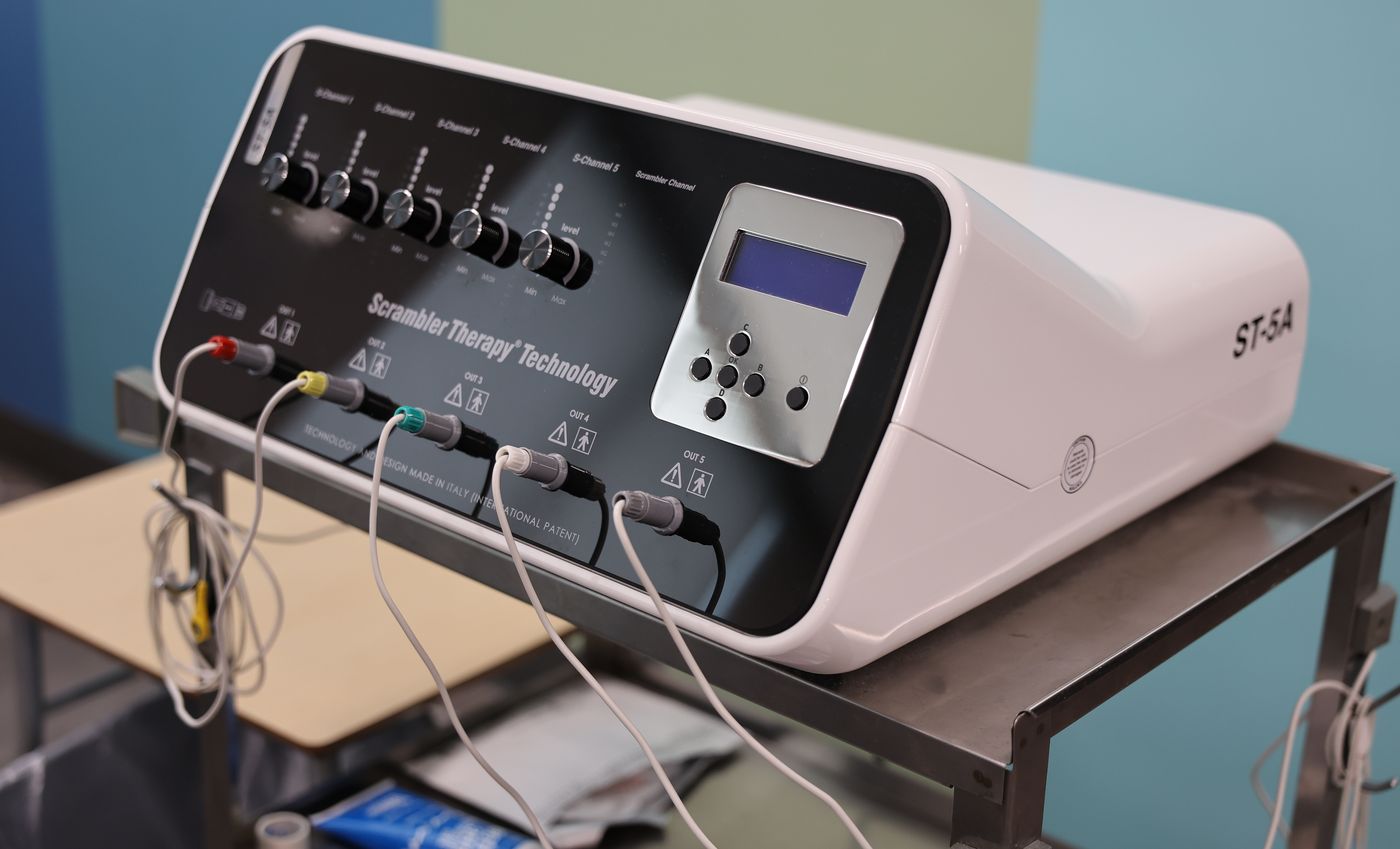
Scrambler therapy is an FDA-cleared, non-drug treatment for the nerve pain shingles leaves behind — what doctors call postherpetic neuralgia. Small electrodes go on skin outside the painful area, on skin that still feels normal. Nothing touches the spot that burns. The machine sends a calm, no-pain message up the same nerve that has been sending pain. No pills to add to the list. No needles. No fog. Nothing implanted. You sit back for about forty minutes, clothes on, and go home.
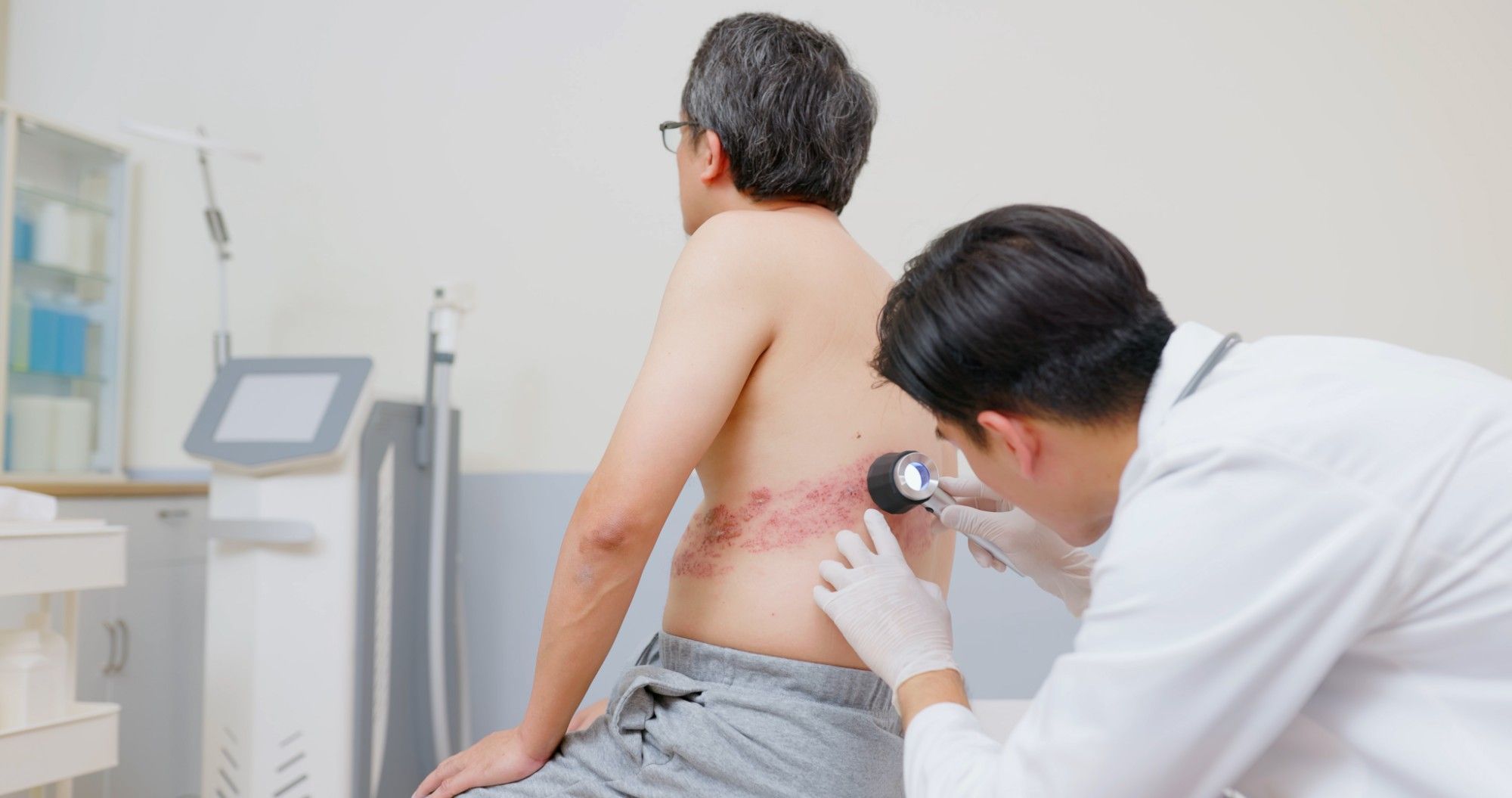
It started as shingles. A rash on one side, a few hard weeks, a bottle of antiviral pills. The rash crusted over, and everyone — maybe you too — figured that was the end of it.
It wasn't. The skin healed. The nerve underneath it never settled down.
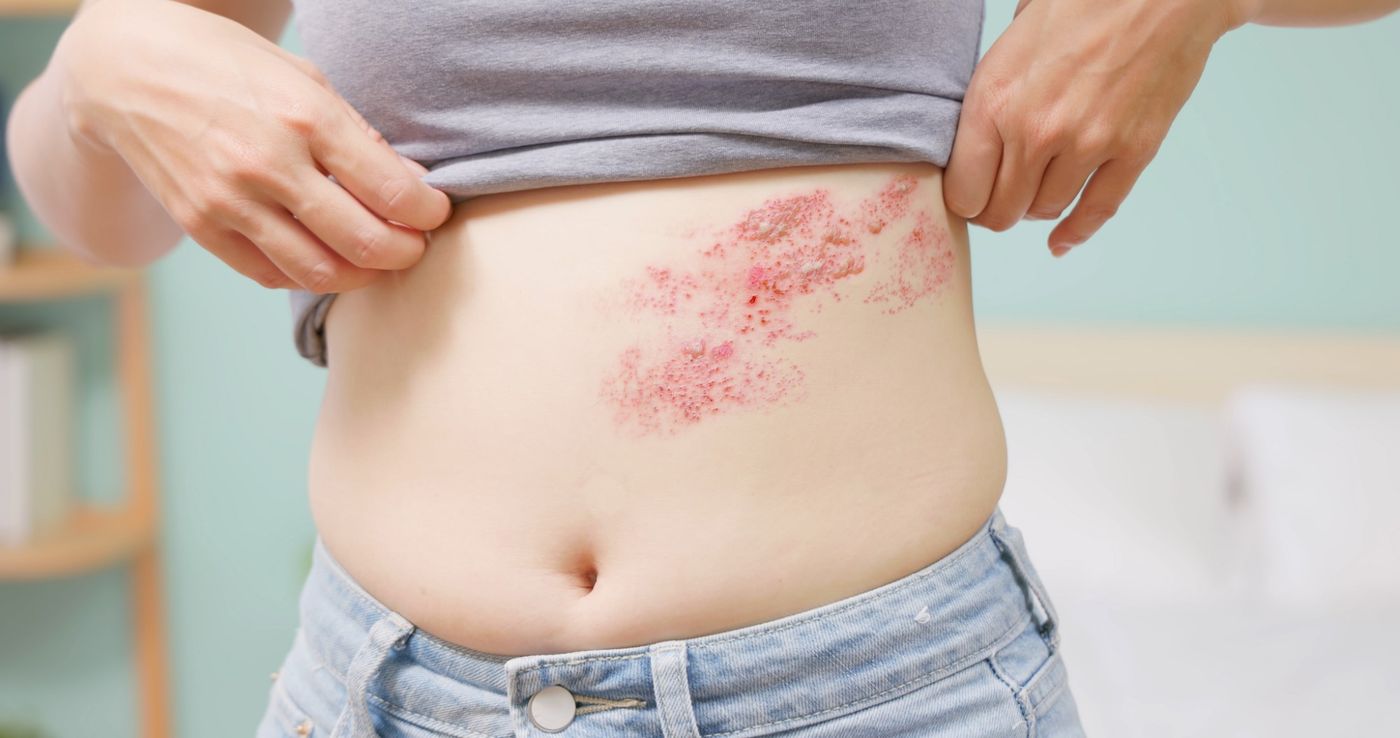
Now there's a band of it. One side only, along a line you could trace with a finger — around your ribs, across your back, over your scalp, down the side of your face. Some of it burns, like someone running a lighter along the nerve. Some of it is jolts that come out of nowhere. Some of it is a crawling itch under the skin that no cream can reach.
And then there's touch. That's the part other people don't get. A shirt hurts. A bra strap hurts. The bedsheet hurts. You've switched to soft, loose everything. You keep ice packs in the freezer and go without a shirt at home when you can. You sleep on one side, if you sleep. The evening is when it climbs — by ten o'clock, it owns the night.
People look at you like you should be over it by now. Some of them think you still have shingles. You don't. You have what it left behind.
And you have a list. Gabapentin, and the fog that came with it — the dizziness, feeling unsteady on the stairs, the words that won't come. The dose that kept going up. Lyrica, and the swelling. Lidocaine patches in every room of the house. Maybe the capsaicin patch that hurt worse than the pain. Maybe a nerve block that held for a week. Amitriptyline. Something to help you sleep.
Somewhere along the way, someone told you there's no telling how long this will last. That's the sentence that keeps you company at night.
Here's what that sentence leaves out: the virus went quiet a long time ago. The nerve it damaged didn't. What you're feeling now is a nerve that learned one message and keeps sending it. There's a treatment built to change that message — without numbing your skin or slowing your thinking. If no one mentioned it, that's because very few clinics own the machine and insurance rarely pays for it, so most doctors have never seen one. The rest of this page is about it.
The mechanism
How it works — in plain words
Start with what shingles did to the nerve.
Shingles is the chickenpox virus waking back up, often decades later, inside a nerve where it has been sleeping.5 When it flares, it travels down that one nerve to the skin. That's why the rash — and now the pain — follows a strip on one side of your body. The rash heals. The nerve it traveled along can stay damaged, and a damaged nerve can keep firing long after there's anything left to warn you about. Your spinal cord and brain keep listening, and the whole circuit gets better and better at sending pain. The pain becomes the habit, not the alarm.
That's why the usual tools only go so far. Gabapentin and Lyrica quiet the signal, but they don't retrain it — so when the pain pushes through, the dose goes up, and the fog comes with it. A lidocaine patch numbs the skin for a few hours, stuck to the very skin that can't stand to be touched. Neither one changes the message the nerve is sending.
Scrambler therapy goes after the message.
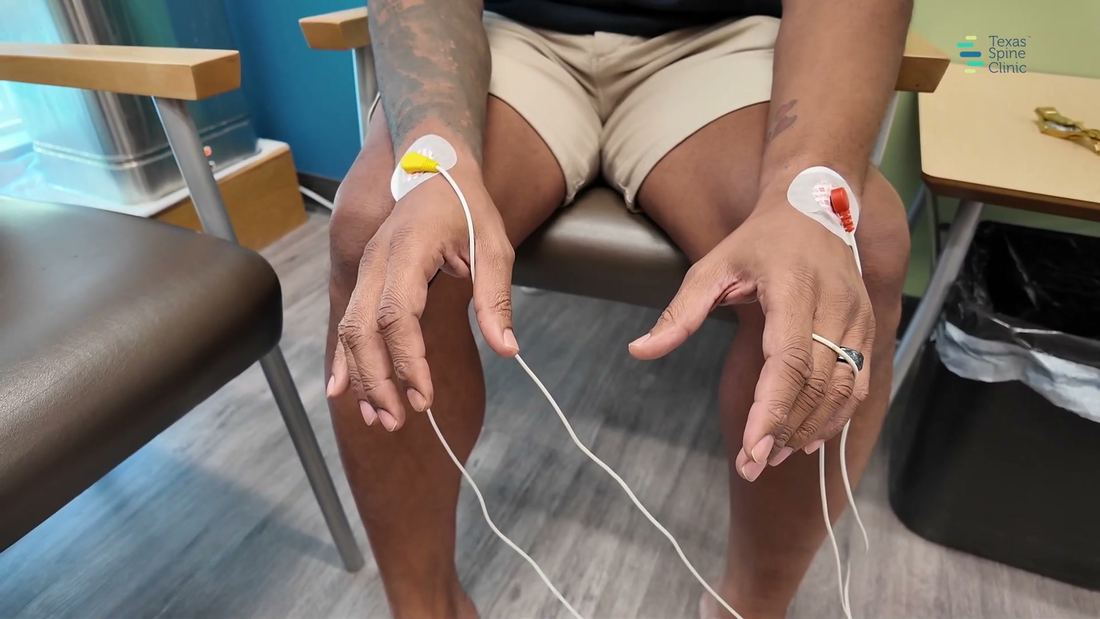
Small stick-on electrodes — like the ones used for a heart test — go on healthy skin along the nerve pathways that feed the painful area.2 Outside the band, not on it. Never on raw, broken or numb skin. The treatment needs nerves that still work well enough to carry a signal — and it leaves the painful spot alone.
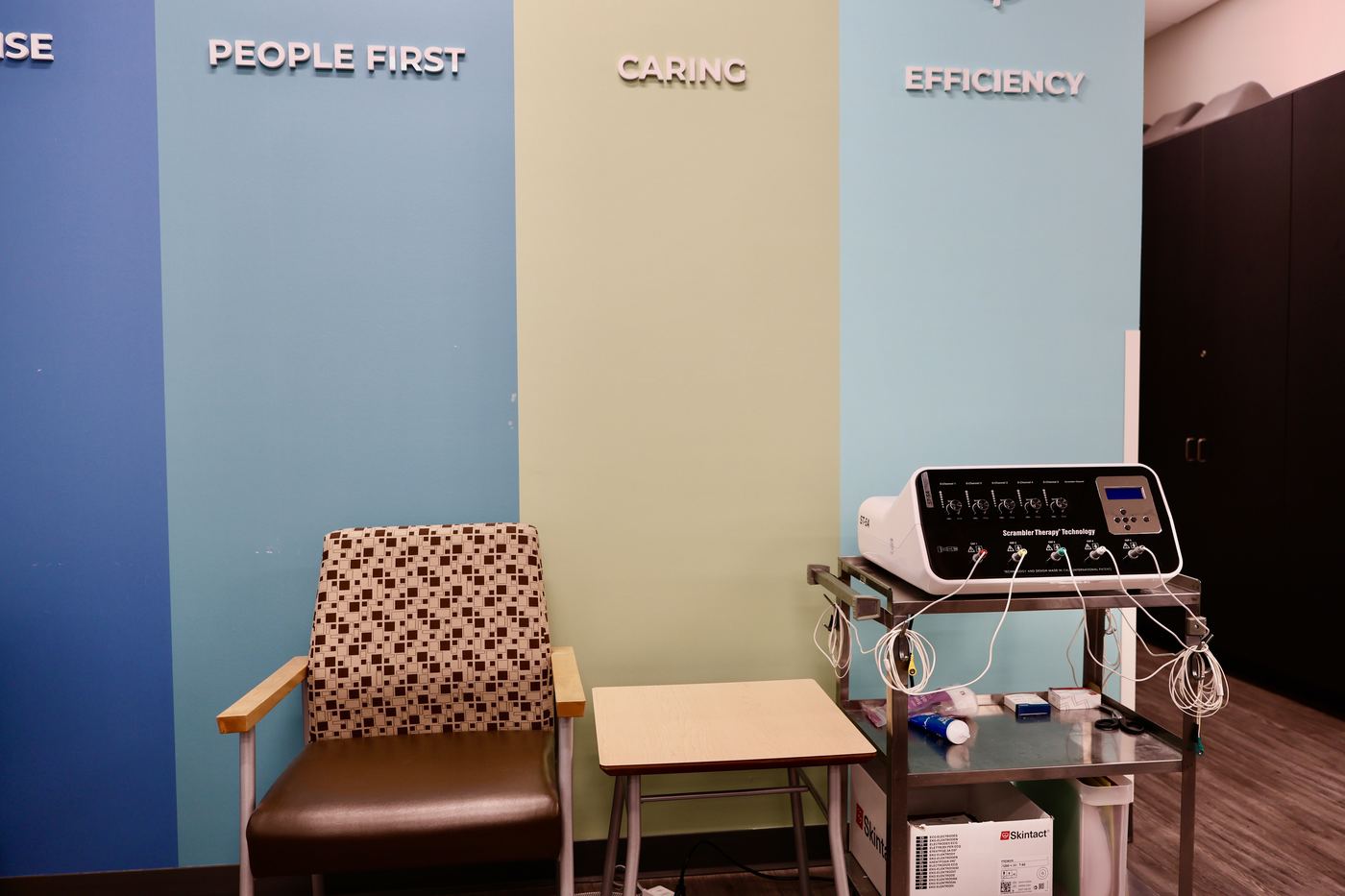
The machine then sends its own signal up those nerves. It isn't a buzz, and it isn't random. It builds patterns that keep changing, shaped to imitate the traffic a healthy nerve sends when nothing is wrong.2 Your nervous system gets a no-pain message on the same line that has been carrying pain — over and over, for about forty minutes.
During the session, the burning in that area gives way to a mild tingle. Then you go home, and the question becomes how long the relief holds. For people who respond, it tends to hold a little longer after each session.2
The questions everyone asks first
"My skin can't stand to be touched. How can you put anything on it?"
We don't put anything on it. The pads go on skin outside the painful area — skin that feels normal to you. The band itself is left alone. If a pad ever lands somewhere that doesn't feel right, it comes off and goes somewhere else.
"Isn't this just a TENS unit?"
No. They share a sticker, not a treatment. A TENS unit is a small box you adjust yourself, and its relief is built to last while it's switched on. Scrambler therapy runs from the device's own program, is given as a course, and aims at relief that lasts after the session. The New England Journal of Medicine review is clear that it isn't a type of TENS.2 If a TENS unit did nothing for you, that tells you nothing about this. The full story on scrambler therapy →
"Does it hurt?"
It should never hurt. You feel a clear tingle, turned up only as far as you say. If anything we do makes your pain go up, we stop and change it — that's the device's own instruction, and it's how it's done here.
"Electricity — at my age?"
The signal is gentle and stays on the surface of the skin. Age isn't on the list of reasons someone can't have this treatment. A pacemaker, a defibrillator and a few other things are, and we check every one of them at the consultation. There's no sedation, no drowsiness and nothing to recover from.
"It sounds too good to be true."
After everything you've tried, that instinct makes sense. So you don't have to take our word for it. The device is FDA-cleared, it has been reviewed in the New England Journal of Medicine, and your first full session is $99 and counts toward the course. You see what your own nerves do with it before anyone asks you to commit.
Shingles pain, specifically
What's different about shingles pain — and how we treat it
Shingles is common — about 1 in 3 people in the United States will have it. Nerve pain that stays after the rash is its most common complication, and the older you are when shingles strikes, the more likely the pain is to stay.5 If that's you, you are far from alone — and this is a treatment built for exactly this kind of stuck nerve signal.
It follows one nerve — and that helps us.
Shingles pain maps to a single nerve on one side of the body. That tells us which pathway is carrying the pain, and so where the electrodes belong: on healthy skin above, below and around the band, along that same nerve.
The touch problem gets its own work.
After months of guarding, your skin has learned that touch means danger. During a session, once the pain is down, there's a window when the skin will accept contact. When shingles pain is stubborn, we use that window: gentle, step-by-step touch, starting with whatever the skin will take — a soft cloth, a light hand — and building from there. It comes from the protocol we built for CRPS, where touch sensitivity is at its worst, and we use it for shingles pain that won't let go. It's part of the course, not billed on top.
We keep changing the setup until we get the answer.
Placement, level, sequence — worked out fresh at every visit, rather than repeating one setup ten times.
Don't stop your medications on your own.
Bring your full list — gabapentin, Lyrica, Cymbalta, amitriptyline, patches, sleep aids, everything. Gabapentin, Lyrica and Cymbalta can interfere with the signal scrambler therapy sends, so we'll work with the doctor who prescribed them to wean you off safely. It has to be gradual: gabapentin and Lyrica are anticonvulsants, and stopping them all at once can cause seizures.
What to expect
What a session is actually like
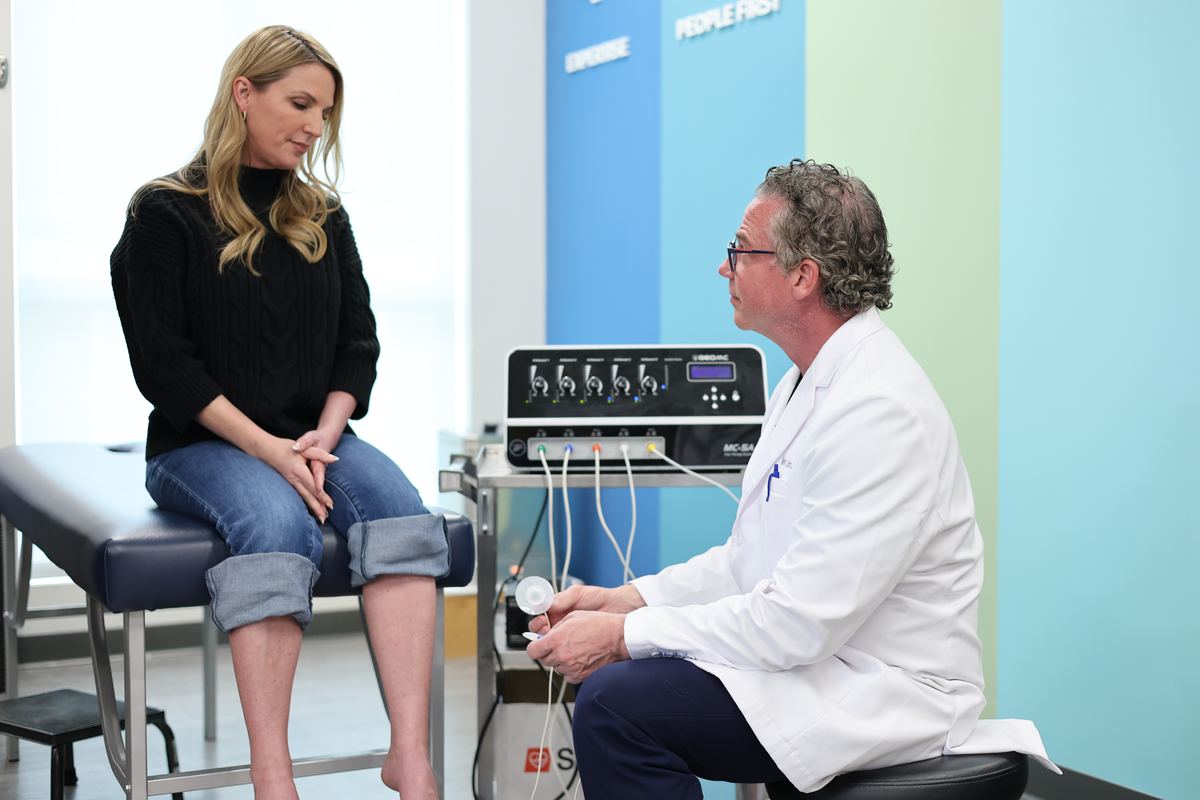
You keep your clothes on. Wear whatever your skin can bear — soft and loose is perfect. You sit or lie back in the treatment chair. No gown, no straps, nothing to climb into.
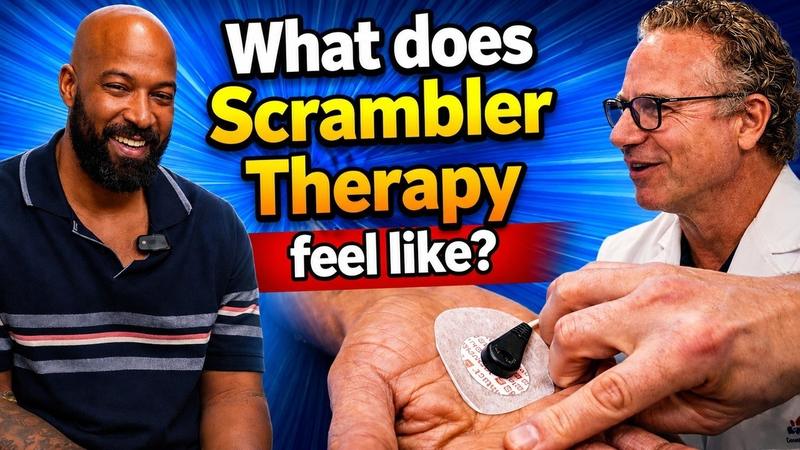
Then the electrodes go on. This is the part that takes skill, and it's done by hand, patient by patient: the pads go on healthy skin along the nerve that serves the painful area. If the first placement doesn't do the job, they come off and go somewhere else.
The level comes up slowly, one channel at a time, and your only job is to tell us what you feel. First tell me when you feel something, then tell me when it's enough.2 The target is a clear, comfortable tingle. People describe it as fizzing, a light buzz, or — in the published description — like being bitten by tiny electrical ants.2
Then the session runs about forty minutes.3 People read, nap, or talk with whoever came along.
We don't put the pads on and walk away. Someone is with you the whole session. We keep checking what the pain is doing, and the goal in every session is your pain at zero while you're in the chair. When that isn't happening, we change the setup right then — not next week.
When the session ends, the pads come off and you go home. No drowsiness, no restrictions, nothing to recover from. The next weekday, you do it again.
The course
Ten weekdays — and an early answer
A full course is ten sessions, on weekdays in a row — five days a week for two weeks.3 That's the schedule the device is built around.
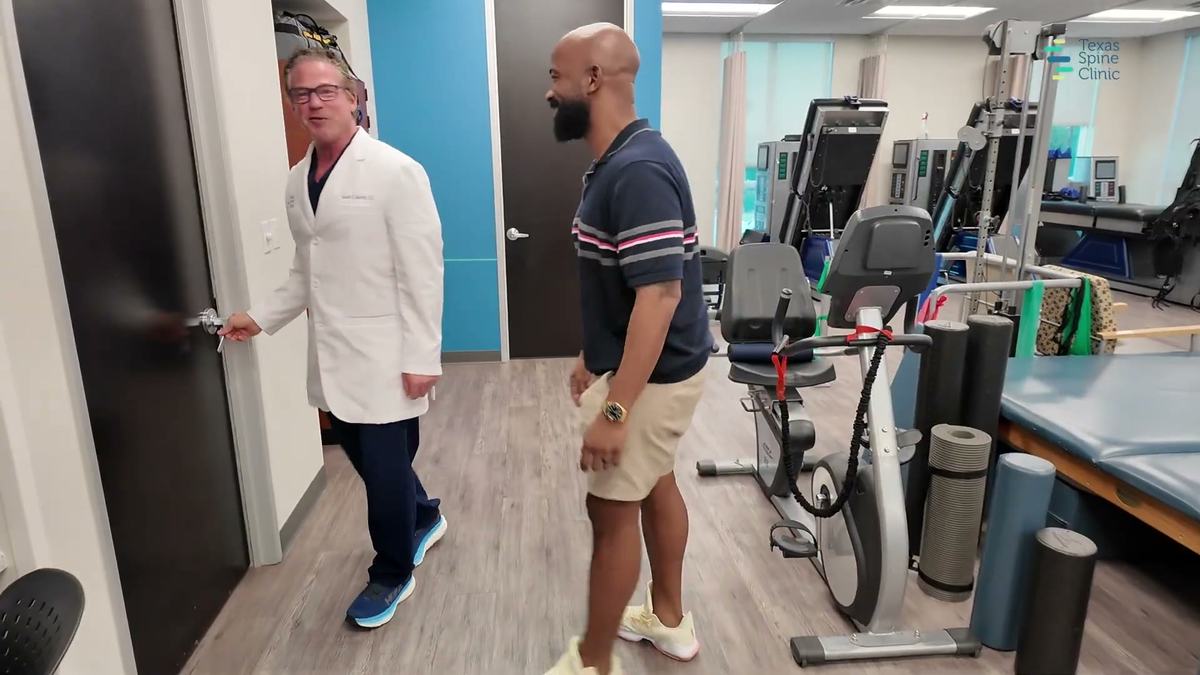
That's also why we run scrambler sessions on Fridays, when the rest of the clinic is closed. A ten-day course doesn't fit a four-day week. If you're driving in from out of town, plan on two weeks in San Antonio.
But you don't decide about ten days on day one. Here's how it goes:
- First, a $19 consultation. Plan on about an hour, Monday through Thursday: roughly half of it is the consultation — your history, an exam, what you've already tried, and the list of reasons someone can't have this treatment — and about half is treatment, so you feel it the first day.
- Then a $99 first full session — credited toward the course. A complete session, run properly, priced to make the question easy to answer. If you continue, the $99 comes off the course.
- Then you decide. If your nerves are answering, we talk about the full course, and you'll have your number in writing before you commit to anything.
What "working" tends to look like
For people who respond, relief builds over the course rather than arriving all at once. The published reports describe relief lasting weeks, months, and in some cases longer after a course ends. When some pain returns later, a short round of booster sessions — usually a couple of days, not another full course — is often all it takes.2
If you're reading this for a parent
If you're here for your mom or dad
A lot of the people who find this page aren't the one in pain. They're the son or daughter who watched a parent go from busy to housebound after a case of shingles — and who has run out of places to look.
If that's you, here's how to bring them in.
- Call for them. (210) 741-9166 — you can book the $19 consultation on their behalf. No referral needed, and same-day appointments are available.
- Gather the list. Every medication and dose, including patches and anything for sleep. Any records about the shingles and what has been tried since. A photo ID.
- Come with them. You're welcome in the room. We take the history, do an exam, and go through the reasons someone can't have this treatment together. If it fits, about thirty minutes of treatment follows — so your parent feels what it's like before anyone talks about a course.
- Plan the two weeks. A course is ten weekday sessions in a row. If your parent doesn't drive, sort out rides before the first session. Friday sessions are available.

Why this works
Why this works — and what we stand behind
Scrambler therapy retrains the pain signal instead of masking it. Here's what makes it work here, and what you can hold us to.
It goes after the message, not the volume. Medicines turn the signal down for as long as you keep taking them. This hands the nerve a different message, session after session, until it starts holding on to it.
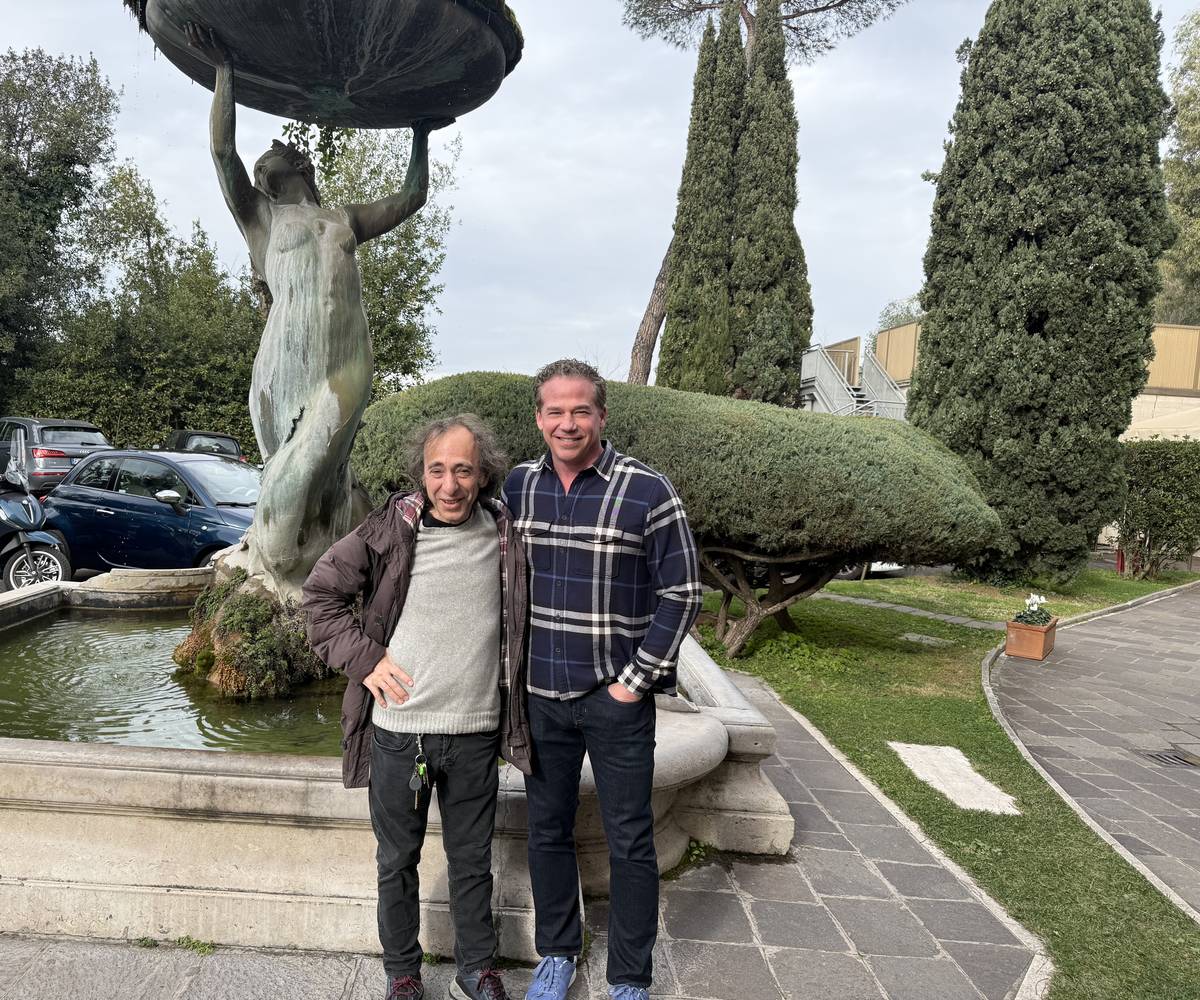
Where the electrodes go decides everything. Placement is worked out by hand, fresh at every visit, by a provider who trained in Rome under the inventor, Giuseppe Marineo — and every course runs under the medical supervision of Lisa D. Persyn, M.D.
Your first session answers the biggest question. The fastest way to know whether your nerves respond is to treat them. That's why the first full session is $99 and counts toward the course.
What we stand behind
- The consultation decides who we treat — not the machine, and not your credit card. If this isn't the right tool for your pain, that's what you'll hear.
- We measure progress, not just ask how you feel. How bad the pain is, how often it comes, and what it's taken from your day — sleep, wearing a shirt, getting out of the house. Standard questionnaires at the start and at follow-ups.
- If it isn't working, we tell you and we stop.
- We listen. We never ignore what you tell us about your pain.
Candidacy
Who this is for — and who it's not for
This page is for you if
- You had shingles, the rash has healed, and the nerve pain stayed
- The pain follows a band or strip on one side — torso, back, scalp, face, arm or leg
- Clothing, a bra strap or a bedsheet on that skin is hard to bear
- Gabapentin, Lyrica, patches or blocks only took the edge off — or the side effects cost you too much
- You want something that doesn't add another pill or implant anything
Scrambler therapy is used for other nerve pain too — CRPS, neuropathy after chemo, diabetic and peripheral neuropathy, and phantom limb pain.
Who cannot have this treatment
These are absolute. They come from the device's own instructions, and no exam changes them:3
- An implanted pacemaker or defibrillator
- A spinal cord stimulator or peripheral nerve stimulator, implanted or in trial
- Aneurysm clips, vena cava clips, or skull plates
- A seizure disorder — epilepsy, or a tendency to seizures
- Pregnancy — the treatment hasn't been studied in pregnancy, so it isn't used
- Undiagnosed pain — pain nobody has worked up yet needs a diagnosis first, not a treatment. If that's where you are, we'll help you get to the right person.
Where we take extra care
Heart problems, diagnosed or suspected — we talk to you about it, and there are placements we don't use. Skin that has lost normal sensation, or is broken, infected or fragile where pads would go. A tendency to bleed or bruise easily, or a recent fracture. Some anticonvulsant medications can change how the course is run — bring your full medication list to the consultation. And occasionally, skin irritation where the pads sit: it's the most common side effect there is, and moving the placement usually solves it.3
Cost & insurance
What it costs — and what you get for it
If you've spent a small fortune on patches, co-pays and prescriptions that only went so far, the front end here is built around one question: does this work for you?
The consultation is $19.
History, an exam, a real conversation about whether this fits your pain, the candidacy screen above — and about thirty minutes of treatment if it does.
A first full session is $99 — and it counts toward the course.
Not a demo. A full session, run properly, so you find out what your nerves do with this before you're asked to commit. Continue with a course and the $99 comes off it.
The full course is an investment we quote in person.
Scrambler therapy isn't a covered insurance benefit, so the course is an out-of-pocket investment — and you'll know exactly what it is, in writing, after your first session and before you agree to anything. If your situation is unusual — a plan that has covered it before, for instance — tell us at the consultation and we'll check what's possible.
Your care team
Who does the treatment
With scrambler therapy, who places the electrodes matters as much as the machine. Results follow placement and the care taken in setting the level. So here's who that is.
Kevin S. Barton, D.C. has practiced in San Antonio since 2003. He manages the scrambler program, and he does the treatments. He completed advanced scrambler therapy training in Rome, Italy, with Dr. Giuseppe Marineo — the biophysicist who invented this treatment.4 Training with the person whose research created the device. There is exactly one provider in San Antonio who can say that.
The program is medically supervised by Lisa D. Persyn, M.D., board certified in Physical Medicine and Rehabilitation — the specialty built around restoring function to people living with pain and nerve injury. That's how this treatment is meant to be delivered: the device is restricted to physicians, or to trained personnel working under a physician's supervision.1 It also means your care is looked at by a physiatrist as well as by the doctor running your sessions.
For an older patient, and for the family bringing them, that combination matters: a trained provider setting up every session by hand, a physician overseeing the program, and a team that works around the skin you can't bear to have touched.
Questions patients actually ask
Before you call
Where do the electrodes go if I can't stand anything touching the painful skin?
On skin outside the painful area — skin that feels normal to you — along the same nerve that feeds the band. Nothing is placed on the band itself, and nothing goes on raw, broken or numb skin.
How soon will I know if it's working?
Often during the first session, when the burning gives way to a tingle. What matters most is whether relief starts holding longer between visits — usually clear within the first several days. That's exactly why the first full session is $99.
I've had shingles pain for years. Is it too late?
How long you've had the pain isn't on the list of reasons someone can't have this treatment. Scrambler therapy is used for chronic nerve pain — including pain that has outlasted everything else. The consultation and the first session tell you where you stand.
Can I keep taking gabapentin, Lyrica or my lidocaine patches?
Keep taking them for now, and don't stop anything on your own. Gabapentin, Lyrica (pregabalin) and Cymbalta (duloxetine) can all interfere with the signal scrambler therapy sends, so we'll work with the doctor who prescribed them to wean you off safely. That has to be done gradually: gabapentin and Lyrica are anticonvulsants, and stopping them all at once can cause seizures. Cymbalta can cause withdrawal symptoms if it's stopped suddenly. Bring your full list to the consultation, including your patches.
My mother is in her eighties. Is this safe for her?
Age alone doesn't rule anyone out. What does is on the list above — a pacemaker or defibrillator, an implanted stimulator, certain clips or plates, a seizure disorder. We go through every one of them at the consultation, along with her heart history and her medications. There's no sedation and nothing to swallow, and she won't leave drowsy.
Can I come into the room with my parent?
Yes. You're welcome in the room. Bring your questions — and the medication list, if you're the one who keeps it.
What does it cost, and does insurance or Medicare cover it?
The consultation is $19 and the first full session is $99, credited toward the course. Scrambler therapy isn't a covered insurance benefit, so the course itself is an out-of-pocket investment — quoted to you in writing before you commit to anything.
Who actually does the treatment — and is a doctor involved?
Dr. Barton runs the sessions himself. He completed advanced scrambler therapy training in Rome with Dr. Giuseppe Marineo, the inventor, and the program is medically supervised by Lisa D. Persyn, M.D., board certified in Physical Medicine and Rehabilitation.
What if it doesn't work for me?
Then you'll know — for $19 and $99, instead of another year of wondering — and we'll talk plainly about what else is worth trying. If it does work and you continue, the $99 comes off the course.
Footnotes
- Smith TJ, Wang EJ, Loprinzi CL. Cutaneous Electroanalgesia for Relief of Chronic and Neuropathic Pain. New England Journal of Medicine 2023;389:158–64. Review by physicians at Johns Hopkins and the Mayo Clinic — ↩
- Same review — mechanism and application: electrode placement on unaffected skin along the affected dermatomes; the continuously varied waveform sequences; the operator's step-by-step level-setting dialogue; session length; relief typically lengthening over a course; reported durability and retreatment; and the statement that scrambler therapy is distinct from TENS. ↩
- ST-5A device instruction manual (Delta International Services & Logistics, rev. 2020) — indications, warnings, contraindications, precautions and treatment protocol, including session length, the ten-treatment course structure, and the exclusions listed above. ↩
- Dr. Barton completed advanced scrambler therapy training in Rome, Italy, with Dr. Giuseppe Marineo, who developed scrambler therapy at the University of Rome Tor Vergata. ↩
- Centers for Disease Control and Prevention, Shingles (Herpes Zoster) — about shingles and its complications (cdc.gov/shingles): shingles is caused by the varicella-zoster virus, the same virus that causes chickenpox, reactivating in the body; about 1 in 3 people in the United States will develop shingles in their lifetime; postherpetic neuralgia is its most common complication, and the risk rises with age. ↩
Primary sources on file at the clinic.
The ask
Find out in ten days what you've been wondering since the rash healed.
Call (210) 741-9166. The consultation is $19 — and it isn't a sales pitch.
- The $19 consultation. We take the history, examine you, look at what's already been tried, and check you against the list of reasons someone can't have this treatment. If you're not a candidate, we'll tell you at that visit and point you at whatever we think is worth trying instead.
- A $99 first session — credited toward the course. A full session, done properly, so you can find out what your body does with this before anyone talks to you about a program. If you continue, the $99 comes off the course.
- You decide, with the number in front of you. If you responded, we'll walk you through the full course and the investment, and you'll decide with all of it in the open. If you didn't, nobody will ask you to try a few more just in case.
Texas Spine Clinic · 3212 Napier Park, San Antonio, TX 78231
Monday–Thursday, 8 a.m.–5 p.m. · Friday: scrambler therapy sessions only, by
appointment.
Book your $19 consultation
No referral needed. Same-day appointments available.
Calendar not showing? Open it in a new tab.
Rather book by phone? Call (210) 741-9166.
P.S. If someone told you there's no telling how long shingles pain lasts, you've probably stopped asking what else there is. Ask once more. A $19 consultation and a $99 session will show you what your own nerves do with a different message — no new pill, nothing on the skin that burns. And if you're reading this for someone you love, you can make the call for them today: (210) 741-9166.