← Blog
Nerve Pain
The chemo is over. Why are your feet still burning?
Chemotherapy-induced peripheral neuropathy often shows up after treatment ends, and stays. How scrambler therapy works on it, what a session feels like, and what an Air Force veteran told us after fourteen years of living with it.
You finished chemotherapy. The scans came back clean. And then, usually four to six weeks after the last infusion, your feet started to feel like they had fallen asleep, and they never woke up.
That is chemotherapy-induced peripheral neuropathy, or CIPN. The cancer treatment is over. The nerve pain is a separate problem, and it has its own treatment. This article covers what is happening in your nerves, how scrambler therapy works on it, what a session feels like, and the story of Braderick Adams, a retired Air Force veteran who has lived with chemo neuropathy since 2011.
What chemo neuropathy feels like
Chemotherapy is built to hit fast-growing cells hard. Some of it also hits the long, thin nerves that reach your feet and hands. Most people notice it in the toes and the soles first, and for many the fingertips follow. Patients describe it to us in almost the same words:
- Feet that feel asleep all the time, with pins and needles that never pass.
- Burning soles, or a constant buzzing, like a phone on vibrate inside your shoe.
- Walking on gravel or marbles, picking each step to avoid the sore spots.
- Hands that don’t cooperate: buttons, earrings, keys, a coffee cup you don’t feel leaving your fingers.
- Pain that climbs through the day. The more you are on your feet, the worse the afternoon and evening get.
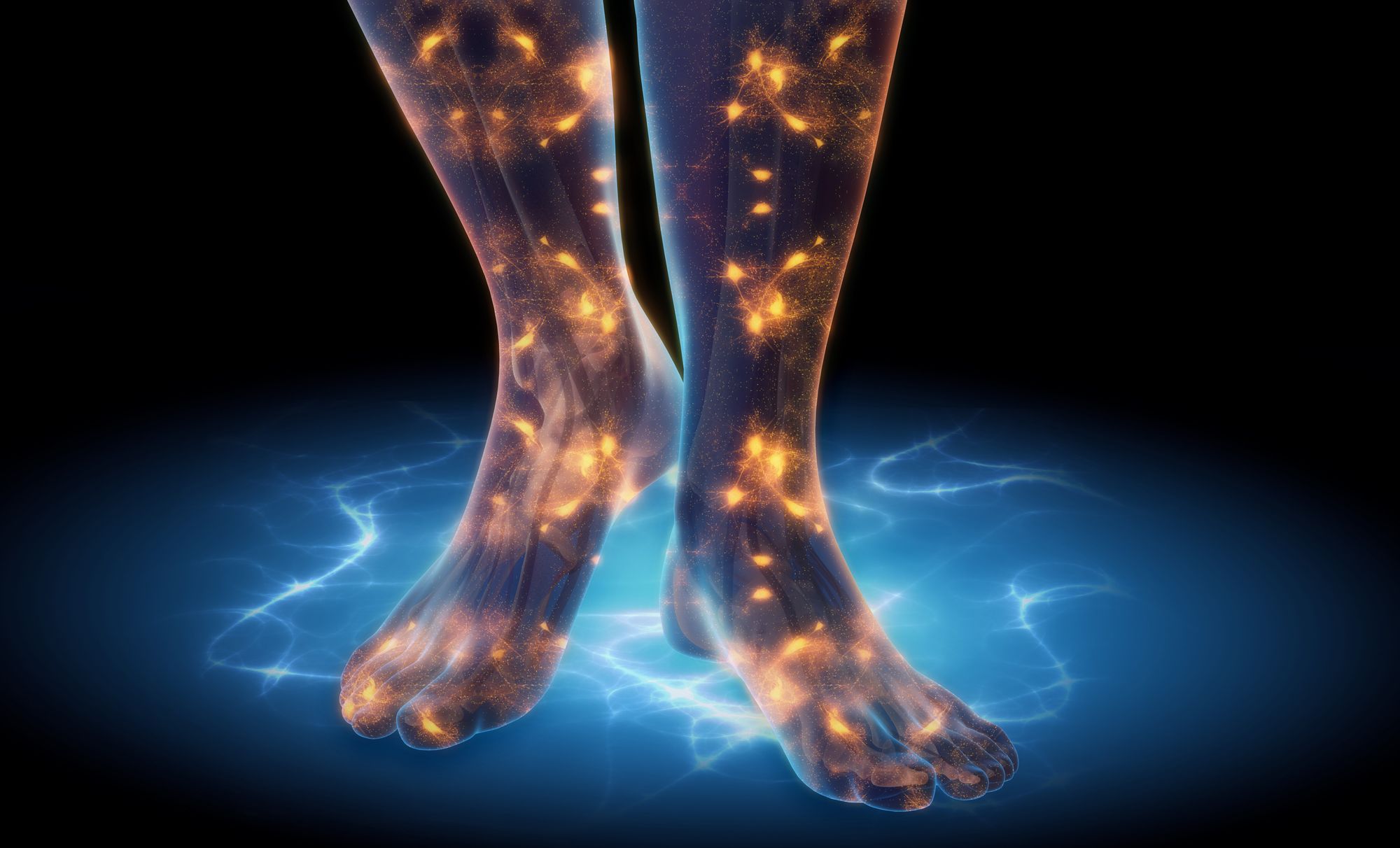
Why the pain stays after the chemo is gone
With most pain, the nerve is a messenger doing its job. You step on something sharp, the foot sends a message, and the message is true. Chemo neuropathy is different. The chemotherapy drugs are long gone, but the nerves they irritated keep firing, and your spinal cord and brain keep listening. The pain becomes the habit rather than the alarm.
That is why the usual tools fall short. A pill that lowers the volume doesn’t change the message. Gabapentin, Lyrica and Cymbalta quiet the signal for a few hours at a time, which is why the dose tends to climb while the feet stay the same.
 Watch
WatchHow scrambler therapy works on it
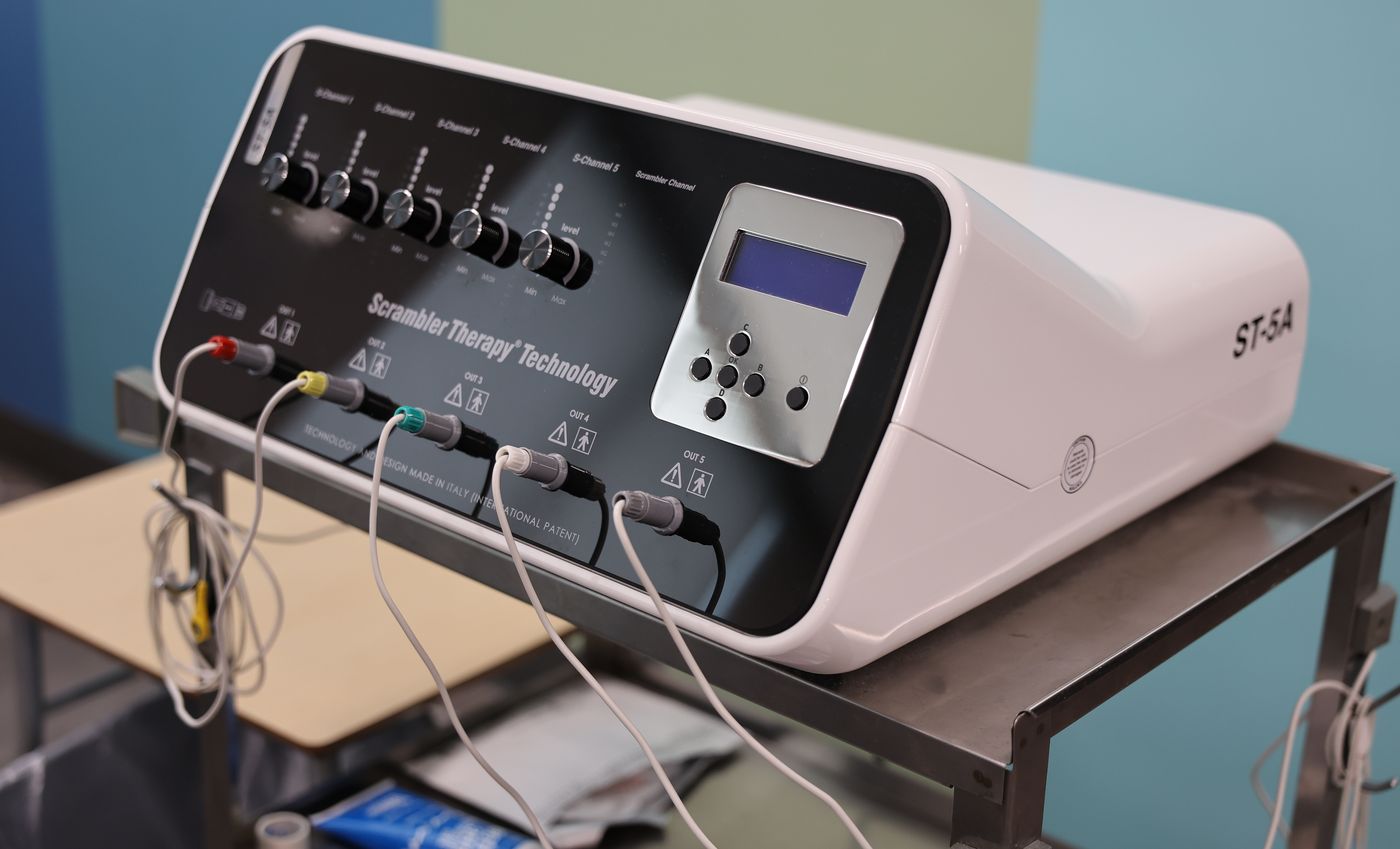
Scrambler therapy is an FDA-cleared, non-drug treatment for nerve pain. It goes after the message itself.
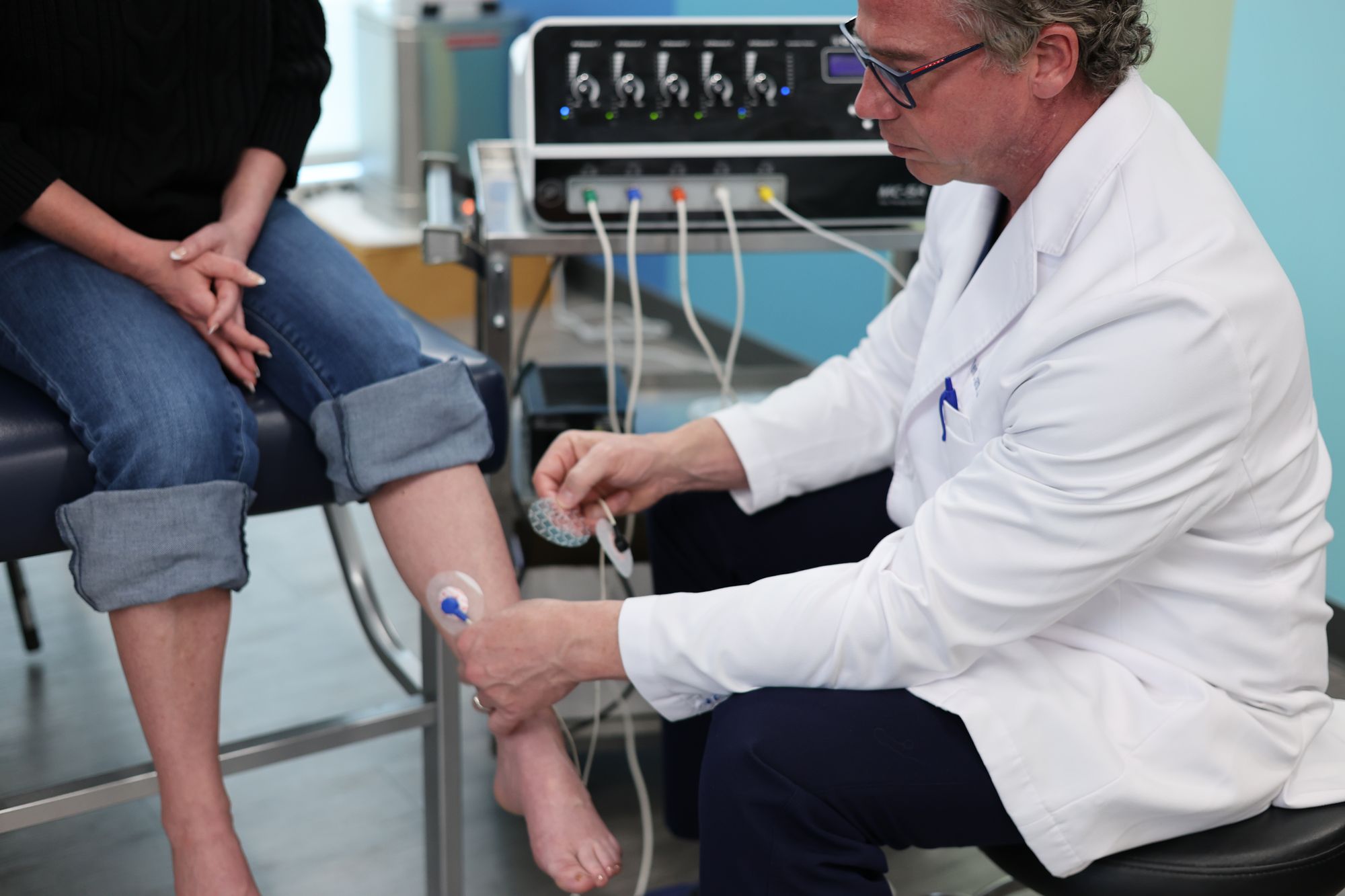
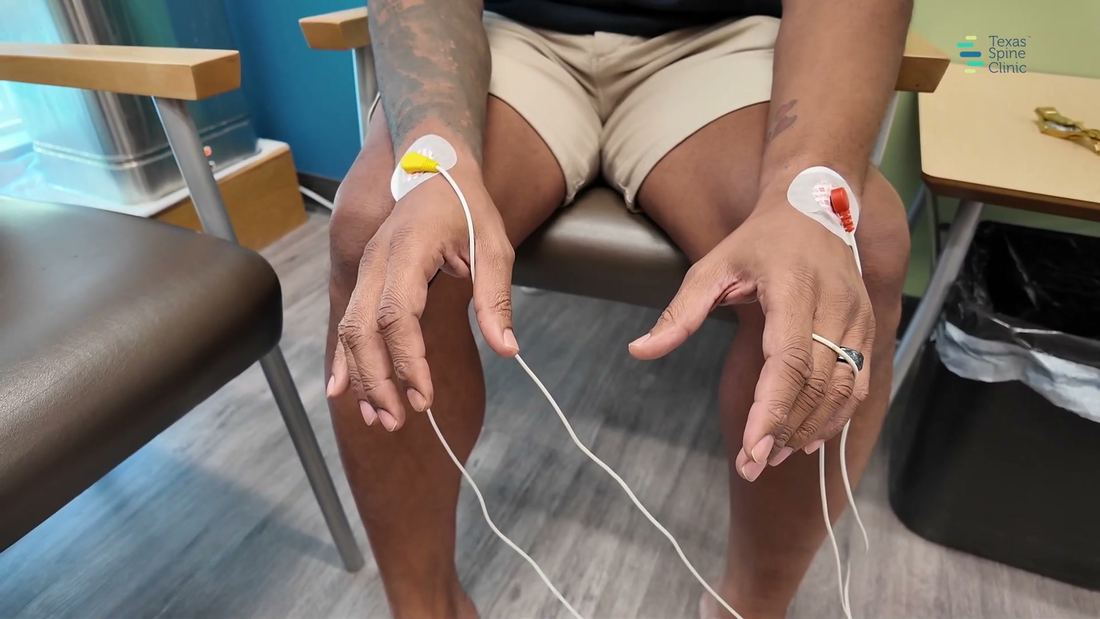
Small adhesive pads, like the ones used for a heart tracing, go on healthy skin along the nerve that feeds the painful area. For chemo neuropathy that means above the numb area, never on it: higher up the leg for the feet, up the arm for the hands. The treatment needs nerves that still work well enough to carry a signal, so that is where the pads go.
The machine then sends its own signal up those nerves: constantly changing waveforms shaped to imitate what a healthy nerve sends when nothing is wrong.1 Your nervous system receives a no-pain message on the same line that has been carrying pain, over and over, for about forty minutes. Session after session, the brain relearns what no pain feels like.
Chemo neuropathy is one of the conditions this treatment was built for. A 2023 review in the New England Journal of Medicine, written by physicians at Johns Hopkins and the Mayo Clinic, lists chronic nerve pain and cancer pain as what the device was designed for. The patient it uses to show how the treatment is done is a patient whose feet were hurt by chemotherapy.1
What the treatment feels like
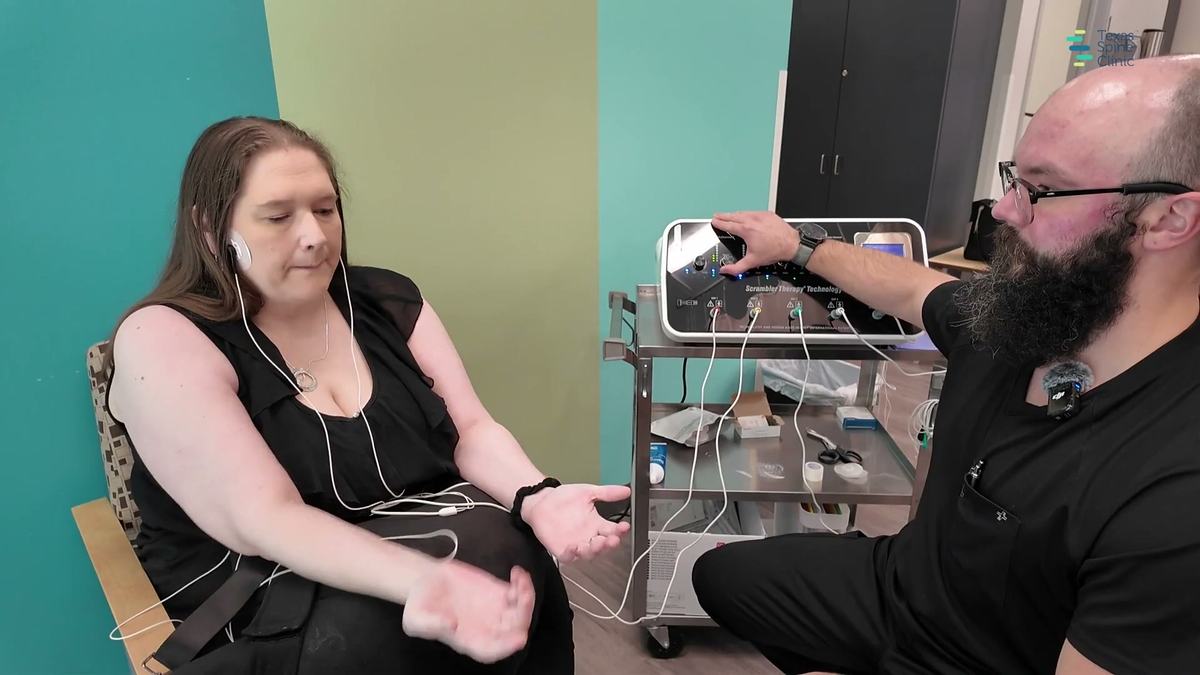
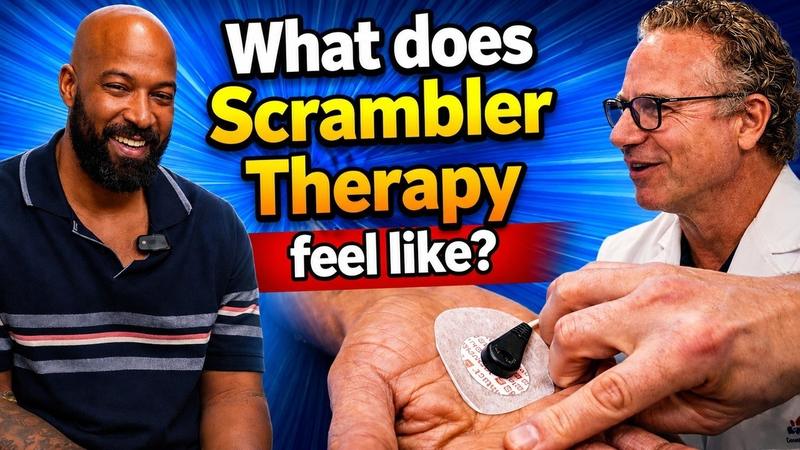
This is the first question everyone asks, so we filmed the answer. Braderick described it while the machine was running on his hands:
“Almost like a tattoo. You feel like your skin’s getting pricked by a tiny needle. It’s not painful. It feels almost like electricity running through your limbs.”
Braderick Adams, during a session
 Watch
WatchHere is how a session runs:
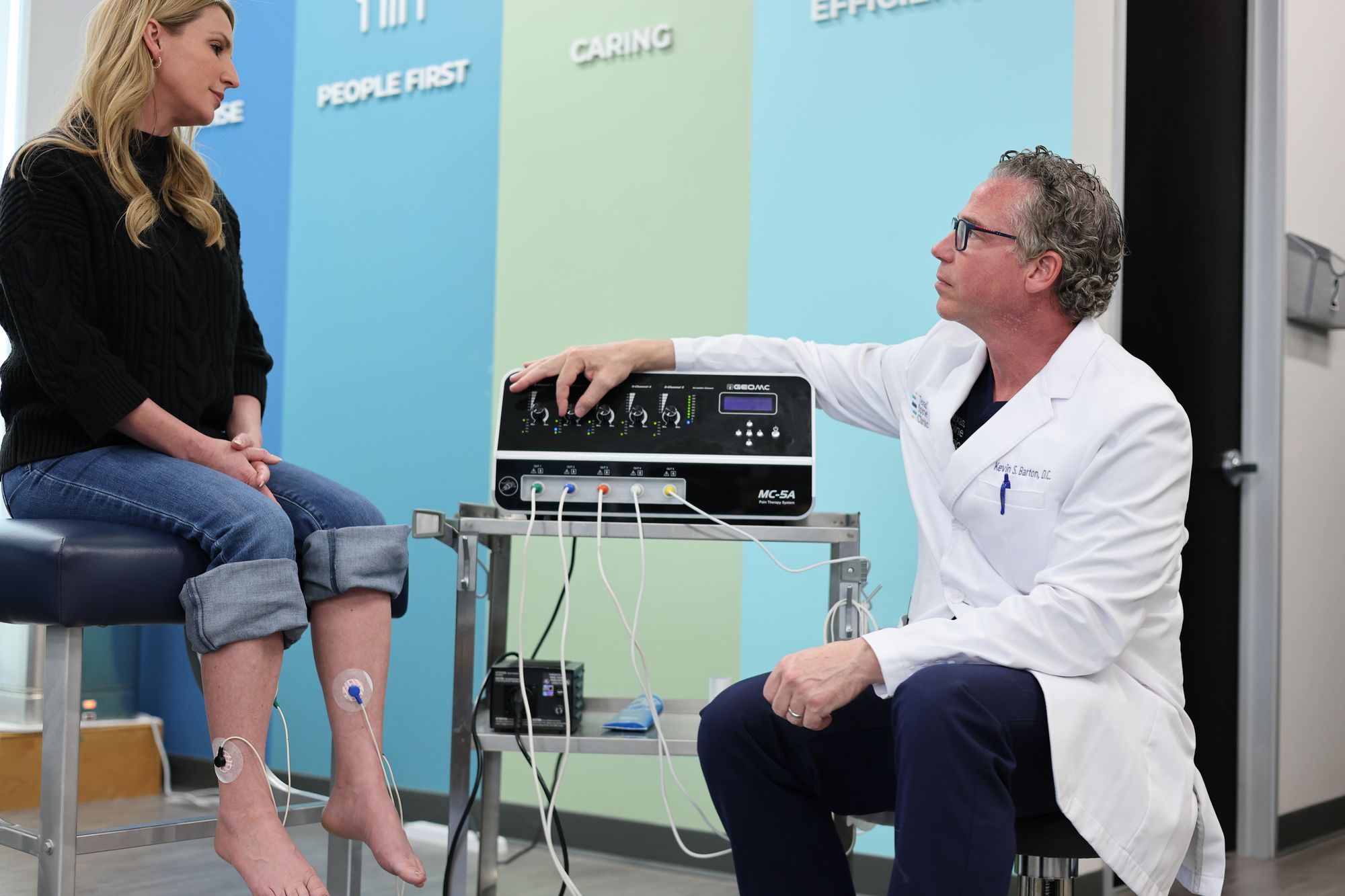
- You keep your clothes on. Roll up your trousers or sleeves and sit back.
- The pads go on by hand, and the placement is worked out fresh at every visit, to match where your pain is that day. Feet and hands often each get their own setup.
- The level comes up slowly, one channel at a time, while we ask what you feel. The target is a clear tingle or vibration that is completely comfortable. It should never hurt.
- Someone stays with you for the whole session, checking what the pain is doing and changing the setup on the spot. The goal every time is your pain at zero while you’re in the chair.
- About forty minutes, then you drive yourself home. No drowsiness and nothing to recover from. The skin under a pad can look a little pink for a short while afterward.
Braderick’s story: from a seven to a one
Braderick Adams served 26 years in the Air Force and retired out of the Pentagon. In 2011, in his early thirties, he was diagnosed with cancer. He went through twenty rounds of chemotherapy, finished that May, and has been cancer-free since.
About six weeks after his last round, his feet began to feel like they were asleep all the time. Then came the pressure. “It felt like I was walking on marbles,” he told us. His pain sat at a three or four when he woke up, reached a seven by midday and a nine or ten by evening. He was still on active duty, with a newborn daughter at home. He got a handicap parking tag. On family outings he would drop everyone at the door and wait in the car.
His doctors tried gabapentin, Lyrica and duloxetine. The nausea ruled them out for him, and the plan he was offered did not sit well: “The best you’re giving me is, take this medicine for the rest of your life. I don’t think so.”
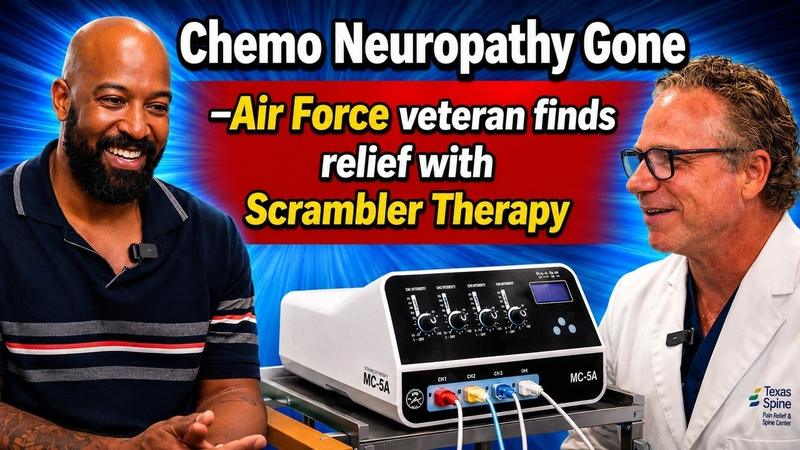
Then an oncologist who had worked at Walter Reed told him about a machine there. At the time it went by the name Calmare. Today it is called scrambler therapy. The military sent him for a course, and he felt the difference within a day of the first session. His daytime pain came down from a seven to a three or four. He remembers the moment: “Okay, wait a minute. My feet feel normal.”
 Watch
WatchSince then he has come back for the treatment whenever the pain crept up, and he says the relief has typically lasted him six months to a year each time. His pain has never returned to where it started.
After he retired to San Antonio, a car accident fired his feet back up to a seven. He and his wife searched the city for a Calmare machine and found nothing, because they were searching under the old name. A neurologist looked it up for him under “scrambler therapy” and found one clinic in San Antonio. It was ours.
Two weeks later, he sat down with Dr. Barton in the middle of the afternoon, the time of day his feet had always been at their worst, and rated his pain at a one.
“I imagine this is what normal feet feels like right now. To be a one in the afternoon, after a full day of doing life. Normally around this time it’s about a seven.”
Braderick Adams, Air Force veteran
He noticed it most in the ordinary moments: “I didn’t think about my feet as we’re walking to go to the grocery store.”
The course, and how you find out if it works for you
A full course is ten sessions on back-to-back weekdays, five days a week for two weeks. That is the protocol the device is built around. For people who respond, relief builds across the course, and each session’s relief tends to last longer than the one before.1 Braderick felt the biggest drop over his first weekend. Some people come back later for a short round of booster sessions when the pain starts to creep up, usually a few days rather than another full course.
You don’t decide about ten days on day one.
- First, a $19 consultation. Your history, including your cancer treatment, what you’ve already tried, and the list of reasons someone can’t have this treatment.
- Then a $99 first session. A full session, run properly, so you find out what your own nerves do with it. The $99 is credited toward your course if you continue.
- Then you decide. Scrambler therapy isn’t a covered insurance benefit, so the course is an out-of-pocket investment. You’ll have the exact number in writing before you commit to anything.
If you are still in cancer treatment
Your oncology team comes first, always. They got you through cancer, and nothing we do changes your cancer plan. If you are still in active treatment or on a maintenance therapy, tell us at the consultation and we coordinate with your oncologist before we start. Bring your full medication list, including anything you take for the neuropathy, and don’t stop or change a medicine on your own.
If you finished chemo years ago, you have not missed your window. Nerve pain that has been there for years is exactly the kind of stuck signal this treatment goes after. Braderick was fourteen years out.
Who cannot have this treatment
These are absolute. They come from the device’s own instructions, and no exam changes them: an implanted pacemaker; a spinal cord stimulator or peripheral nerve stimulator, implanted or in trial; aneurysm clips, vena cava clips or skull plates; a seizure disorder; pregnancy; and undiagnosed pain, which needs a diagnosis before it needs a treatment.
An implanted defibrillator does not rule you out. We use a magnet to turn it off during the session. Joint replacements and the screws, plates and rods used to repair bones or fuse a spine are not a problem either.
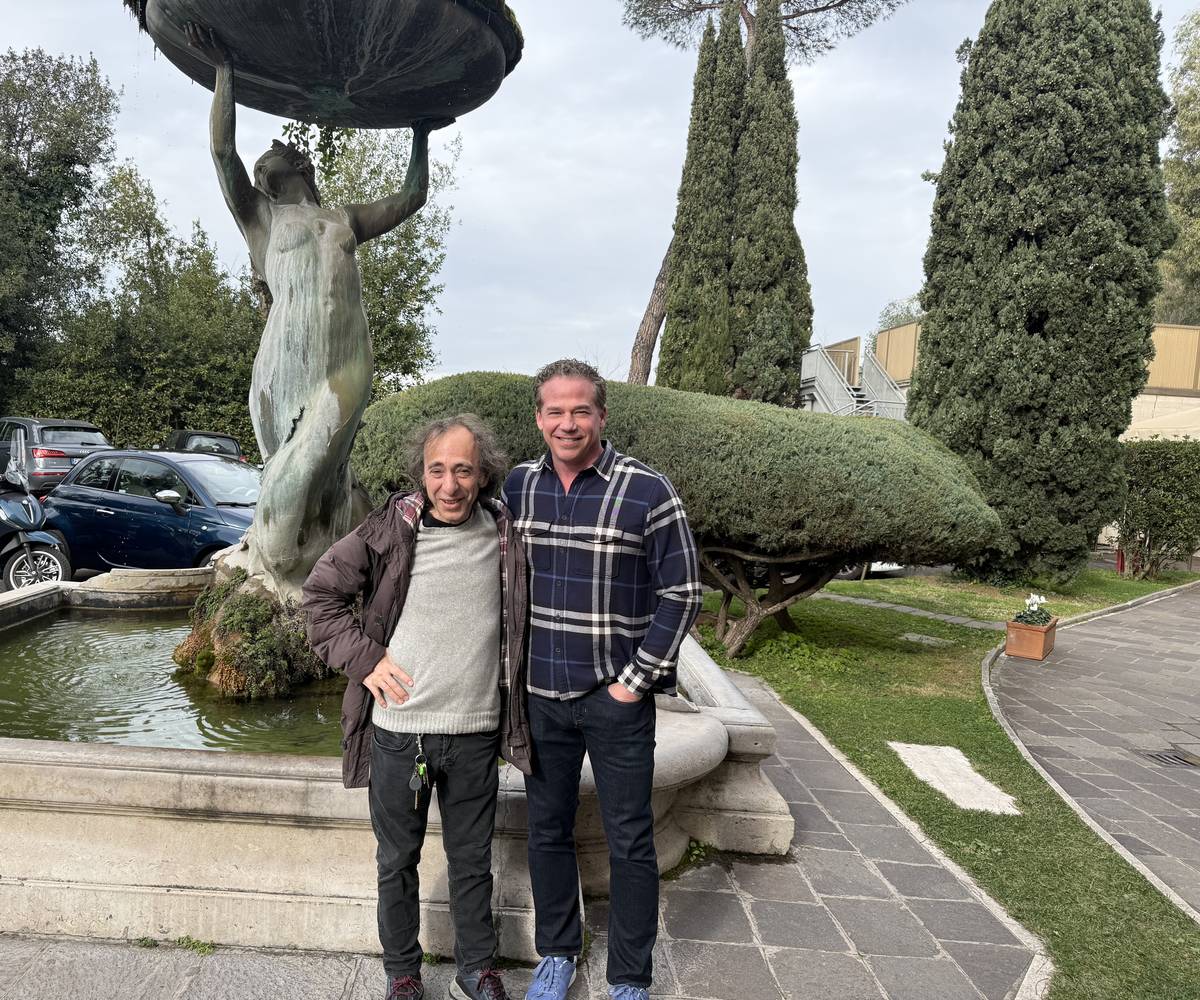
The scrambler program at Texas Spine Clinic is run by Dr. Kevin Barton, D.C., who trained in Rome with Dr. Giuseppe Marineo, the inventor of the treatment, and is medically supervised by Lisa D. Persyn, M.D., board certified in Physical Medicine and Rehabilitation. You got through the hard part. This part has a next step.
Chemo neuropathy treatment at Texas Spine Clinic
Source
- Scrambler therapy for chronic pain. New England Journal of Medicine, 2023, a review written by physicians at Johns Hopkins and the Mayo Clinic.
This article is educational and is not a substitute for an examination and diagnosis. Individual results vary and no outcome is guaranteed.