← Blog
Nerve Pain
When the injury healed but the pain didn’t
CRPS, shingles, chemo neuropathy: pain that keeps firing long after the damage is done. How scrambler therapy sends the nerve a “no-pain” message over the same pathway, and who is a candidate.
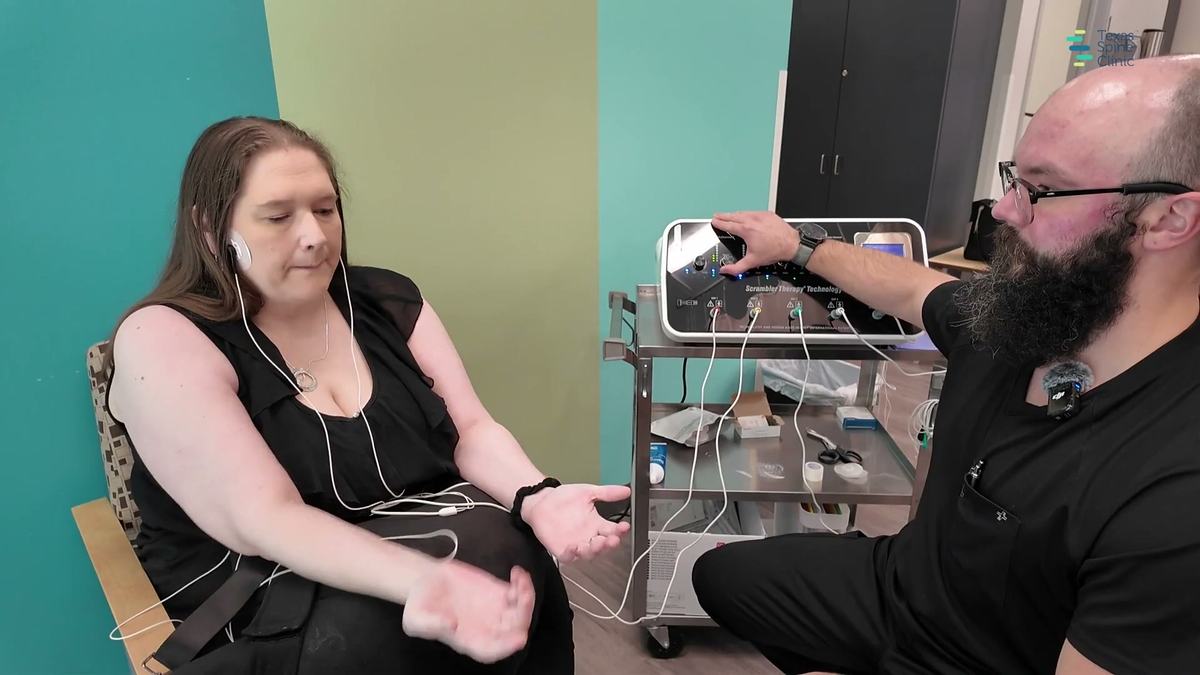
The chemo ended two years ago. The shingles rash is long gone. The ankle you broke has been solid for a decade. And the pain is still there, burning, or electric, or the kind that makes a bedsheet unbearable. The injury healed. The pain didn’t.
This article is about that kind of pain, why the usual tools underperform against it, and a treatment built specifically for it.
When pain becomes the habit instead of the alarm
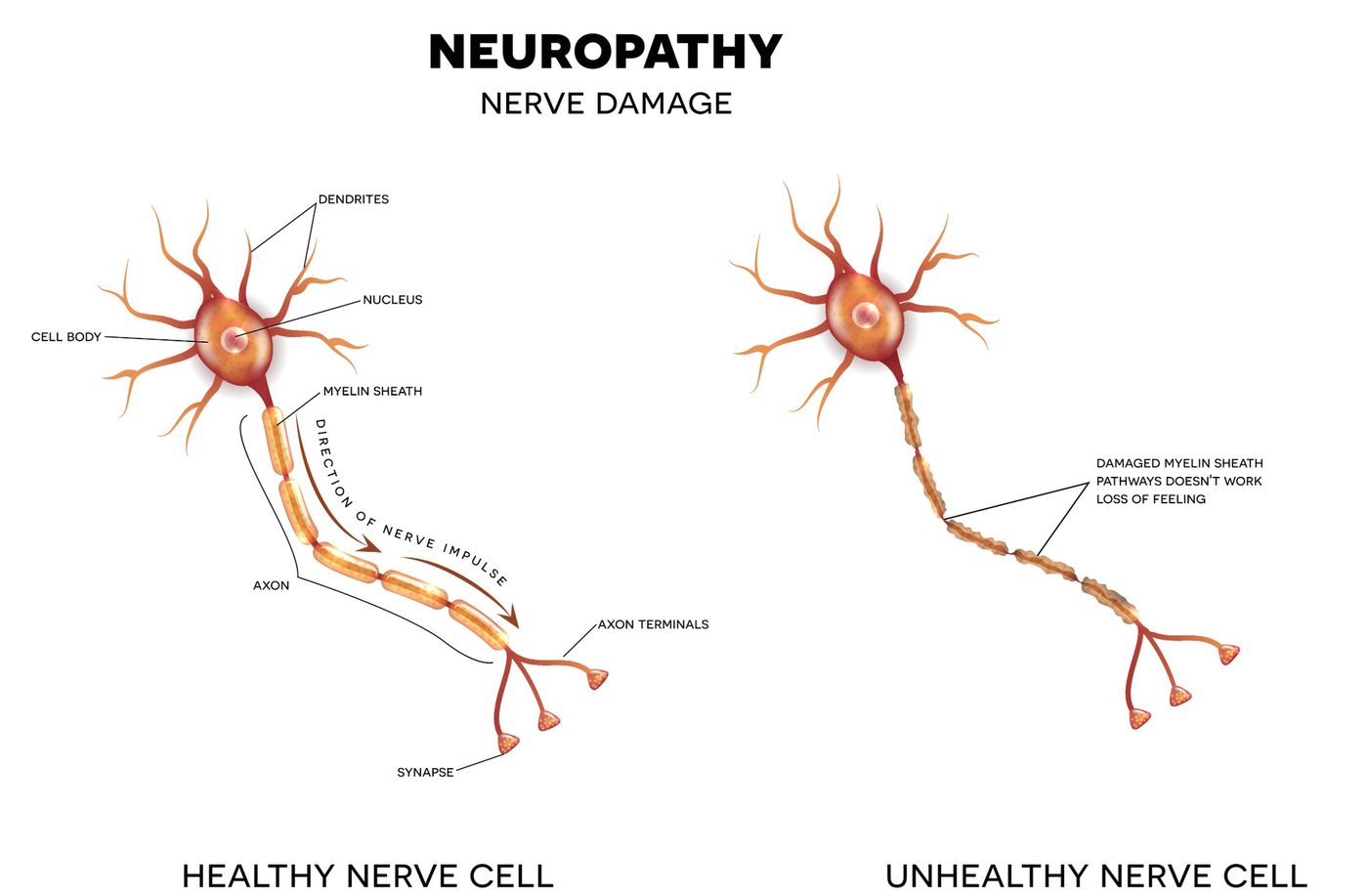
With most pain, the nerve is a messenger doing its job. You sprain an ankle, the ankle sends a message, the message is true. Nerve pain is different. The tissue may have healed, but the nerve keeps firing, the spinal cord and brain keep listening, and the whole circuit gets better and better at a message that isn’t warning you about anything anymore. Pain becomes the habit rather than the alarm.
That is why the usual tools fall short here. A pill that lowers the volume doesn’t change the message. A block that numbs the line wears off, and the line comes back. The problem isn’t only where it hurts. It’s the pattern being sent and re-sent.
The kinds of pain this is used for
Scrambler therapy is used for nerve pain: pain caused by a problem in the nerves themselves, rather than pain from a joint or a muscle. The conditions we see most:
- CRPS / RSD: burning, color and temperature changes, a limb that can’t stand to be touched.
- Chemotherapy-induced peripheral neuropathy: the feet and hands that never came back after treatment ended.
- Shingles nerve pain (postherpetic neuralgia): the rash healed; the burning didn’t.
- Diabetic and other peripheral neuropathy: burning feet, pins and needles, the “walking on gravel” feeling.
- Phantom limb pain.
- Nerve pain after surgery or injury, including pain along a scar, and radiating pain that stayed after a back or neck operation.
If your pain is mechanical rather than neuropathic, a disc pressing on a nerve for instance, scrambler therapy may not be the right tool, and we’ll tell you. Sometimes the right answer is spinal decompression instead. Sometimes it’s both.
How it sends the nerve a different message
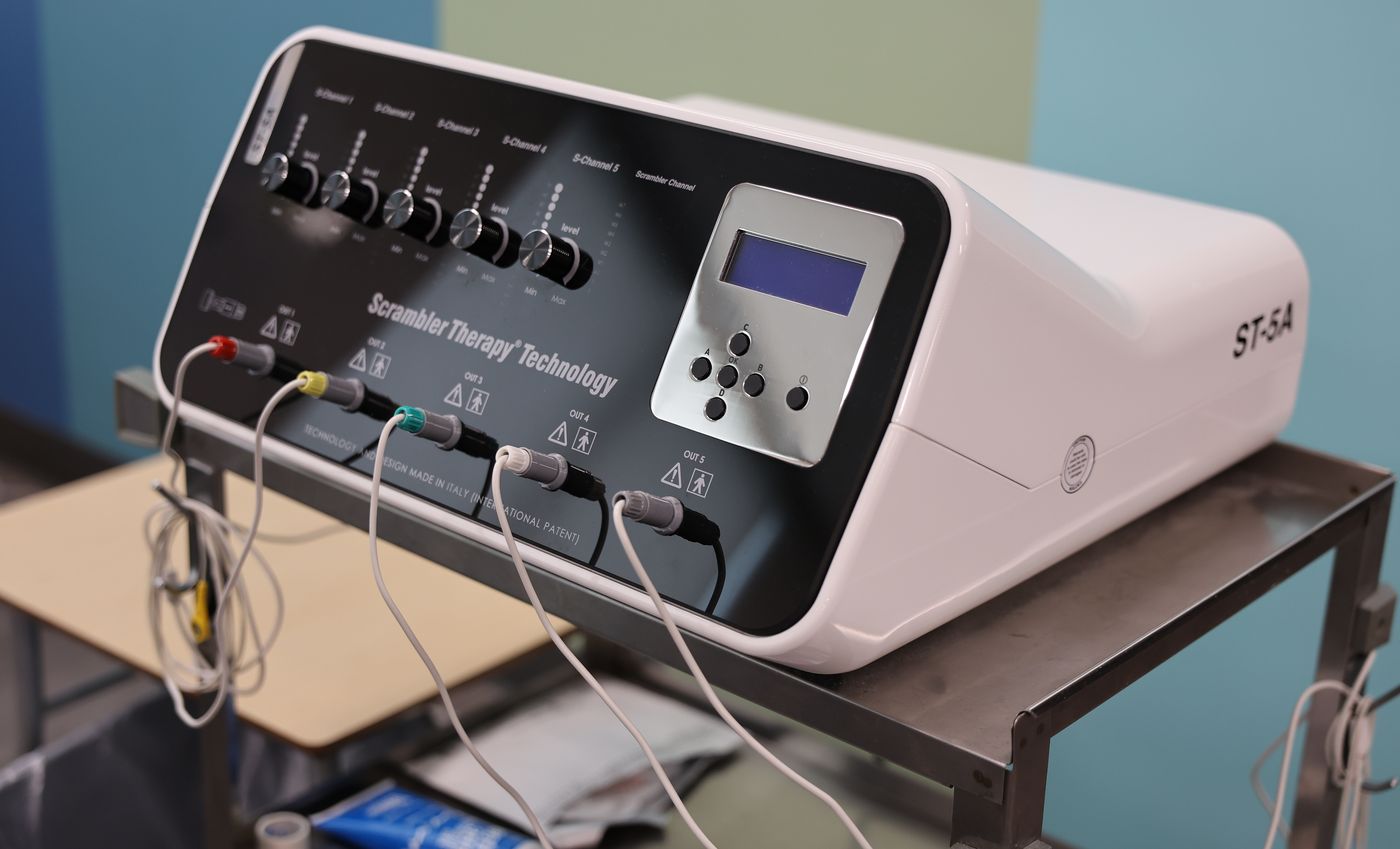
Small adhesive electrodes, the kind used for an EKG, are placed on healthy skin around the painful area, on the nerve pathways that feed it. Never on the raw spot. Never on broken or numb skin. The whole idea depends on finding nerves that still work well enough to carry a signal.
The machine then sends its own signal up those nerves. It isn’t a buzz and it isn’t random. The device builds sequences of waveforms, changing constantly, shaped to imitate the traffic a healthy nerve sends when nothing is wrong.1 Your nervous system receives a non-painful message on the same line that has been carrying pain, over and over, for about forty minutes. While that’s happening, most people feel their pain drop in the room. Then you go home, and the question becomes how long it holds, which is what the next ten days answer.
 Watch
WatchWhat a session is actually like
You keep your clothes on. You sit or lie back in a treatment room, no gown, no straps. Someone places the electrodes, by hand, patient by patient, and then brings the level up slowly, one channel at a time, asking what you feel. The target is a clear tingle that is completely comfortable. It should never hurt. If anything we do makes the pain go up, we stop and change something.
Then the session runs about forty minutes. People read, scroll, nap, talk. And here is the part that separates one clinic from another: we don’t put the pads on and walk away. Someone is with you for the session, checking what the pain is doing, and if a placement isn’t getting the answer we want, we change it in that session, not next week. The goal we work toward every single time is your pain at zero while you’re in the chair. When the session ends, the pads come off and you drive yourself home. Nothing to recover from.
The course: ten days, and an early answer
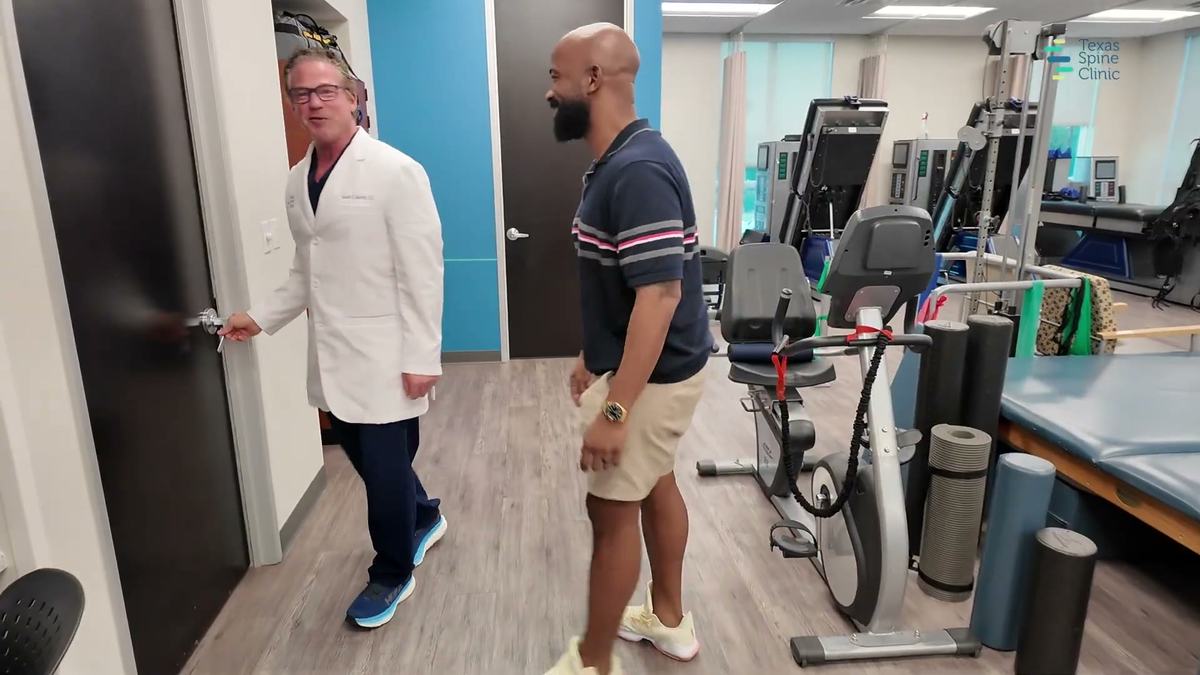
A full course is ten sessions on consecutive weekdays, five days a week for two weeks. That is the protocol the device is built around and the one the published work uses. It is a real commitment, which is why we run scrambler sessions on Fridays, when the rest of the clinic is closed. But you don’t decide about ten days on day one.
- A $19 consultation first: your history, your diagnosis, what you’ve already tried, and the list of reasons someone can’t have this. If you’re not a candidate, that’s where it ends.
- A $99 first session, done properly. Most people get useful information from that one session about whether their body is responding. The $99 is credited toward your course.
- Then you decide. If there’s a signal, we talk about the full course and you know the cost before you commit. If there’s nothing after a few sessions, we say so, and we stop.
For people who respond, relief usually builds over the course rather than arriving all at once; each session’s relief tends to last a little longer than the last. The published reports describe relief lasting weeks, months and in some cases longer after a course ends, and people whose pain returns responding again to a short round of booster sessions.1 People who fly across the country for this treatment say the boosters are the hard part. In San Antonio, they’re a drive.
If you have CRPS: the part most clinics leave out
Complex regional pain syndrome needs more than the machine, and our CRPS protocol includes it: desensitization, retraining the skin to tolerate touch again, and mirror therapy, which uses the reflection of the healthy limb to help the brain re-map the painful one. Both are included, and both are used for other resistant nerve pain when they help.
Who cannot have this treatment
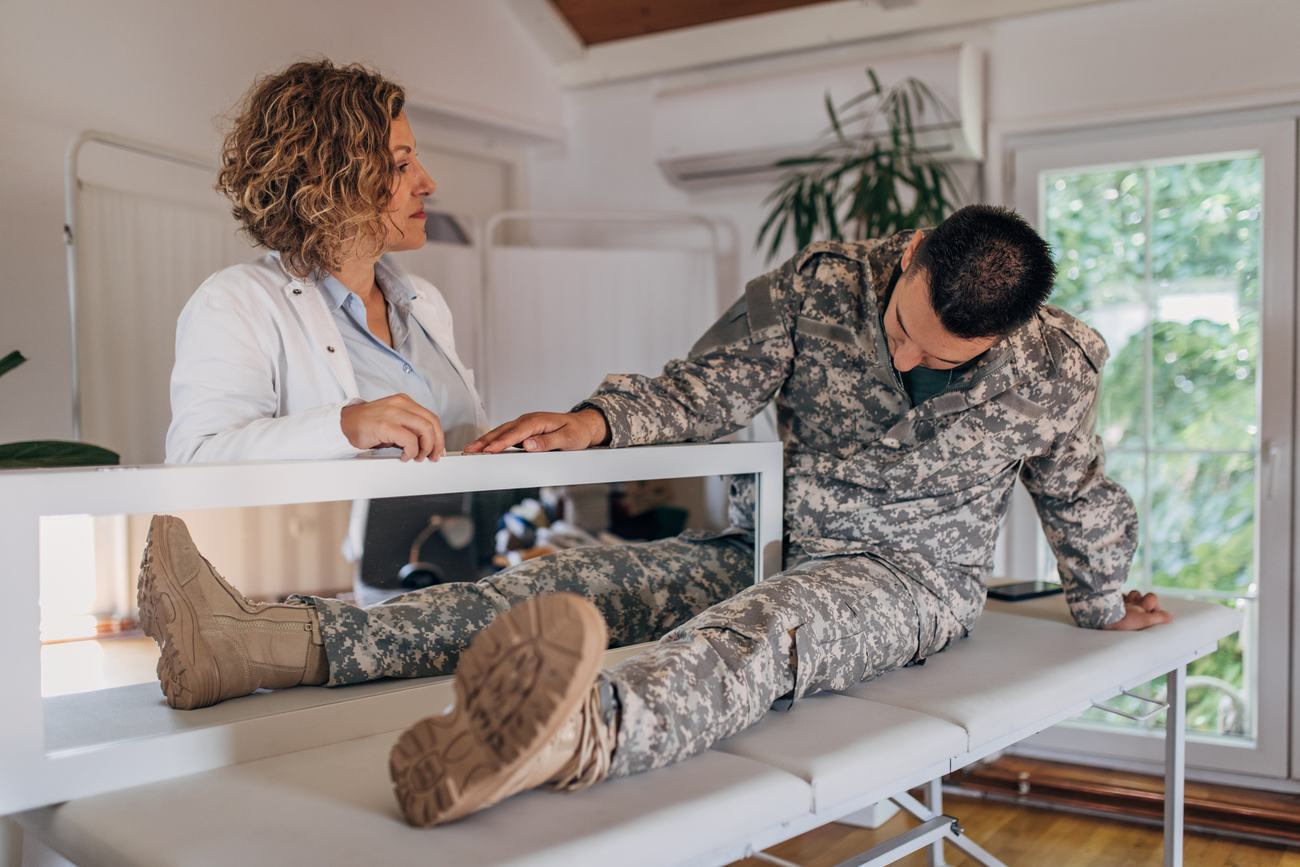
These are absolute. They come from the device’s own instructions, and no exam changes them: an implanted pacemaker or defibrillator; a spinal cord stimulator or peripheral nerve stimulator, implanted or in trial; aneurysm clips, vena cava clips or skull plates; a seizure disorder; pregnancy; and undiagnosed pain, which needs a diagnosis before it needs a treatment. Electrodes are never placed on the head or the front of the neck, so it is not used for headaches or facial pain.
Worth knowing, because patients assume the opposite: a knee, hip or shoulder replacement is not a problem, and neither are the pins, plates, screws, cages and rods used to repair bones or fuse a spine. If you’ve had spine surgery with hardware, you have not been ruled out.
Three patients, three kinds of nerve pain
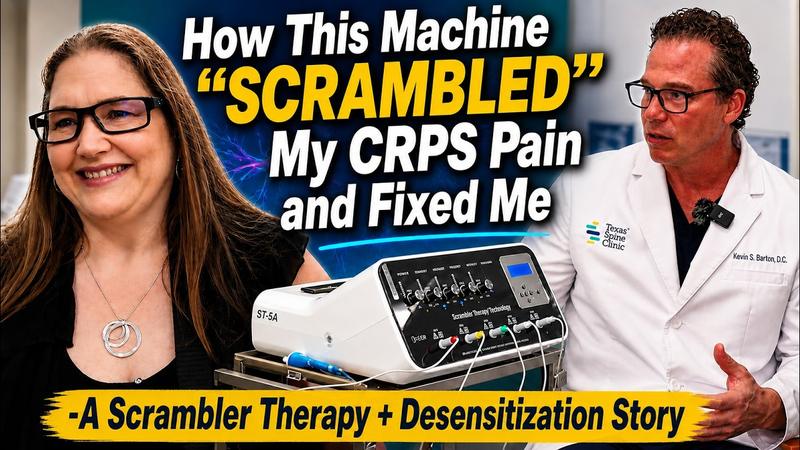 Watch
WatchShannon: CRPSWhen medications, nerve blocks and ketamine had all failed. Her pain came down to a 1.
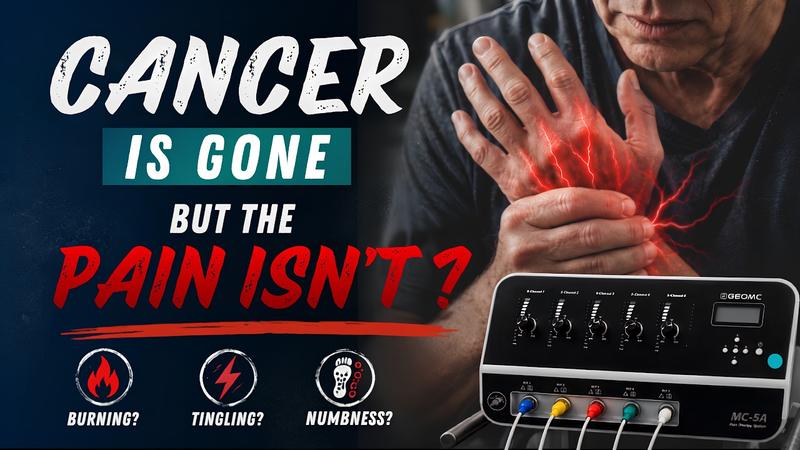 Watch
WatchCancer is gone. The pain isn't.Scrambler therapy for chemo-induced neuropathy.
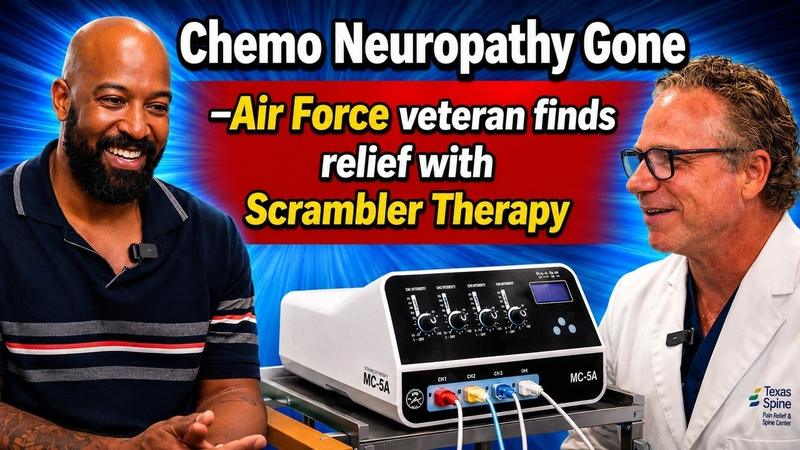 Watch
WatchChemo neuropathy and the treatment you've never heard ofThe burning feet that never came back after treatment ended.
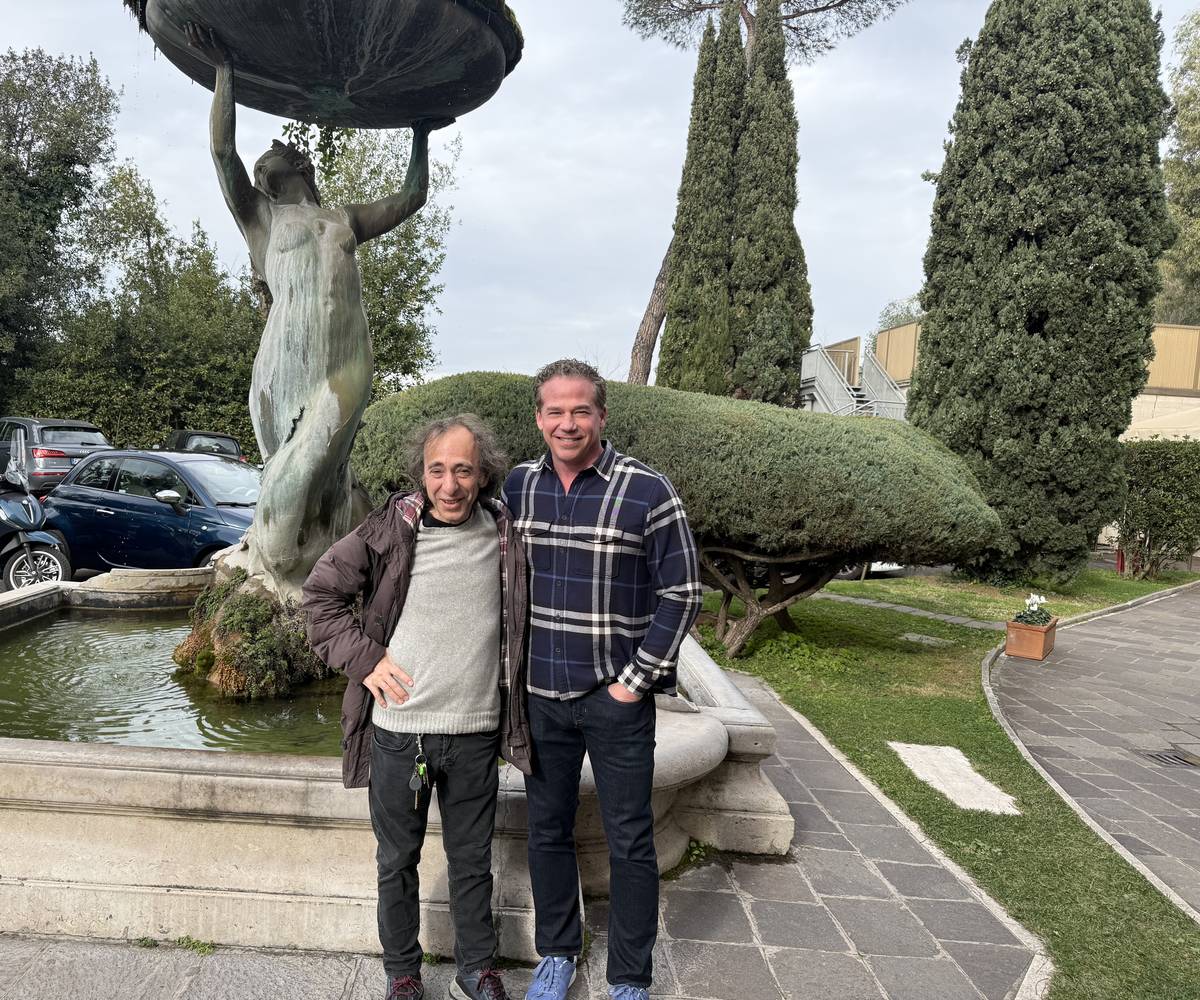
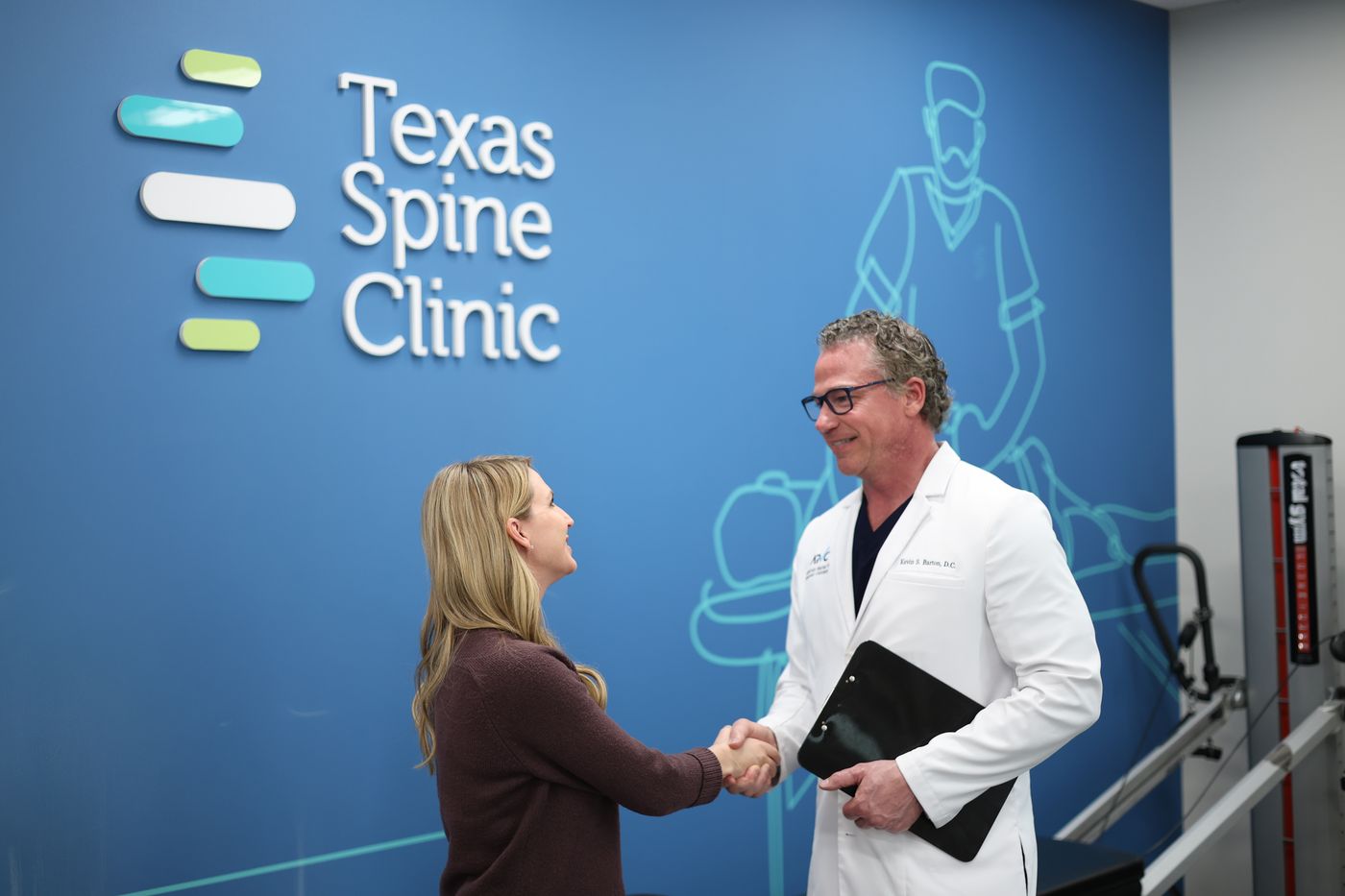
The scrambler program at Texas Spine Clinic is run by Dr. Kevin Barton, who trained in Rome with Dr. Giuseppe Marineo, the inventor of the treatment, and is medically supervised by Lisa D. Persyn, M.D., board certified in Physical Medicine and Rehabilitation. If the injury healed and the pain didn’t, this is the conversation you haven’t had yet.
About scrambler therapy at Texas Spine Clinic
Source
- Scrambler therapy for chronic pain. New England Journal of Medicine, 2023, a review written by physicians at Johns Hopkins and the Mayo Clinic.
This article is educational and is not a substitute for an examination and diagnosis. Individual results vary and no outcome is guaranteed.