← Blog
Spine & Discs
Is spinal decompression just traction?
Both pull on the spine. The difference is in how the pull is controlled, where it’s aimed and how it’s measured, and why that matters for a herniated disc.
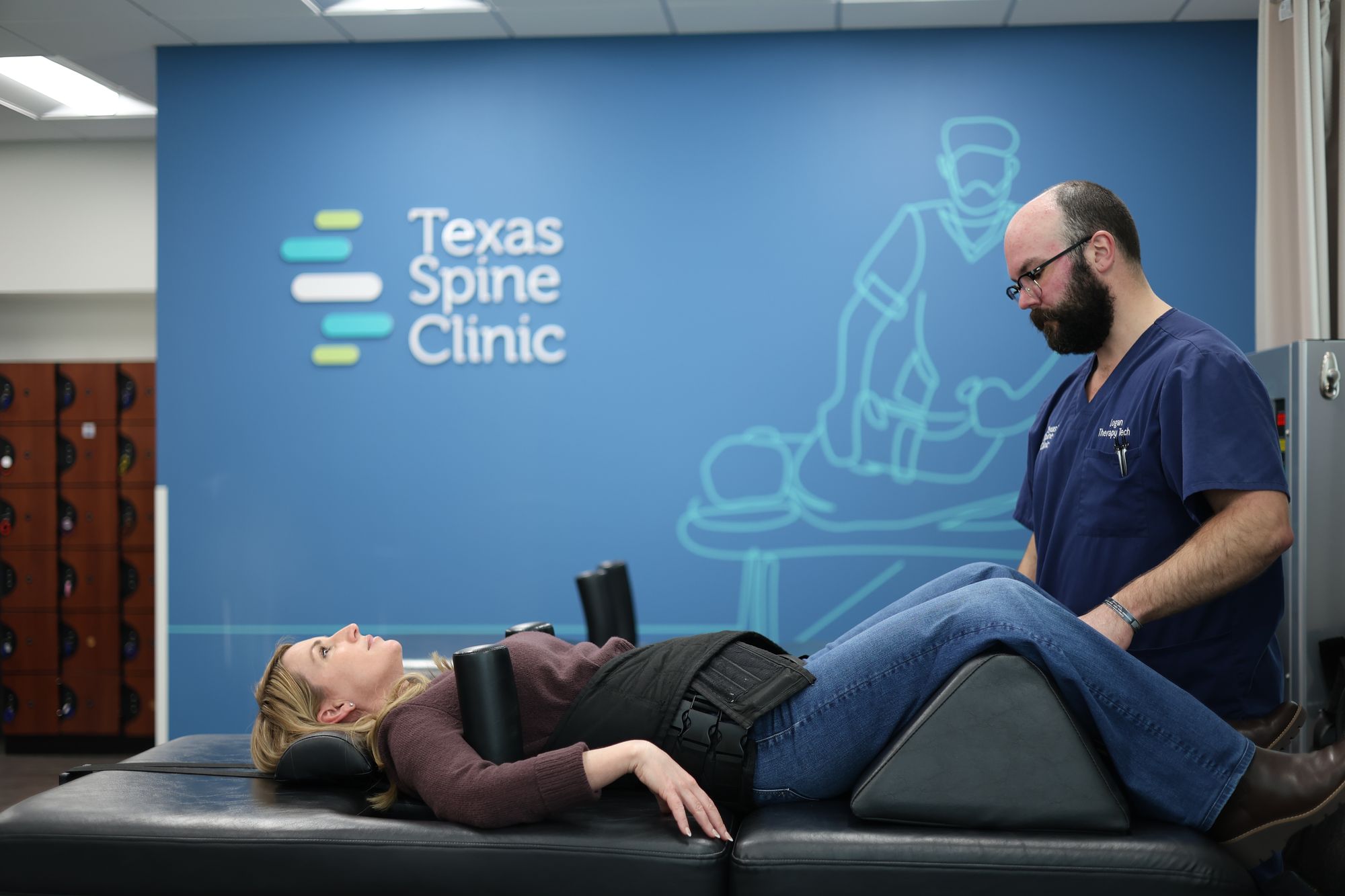
It’s the question people ask with a slight edge in their voice, because they have already hung upside down from an inversion table, or spent six weeks on a traction unit at physical therapy, and it didn’t change anything. Isn’t this just traction with a better paint job?
Same family. Different animal. Both pull on the spine. Everything that matters is in how the pull is controlled, where it’s aimed, and how it’s measured.
What traction does, and why the body fights it
Traction, in all its forms, applies a steady pull to the spine. Hang from a bar, strap your ankles into an inversion table, or lie on a clinic unit with a weight on a rope, and you are pulling your whole spine, bluntly, with roughly the same force from your neck to your pelvis.
Your body has an opinion about that. The muscles along the spine exist to protect it, and when they feel a sustained pull they do what they were built to do: they tighten and guard. Once they’re guarding, most of your pull is being absorbed by muscle, not reaching the disc. You can’t target a level, you can’t control the force curve, and you can’t measure what is actually happening inside.
 Watch
WatchThree things the DRX9000 does that a traction table can’t
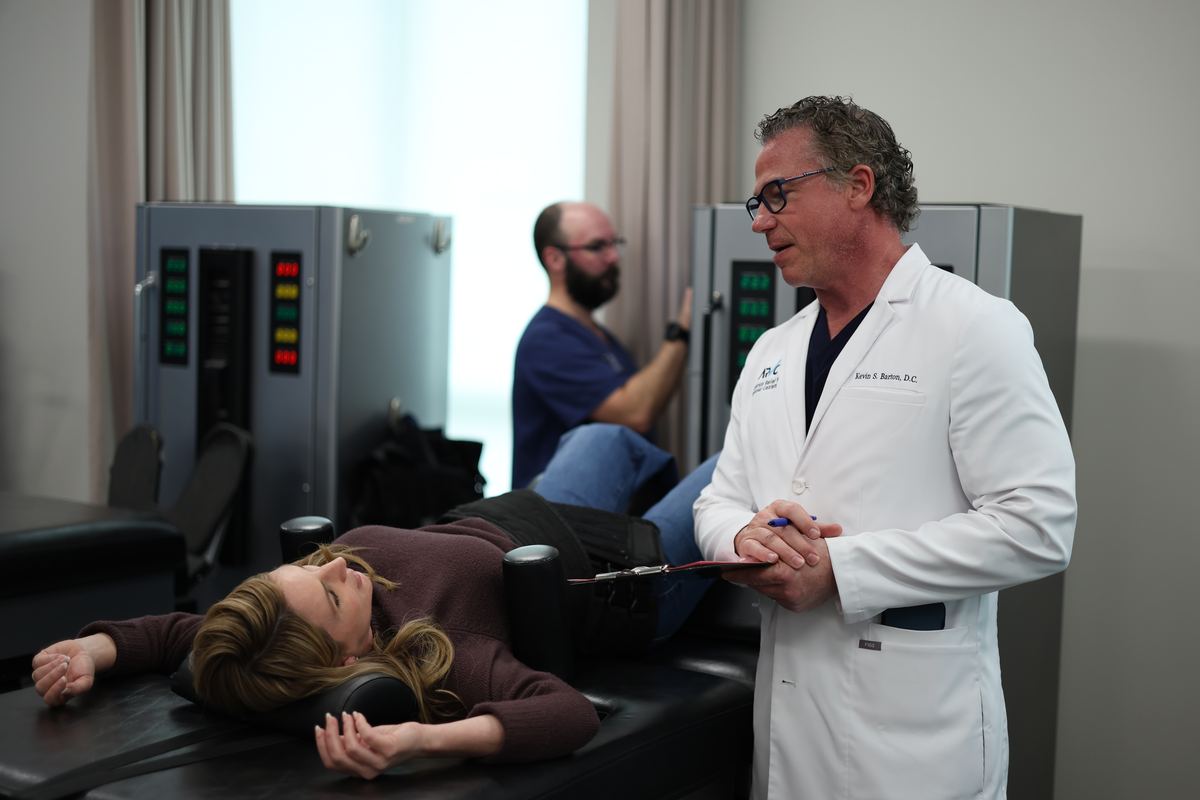
- It measures and adjusts the pull continuously. The machine applies its force in a curve, ramping up and easing off, and it measures the resistance it meets continuously, adjusting as it goes. The point of the curve is to stay below the threshold that triggers muscle guarding. If the muscles never start fighting, the pull reaches the disc.
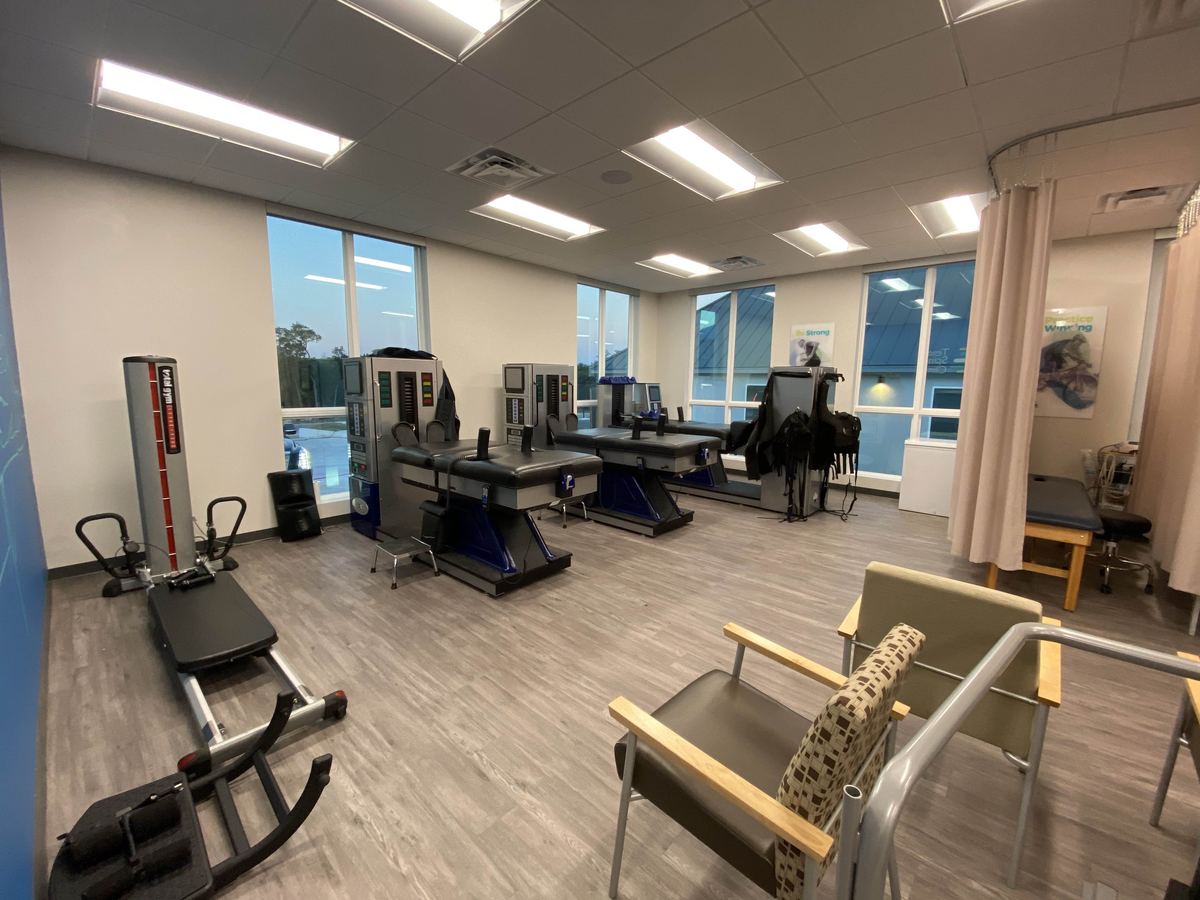
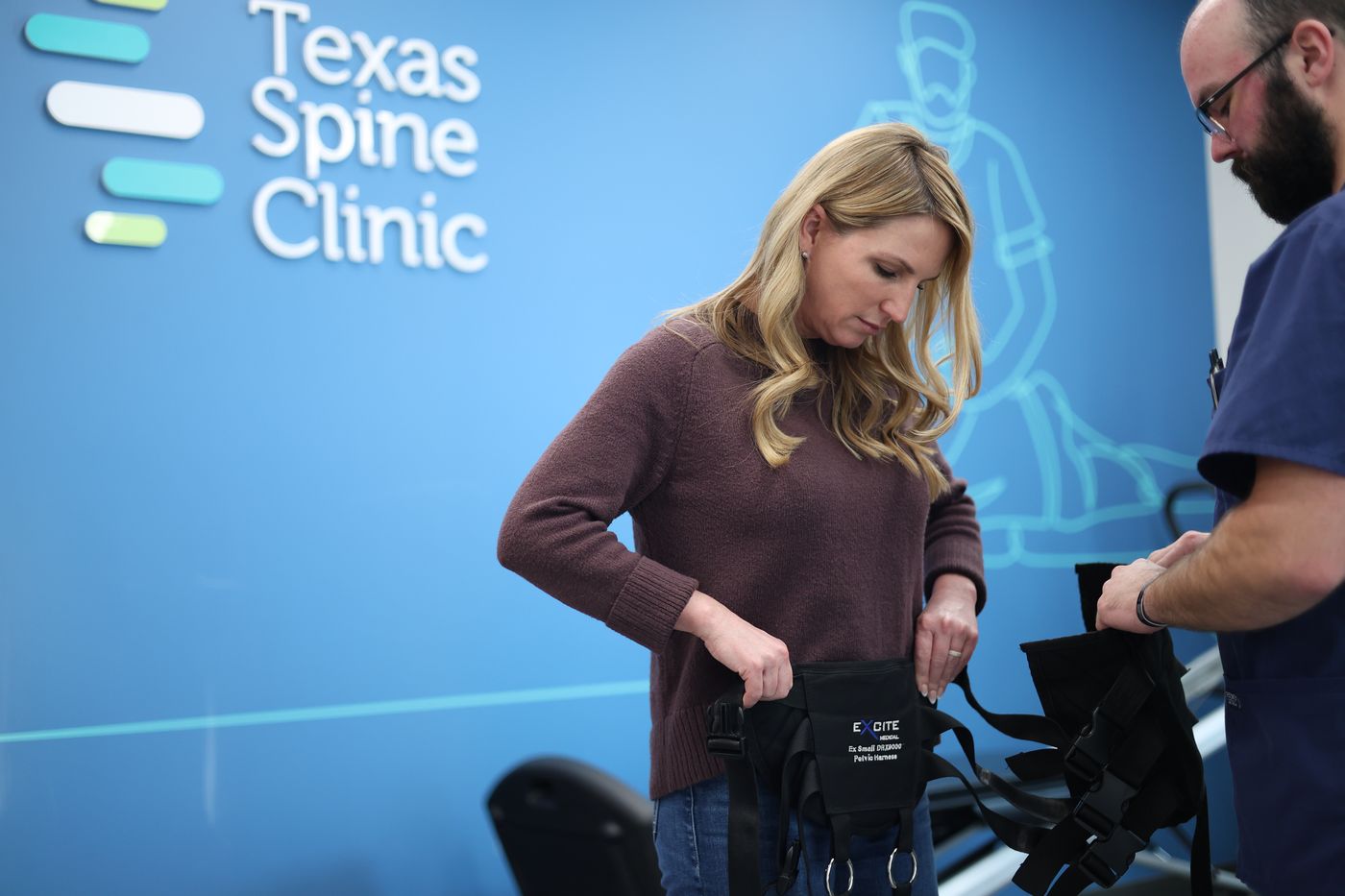
- It aims at one level. The angle of the pull is set for the specific disc that is herniated, L4-L5 or L5-S1 or C5-C6, rather than distributed along the whole spine. Your protocol is set by hand: angle, force and level, and adjusted as you respond.
- It works the disc, not just the space around it. The cycle of pulling and releasing does something to the disc itself, which is the next section.
What happens inside the disc
A disc has no blood supply of its own. It feeds by pressure. When weight presses down on a disc, fluid is squeezed out. When the weight comes off, the disc soaks fluid back in, along with the nutrients it carries. All day long, upright, the disc is being squeezed. Decompression gives the disc the unloading on purpose, again and again, for half an hour.
And under a controlled pull, the pressure inside the disc doesn’t just drop. It goes negative. Researchers publishing in the Journal of Neurosurgery put pressure sensors inside human lumbar discs during decompression and recorded a true vacuum.1 That negative pressure is what helps draw bulging material back off the nerve, and the pumping of fluid is what lets a starved disc take in what it needs to repair.
If you want the physiology from a different direction: astronauts come home from space measurably taller, because with gravity off the spine, every disc swells with fluid. Nothing about that is marketing; it is what discs do when the load comes off. A decompression table gives one disc a controlled version of that unloading, thirty minutes at a time.
 Watch
WatchWhy the difference shows up in the research
Because a sham decompression is easy to build (same machine, same harness, same thirty minutes, force set to zero), this is one of the few back treatments that has been tested against a fake version of itself. In that randomized trial, real decompression shrank herniations by 27.6% at three months. The sham shrank them by 7.1%.2
And in a study that compared decompression head-to-head with physical therapy plus conventional traction, radiating leg pain improved in far more of the decompression patients, 84.6% against 20.6%, and their discs gained measurable height on MRI.3 That is the cleanest answer to the question in the title: the two treatments were put side by side, and one of them moved the nerve pain.
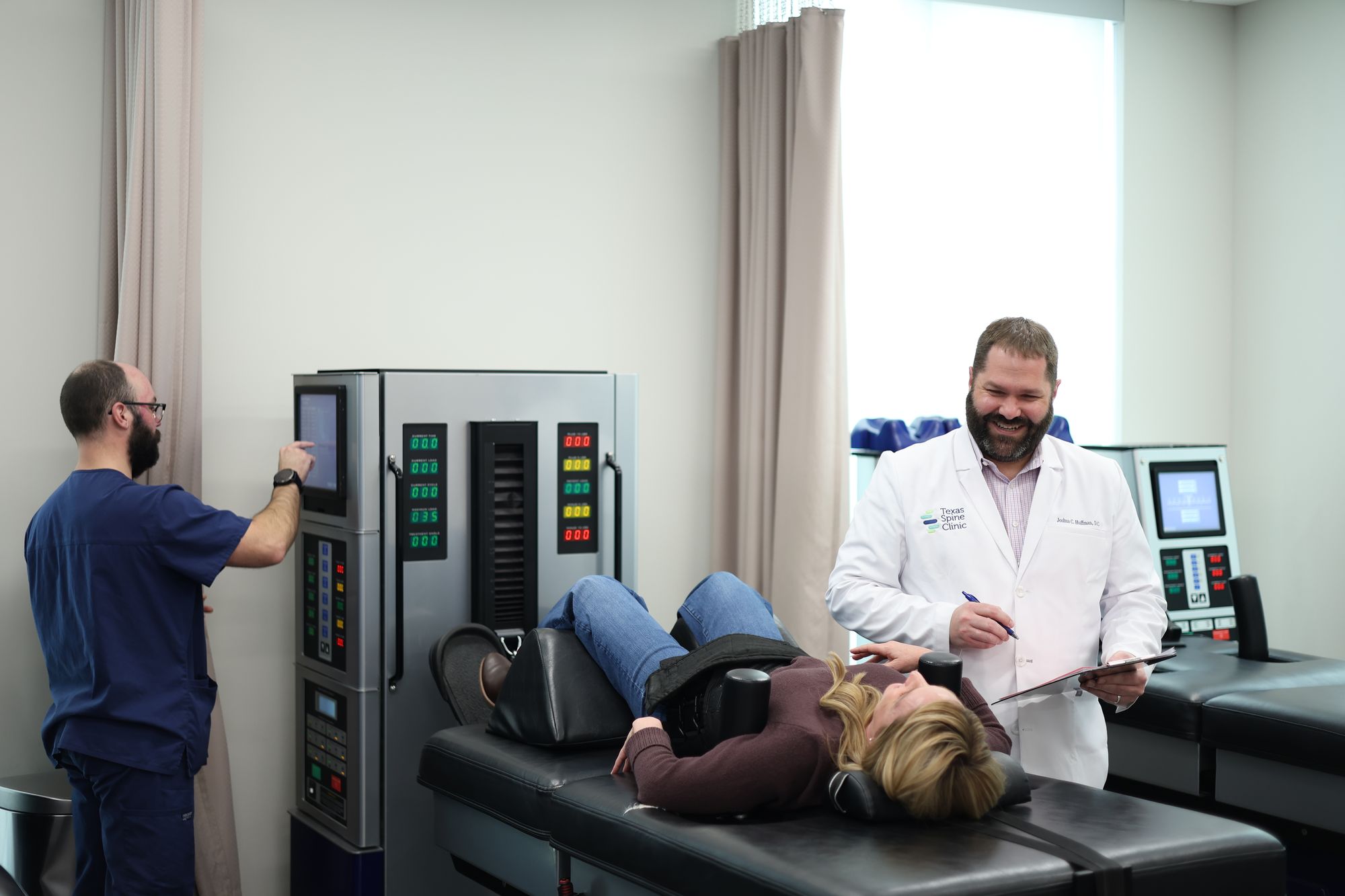
What it looks like, start to finish
 Watch
WatchWhy the DRX9000 makes traditional traction look outdatedThe mechanism, side by side with a traction table.
 Watch
WatchA lumbar session, start to finishWhat the thirty minutes on the table actually look like.
And the table is only half the program
The pull takes pressure off the disc and the nerve. Core strengthening, which runs alongside the decompression, is what makes the result hold once you are back on your feet. A course runs about 20 to 25 sessions over six to eight weeks, and you know by the second week whether your body is responding.
So no, it isn’t traction. If traction had done this, you wouldn’t be reading this. Find out whether your disc is a candidate at a $49 DRX9000 consultation: an exam, your imaging reviewed with you, and if you qualify, your first session on the table.
Book the $49 DRX9000 consultation
Sources
- Ramos G, Martin W. Effects of vertebral axial decompression on intradiscal pressure. Journal of Neurosurgery. 1994;81(3):350–353.
- Choi E, et al. Effectiveness of spinal decompression therapy for lumbar disc herniation: a randomized sham-controlled trial. International Journal of Clinical Practice. 2022.
- El-Zayat RS, et al. Non-surgical spinal decompression versus physiotherapy and traction for lumbar disc herniation. Egyptian Rheumatology and Rehabilitation. 2019.
Full methodology for every study we cite: the evidence page.
This article is educational and is not a substitute for an examination and diagnosis. Individual results vary and no outcome is guaranteed.