← Blog
Chiropractic
What an adjustment actually is: a stretch for a joint
A tight joint moves wrong, gets inflamed and hurts. An adjustment stretches it the way you’d stretch a tight muscle. What the pop is, and what you’ll feel afterward.
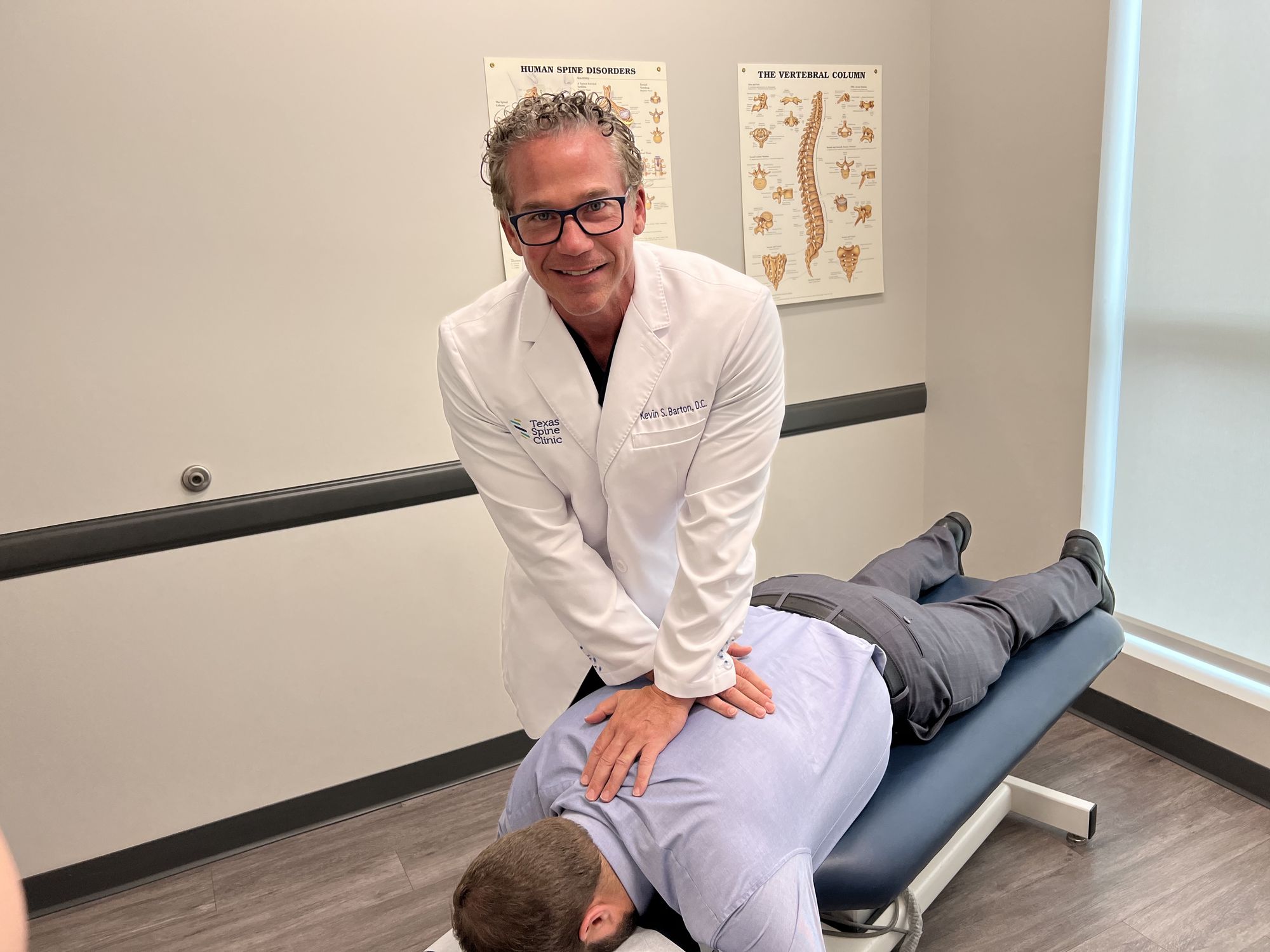
Most people have a picture of an adjustment before they ever have one. Somebody gets twisted, something cracks, a bone goes “back into place.” It makes for a good video. It is also not what is happening.
Here is what is happening, in plain words. An adjustment is a stretch for a joint. You already know how this works, because you have done it to a muscle.
Your spine is a stack of small joints
Your spine isn’t one long bone. It is a stack of small bones connected by small joints, about two dozen segments, each built to move a little. Bend, twist or look over your shoulder, and dozens of those joints each do their share.
When one of them gets tight, from how you sit all day, from lifting wrong, from an old injury, or just from never moving it through its full range, four things follow, in this order.
- It stops moving the way it was built to. Think of a door with one stiff hinge. The door still opens. But it drags, it squeaks, and it pulls on the frame every single time.
- Its neighbors pick up the slack. Picture a shopping cart with one stuck wheel. It still rolls, but it pulls to one side, and the other three wheels wear out doing the stuck one’s work. The joints above and below a tight one over-move to make up for it, and they start to complain too.
- The joint gets inflamed. A shoe that rubs your heel is nothing for one step. A thousand steps a day, and you have a blister. A joint that moves wrong rubs wrong every time you bend, sit or turn, and the tissue around it gets irritated.
- The muscles lock down to protect it. Your body guards a sore joint. The muscles around it tighten like a splint. That is the knot you feel. But a splinted joint moves even less, so it gets tighter, the rubbing gets worse, and the cycle feeds itself.
What the adjustment does
When your hamstring is tight, it doesn’t work right. You can’t bend as far, it pulls, and if you push it, it hurts. So you stretch it. You take it a little past where it has been stuck, and it starts moving the way it was built to again.
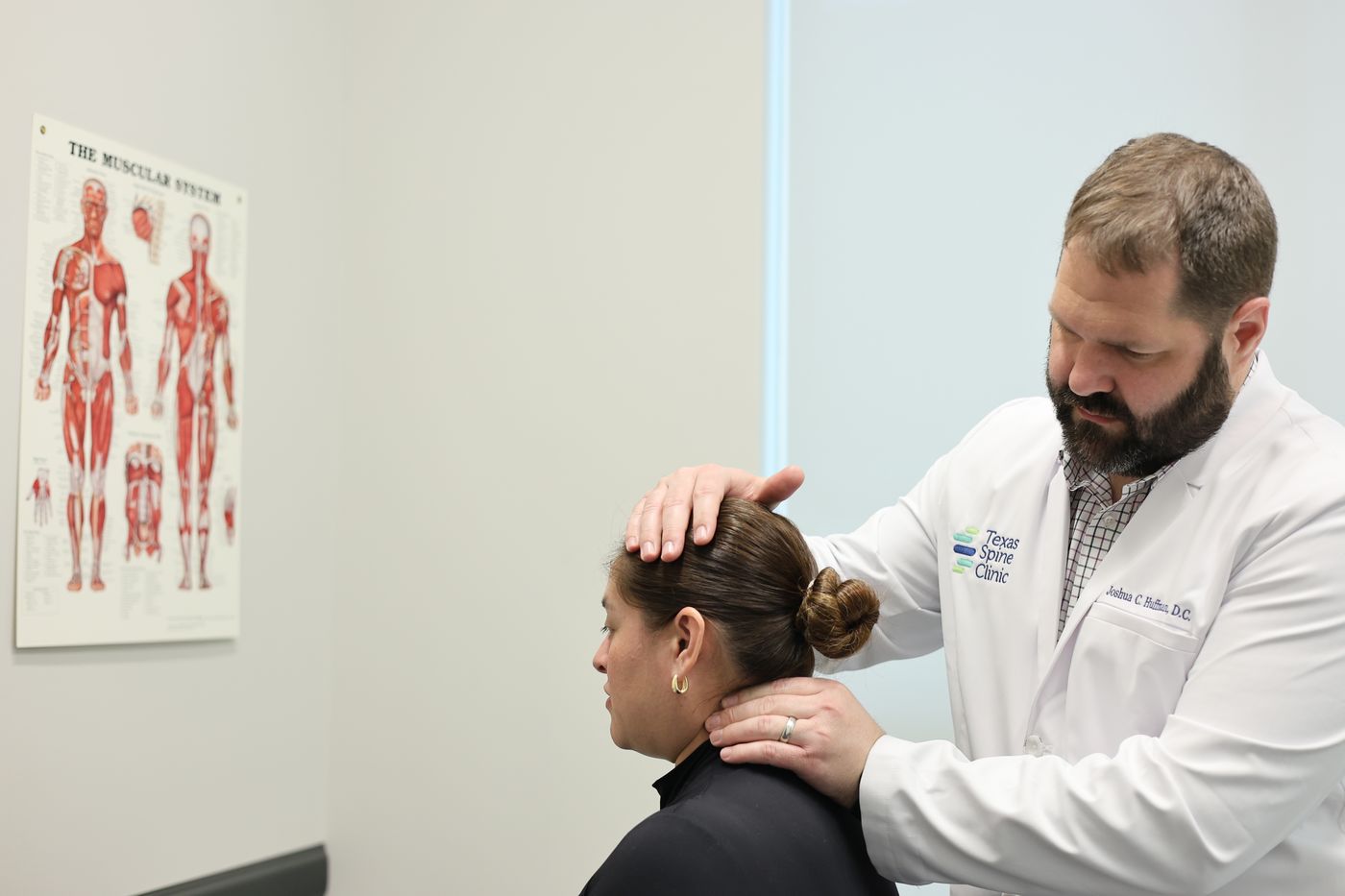
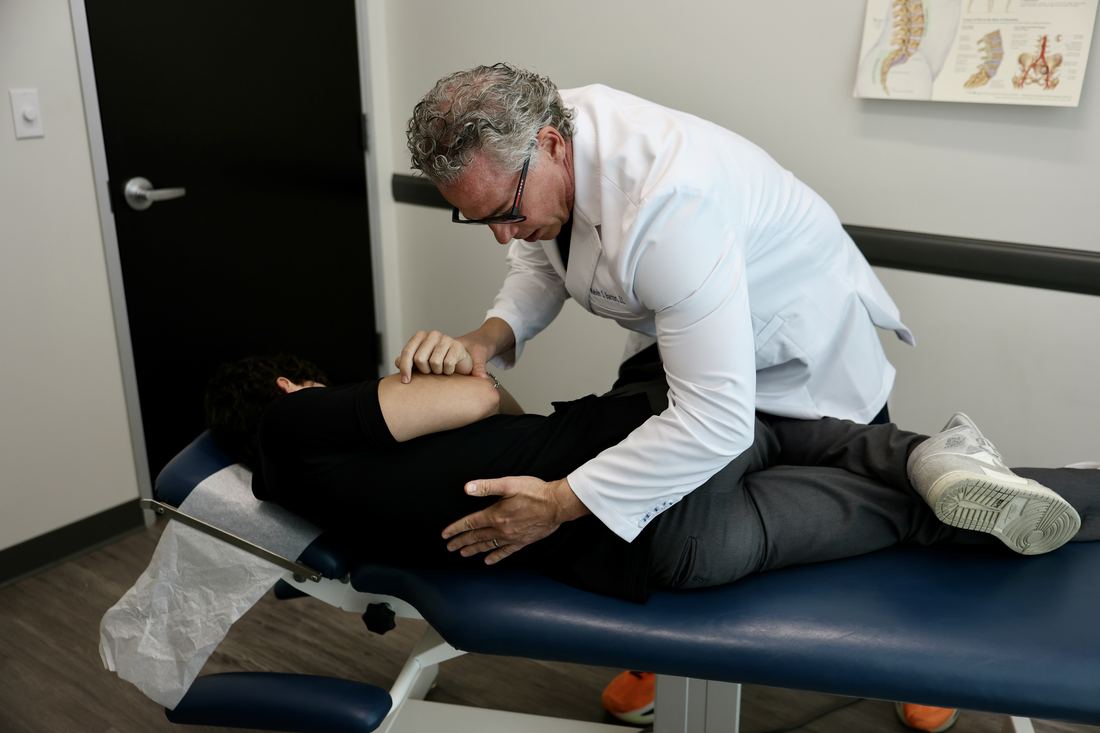
A spinal adjustment does the same thing for a joint. Your chiropractor finds the joint that is stuck, positions you so the pressure goes exactly there, and uses a quick, controlled stretch to take that joint through the motion it has lost. The joint moves the way it was designed to. And a joint that moves right stops rubbing wrong.
Here is what follows from it:
- Motion comes back. The stiff hinge swings freely again. Turning, bending and reaching stop feeling like negotiations.
- The rubbing stops, so the inflammation can settle. Take away what is irritating the tissue, and your body does what it always does when an irritation stops: it calms down.
- The neighbors get a break. When the stuck wheel rolls again, the other three quit doing its work.
- The muscles let go. A joint that isn’t sore doesn’t need a splint. The guarding eases.
What about the pop?
Sometimes an adjustment makes a sound. It is the same thing that happens when you crack your knuckles: as the joint surfaces separate a little, a small pocket of gas in the joint fluid is released. It is not a bone going back into place. Your bones weren’t out of place. The sound isn’t the goal, and it isn’t how we measure an adjustment. The goal is the motion. Some adjustments pop, some don’t, and both work.
The sound isn’t the goal. The motion is.
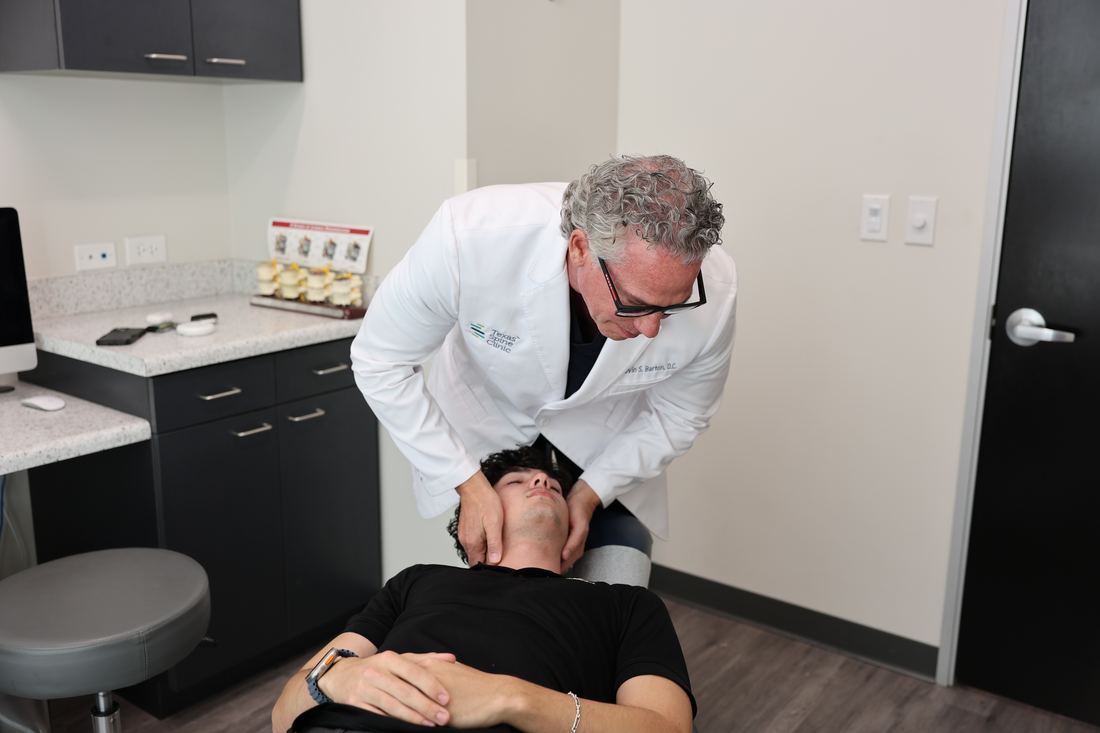
What an adjustment isn’t
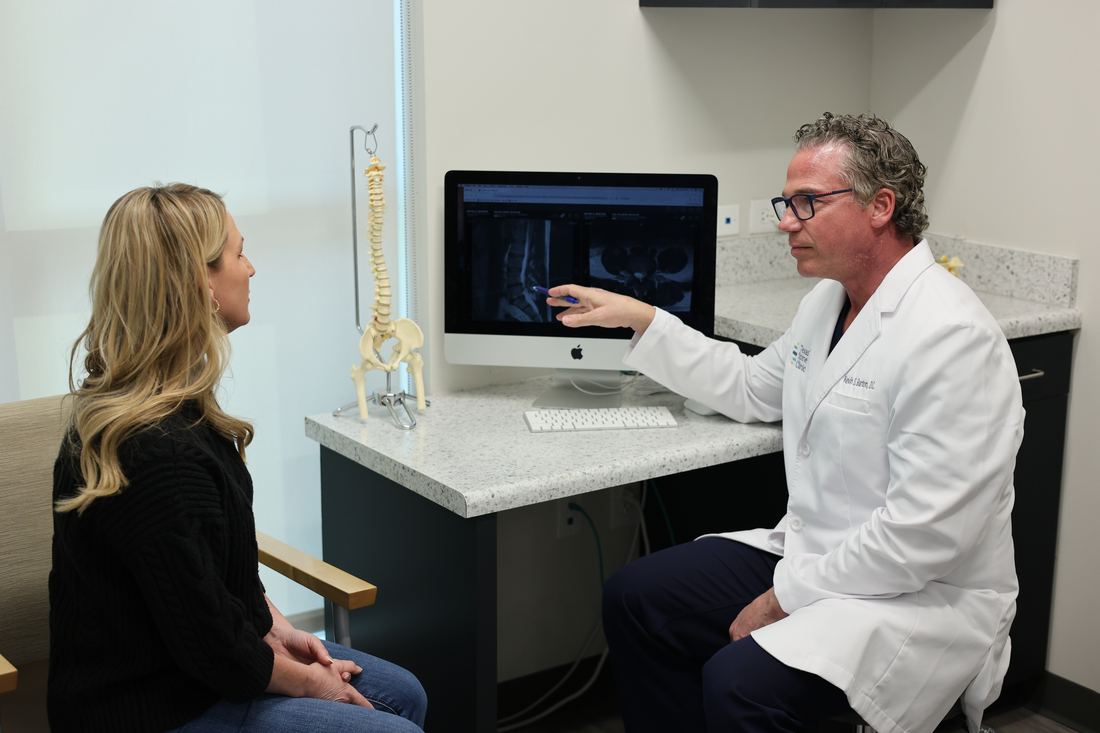
It isn’t forcing anything. It isn’t something done to a joint that doesn’t need it. And it isn’t the only tool we have, which matters, because some joints and some patients do better with a different one. That is why the exam comes first: history, an orthopedic and neurological exam, X-rays when they are needed, and only then the adjustment, most often the same day.
 Watch
WatchWhat you’ll feel afterward
During the adjustment, pressure and a stretch as the joint moves. Usually, no pain. Afterward, depending on your condition and why you are being treated, a little soreness can be expected, the way you feel after a good stretch or a new workout. It usually passes within a day. Most people notice the motion first: turning the head further, standing up straighter, the knot that isn’t there.
Free the joint. Then teach it to stay free.
An adjustment gets a stuck joint moving. Keeping it moving is the other half of the plan, and it happens in the rehab room: the specific exercises that strengthen what has been slacking off and stretch what has been guarding, so the joint isn’t pulled back into the same rut next week.
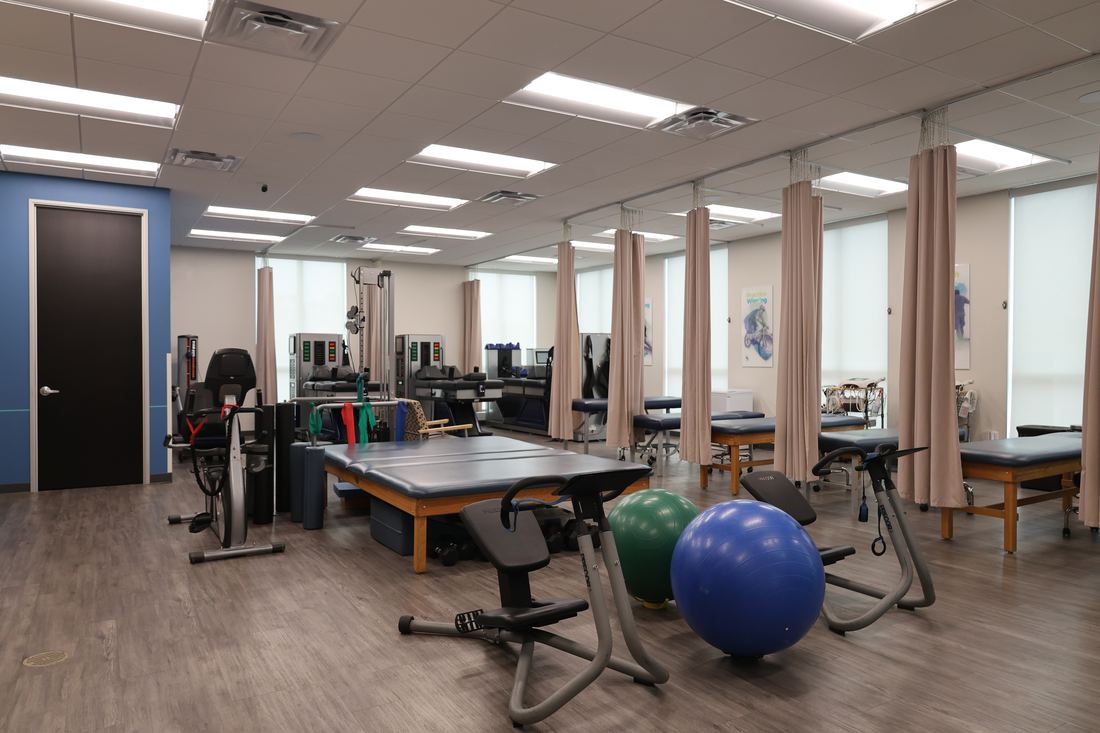
Your plan has an end date and checkpoints along the way. When the joint moves right and the pain has settled, you are done with the plan. Many people choose an occasional check-in afterward to keep it that way, like a dental cleaning.
Get the stuck joint moving again
Chiropractic care at Texas Spine Clinic is same day, with no referral needed: an exam first, then care built around your pain and what you need to get back to doing. Neck, mid-back, low back and SI joints. Here is how a first visit works.
This article is educational and is not a substitute for an examination and diagnosis. Individual results vary and no outcome is guaranteed.