← Blog
Spine & Discs
Why nobody offered you spinal decompression
The answer is structural, not medical. Insurance is built around pills, injections and surgery, and the step between the shot and the scalpel sits outside that system. Nobody did anything wrong. Here’s how it works.
You have been to the family doctor, the orthopedist, maybe a pain specialist. You have the prescriptions, you did the physical therapy, you may have had the injection. And somewhere along the way you heard the sentence that sent you looking for articles like this one: “If this doesn’t work, the next step is surgery.”
Then a neighbor, or a video, or a search at midnight mentions spinal decompression, and the obvious question follows. If this exists, why did nobody offer it to me?
It’s a fair question, and the answer is structural, not medical.
Insurance is built around three things
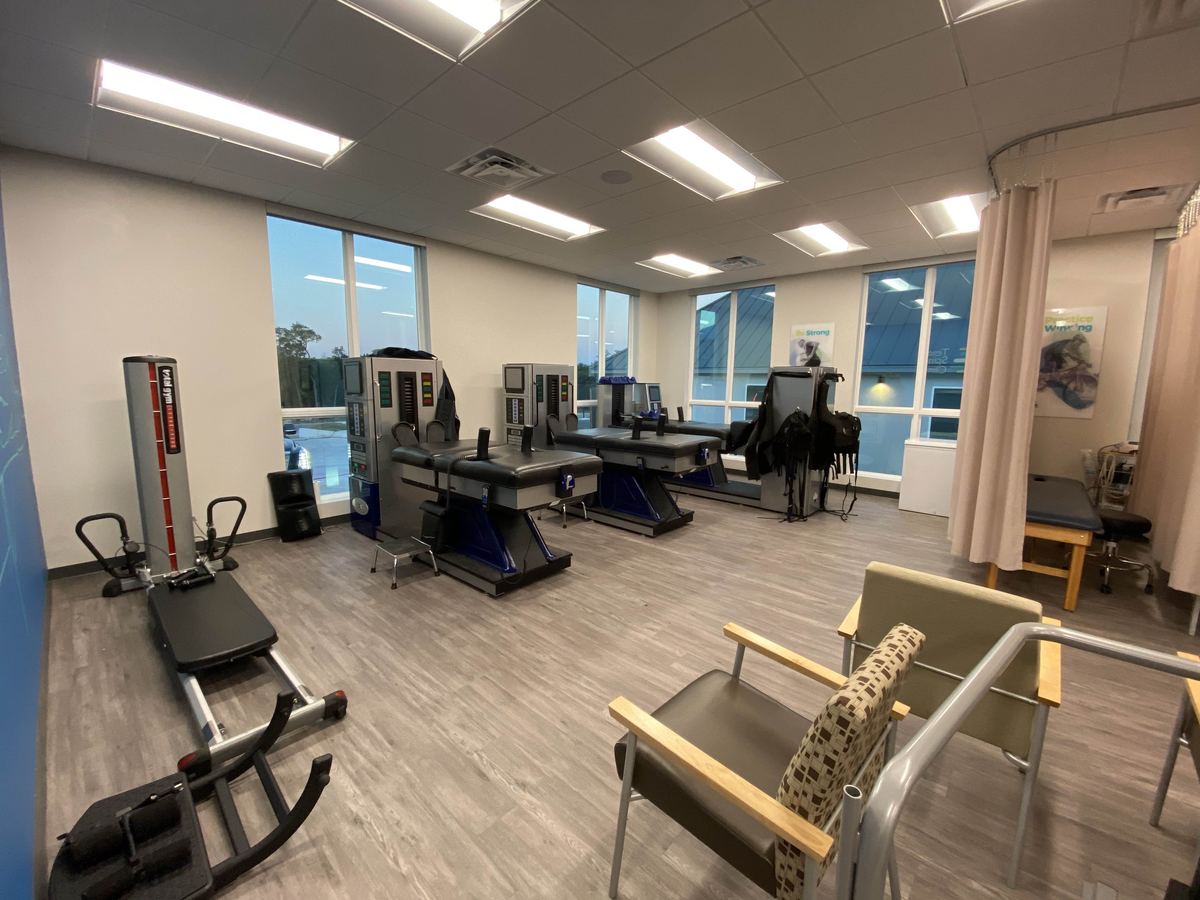
Insurance pays for pills, injections and surgery. It does not pay for spinal decompression. The coverage rules were written around old-fashioned traction, and they reimburse it at a few dollars a session.
Follow that one fact downstream and the rest of the puzzle solves itself:
- A decompression table is a serious piece of equipment. At a few dollars a session, it doesn’t pay for itself in a medical practice.
- So most practices never buy one.
- And doctors, reasonably, rarely recommend what they can’t provide.
Nobody did anything wrong. Your doctors offered you what their building has. It just means the step between the shot and the scalpel, the one that doesn’t involve a needle or a knife, is the step that nobody inside that system is in a position to offer you.
The option that doesn’t involve a scalpel is the one nobody in that system is in a position to offer you.
So what is it, actually?
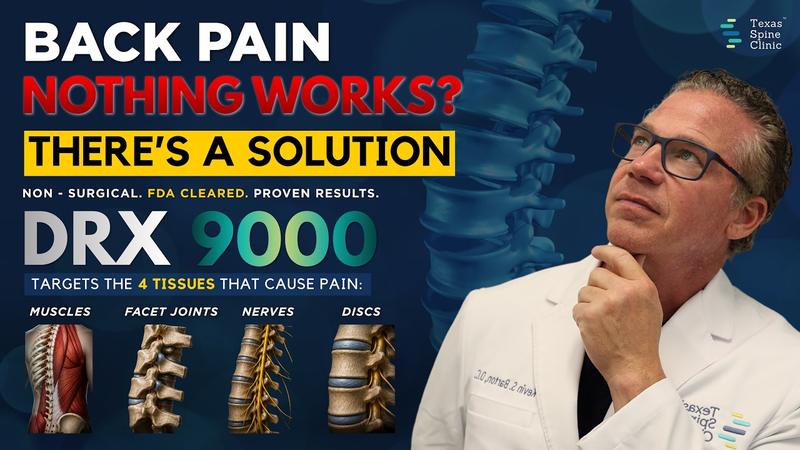
Start with why back pain is so hard to treat. When a disc is injured, four tissues get involved: the disc itself, the nerve it presses on, the small joints behind it, and the muscles that lock down to guard the whole area. Most treatments aim at one of the four. A pill calms the inflammation. An injection calms the nerve. An adjustment frees the joint. None of them changes what is pressing on the nerve, which is why relief from them tends to fade.
 Watch
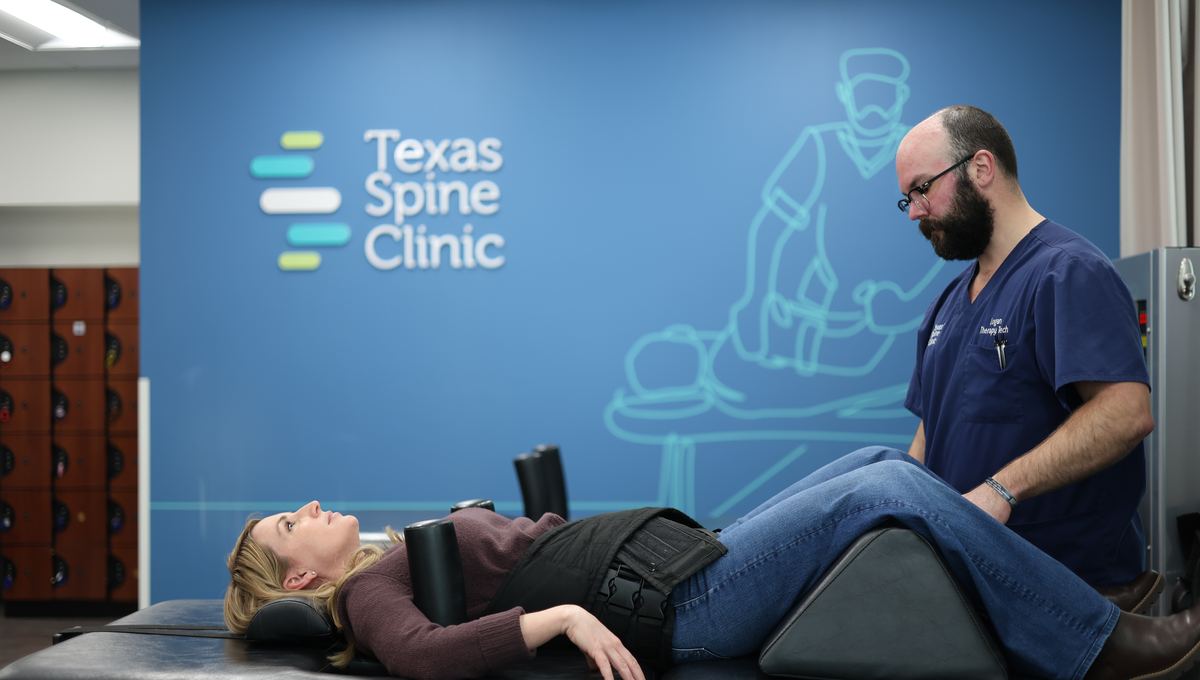
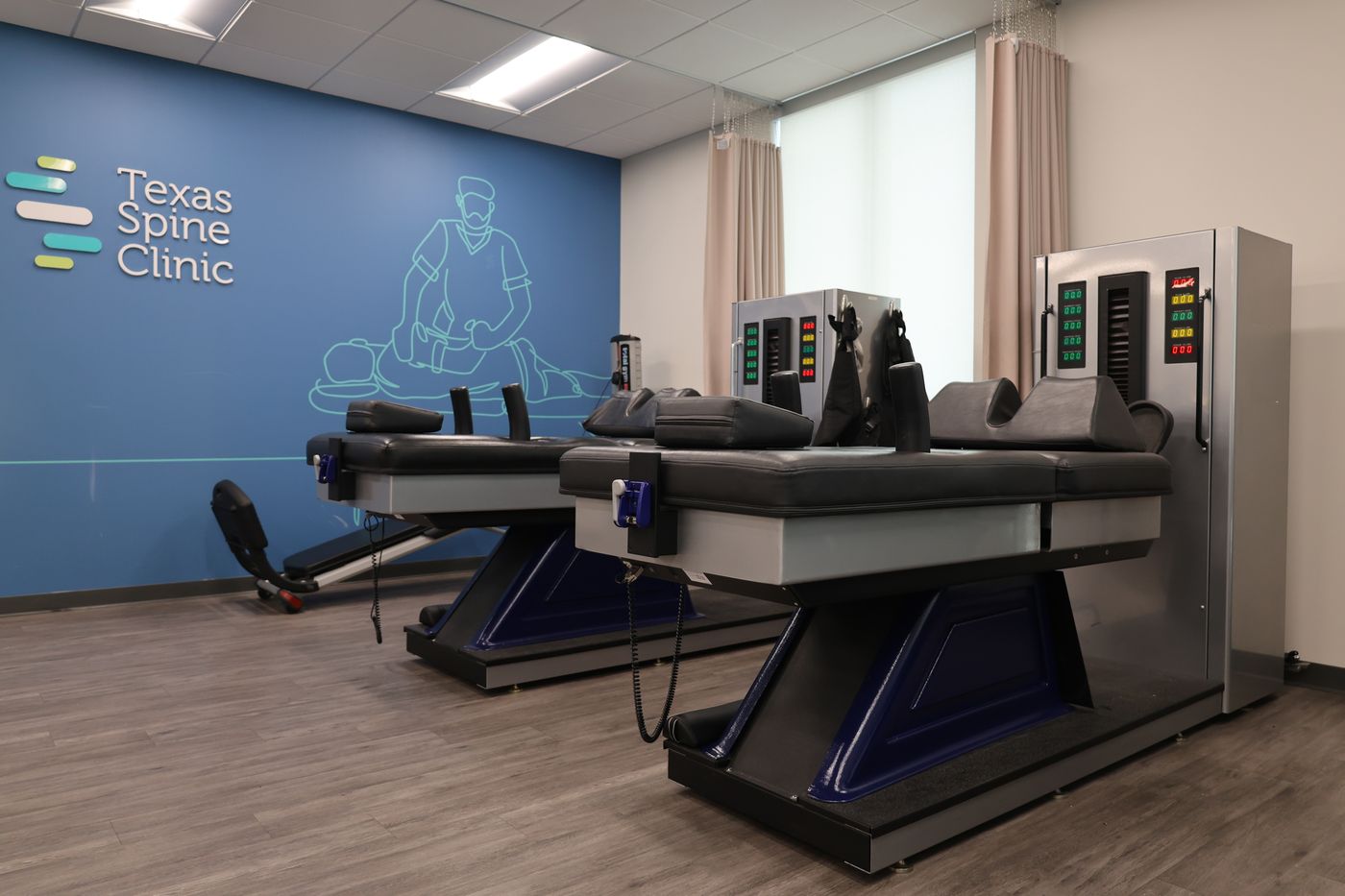
WatchSpinal decompression aims at the disc. You lie on a table, secured by a harness, and the machine applies a gentle, measured pull to one specific level of your spine, ramping up and easing off in a curve, over about thirty minutes. Inside the disc, that unloading creates a negative pressure. When weight presses down on a disc, fluid is squeezed out. When the weight comes off, the disc soaks fluid back in. Decompression gives the disc that unloading on purpose, session after session, and the negative pressure helps draw the bulging material back off the nerve.
That is not a theory. Researchers publishing in the Journal of Neurosurgery put pressure sensors inside human lumbar discs during decompression and recorded a true vacuum, measured, not assumed.1 In a randomized trial that compared real decompression against a sham version of the same treatment, the real one shrank herniations by a wide margin and the sham didn’t.2 And in the published study of the DRX9000 by name, 94 chronic low-back-pain patients, 13% of them already operated on, finished a course of care with their average pain down from about 6 out of 10 to about 1, with no adverse events.3
We publish the studies themselves, what each measured and how it was designed, on our evidence page. Anyone who quotes you a success percentage instead is quoting marketing.
What you get that the other three don’t give you
- Nothing cut, nothing fused, nothing implanted. No hospital, no anesthesia, no recovery period.
- No narcotics. Nothing to become dependent on, no side-effect list to manage.
- No downtime. You work and drive through your care. Most patients find the sessions comfortable; plenty fall asleep on the table.
- It works with the body’s own healing instead of overriding it.
- It keeps every other door open. Nothing we do here takes surgery off the table later, if it ever comes to that.
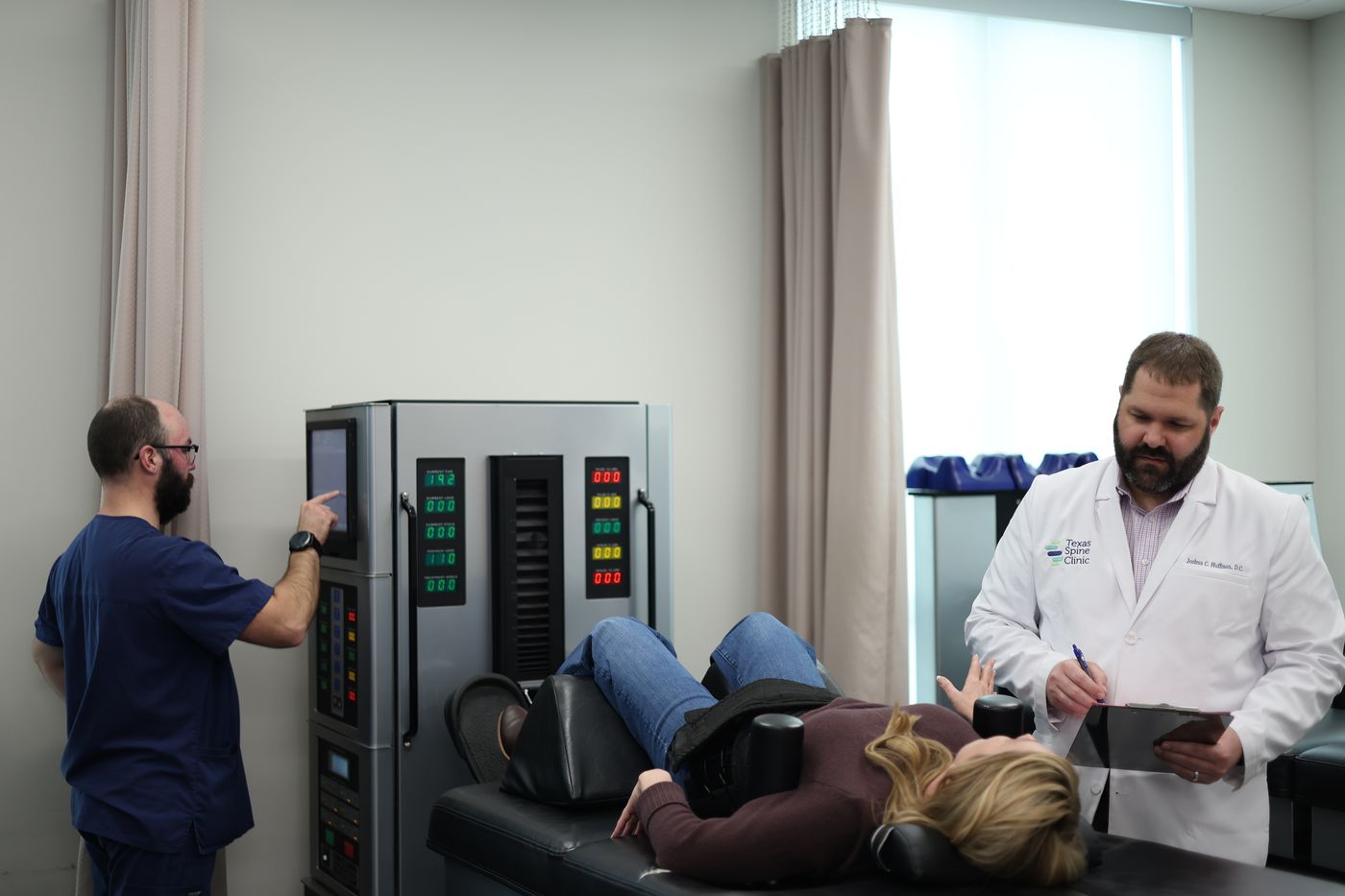
Who it’s for, and who it isn’t
Decompression tends to be the right conversation if your MRI shows a herniated disc, a bulging disc or degenerative disc disease; if you have sciatica or arm pain that traces to a disc pressing on a nerve; if you have facet syndrome or spinal stenosis and want to avoid injections or surgery; or if you’ve been told you’re “not bad enough for surgery yet” and nobody offered a plan for the meantime.
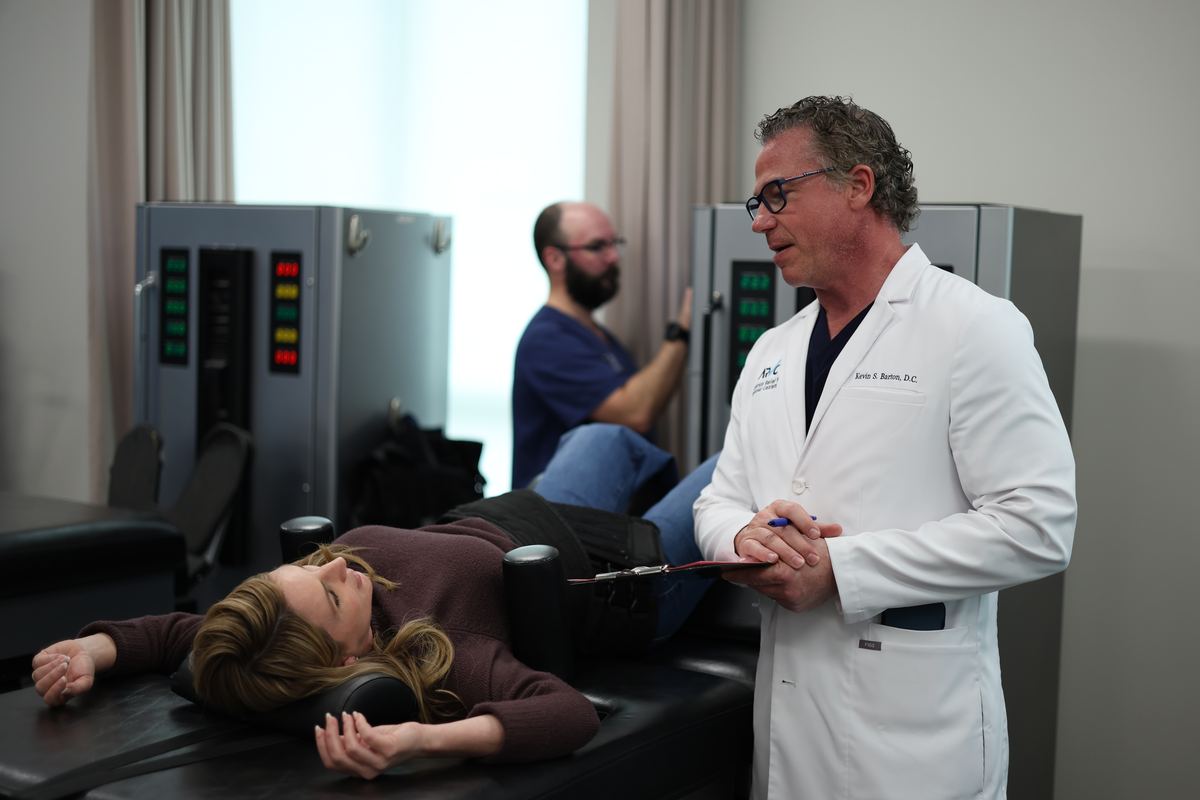
It is not for everyone, and we screen the way a spine surgeon screens: history, an orthopedic and neurological exam, and MRI or CT imaging. Fusion hardware at the level that hurts and severe osteoporosis rule it out, and there are others the exam catches. About one in five people who ask about the program are told no. Dr. Barton puts it plainly: “I can’t tell you how many patients I’ve turned away from this treatment that were begging for me to take their money.”
Three people who were told the next step was surgery
 Watch
WatchTold he needed back surgeryHe did this instead.
 Watch
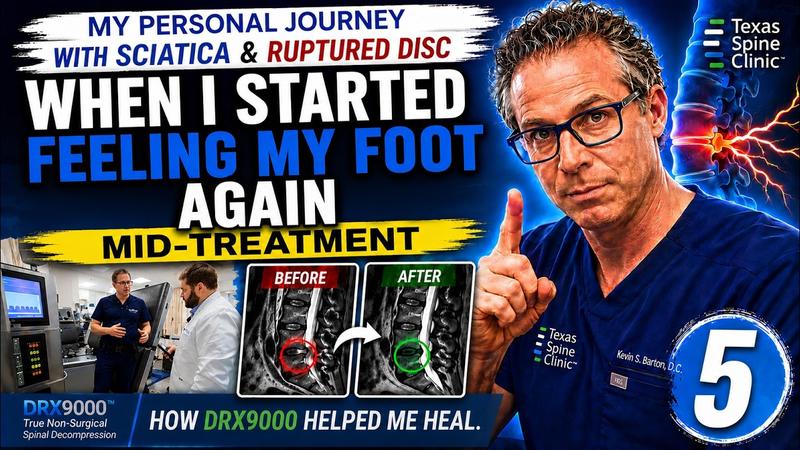
WatchThe doctor's own discI almost had back surgeryDr. Barton's own L4-L5 rupture, and what he did about it.
 Watch
WatchCameron Beckman, PGA golferDrop foot resolved. Went on to win a Champions Tour event at 51.
The next step, if this sounds like you
It starts with a $49 DRX9000 consultation: your history, a full exam, and if you’re a candidate, your first treatment on the table that same visit. At the second visit your MRI goes up on the screen with you, and you leave with a straight answer and your investment in writing. Now you know why nobody offered it. You can offer it to yourself.
Book the $49 DRX9000 consultation
Sources
- Ramos G, Martin W. Effects of vertebral axial decompression on intradiscal pressure. Journal of Neurosurgery. 1994;81(3):350–353.
- Choi E, et al. Effectiveness of spinal decompression therapy for lumbar disc herniation: a randomized sham-controlled trial. International Journal of Clinical Practice. 2022.
- Macario A, et al. Treatment of 94 outpatients with chronic discogenic low back pain with the DRX9000: a retrospective chart review. Pain Practice. 2008;8(1):11–17.
How each study was designed, who funded it and what it can and can’t tell you: the evidence page.
This article is educational and is not a substitute for an examination and diagnosis. Individual results vary and no outcome is guaranteed.