← Blog
Nerve Pain
Four specialists in three years. Why is this the first you’ve heard of scrambler therapy?
It isn’t a conspiracy. It’s plumbing. One device, one manufacturer, days of specialized training, and a treatment that sits outside the usual pain-medicine sequence. There is one in San Antonio.
The first thing almost every patient says when they find this treatment is a version of the same sentence: I’ve seen four specialists in three years. Why is this the first I’m hearing about it?
It’s a fair question, and the answer isn’t a conspiracy. It’s plumbing.
There aren’t many machines
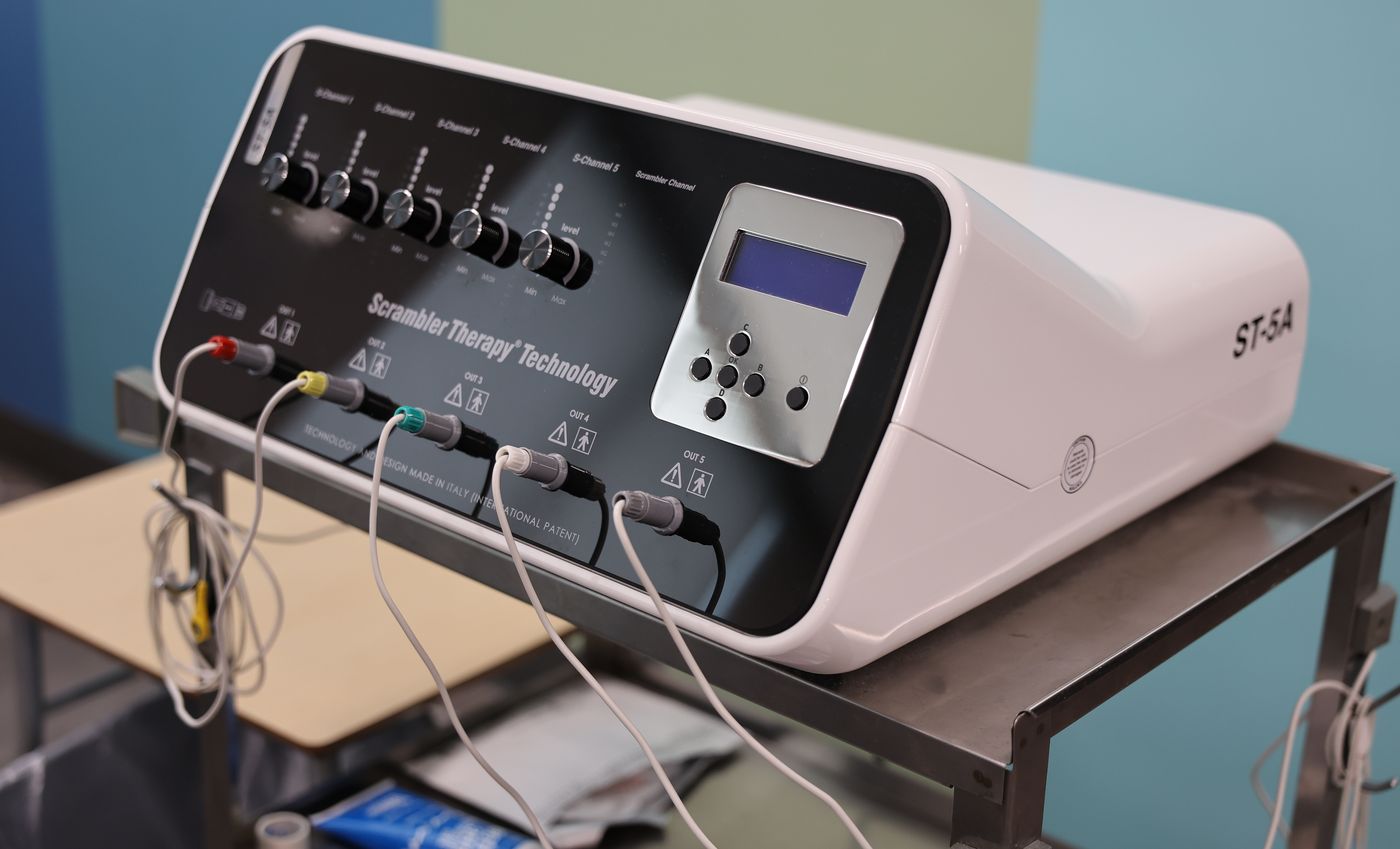
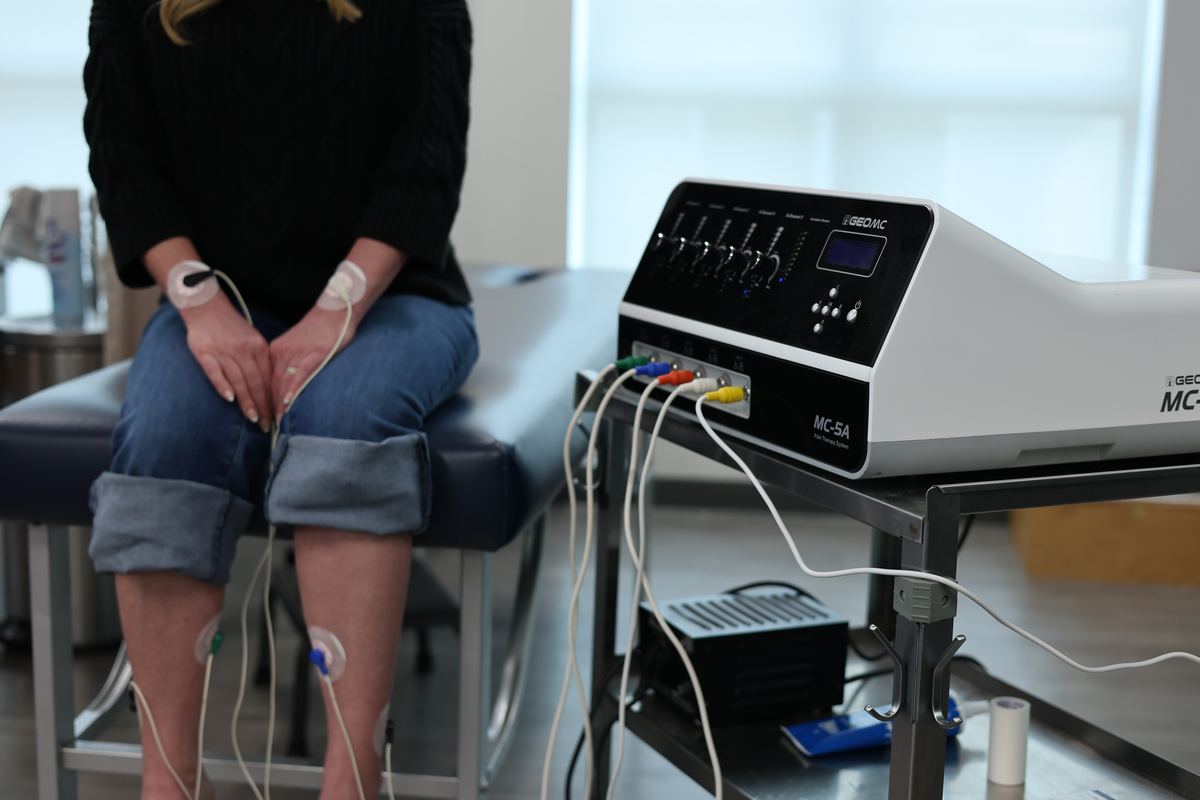
Scrambler therapy is delivered by one specific device, made and licensed by a single manufacturer.1 It isn’t a category you can shop. There is no generic version, no cheaper competitor, no model that shows up in every clinic. Ours is the ST-5A, the current-generation machine.
A clinic that wants to offer this has to buy the machine outright, at a price the New England Journal of Medicine review puts around $65,000,1 and then send people for several days of training in how to use it. The device is restricted to physicians, or to trained personnel working under a physician’s supervision.1 You can’t buy one, and a clinic can’t just plug one in.
Insurance generally doesn’t pay for it
So the machine doesn’t pay for itself the way a billable procedure does. A practice offering scrambler therapy is choosing to, not being paid to. That alone keeps it out of most buildings.
And it isn’t part of the pathway
Pain medicine has a well-worn sequence: medication, then injections, then a spinal cord stimulator or a pump. Those are the tools inside the building. A doctor with a full clinic and a fifteen-minute appointment recommends what they have and what they know. Nobody did anything wrong. It just means a treatment that sits outside that sequence can stay invisible for years, even to excellent doctors.
It isn’t obscure in the research. It just never made the trip from the journals to the appointment.
That is the part patients find hardest to believe. The New England Journal of Medicine published a review of scrambler therapy in 2023, written by physicians at Johns Hopkins and the Mayo Clinic.1 It has been studied at academic cancer centers for years. Public television has covered it. Here is one of the review’s authors explaining it:
 Watch
WatchWhat it is, in one paragraph
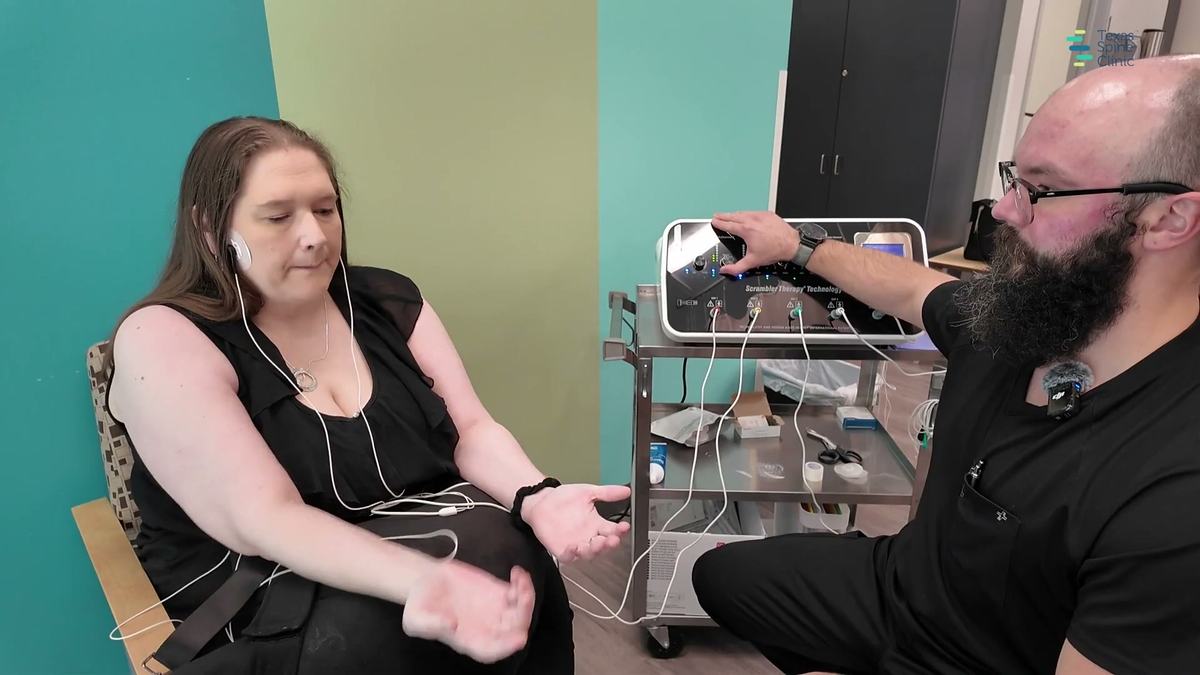
Nerve pain is a message that keeps sending after the injury is over. The chemo ended, the shingles rash healed, the surgery is years behind you, but the nerve keeps firing and the brain keeps listening. Scrambler therapy goes after the message rather than the messenger. Small electrodes, the kind used for an EKG, go on healthy skin around the painful area, and the device sends its own signal up those nerves: constantly changing sequences shaped to imitate the traffic a healthy nerve sends when nothing is wrong.1 For about forty minutes, your nervous system receives a non-painful message on the same line that has been carrying pain. We wrote the long version here, including what a session feels like and who can and can’t have it.
Where the one in San Antonio is
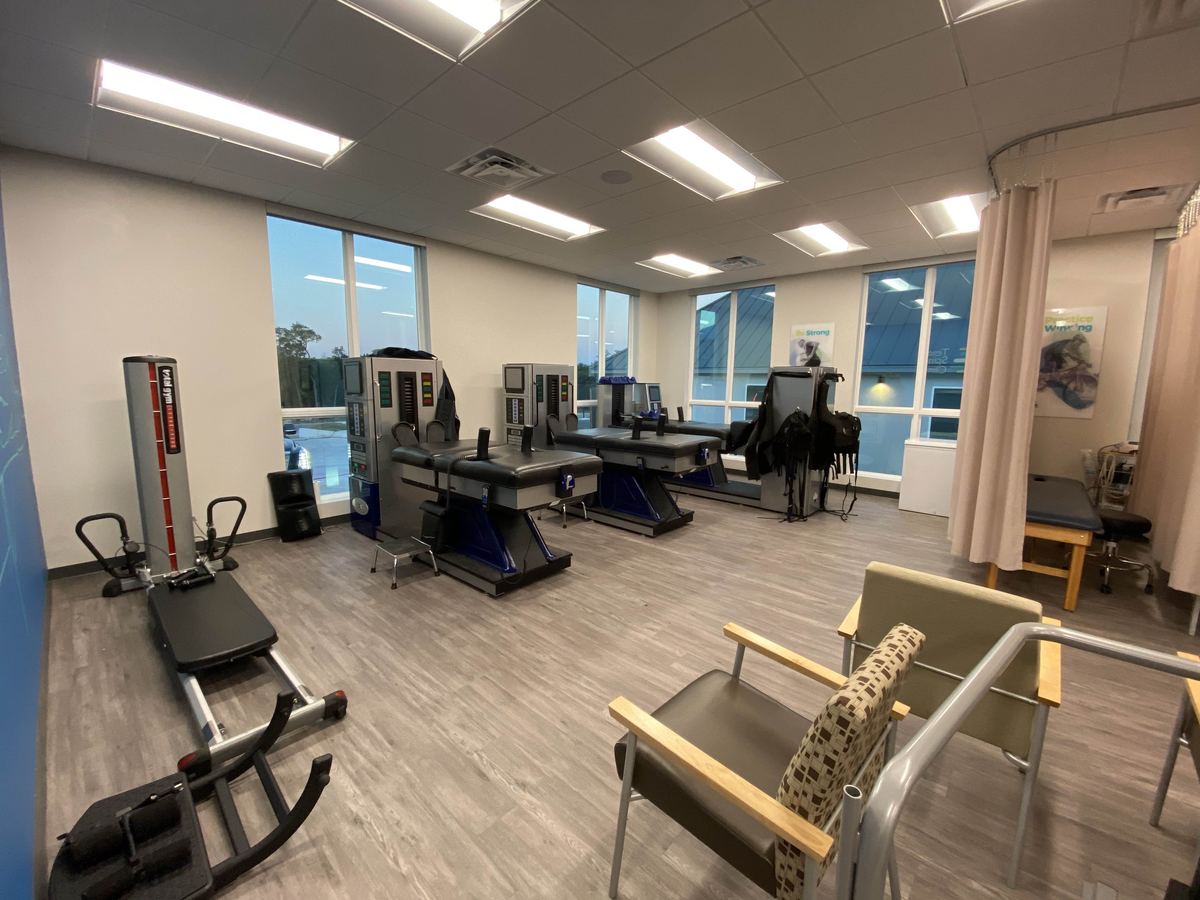
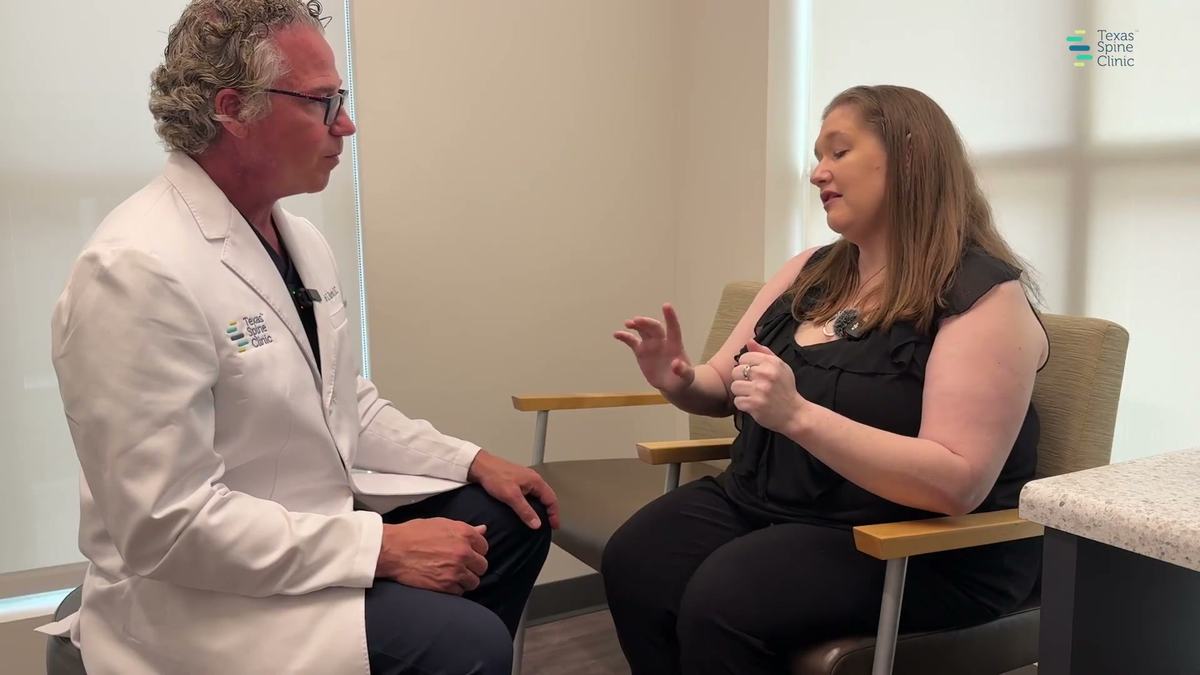
At Texas Spine Clinic, the scrambler program is run by Dr. Kevin Barton, who trained in Rome with Dr. Giuseppe Marineo, the biophysicist who invented the treatment. The program is medically supervised by Lisa D. Persyn, M.D., who is board certified in Physical Medicine and Rehabilitation. Because a full course runs on consecutive weekdays, we run scrambler sessions on Fridays as well, when the rest of the clinic is closed.
How you find out whether it works for you
You don’t decide about a full course on day one.
- First, a $19 consultation. Your history, what you’ve been diagnosed with, what you’ve already tried, and the list of reasons someone can’t have this treatment. If you’re not a candidate, that’s where it ends.
- Then a $99 first session. A full session, done properly, priced so the question is answerable. Most people learn something from that one session about whether their body is responding. The $99 is credited toward your course if you continue.
- Then you decide. If there’s a signal, we talk about the full course, ten sessions over two weeks, and you know what it costs before you commit to anything.
Watch before you come
 Watch
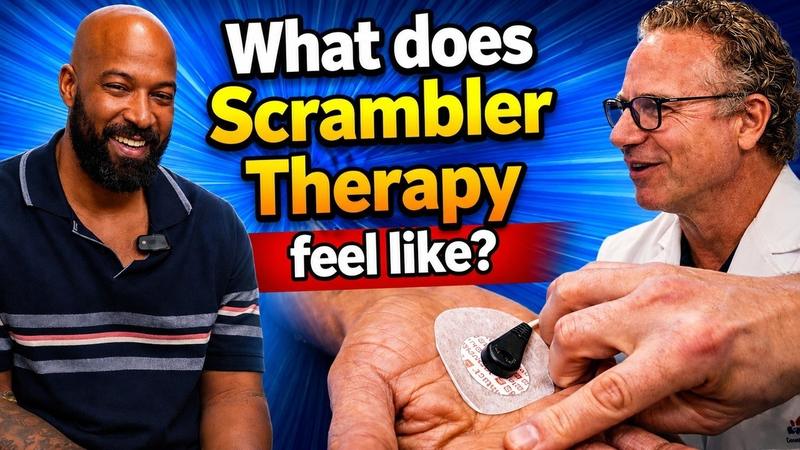
WatchWhat does it feel like?The question everyone asks first. A light buzz, never pain, and someone adjusting it with you.
 Watch
WatchCRPS: what's really driving your painWhy the usual tools fall short, and the treatment most patients have never heard of.
 Watch
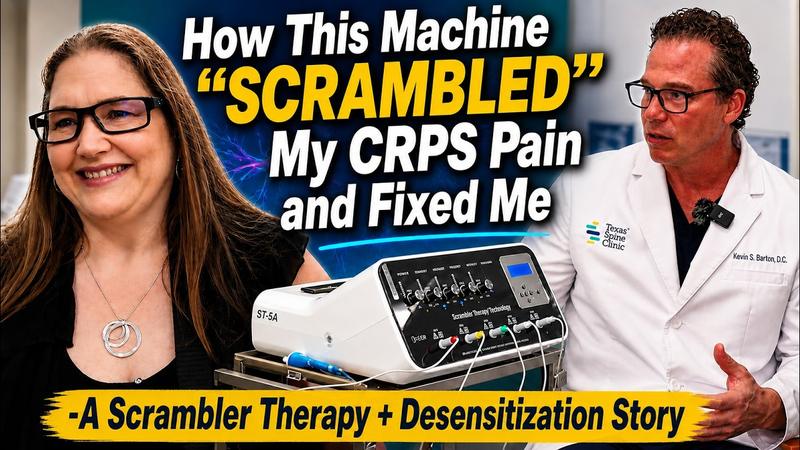
WatchShannon: why this CRPS treatment workedWhen medications, nerve blocks and ketamine had all failed. Her pain came down to a 1.
If you have been carrying nerve pain through four specialists and three years, you now know why the fifth conversation never happened. It can happen here.
About scrambler therapy at Texas Spine Clinic
Source
- Scrambler therapy for chronic pain. New England Journal of Medicine, 2023, a review written by physicians at Johns Hopkins and the Mayo Clinic. The single manufacturer, the device cost, the training requirement and the restriction to physicians or supervised personnel are all described in this review.
This article is educational and is not a substitute for an examination and diagnosis. Individual results vary and no outcome is guaranteed.