

Free patient guide · From Texas Spine Clinic
When Nerve Pain Won't Let GoNeuropathy, shingles pain, CRPS and other nerve pain: why it lasts, what you've been offered, and a drug-free treatment you can try in one session.
How to use this guide
01Why it hasn't stopped
The injury healed. The pain didn't. Here's why.
With most pain, the nerve is a messenger doing its job. You sprain an ankle, the ankle sends a message, and the message is true.
Nerve pain is different. The tissue may have healed. The chemo ended two years ago. The shingles rash is long gone. But the nerve keeps firing, and the spinal cord and brain keep listening, and the whole circuit gets better and better at sending a message that isn't warning you about anything anymore.
Pain becomes the habit rather than the alarm.
That's why the usual tools fall short. A pill that lowers the volume doesn't change the message. A block that numbs the line wears off, and the line comes back. The problem isn't only where it hurts. It's the pattern being sent and re-sent.
02What kind of nerve pain
Find the line that sounds like you.
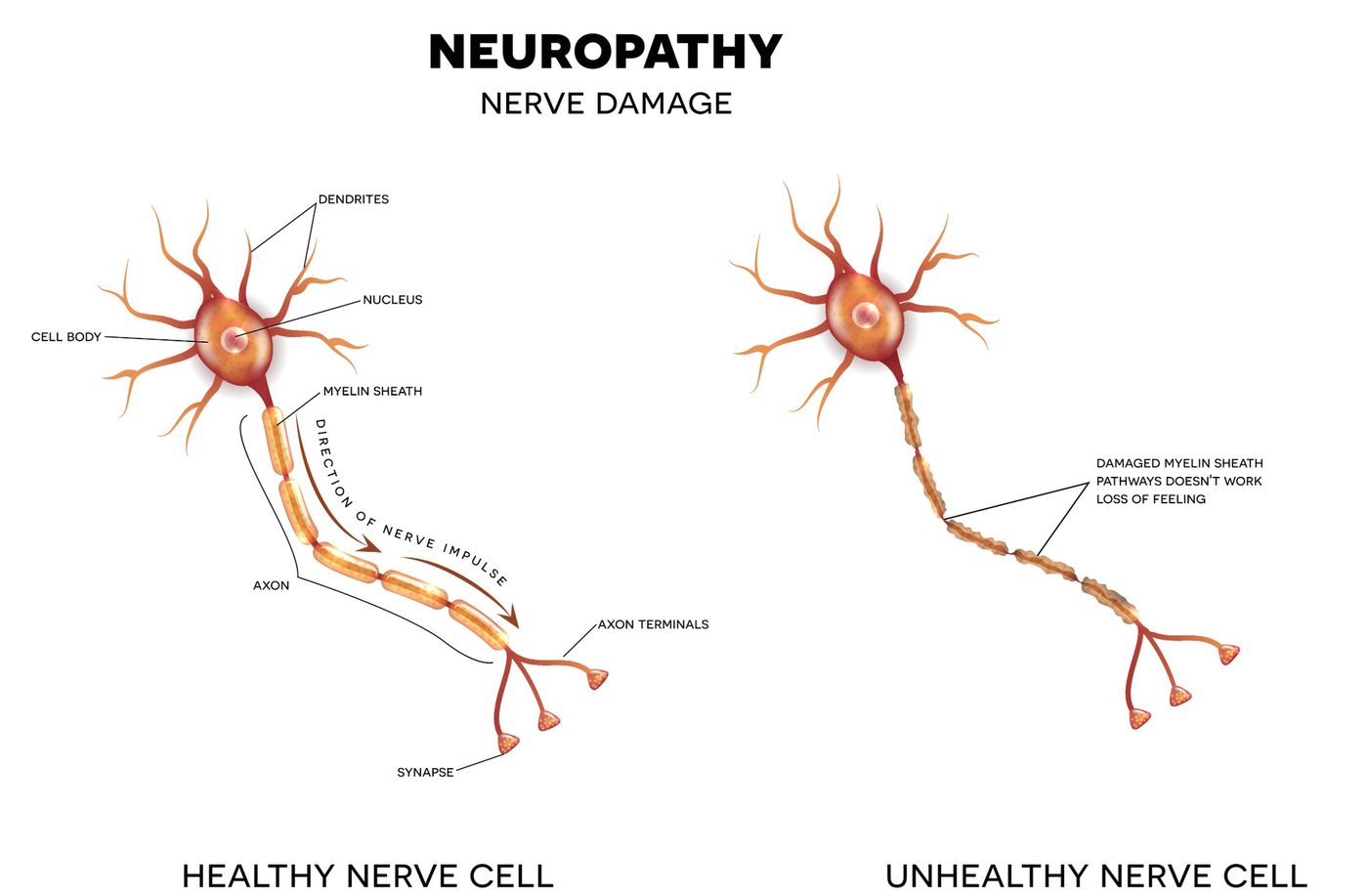
Nerve pain is pain caused by a problem in the nerves themselves, rather than in a joint or a muscle. These are the kinds we see most.
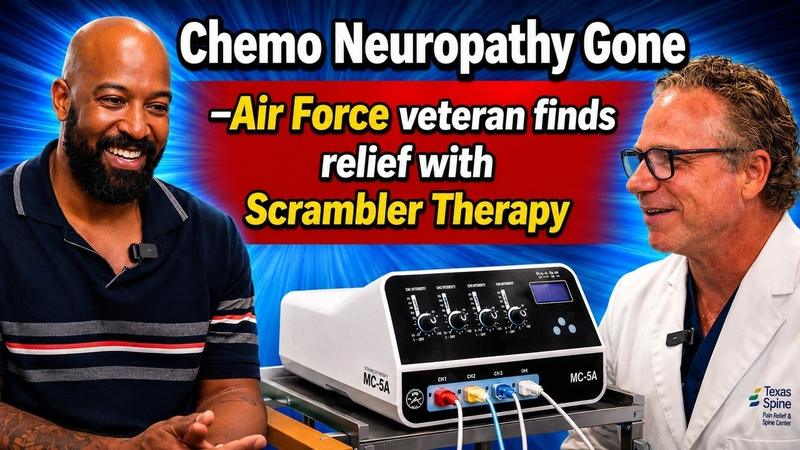
Burning, tingling or numbness in your feet or hands that started after your chemotherapy stopped, usually four to six weeks later
Chemotherapy-induced peripheral neuropathy.
Burning, pins and needles, or a "walking on gravel" feeling in your feet, with diabetes
Diabetic neuropathy.
The same burning or numbness in your feet or hands, with no clear cause
Peripheral neuropathy.
The shingles rash healed, but the burning along that band of skin didn't
Shingles nerve pain, also called postherpetic neuralgia.
An arm or leg that burns, changes color or temperature, and can't stand to be touched, often after a small injury
Complex regional pain syndrome, or CRPS.
Pain along a scar, or pain that still travels down an arm or leg after back or neck surgery
Nerve pain after surgery or injury.
Nerve pain, or a disc pressing on a nerve?
If a disc in your back or neck is pressing on a nerve, the pain is mechanical, and the right answer may be spinal decompression instead. Sometimes it's both. Your consultation sorts that out, so the treatment matches what's actually causing your pain.
03Your starting line
Write down where you are today. It's how you'll know how far you've come.
We measure progress by how bad the pain is, how often it comes, and what you can do. Fill this in once. It saves on this phone, and it's the most useful thing you can bring to your consultation.
Your numbers today
What does it feel like?
0 of 6 checkedWhat have you tried?
0 of 6 checked
Not an appointment — today
Go to an emergency room today if you have any of these.
Nerve pain that has been the same for years is a different situation from something changing this week. If it's happening right now, call 911.
04What you've been offered
What each option does to the pain signal.
Turn the volume down.
Gabapentin, Lyrica and Cymbalta can lower the pain. They don't change the message the nerve is sending, and many people trade relief for fog.
Numb the line, for a while.
When the block wears off, the line comes back.
Works while it's switched on.
For most people the relief fades within minutes to hours of turning it off.
Take the edge off.
And take some other things with it.
An implant, placed in surgery.
Leads under your skin, and a device that has to be surgically removed if you ever want it out.
Goes after the message itself.
No needles, no medication, nothing implanted, nothing to recover from. You sit back for about forty minutes and drive yourself home.
05How scrambler therapy works
A non-painful message, on the same line your pain has been using.
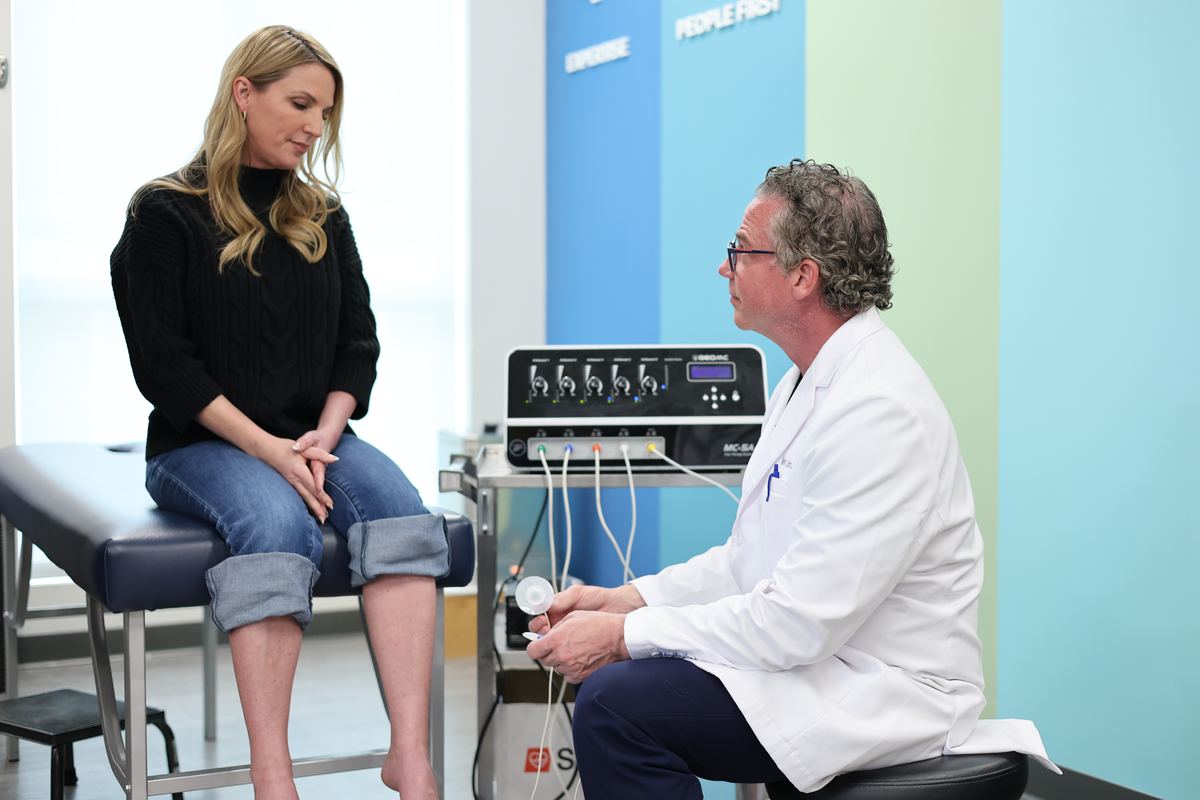
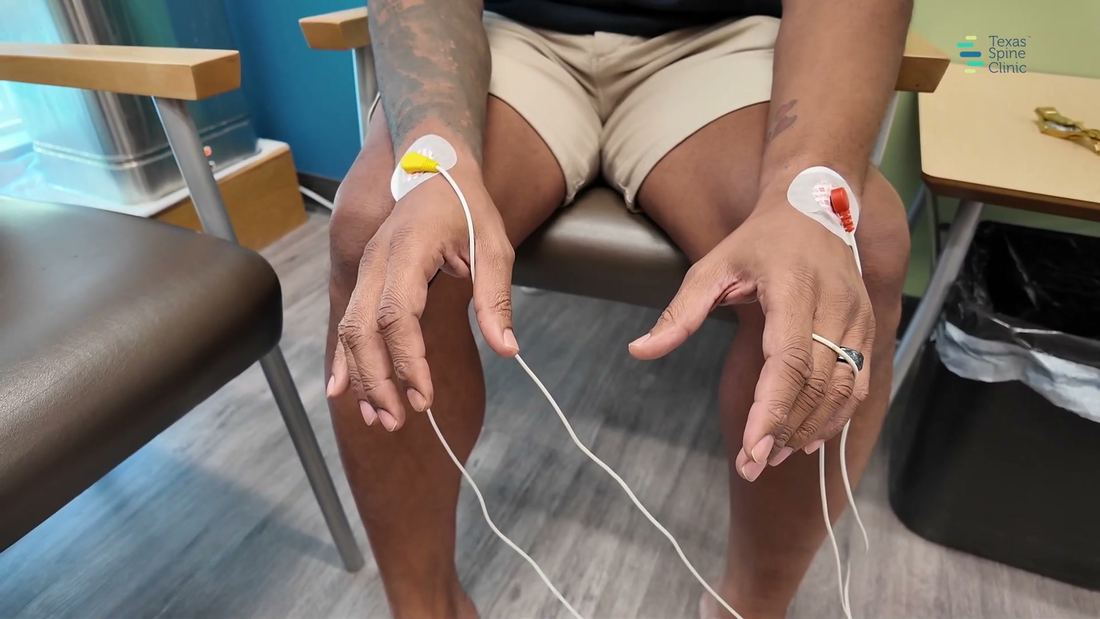
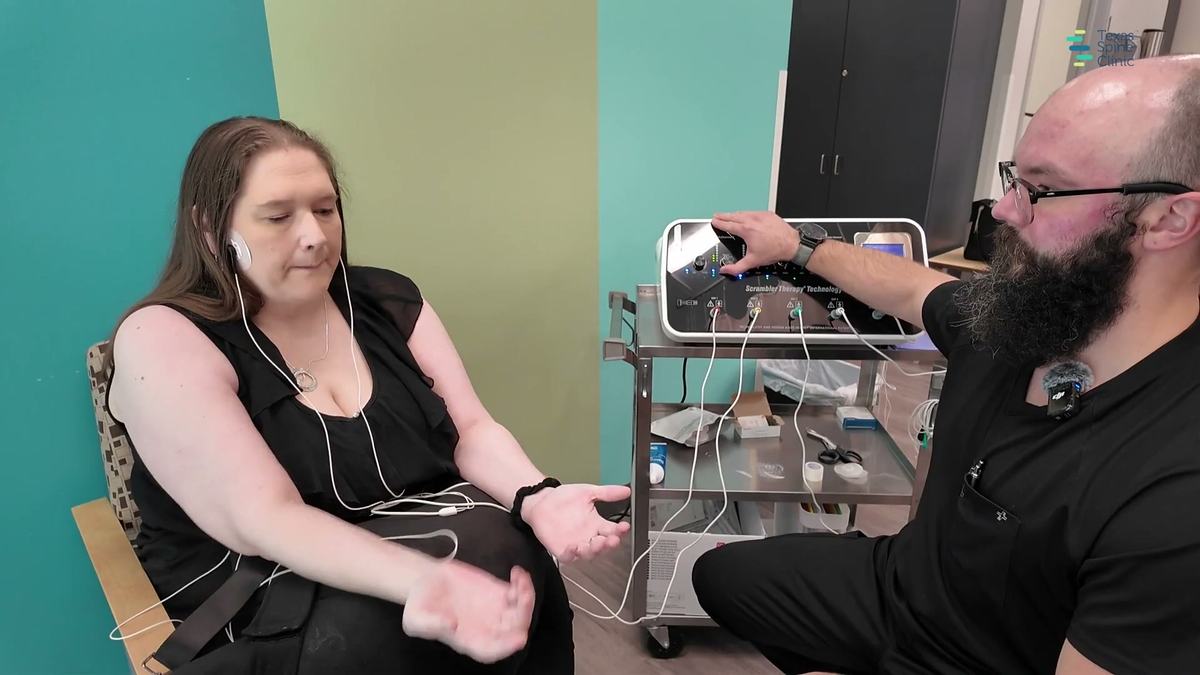
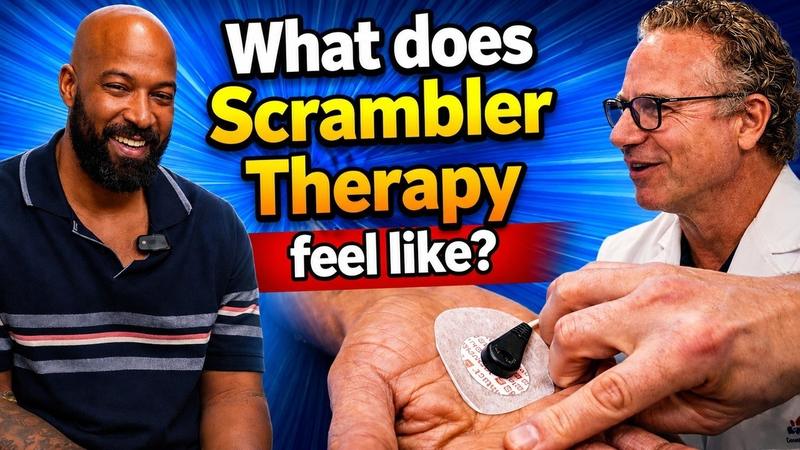
Small adhesive electrodes, the kind used for an EKG, go on healthy skin around the painful area, on the nerve pathways that feed it. Never on the raw spot. Never on broken or numb skin.
The machine then sends its own signal up those nerves. It isn't a buzz and it isn't random. The device builds sequences of waveforms, changing constantly, shaped to imitate the traffic a healthy nerve sends when nothing is wrong. Your nervous system receives a non-painful message on the same line that has been carrying pain, over and over, for about forty minutes.
Many people feel their pain drop while they're on the machine. Then you go home, and the question becomes how long it holds. That's what the course of sessions is for.
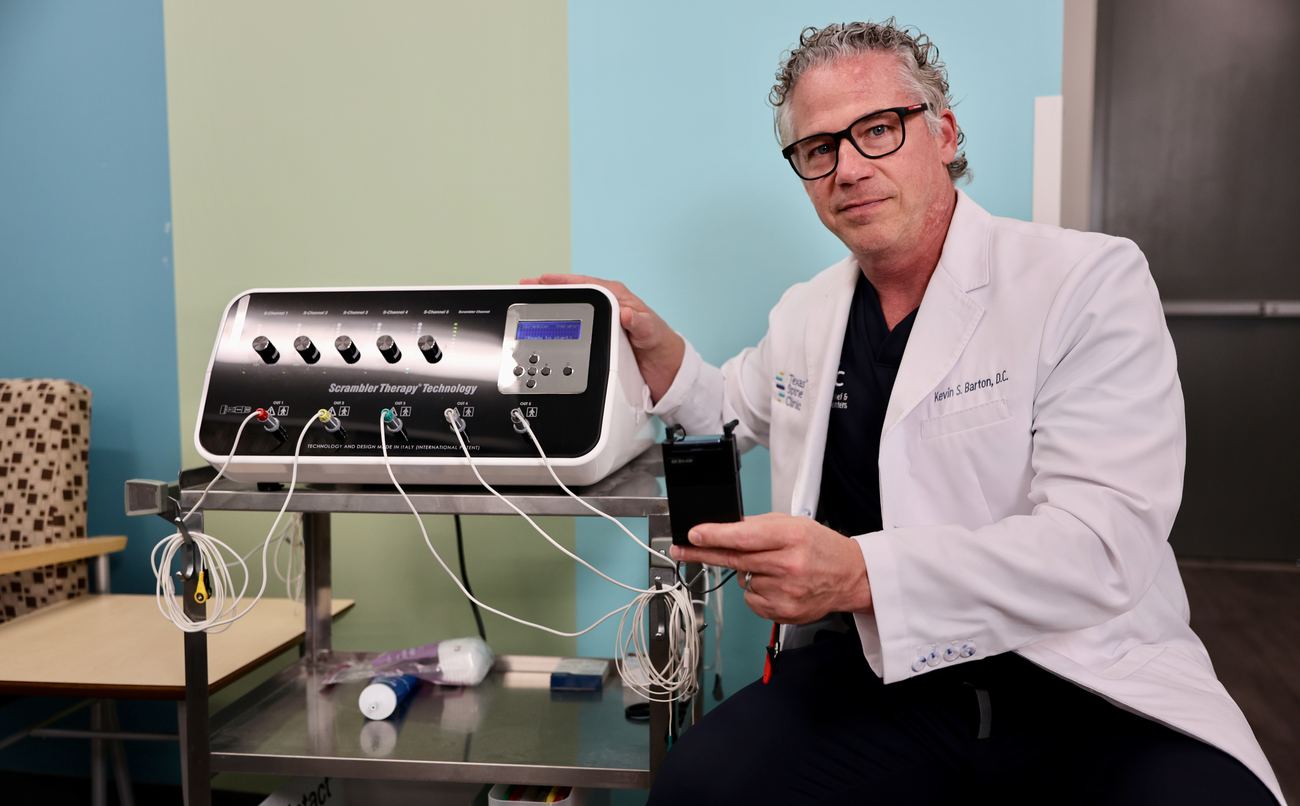
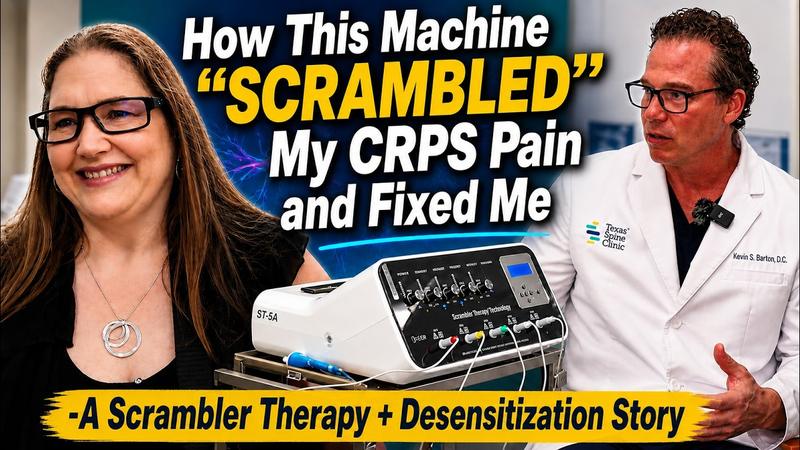
Scrambler therapy is FDA-cleared. The machine here is the ST-5A, the current generation, designed and built in Italy, where the treatment was invented. A 2023 review in the New England Journal of Medicine, by physicians at Johns Hopkins and the Mayo Clinic, describes the treatment and states that it is distinct from TENS.
Why it isn't a TENS unit
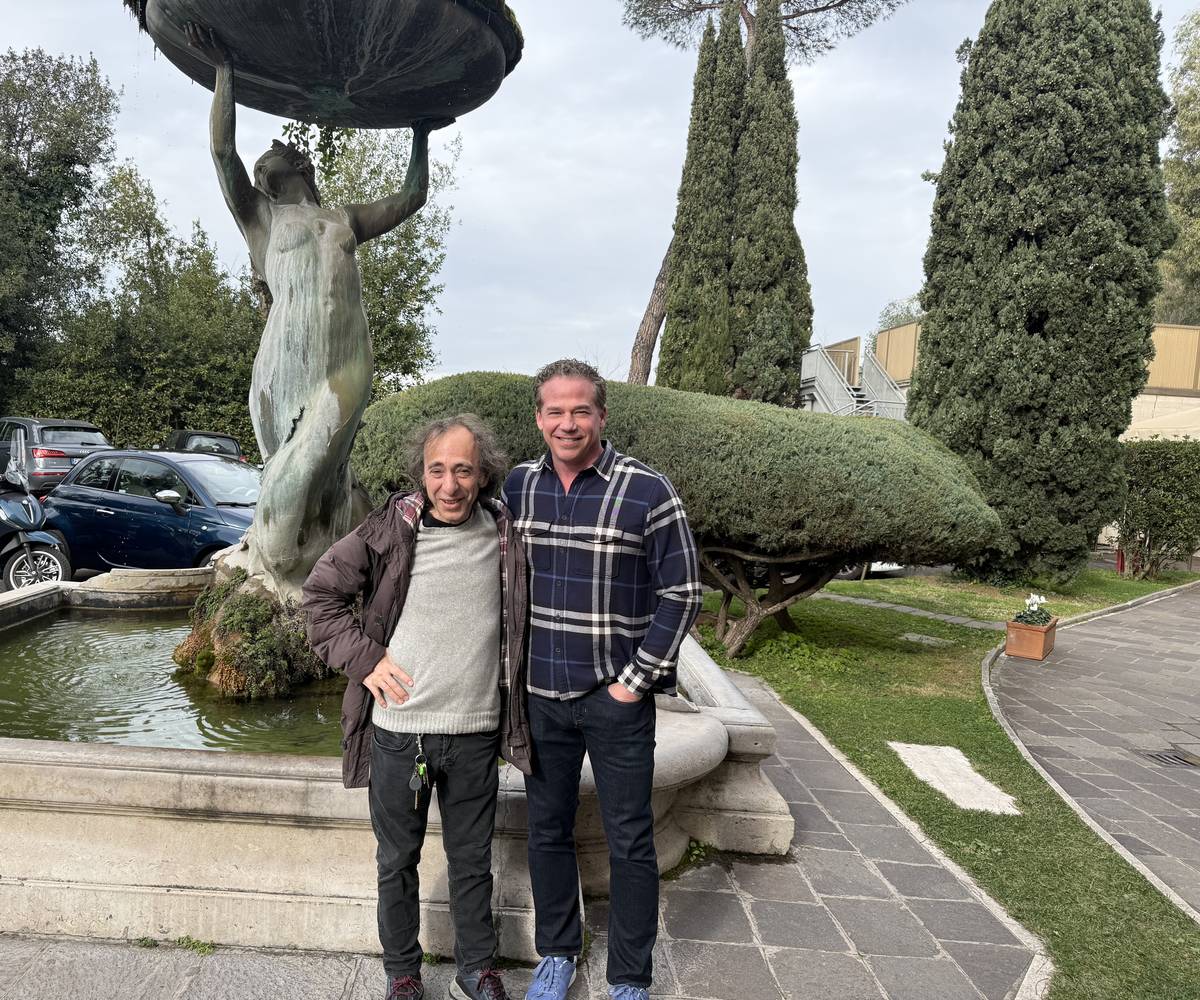
Who does the treatment matters as much as the machine.
Results follow where the electrodes go and the care taken in setting the level. Kevin S. Barton, D.C., manages the scrambler program and does the treatments himself. He completed advanced scrambler therapy training in Rome, Italy, with Dr. Giuseppe Marineo, who invented this treatment.
The program is medically supervised by Lisa D. Persyn, M.D., board certified in Physical Medicine and Rehabilitation, the specialty built around restoring function to people living with pain and nerve injury.
06A session, start to finish
About forty minutes, clothes on, nothing to recover from.
The electrodes go on by hand.
On healthy skin along the nerve pathway that serves the painful area. If the first placement doesn't do the job, they come off and go somewhere else.
You tell us what you feel.
The level comes up slowly, one channel at a time. The target is a clear tingle that's completely comfortable. People describe it as fizzing, or a light buzz.
It should never hurt.
If anything we do makes the pain go up, we stop and change something.
Someone stays with you.
We keep checking what the pain is doing and change the setup on the spot when we need to. The goal in every session is your pain at zero while you're on the machine.
You drive yourself home.
No drowsiness, no restrictions. The next day you do it again, and the placement is worked out fresh.
If you have CRPS
For CRPS we run a protocol built for the condition. We start desensitizing almost immediately: once the pain is down during a session, there's a window when the limb can be touched, and that's when we use it. We use mirror therapy during treatment, so the brain watches a limb that moves normally and doesn't hurt. And we keep changing the approach across the course until we get the answer.
All of it is part of the protocol, with no separate charge. In our experience, combining these speeds things up considerably compared with the scrambler alone. We use the same tools for any nerve pain that's stubborn against the sessions alone, shingles pain and phantom limb pain included.
07The course
Ten sessions over two weeks, and an early answer.
A full course is ten sessions, on consecutive weekdays: five days a week for two weeks. It's the protocol the device is built around. That's why we run scrambler sessions on Fridays, when the rest of the clinic is closed. If you're driving in from out of town, plan for two weeks in San Antonio.
A $19 consultation.
Your history, an exam, what you've already tried, and the candidacy check on page 8. If you're not a candidate, you'll know at that visit.
A $99 first session, credited toward your course.
A full session, run properly, so you can find out what your nerves do with this treatment before you're asked to commit.
With your number in writing.
If you respond, we walk you through the full course and what it costs. If it isn't working, we say so, and we stop.
For people who respond, relief usually builds over the course, each session's relief lasting a little longer than the last. Some people come back later for a short round of booster sessions, usually a couple of days rather than another full course. In San Antonio, a booster is a drive, not a flight.
The investment
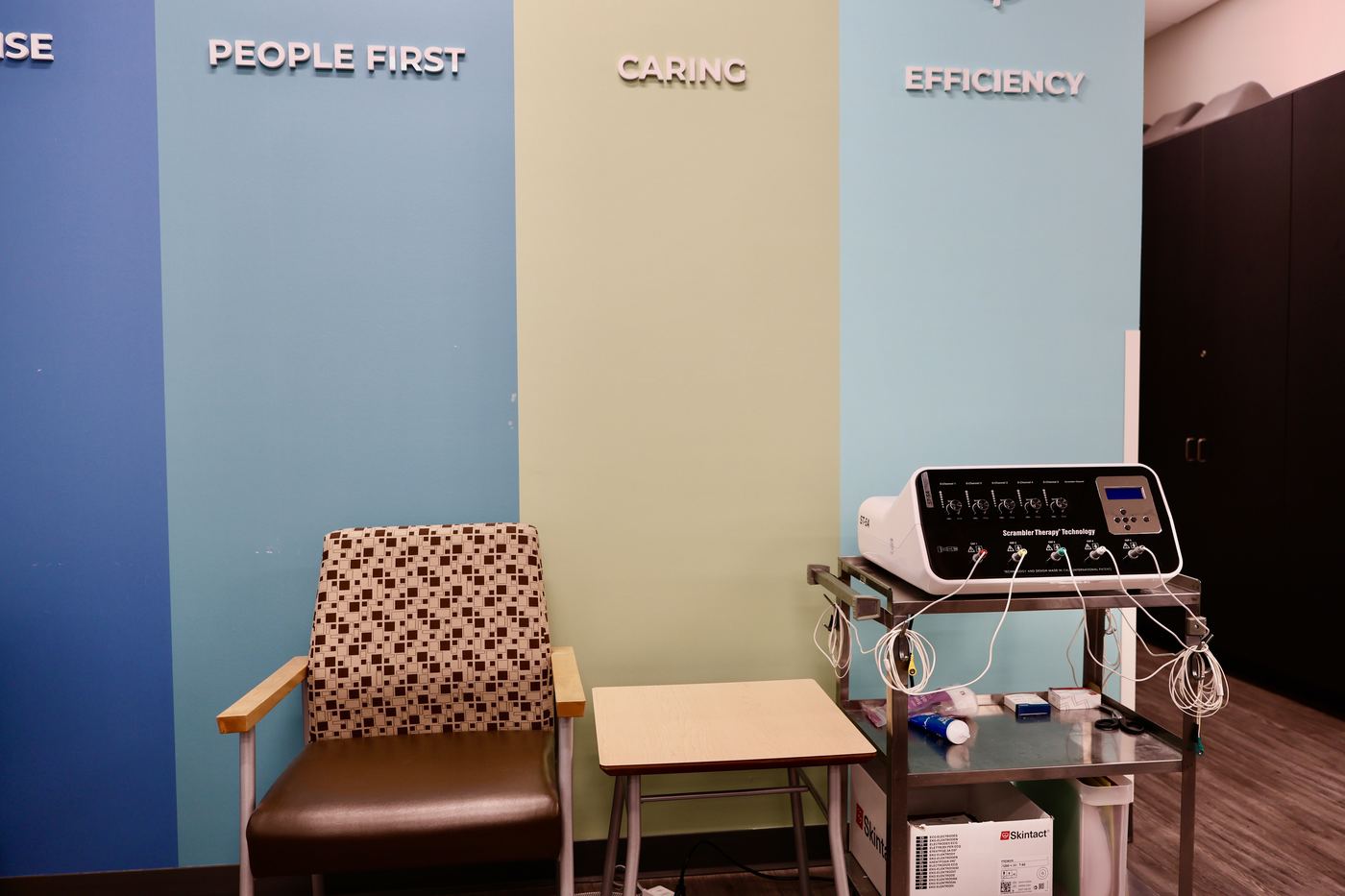
Scrambler therapy isn't a covered insurance benefit, so the course is an out-of-pocket investment. You'll have the exact number in writing after your first session, before you agree to anything, and the $99 comes off it. If you have a workers' comp claim, or a plan that has covered it before, tell us at the consultation.
08Who it's for
Read this before you come in.
These come from the device's own instructions, and no exam changes them.
You can't have scrambler therapy if you have…
- An implanted pacemaker or defibrillator
- A spinal cord stimulator or peripheral nerve stimulator, implanted or in trial
- Aneurysm clips, vena cava clips or skull plates
- A seizure disorder: epilepsy, or a tendency to seizures
- A pregnancy
- Pain nobody has diagnosed yet. That needs a diagnosis first, and we'll help you get to the right person.
Hardware is not a problem
A knee, hip or shoulder replacement is fine, and so are the pins, plates, screws, cages and rods used to repair bones or fuse a spine. They don't conduct electricity the way an implanted electronic device does. If you've had spine surgery with hardware, you have not been ruled out.
Keep taking your medications
Don't stop anything on your own. Gabapentin, Lyrica and Cymbalta can interfere with the signal scrambler therapy sends, so we work with the doctor who prescribed them to wean you off safely. That has to be done gradually: gabapentin and Lyrica are anticonvulsants, and stopping them all at once can cause seizures. Bring your full medication list to the consultation.
09The next step
Your $19 scrambler therapy consultation.
Bring with you
0 of 4 packedTexas Spine Clinic · 3212 Napier Park, San Antonio, TX 78231
Monday–Thursday, 8 a.m.–5 p.m. · Friday: scrambler therapy sessions only, by appointment · No referral needed
This guide is general information, not medical advice. If you have a medical emergency, call 911.
Book your $19 scrambler therapy consultation
$19 consultation. $99 first session, credited to your course.
Calendar not showing? Open it in a new tab.
Rather book by phone? Call (210) 741-9166.