← Blog
Spine & Discs
Discs can heal on their own. The question is how long you can wait.
A herniated disc can shrink back over time. What that timeline looks like, what the waiting costs you (sleep, work, the strength in your leg), and why we would rather not leave it to the calendar.
Somewhere in your reading you will run into a fact that sounds like the end of the conversation: herniated discs often shrink on their own.
It’s true. We’ll say it plainly, because the studies are clear and you deserve to hear it from the people who treat discs for a living. Many herniations, especially the large ones, shrink over time without any treatment at all. A disc that has pushed all the way through its shell meets the body’s immune system for the first time, the immune system treats the escaped material as something to clean up, and over the following months it does.
So the real question was never whether. It’s the one Dr. Barton asks every patient who brings this up: how long does it take, and what happens to the nerve while you wait?
What the numbers actually say
The largest review of this question pooled the imaging follow-up of hundreds of herniated discs treated without surgery.1 Roughly seven in ten showed some shrinkage over the follow-up period, and the bigger, more dramatic-looking herniations shrank most often. That is the headline everyone repeats. Here is the rest of the same paper, which almost nobody repeats:
- It takes months to years, not weeks. The follow-up scans in those studies were taken anywhere from 3 to 40 months after the first one. Most of the shrinking happened within the first year. A year is a long time to be unable to sit through a meeting, sleep through the night, or lift your child.
- “Shrank somewhat” and “went away” are different outcomes. Only about 15% of extrusions resolved completely. Most of that headline percentage is partial shrinkage, with the rest of the herniation still there.
- A smaller disc on a scan is not the same as your pain going away. The review looked at this directly. Of the studies that checked whether shrinkage tracked how patients felt, eight found a connection and six found none. Pain can persist after a herniation has shrunk, and it can ease while the disc looks unchanged.
- Nobody can tell you in advance which group you’re in. The statistics describe populations. They cannot tell you whether your herniation is one of the ones that will resorb, or one of the ones that won’t.
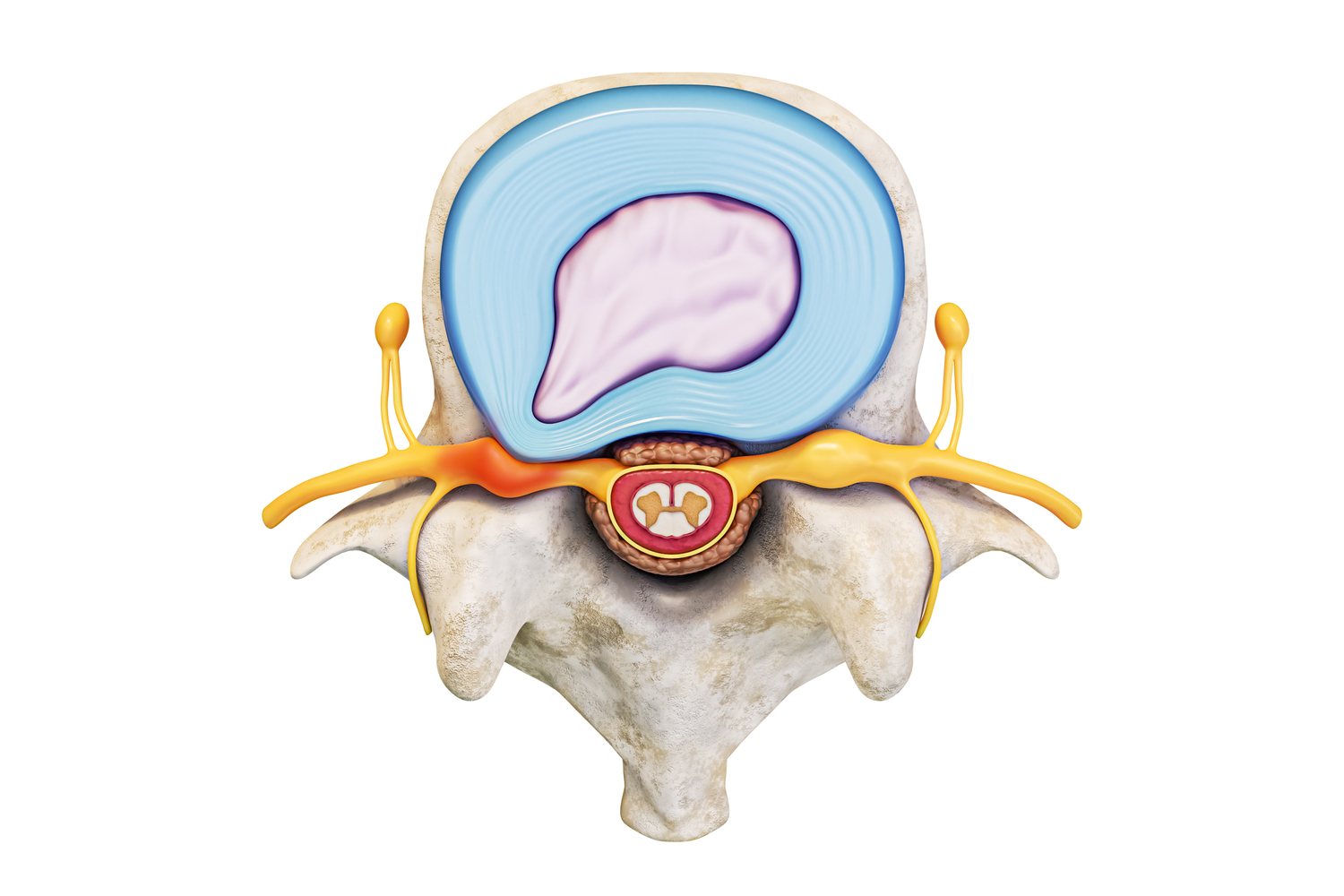
The cost of waiting is paid by the nerve
This is the part that matters most, and it’s the reason we don’t leave a compressed nerve to the calendar.
A nerve under sustained pressure can lose function. First it’s pain, then numbness, then weakness: a foot that won’t lift, a calf that won’t push off, a grip that isn’t there. And the longer a nerve stays compressed, the slower it tends to recover once the pressure comes off, sometimes incompletely. Waiting is not a neutral act when there is weakness or numbness in the picture.
Yes, discs resorb on their own. But while you’re waiting for that, the herniation can be creating nerve damage and a permanent deficit.

The doctor who tested this on himself
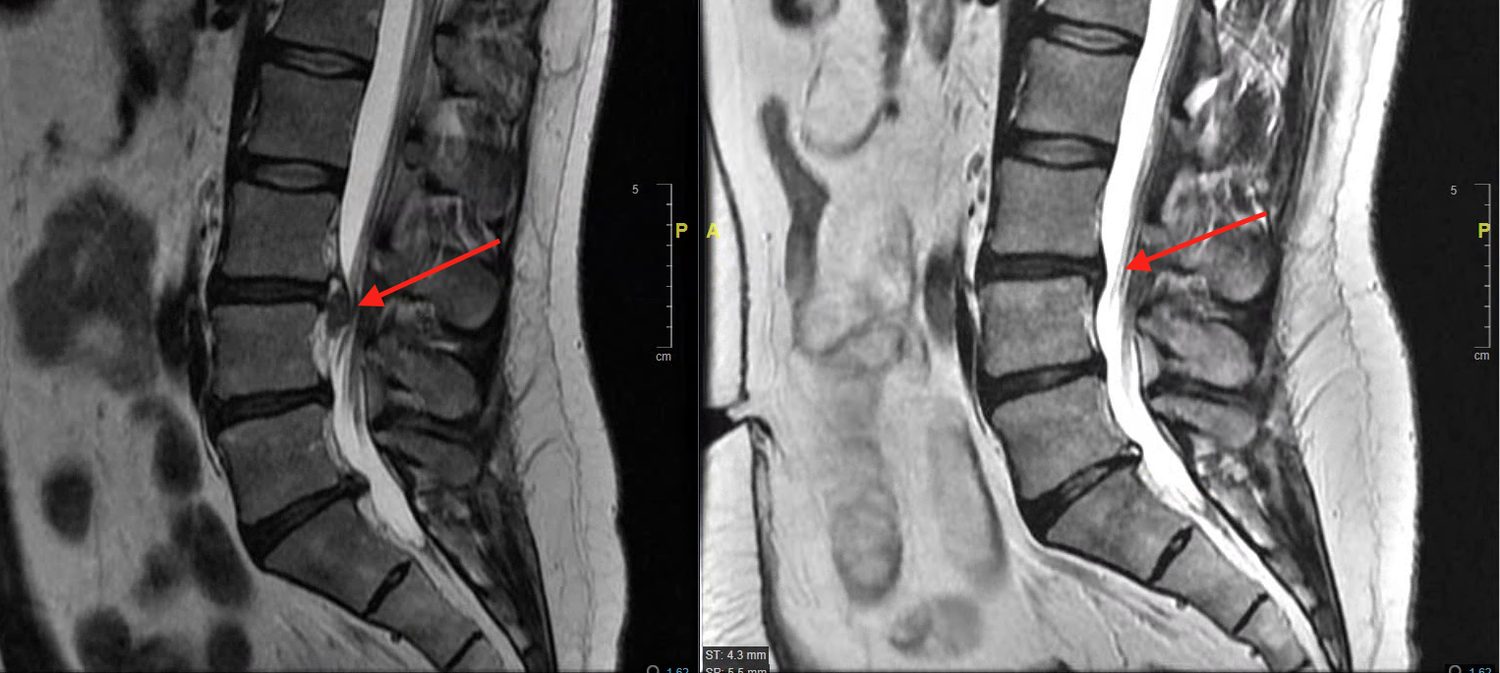
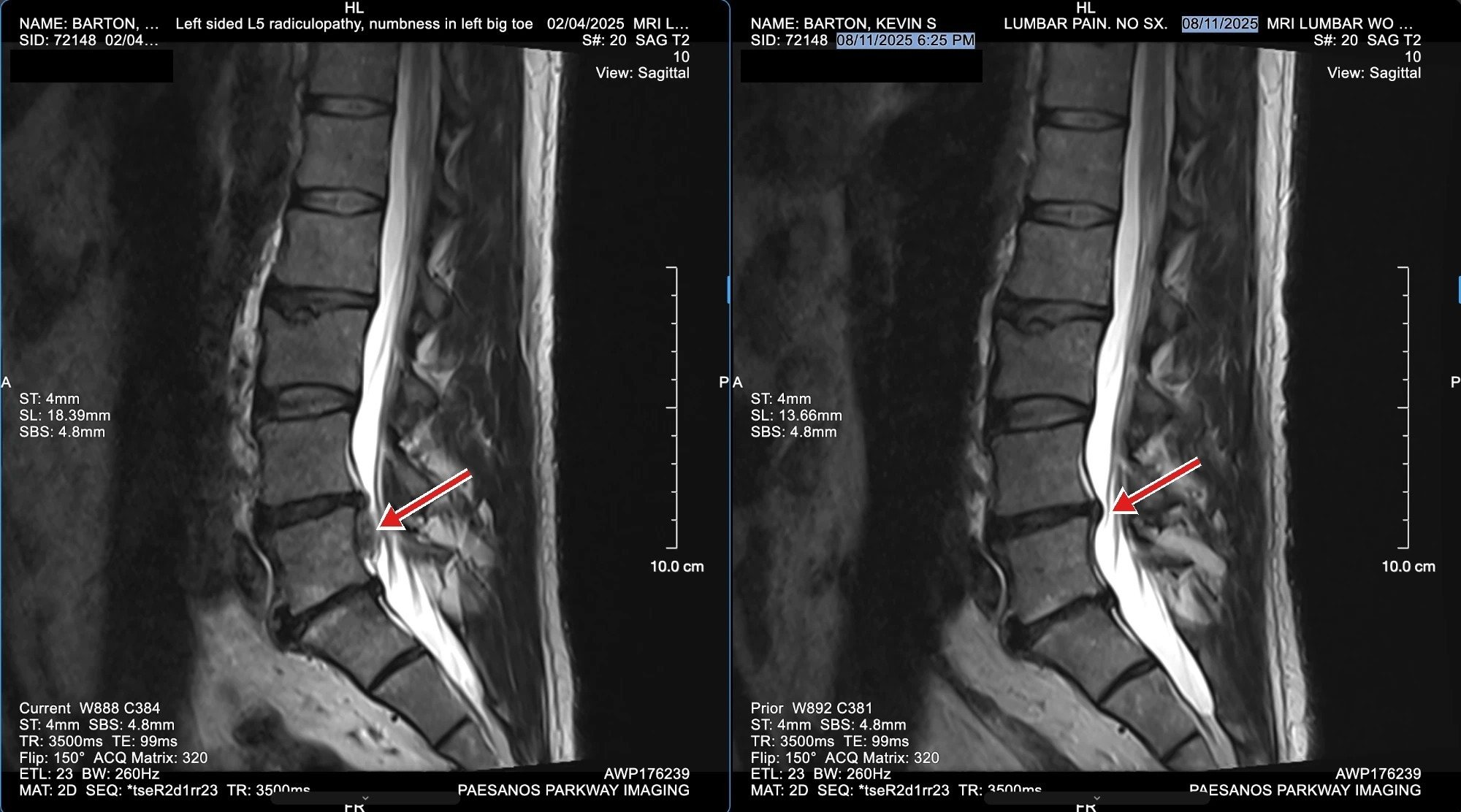
In February 2025, Dr. Barton’s own L4-L5 disc ruptured: a 15 mm extrusion completely compressing the nerve to his left leg. His big toe went dead. He could not walk on his heel. In his words, it was one of the worst cases he had seen in more than twenty years of practice, and he was a candidate for surgery.
He knew the resorption data better than anyone. His own assessment was that natural resorption “probably would have taken at least a year, maybe longer. Meanwhile, the nerve would have been permanently damaged, and I would have lost use of my ankle.” He chose the same care he offers patients. In under two weeks he had control of his big toe back. By three weeks he could walk on his heel. His follow-up MRI in August showed the extrusion gone.
One case, his, proves what is possible, not what is typical. But it is why the approach here starts where it does. The whole story, with his MRIs, is here.
What decompression changes about the timeline
Spinal decompression doesn’t replace the body’s clean-up. It helps it along. A measured pull on one level of the spine lowers the pressure inside the disc, and researchers who put sensors inside human discs during decompression measured that drop directly.2 In the one randomized trial that compared real decompression with a sham version of the same treatment, the real one shrank herniations by 27.6% at three months and the sham by 7.1%.3 Decompression helps a herniation shrink faster, which takes pressure off the nerve. That is the whole point: the same destination, reached before the nerve pays for the trip.
What a nerve looks like getting its function back
 Watch
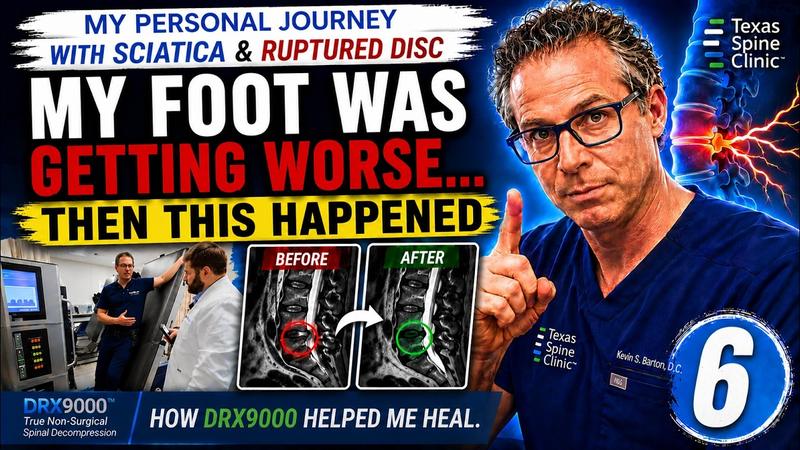
WatchThe doctor's own discThe foot drop got worse firstThe week it got worse before it got better, on camera.
 Watch
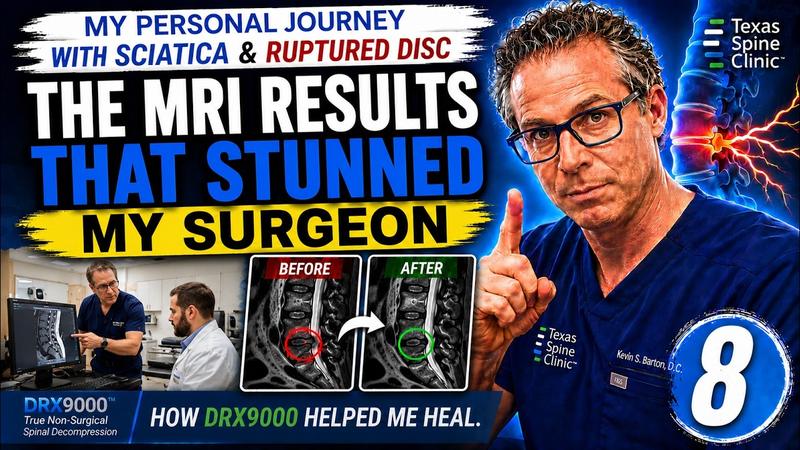
WatchThe doctor's own discThe MRI doesn't lieThe same disc, before and after the program.
 Watch
WatchElaine Wild, scientistA 10 mm herniation, resolved without surgery.
So should you wait?
The exam decides, not this article. Someone a few weeks into a first episode, with pain that is already easing and no weakness, may be told to keep doing what they’re doing, and we will say so. Someone four years in, who has already tried the pills, the therapy and the injection, has already given natural resorption its window.
Either way, the way to know is to be examined. The $49 DRX9000 consultation is that exam: reflexes, strength, sensation, and your MRI on the screen with you at the second visit. If your nerve is losing ground, we would rather find out this week than next year.
Book the $49 DRX9000 consultation
Sources
- Chiu CC, et al. The probability of spontaneous regression of lumbar herniated disc: a systematic review. Clinical Rehabilitation. 2015;29(2):184–195. No industry funding.
- Ramos G, Martin W. Effects of vertebral axial decompression on intradiscal pressure. Journal of Neurosurgery. 1994;81(3):350–353.
- Choi E, et al. Effectiveness of spinal decompression therapy for lumbar disc herniation: a randomized sham-controlled trial. International Journal of Clinical Practice. 2022.
Full methodology for every study we cite: the evidence page.
This article is educational and is not a substitute for an examination and diagnosis. Individual results vary and no outcome is guaranteed.